Imagine walking down a street and spotting a house with black beams crisscrossing over white walls. It looks old, sturdy, and almost storybook-like. That is the signature look of Tudor Architecture, a style of building that originated in England during the late medieval and early modern periods. This style isn't just about how a house looks; it tells a story of power, wealth, and the transition from medieval castles to comfortable homes. You might see these buildings in London or even in suburban neighborhoods across the United States. But what makes them special, and why do they still catch our eyes today?
Quick Summary / Key Takeaways
- Tudor Architecture emerged in England between 1485 and 1603 during the Tudor Dynasty.
- Key features include Half-timbering, a construction method using wooden frames filled with wattle and daub, steep roofs, and tall chimneys.
- The style evolved from Gothic Architecture, a medieval style characterized by pointed arches and ribbed vaults into something more domestic and less fortified.
- A Tudor Revival, a 19th and 20th-century movement that copied the original style brought the look to America and Australia.
- Materials shifted from heavy timber to brick and stone as the period progressed.
What Is Tudor Architecture?
When people talk about Tudor style, they usually picture the black and white houses. However, the real history is more complex. Tudor Architecture refers to the English architectural style of the Tudor period covers a specific timeframe. It starts with Henry VII in 1485 and ends with Elizabeth I in 1603. During these years, England changed from a feudal society to a more centralized nation. The buildings reflect this shift. Early structures were still very much like castles, built for defense. Later buildings became more about comfort and display of wealth.
You won't find this style everywhere. It is deeply rooted in English history. The name comes from the Tudor Dynasty, the royal house that ruled England from 1485 to 1603. Kings like Henry VIII and queens like Elizabeth I commissioned massive palaces. These palaces set the trend for the wealthy nobility. They wanted homes that looked grand but also offered warmth. The architecture moved away from the cold stone of medieval fortresses toward something more livable.
The Historical Timeline
Understanding the dates helps you see how the style changed. The period isn't just one block of time. It has phases. In the early 1500s, you see the tail end of the Perpendicular Gothic, the final phase of English Gothic architecture style. This means you see pointed arches and large windows. As time moved toward the 1550s, the Renaissance influence began to creep in. You start seeing symmetrical designs and classical details.
By the late 1500s, the style is distinct. It is no longer purely medieval. It is a blend. The Elizabethan Era, the period of Queen Elizabeth I's reign known for cultural flourishing produced some of the most famous examples. Think of Longleat House or Hardwick Hall. These buildings show the transition. They have large windows, but the layout is still traditional. The timeline ends when James I takes the throne in 1603, marking the start of the Jacobean period, which is slightly different but closely related.
Key Design Features
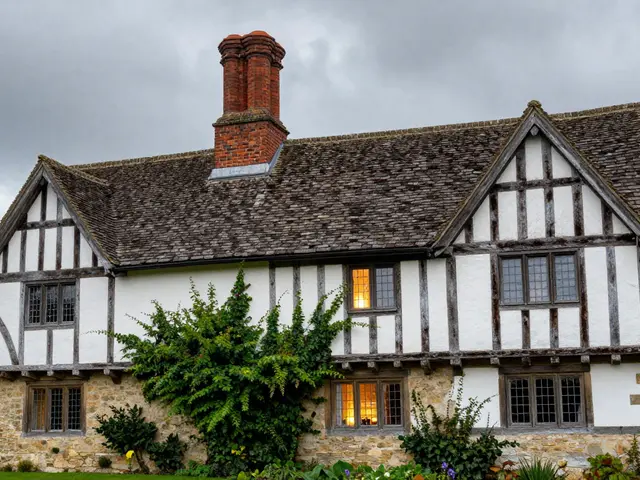
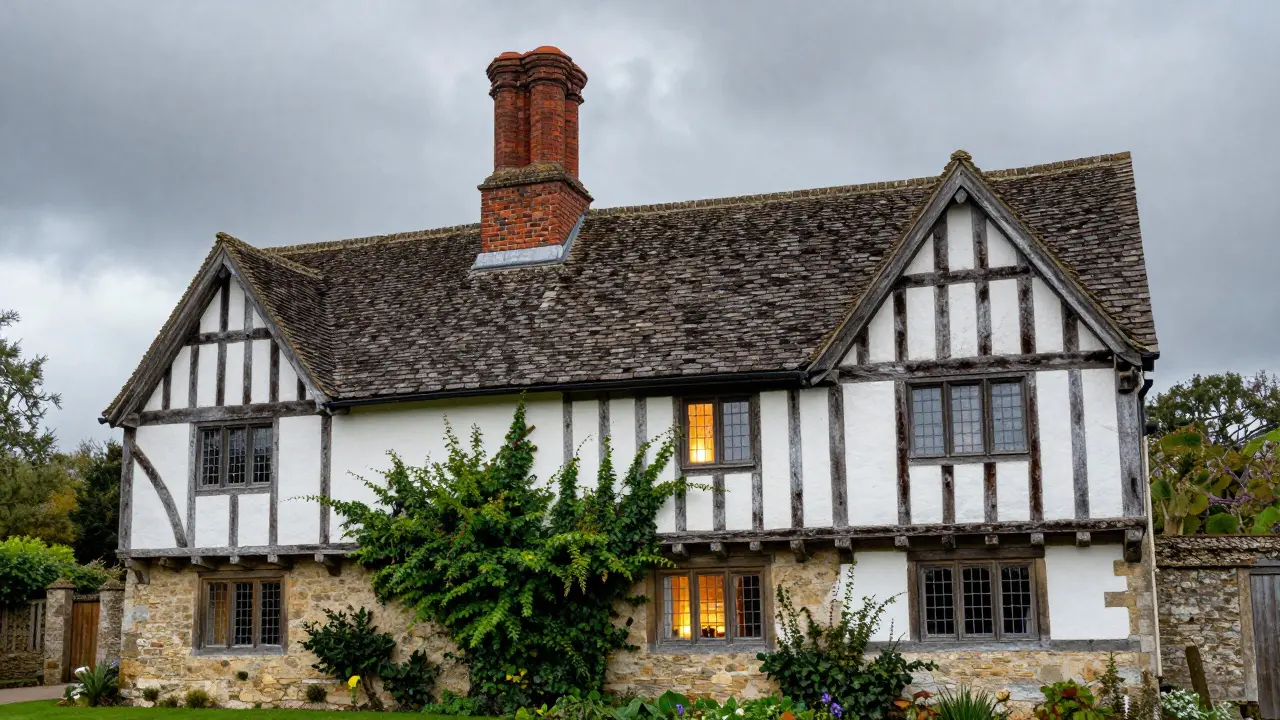
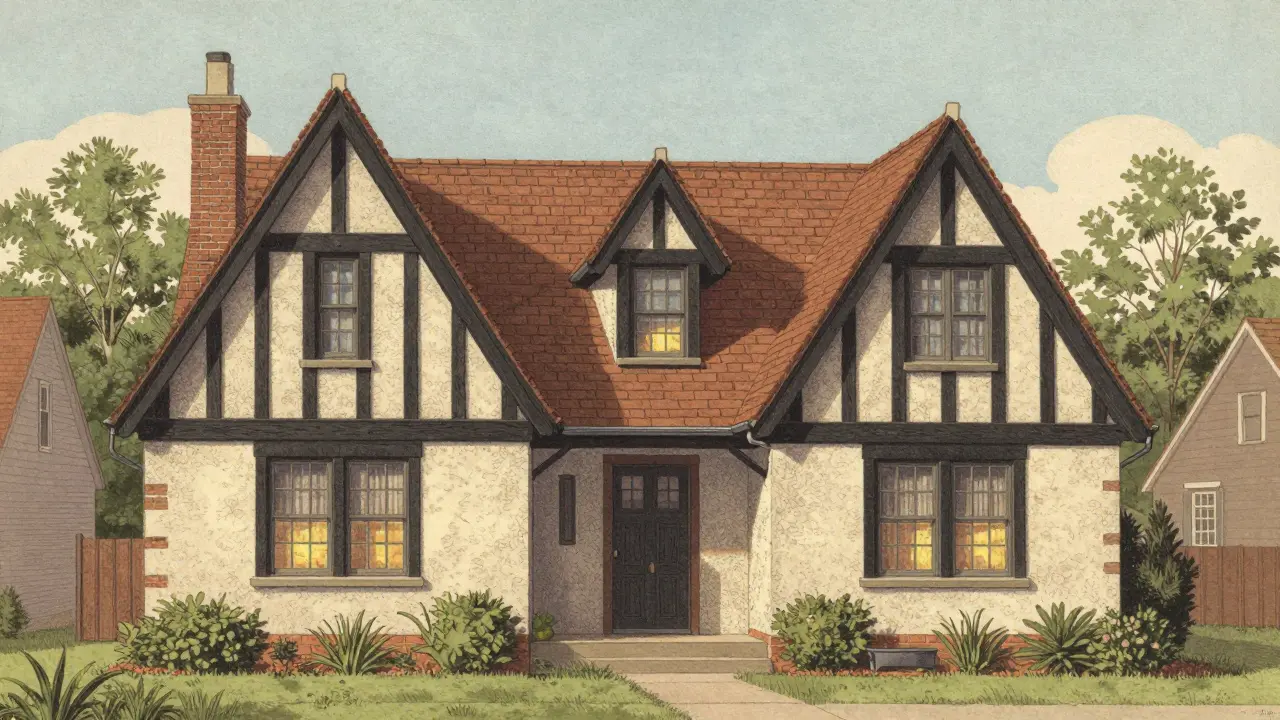
If you walk past a Tudor building, what should you look for? There are specific elements that define the look. The most famous one is Half-timbering, a framework of timber with spaces filled with plaster, brick, or wattle and daub. In the original buildings, the timber was structural. It held the weight of the house. The gaps were filled with a mix of clay, straw, and animal hair. Over time, the timber darkened, and the plaster stayed white, creating that high-contrast pattern.
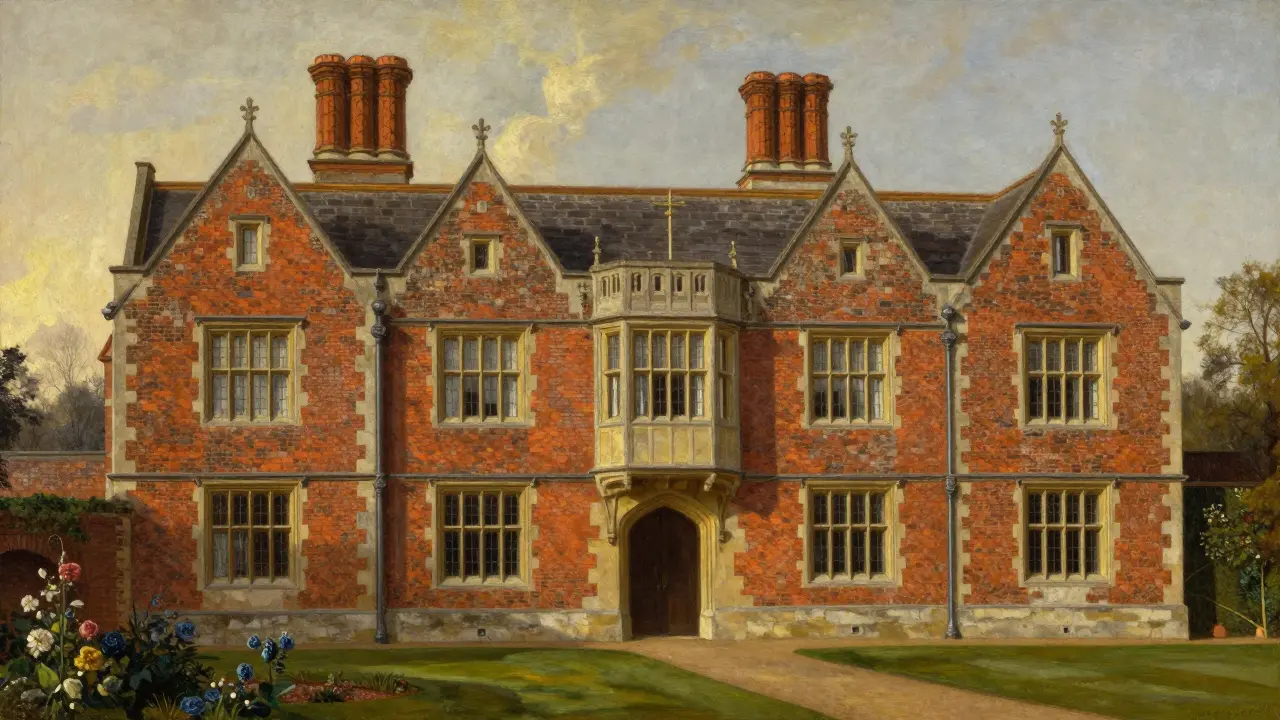
Another feature is the roof. Tudor roofs are steep. They are often covered in stone tiles or slate. The steep angle helps shed snow and rain quickly. This was practical for the English climate. You will also see tall, ornate chimneys. In earlier times, fireplaces were in the center of the room. Later, they moved to the sides, and the chimneys became decorative. They might have patterns or shapes on top.
Windows are another clue. Early Tudor windows were small and square. As glass became cheaper and more available, windows got bigger. By the end of the period, you see large mullioned windows. These are windows divided by vertical bars. They let in more light and showed off the owner's wealth. The doors are often heavy and arched, sometimes with decorative carvings.
| Feature | Early Tudor (1485-1550) | Late Tudor (1550-1603) |
|---|---|---|
| Windows | Small, square, few panes | Large, mullioned, many panes |
| Chimneys | Central, functional | Side, decorative, patterned |
| Materials | Timber and wattle and daub | Brick and stone |
| Layout | Fortified, inward-facing | Open, symmetrical, outward-facing |
Tudor Revival: The Modern Copy
Here is where things get interesting. The original Tudor style stopped in 1603. But the look didn't die. In the 1800s and 1900s, people started copying it. This is called Tudor Revival, an architectural movement that revived Tudor styles in the 19th and 20th centuries. It became huge in the United States and the United Kingdom. Why did people want it back? They missed the romantic feel of the past. It looked cozy and traditional.
The Revival style is different from the original. In the 1920s, for example, builders used brick and stucco instead of real timber frames. They painted the beams black to mimic the old look. This is often called "mock Tudor." You see this in many American suburbs. It is not structurally the same as the 1500s buildings, but it keeps the aesthetic alive. The Craftsman movement, an early 20th-century design style emphasizing handcrafted quality also influenced how these homes were built, focusing on natural materials and handiwork.
This revival spread globally. You can find Tudor Revival homes in Australia, Canada, and even Japan. It shows how powerful a design can be. People associate the style with history and stability. Even though the materials changed, the emotional connection remained. The steep roofs and dark beams still signal "home" to many people.
Materials and Construction
How did they actually build these houses? The process was labor-intensive. Timber Framing, a method of construction using wooden joints to create a structural skeleton was the primary method. Builders used oak because it was strong and resistant to rot. They cut the wood to fit together without nails. This required skilled carpenters. The joints were often decorative, showing off the builder's skill.
For the walls between the beams, they used Wattle and Daub, a building technique using a woven lattice of wooden strips and a sticky mixture of clay, dung, and straw. Wattle is the woven part. Daub is the mud mixture. It was cheap and effective. It insulated the house well. Later, as brick became common, they started using brick infill. This was more durable. The shift from timber to brick marks the wealth of the owner. Brick was expensive to transport and make.
Roofing materials also varied. Thatch was common for poorer homes. It was made from reeds or straw. Wealthy homes used tiles or slate. The Steep Gables, the triangular portion of a wall between the edges of a sloping roof were often decorated with timber patterns. This added beauty to the structure. The construction methods ensured the houses lasted centuries. Many original Tudor buildings still stand today as proof of this quality.
Where to See Tudor Architecture
Want to see the real thing? You need to go to England. There are many preserved examples. Shakespeare's Birthplace, a historic house museum in Stratford-upon-Avon is a classic example. It has the black and white beams and the steep roof. It shows how a middle-class home looked in the late 1500s. Another great spot is Hampton Court Palace. This was a royal residence. It shows the grand side of the style with its brickwork and large windows.
Outside of England, you look for the Revival style. In the United States, cities like Pasadena in California have many Tudor Revival homes. The style was popular there in the 1920s. In Australia, you might find examples in older suburbs of Sydney or Melbourne. They might not be authentic Tudor, but they carry the spirit. If you are looking for authenticity, the UK remains the best place. The National Trust, a conservation organization in the UK that manages historic properties protects many of these sites. They ensure the history is preserved for future generations.
Why It Matters Today
Why do we care about buildings from 500 years ago? They teach us about how people lived. The shift from castle to home shows a shift in society. People wanted safety and comfort, not just defense. The architecture reflects the values of the time. Today, the style influences modern design. Many new homes use Tudor elements to add character. It adds a sense of permanence to a neighborhood.
Understanding this history helps you appreciate the details. When you see a tall chimney or a half-timbered wall, you know there is a story behind it. It wasn't just decoration. It was a solution to building problems. The style survived because it works. It looks good and it stands strong. Whether it is the original stone and oak or the modern brick and stucco, the legacy continues.
When did Tudor Architecture start?
Tudor Architecture began in 1485 with the start of the Tudor Dynasty under Henry VII. It continued until 1603 when James I took the throne.
What is the main feature of Tudor homes?
The most recognizable feature is half-timbering, where dark wooden beams are visible against white plaster or brick walls.
Is Tudor Revival the same as original Tudor?
No, Tudor Revival is a later copy from the 19th and 20th centuries. It often uses brick and stucco instead of structural timber.
Where can I see authentic Tudor buildings?
You can find authentic examples in England, such as Shakespeare's Birthplace in Stratford-upon-Avon or Hampton Court Palace.
Why were Tudor roofs so steep?
Steep roofs were designed to shed rain and snow quickly, which was essential for the wet English climate.