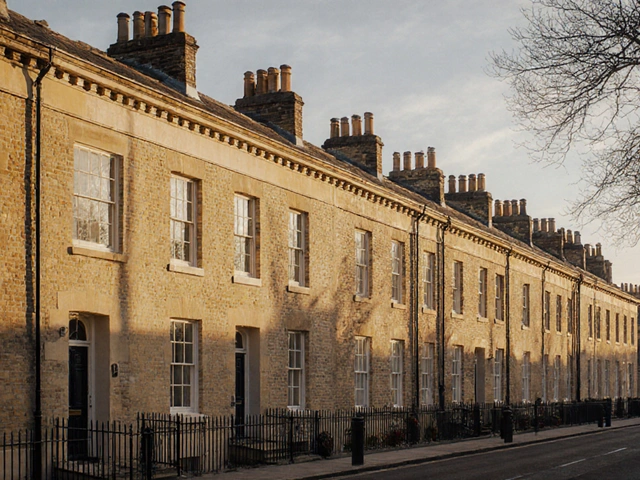
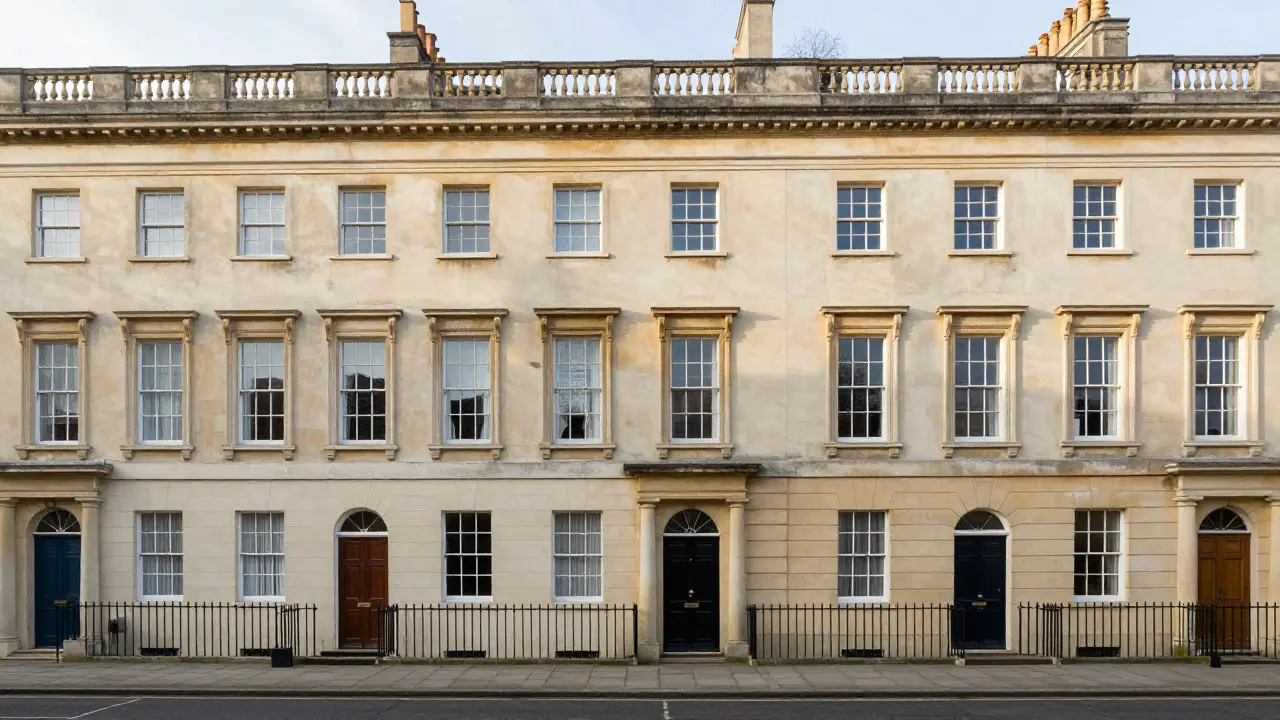
Walk down a quiet street in Bath, London, or even parts of Melbourne, and you might notice something striking about the houses. They stand in neat rows, wearing identical faces with symmetrical windows and elegant brickwork. This isn’t just good urban planning; it is the fingerprint of Georgian architecture, a style that dominated the British Empire from roughly 1714 to 1830. It named itself after four monarchs-George I, II, III, and IV-but its true parentage lies in the ancient ruins of Rome and Greece.
You don’t need to be an architect to spot this style. It feels calm, ordered, and serious. But why does a building style from over two centuries ago still look so fresh today? The answer isn’t just nostalgia. It’s because Georgian design solved fundamental problems of human comfort and visual balance that we are still grappling with. When you understand the rules behind these buildings, you start seeing them everywhere, from historic townhouses to modern suburban developments trying to capture that same sense of stability.
The DNA of Order: Symmetry and Proportion
If you had to sum up Georgian architecture in one word, it would be "symmetry." Imagine folding a house in half vertically. The left side should match the right side almost perfectly. Windows align in straight horizontal lines across the facade. Doors sit dead center. This wasn’t just for looks; it reflected the Enlightenment belief that order, logic, and reason were the highest virtues. Chaos was ugly; harmony was beautiful.
This obsession with balance relied heavily on mathematical proportions. Architects didn’t guess how big a window should be. They used ratios derived from classical orders-Doric, Ionic, and Corinthian columns. A common rule was that the height of a room should relate to its width in specific fractions, creating spaces that felt naturally comfortable to the human eye. You’ve probably experienced this without realizing it. Rooms that feel "right" often follow these old geometric rules. They aren’t too cramped, nor do they feel cavernous. They breathe.
The materials played a huge role here too. In London, red brick was king, often paired with white stone trim (quoins) at the corners. In areas like Bath, limestone gave buildings a creamy, uniform glow. The choice of material dictated the color palette, which remained restrained. You rarely saw wild colors or chaotic patterns. The beauty came from the texture of the brick, the shadow of the cornice, and the play of light on the stonework. This simplicity makes the style incredibly adaptable. It doesn’t scream for attention; it invites you to look closer.
Inside the Box: Light, Space, and Social Ritual
Stepping inside a Georgian home reveals another layer of its legacy: the relationship between space and society. These houses weren’t designed for open-plan living like many modern homes. They were designed for privacy and hierarchy. The ground floor held the public rooms-the drawing room and dining room-where guests were entertained. Upstairs, private bedrooms offered retreat. The layout forced a certain rhythm to daily life, separating work, socializing, and rest into distinct zones.
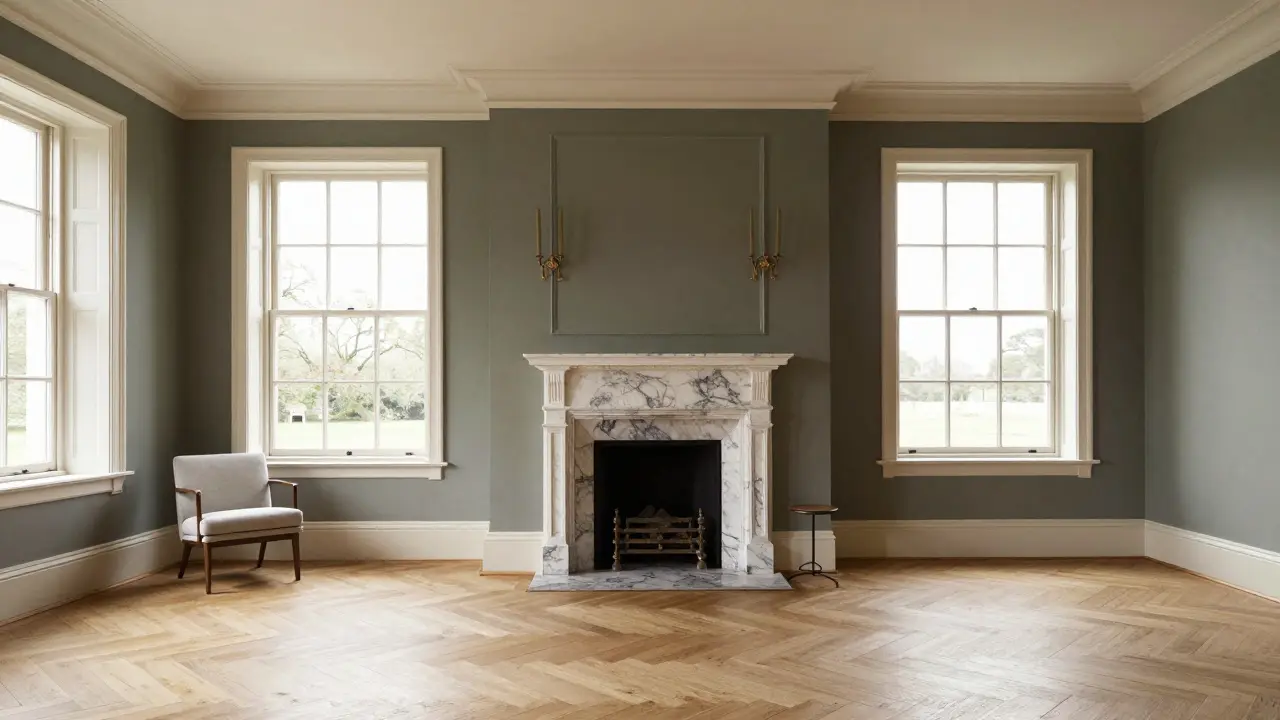
One of the most significant innovations was the sash window. Unlike casement windows that swing outward, sash windows slide up and down. This allowed for better ventilation control and created those iconic vertical lines on the exterior. Inside, large sash windows flooded rooms with natural light, which was crucial before electric lighting became reliable. Gaslight eventually arrived, but the design prioritized daylight. This focus on natural illumination is a lesson modern architects are relearning. We now know that access to natural light improves mood and health, a fact Georgian builders intuitively understood by making windows tall and numerous.
Floorboards were wide and made of durable oak or pine, laid in patterns that added subtle interest without clutter. Fireplaces were central features, not just for heat but as focal points for conversation. The mantelpieces were often ornate, carved from marble or wood, serving as the primary decoration in an otherwise plain room. This approach to interior design-letting architecture speak first, then adding curated details-is highly relevant today. It contrasts sharply with the trend of over-decorating every square inch. Georgian interiors teach us that empty space has value.
From Townhouses to Suburbs: Urban Planning Impact
Georgian architecture didn’t just change individual buildings; it reshaped entire cities. Before this era, streets were often narrow, winding, and irregular, remnants of medieval layouts. Georgian developers introduced terraces and squares. Think of the sweeping crescents in Bath or the orderly grids in Dublin. These designs maximized land use while ensuring every house got sunlight and air.
The concept of the "garden square" emerged during this period. Wealthy families built around a shared green space, creating semi-private communities within the city. This model influenced suburban planning for centuries. Even today, when developers create neighborhoods with cul-de-sacs and community parks, they are echoing Georgian principles of communal yet private living. The terrace house, once a symbol of middle-class respectability, remains a popular housing type in dense urban areas because it balances density with dignity. It allows people to live close together without feeling crowded, thanks to strict setbacks and uniform facades.
In Australia, particularly in Melbourne, Georgian influence merged with local conditions. While pure Georgian examples are less common than Victorian ones, the underlying principles of symmetry and proportion persisted. Many early colonial buildings adopted Georgian elements like hipped roofs and simple cornices, adapting them to a warmer climate with verandas and higher ceilings. This hybridization shows the style’s flexibility. It wasn’t a rigid dogma but a toolkit of ideas that could be adjusted to local needs.
The Neoclassical Shift and Revival
As the 18th century progressed, Georgian architecture evolved into what we call Neoclassicism. Inspired by archaeological discoveries in Pompeii and Herculaneum, architects moved away from the softer Palladian influences toward stricter Greek and Roman forms. Columns became more prominent, pediments sharper, and decorations more archaeological. This shift marked the transition from the earlier Georgian period to the Regency era, but the core values remained.
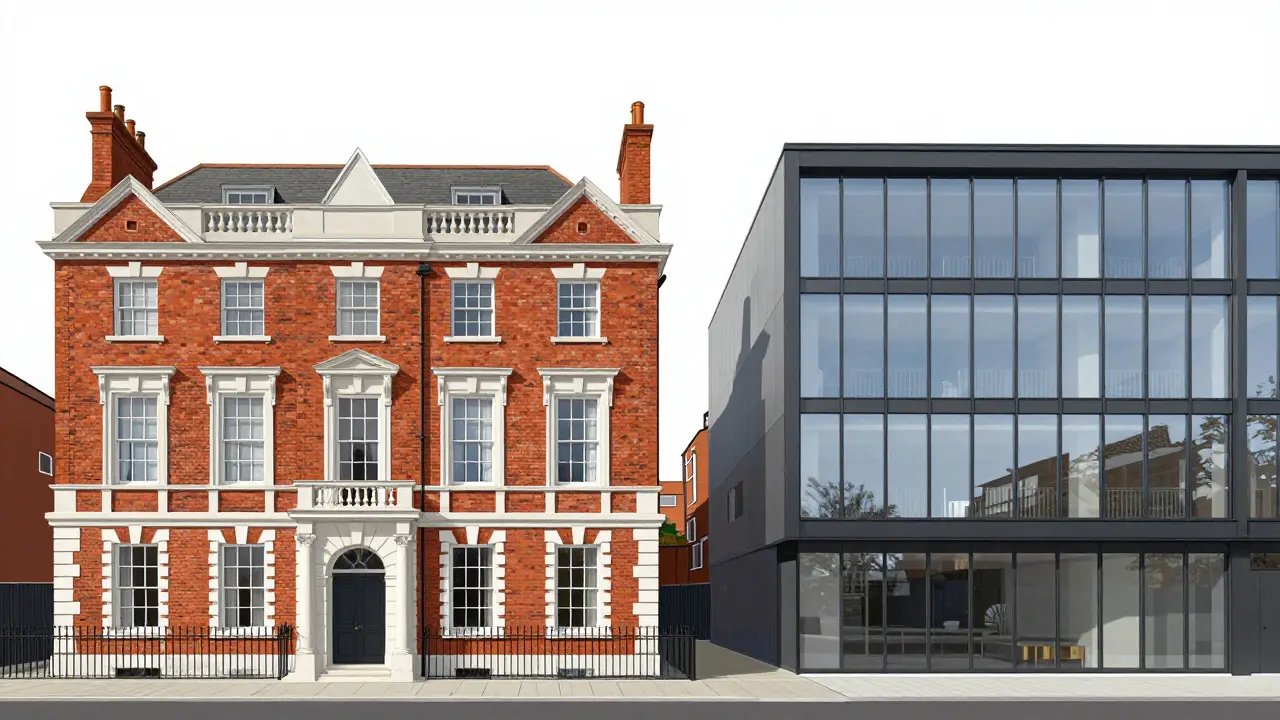
Interestingly, the style fell out of favor briefly during the Gothic Revival of the mid-19th century, when pointed arches and medieval aesthetics took over. However, Georgian architecture never truly died. It went dormant, waiting for a resurgence. In the 20th century, as modernism stripped buildings down to bare bones, critics argued that modern homes lacked soul and warmth. The response was a revival of traditional styles, including Georgian. Today, new builds often mimic Georgian facades-not as pastiches, but as nods to proven design principles. Developers realize that buyers trust familiar forms. A symmetrical front with balanced windows feels safe, valuable, and timeless.
| Feature | Georgian (1714-1830) | Victorian (1837-1901) | Modernist (20th Century+) |
|---|---|---|---|
| Symmetry | Strictly enforced | Often asymmetrical | Varies, often free-form |
| Materials | Brick, stone, timber | Brick, terra cotta, stained glass | Steel, concrete, glass |
| Windows | Sash windows, multi-pane | Bay windows, varied shapes | Large panes, minimal frames |
| Ornamentation | Subtle, classical motifs | Heavy, eclectic details | Minimal to none |
| Philosophy | Order, reason, proportion | Individuality, craftsmanship | Function, efficiency |
Why It Still Matters: Lessons for Today
So, why should you care about buildings from the 1700s? Because Georgian architecture offers a masterclass in restraint. In an age of maximalism and digital noise, the clean lines and balanced compositions provide visual relief. For homeowners looking to renovate, adopting Georgian principles can increase property value and appeal. Simple changes like painting doors a deep green or black, installing sash-style blinds, or restoring original fireplaces can transform a dated interior into something elegant and enduring.
For designers, the emphasis on proportion is a reminder that math matters. Good design isn’t arbitrary. It follows rules that have been tested for centuries. Whether you’re arranging furniture or designing a website, applying golden ratio principles can make your work feel more cohesive. Georgian architecture teaches us that beauty comes from consistency and clarity, not complexity.
Moreover, the sustainability angle is worth noting. These buildings were constructed with durable materials meant to last generations. Thick walls provided thermal mass, keeping interiors cool in summer and warm in winter. While not energy-efficient by modern standards, their longevity reduces the environmental cost of demolition and reconstruction. Emulating this durability in new construction is a key step toward sustainable urban development. We build enough; let’s build things that stay built.
What defines Georgian architecture?
Georgian architecture is defined by strict symmetry, proportion, and classical details. Key features include sash windows, centered doors with fanlights, brick or stone facades, and restrained ornamentation inspired by Greek and Roman temples. It emphasizes order and balance above all else.
How is Georgian different from Victorian architecture?
Georgian architecture is symmetrical and restrained, using classical motifs. Victorian architecture is often asymmetrical, more colorful, and heavily decorated with eclectic elements like bay windows, turrets, and intricate brickwork. Georgian feels calm and orderly; Victorian feels busy and expressive.
Can I add Georgian features to a modern home?
Yes, you can incorporate Georgian elements through details rather than structure. Install sash-style windows, use symmetrical lighting fixtures, choose neutral paint palettes with dark accents, and add classical moldings around doors and ceilings. Focus on balance and simplicity to capture the essence.
Where can I find authentic Georgian buildings?
Authentic Georgian buildings are abundant in the UK, particularly in London, Bath, Edinburgh, and Dublin. In the US, cities like Charleston, Savannah, and Philadelphia have significant concentrations. In Australia, Melbourne and Sydney feature Georgian-influenced colonial structures, especially in older suburbs.
Why is Georgian architecture considered timeless?
Its timelessness comes from its reliance on universal principles of geometry and proportion. Because it avoids trendy decorations and focuses on structural harmony, it doesn’t date quickly. The human eye naturally finds symmetry pleasing, making these buildings perpetually attractive regardless of changing fashion trends.