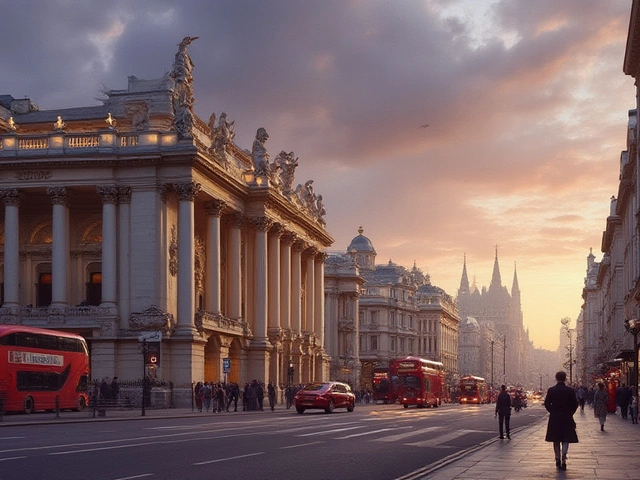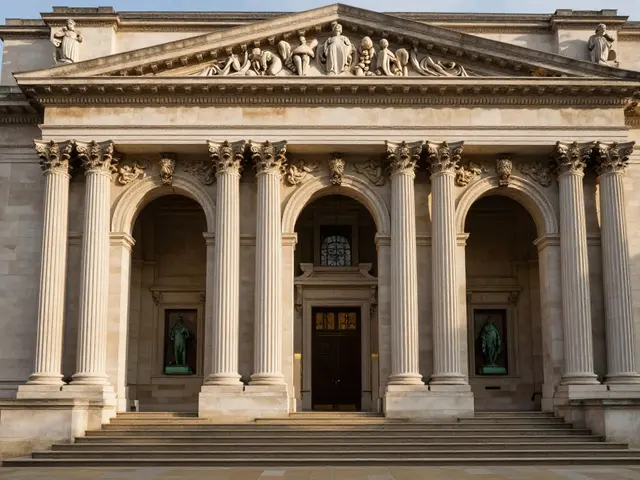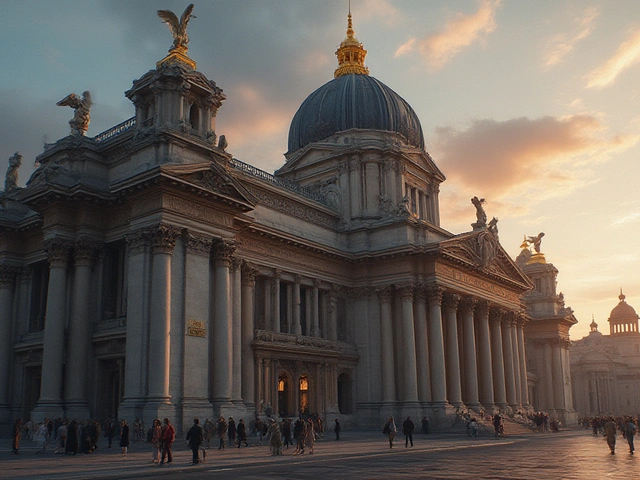
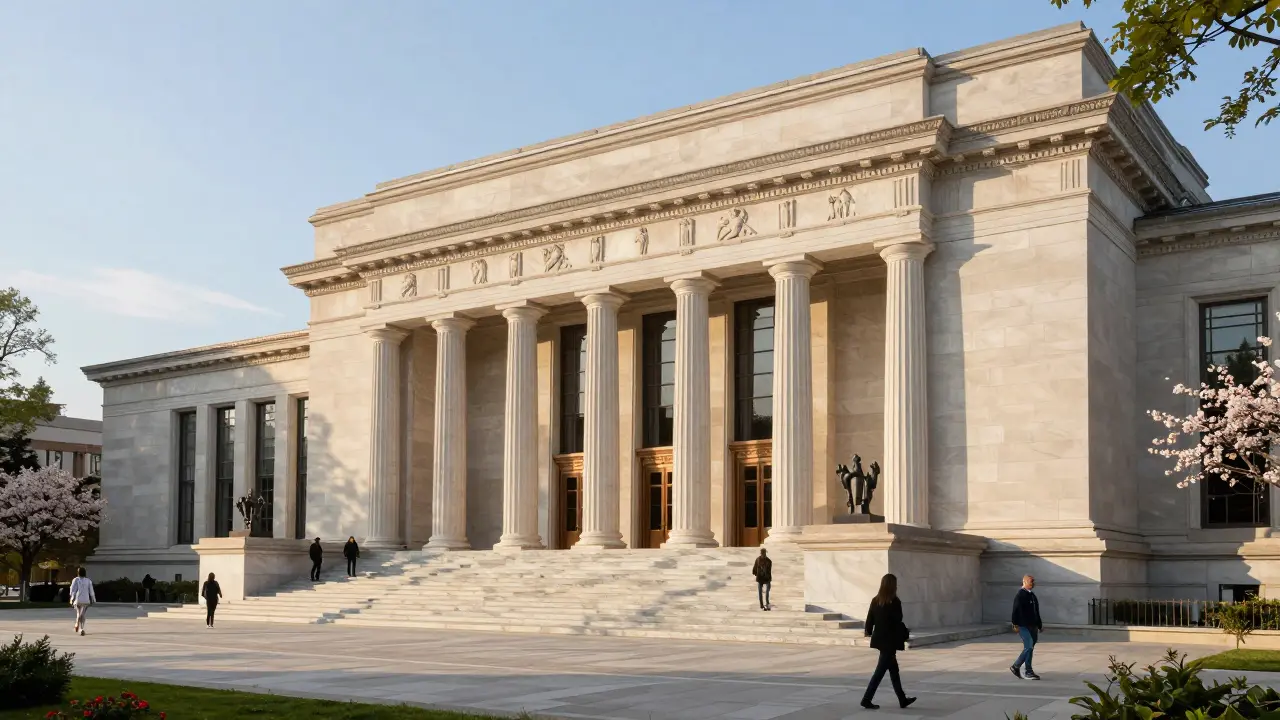
For decades, Beaux-Arts architecture was seen as a relic of the Gilded Age - ornate, over-the-top, and out of step with the clean lines of modernism. But something unexpected is happening. Across North America, Europe, and even parts of Asia, new buildings are rising with sweeping staircases, sculpted pediments, and marble columns that look straight out of 1905. This isn’t nostalgia. It’s a deliberate return to a style that once defined civic pride - and today, it’s being rebuilt for a new kind of grandeur.
What Exactly Is Beaux-Arts Architecture?
Beaux-Arts architecture comes from the École des Beaux-Arts in Paris, where architects were trained in the late 1800s to blend classical forms with Renaissance symmetry and Baroque drama. It wasn’t just about copying ancient Greece or Rome. It was about combining them with modern engineering and a sense of theatrical scale. Think of the Grand Palais in Paris, the New York Public Library, or the Boston Public Library. These buildings didn’t just house functions - they announced importance.
The style had clear rules: axial planning, monumental entrances, rich materials like limestone and bronze, and sculptural decoration that told stories. Windows weren’t just openings - they were framed by columns. Balustrades weren’t railings - they were rhythmic bands of stone. Even the stairs were designed to be seen, not just climbed. This wasn’t decoration for decoration’s sake. It was architecture as public theater.
Why Did It Disappear?
After World War II, modernism took over. Architects like Le Corbusier and Mies van der Rohe pushed for efficiency, steel frames, and glass boxes. Beaux-Arts was labeled wasteful, elitist, and outdated. Governments stopped funding grand civic buildings. The cost of hand-carved stone, gilded moldings, and bronze fixtures became unthinkable in an age of prefab concrete and cost-cutting. By the 1970s, even restoring a Beaux-Arts building felt like a luxury.
But here’s the twist: the very things people rejected - the craftsmanship, the permanence, the human scale - are now what we’re missing. Modernist buildings, especially from the 1960s and 70s, are aging poorly. Many have cracked concrete, leaking roofs, and cold, unwelcoming interiors. People are starting to ask: Why did we abandon buildings that felt like they were made to last a century?
The New Wave: Where Beaux-Arts Is Coming Back
In 2023, the Smithsonian’s National Museum of American History in Washington, D.C., completed a major renovation that added a new Beaux-Arts-inspired entrance pavilion. It didn’t copy the original 1964 building. Instead, it echoed the proportions, materials, and dignity of early 20th-century civic design. The result? A space that feels both timeless and welcoming.
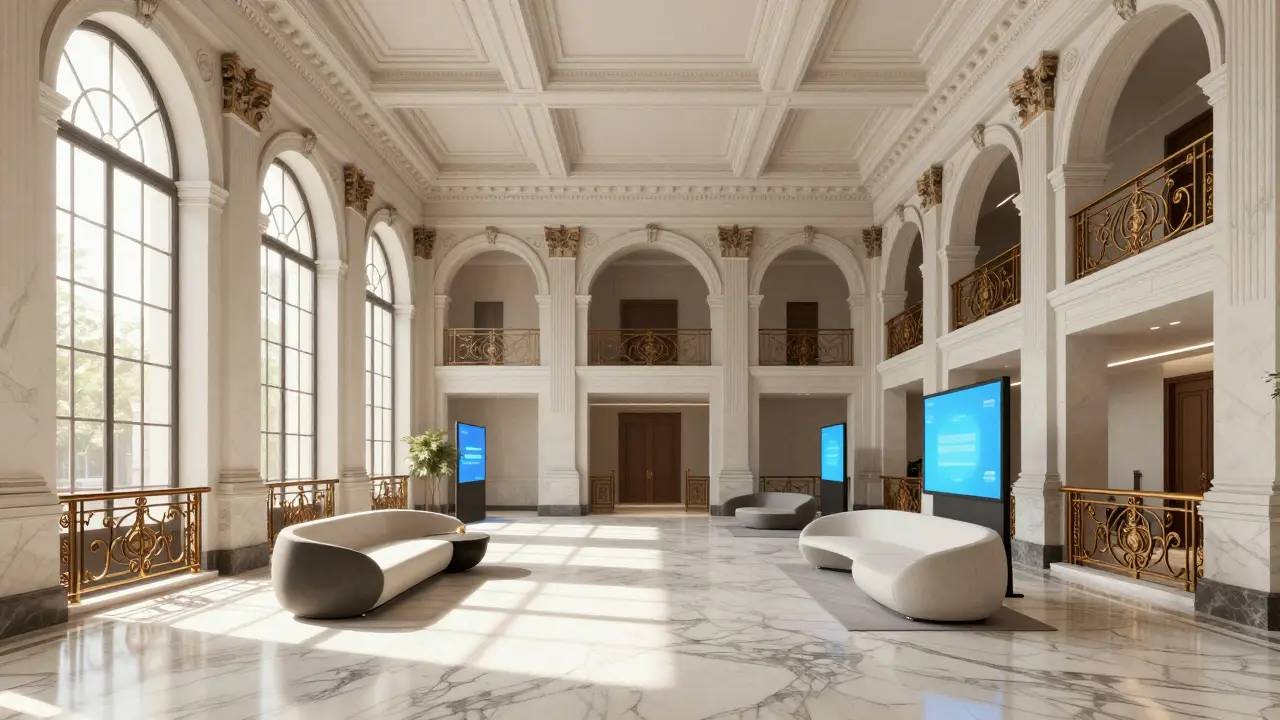
Across the border in Canada, the new Toronto Public Library’s central branch - opened in 2024 - uses a modern steel frame but wraps it in limestone, arched windows, and a grand central staircase that recalls the Parisian tradition. Even tech companies are taking notice. Salesforce’s new headquarters in San Francisco, completed in 2022, includes a soaring atrium with marble floors, bronze railings, and coffered ceilings - all hallmarks of Beaux-Arts.
It’s not just in big cities. Smaller universities are building new student centers with classical facades. Luxury hotels in London and New York are adding porticos and balustrades to their expansions. Even private homes in places like Palm Beach and Montreal are opting for symmetrical layouts, columned porches, and carved stone details. This isn’t about copying the past. It’s about borrowing its confidence.
Why Now? The Cultural Shift
The revival isn’t random. It’s tied to a broader cultural fatigue. After years of minimalist interiors, glass towers, and soulless corporate campuses, people are craving buildings that feel rooted. There’s a growing appreciation for craftsmanship - not just in furniture or fashion, but in architecture. People want to touch stone, walk on marble, and feel the weight of history in the spaces they occupy.
There’s also a quiet rebellion against the homogenization of cities. When every new office building looks like a mirrored box, Beaux-Arts stands out - not as a gimmick, but as a statement. It says: This place matters. This building was meant to be remembered.
And let’s not forget sustainability. A Beaux-Arts building from 1910 is still standing - often with its original structure intact. Modernist buildings from the 1980s are already being torn down. Reusing and restoring classical buildings is inherently green. The new wave of Beaux-Arts isn’t just about looks - it’s about longevity.
How Modern Designers Are Adapting the Style
Today’s architects aren’t slapping columns onto glass towers. They’re rethinking the principles: symmetry, hierarchy, material richness, and human-centered scale. A new courthouse in Atlanta doesn’t have a dome - but it has a central axis that leads visitors from the plaza to the courtroom, with natural light filtered through high windows. A library in Portland uses limestone cladding and arched entryways, but the interior is open-plan and tech-ready.
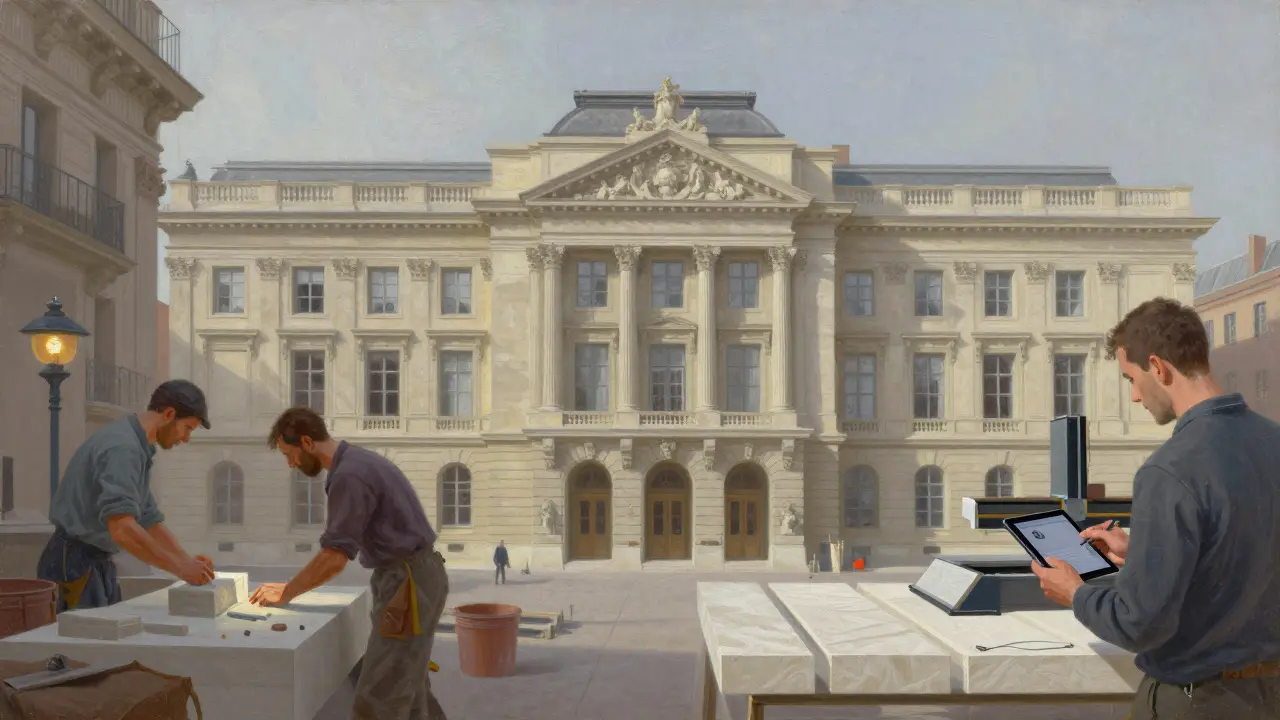
Materials have changed too. Instead of hand-carved stone, many use precast concrete with stone finishes. Bronze is replaced by powder-coated steel that mimics its patina. The ornamentation is often digital-milled - precise, repeatable, and cheaper. The spirit remains, but the tools are modern.
One of the most interesting examples is the new National Museum of African American History and Culture in Washington, D.C. While not pure Beaux-Arts, its three-tiered corona form draws from Yoruba sculpture and the ironwork of African-American artisans in the South. The building’s grand staircase, axial symmetry, and use of bronze and cast iron echo Beaux-Arts traditions - but reinterpreted through a cultural lens. It proves the style isn’t frozen in time. It can evolve.
What’s Missing in the Revival?
Not every new building that uses columns is Beaux-Arts. Too many developers slap on a few decorative elements and call it classical. True Beaux-Arts is about composition - how every part relates to the whole. A single column on a flat facade isn’t architecture. It’s a prop.
Another issue: cost. Even with modern materials, a well-executed Beaux-Arts building can cost 30-50% more than a standard modern structure. That’s why most revivals are happening in public or institutional projects - places where the long-term value justifies the upfront investment.
There’s also a risk of romanticizing the past. Original Beaux-Arts buildings were often built with wealth extracted from colonialism and labor exploitation. Today’s revival must confront that history. The new wave isn’t about repeating the past - it’s about building a more inclusive version of grandeur.
The Future of Grandeur
Beaux-Arts architecture isn’t returning because we want to live in the 1900s. It’s returning because we’ve learned that beauty, dignity, and permanence aren’t outdated. They’re essential. The buildings we build today will outlast our smartphones, our apps, and even our politics. We need them to speak to future generations - not just function for us.
The revival isn’t about copying moldings. It’s about remembering that architecture can be more than efficient. It can be meaningful. It can be a gift to the city. And that’s something no glass box can offer.
| Feature | Traditional (1880-1920) | Modern Revival (2020s) |
|---|---|---|
| Primary Material | Hand-cut limestone, marble, bronze | Precast concrete with stone finish, powder-coated steel |
| Ornamentation | Hand-sculpted reliefs, carved capitals | Digital milling, CNC-cut details |
| Structural System | Masonry load-bearing walls | Steel or concrete frame with cladding |
| Scale | Monumental civic buildings | Hybrid: civic, cultural, luxury residential |
| Interior Layout | Formal, compartmentalized rooms | Open-plan with classical proportions |
| Cost per sq. ft. | $300-$500 (1910 equivalent) | $250-$400 (adjusted for inflation) |
Why This Matters Beyond Aesthetics
Architecture shapes how we feel. A Beaux-Arts building doesn’t just house a library - it makes you feel like knowledge is sacred. A train station with vaulted ceilings and marble floors doesn’t just get you from A to B - it makes you feel like your journey matters.
Studies in environmental psychology show that people feel calmer, more focused, and more connected in spaces with natural materials, symmetry, and human-scale details. That’s not coincidence. It’s design. Beaux-Arts, at its core, was designed for human experience - not just efficiency.
As cities grow denser and more chaotic, we need places that offer stillness. Places that remind us of continuity. That’s why the revival isn’t a trend. It’s a correction.
Is Beaux-Arts architecture expensive to build today?
Yes, but not as much as you might think. Traditional Beaux-Arts buildings from the early 1900s used hand-carved stone and bronze, which made them extremely costly. Today, modern techniques like precast concrete with stone finishes and digitally milled details reduce labor costs by up to 40%. While still pricier than standard modern construction, the long-term durability and lower maintenance make it cost-effective over 50+ years.
Can Beaux-Arts be used in small buildings or homes?
Absolutely. While the style was originally for civic buildings, modern adaptations work well for luxury homes, boutique hotels, and university buildings. A symmetrical facade, a columned porch, or even a grand staircase inside a townhouse can carry the spirit of Beaux-Arts without the full scale. The key is proportion - not size.
Is Beaux-Arts architecture sustainable?
Yes - in a way modern buildings often aren’t. Beaux-Arts structures were built to last 100+ years with minimal maintenance. Many from the 1890s are still in use today. In contrast, many 1970s modernist buildings are being demolished due to poor materials and design flaws. Restoring and reusing a Beaux-Arts building is one of the most sustainable choices in architecture.
Does Beaux-Arts architecture feel outdated in modern interiors?
Not if it’s done right. The best modern Beaux-Arts buildings combine classical exteriors with open, light-filled interiors. Think marble floors and bronze railings paired with minimalist furniture and smart lighting. The architecture provides structure and dignity; the interior provides comfort and function. They don’t clash - they complement.
Are there any famous examples of Beaux-Arts revival in Australia?
Australia hasn’t seen large-scale Beaux-Arts revival yet, but there are hints. The redevelopment of Melbourne’s State Library Victoria’s main reading room in 2021 added new bronze details and restored classical ceiling moldings. A new law school building at the University of Sydney, completed in 2023, uses a symmetrical facade with limestone cladding and arched windows - a clear nod to Beaux-Arts principles, though simplified. The trend is just beginning here.
What Comes Next?
The revival isn’t about turning back the clock. It’s about asking: What did we lose when we stopped building for beauty and permanence? The answer isn’t to rebuild the past. It’s to build better - with the same care, the same attention to detail, and the same belief that public spaces should uplift us.
Beaux-Arts architecture didn’t die. It was sleeping. And now, it’s waking up - not as a museum piece, but as a living language. One that still has something powerful to say.