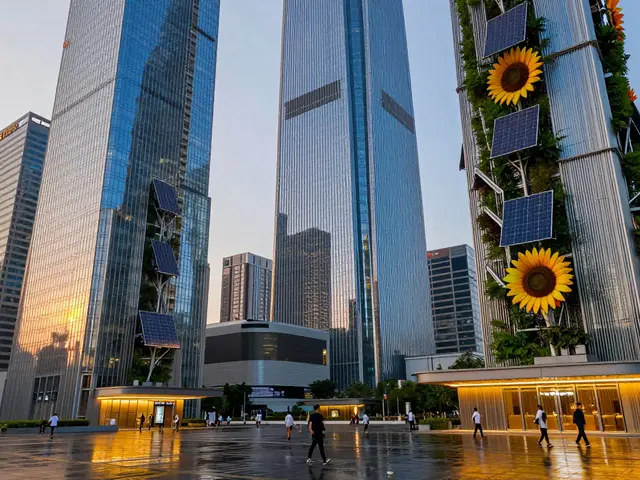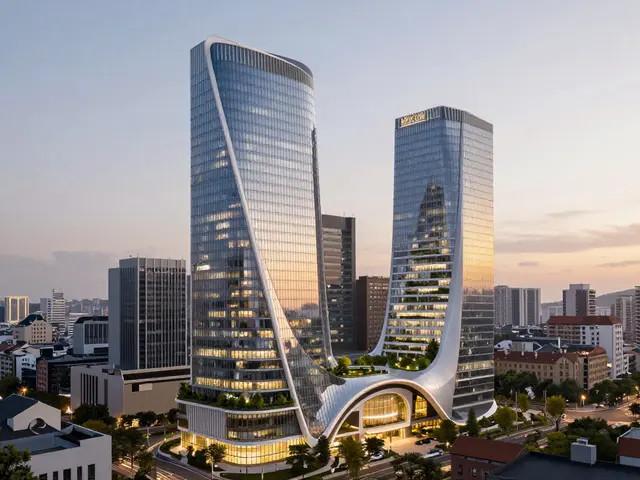
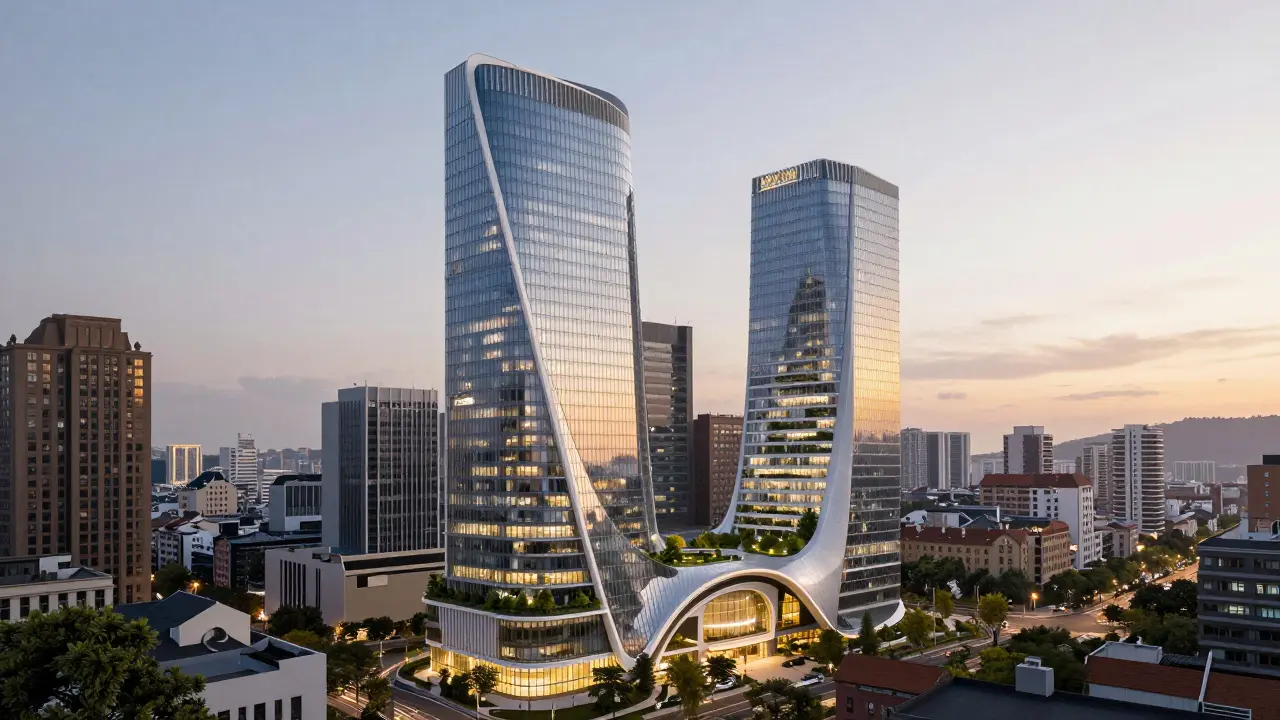
Imagine a building that looks like it was plucked straight from a sci-fi movie. It curves organically, glows with smart glass, and seems to breathe with the environment around it. This isn’t just a fantasy anymore. Neo-futurism is an architectural and artistic movement that blends high-tech innovation with organic forms to create structures that look like they belong in the future. It’s not just about making things look cool; it’s about solving real problems-energy efficiency, urban density, and human well-being-through radical design.
If you’ve ever walked past a twisting skyscraper or a stadium that resembles a giant flower, you’ve seen neo-futurism in action. But what exactly makes this style different from traditional modernism? And why are more cities adopting these bold designs today?
What Is Neo-Futurism Architecture?
To understand where we are, we need to look back briefly. The original futurist movement of the early 20th century celebrated speed, technology, and industrial power. Think sharp angles, steel, and aggressive lines. Neo-futurism, however, emerged much later, gaining traction in the late 1980s and 1990s. It keeps the love for technology but ditches the cold, rigid aesthetic. Instead, it embraces fluidity, sustainability, and biomimicry (design inspired by nature).
The key difference lies in the approach. Old futurism said, "We will conquer nature." Neo-futurism says, "We will work with nature using advanced tools." Architects use computer-aided design (CAD) and parametric modeling to create shapes that would have been impossible to build even thirty years ago. These structures often feature sweeping curves, transparent materials, and integrated green spaces.
It’s also deeply connected to the concept of the "smart city." A neo-futuristic building doesn’t just stand there; it interacts. Sensors adjust lighting based on sunlight levels. Facades change opacity to control heat. The building becomes a living machine rather than a static shell.
Core Principles of Neo-Futuristic Design
Not every curvy building is neo-futuristic. To truly fit the label, a design usually incorporates several core principles. Here is what defines the movement:
- Biomimicry: Taking cues from natural forms. For example, the Eastgate Centre in Zimbabwe mimics termite mounds to regulate temperature without air conditioning.
- Parametricism: Using algorithms to generate complex geometries. This allows for seamless transitions between structural elements and aesthetic features.
- Sustainability Integration: Green roofs, solar skins, and rainwater harvesting aren’t add-ons; they are central to the form. The shape of the building often dictates how it captures energy.
- Transparency and Light: Extensive use of glass and light-transmitting concrete creates a sense of openness and connection to the outside world.
- Fluidity: Rejecting right angles in favor of continuous, flowing lines that guide movement and sightlines naturally.
These principles ensure that the architecture serves a purpose beyond visual impact. The goal is to create environments that enhance human experience while minimizing environmental footprint.
Iconic Examples of Neo-Futurism Around the World
You don’t have to look far to see examples of this style transforming skylines. Let’s look at a few standout projects that define the genre.
| Building | Location | Architect | Key Feature |
|---|---|---|---|
| Heydar Aliyev Center | Baku, Azerbaijan | Zaha Hadid | Seamless white curves resembling liquid stone |
| The Gherkin | London, UK | Norman Foster | Aerodynamic shape reduces wind load by 30% |
| Bird’s Nest Stadium | Beijing, China | Herzog & de Meuron | Exposed steel structure mimicking a woven nest |
| Al Bahar Towers | Abu Dhabi, UAE | Kennwood Smith | Dynamic shading system inspired by Islamic patterns |
Take the Heydar Aliyev Center in Baku. Designed by the late Zaha Hadid, it has no sharp corners. The roof flows directly into the walls, creating an interior space that feels infinite. This wasn’t just a stylistic choice; it allowed for flexible public spaces that can adapt to different events.
Then there’s the Al Bahar Towers in Abu Dhabi. Here, neo-futurism meets cultural heritage. The facade consists of thousands of small units that open and close automatically throughout the day, blocking the harsh sun. This reduces energy consumption for cooling by up to 50%. It proves that futuristic design can respect tradition while pushing technological boundaries.
Technology Driving the Movement
You can’t have neo-futurism without the tech behind it. The movement relies heavily on three key technological pillars:
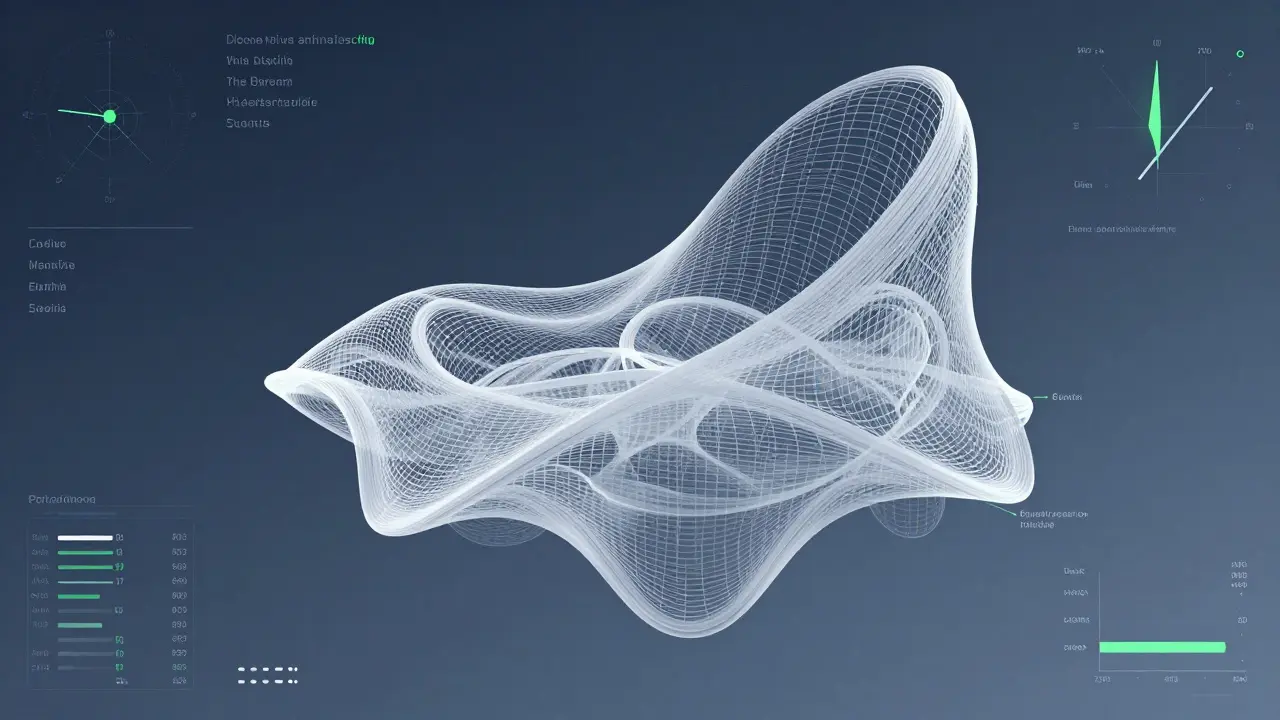
- Parametric Software: Tools like Rhino and Grasshopper allow architects to manipulate variables (like wind speed or sunlight angle) to generate optimal forms. The software does the heavy lifting of calculation, freeing designers to focus on creativity.
- Advanced Materials: Self-healing concrete, electrochromic glass (which tints itself), and carbon fiber composites enable thinner, stronger, and more responsive structures.
- Robotic Construction: 3D printing and robotic arms can fabricate complex components that human hands simply couldn’t assemble efficiently. This reduces waste and increases precision.
For instance, 3D-printed houses are becoming more common. They use less material, take fewer days to build, and can be customized to any shape. This democratizes access to unique, high-quality housing, moving away from the cookie-cutter suburban model.
Sustainability: More Than Just Greenwashing
Critics sometimes argue that futuristic buildings are energy hogs due to their complex shapes and reliance on electronics. However, true neo-futurism prioritizes net-zero goals. The logic is simple: if you design a building’s shape to optimize airflow and light capture, you reduce the need for mechanical systems.
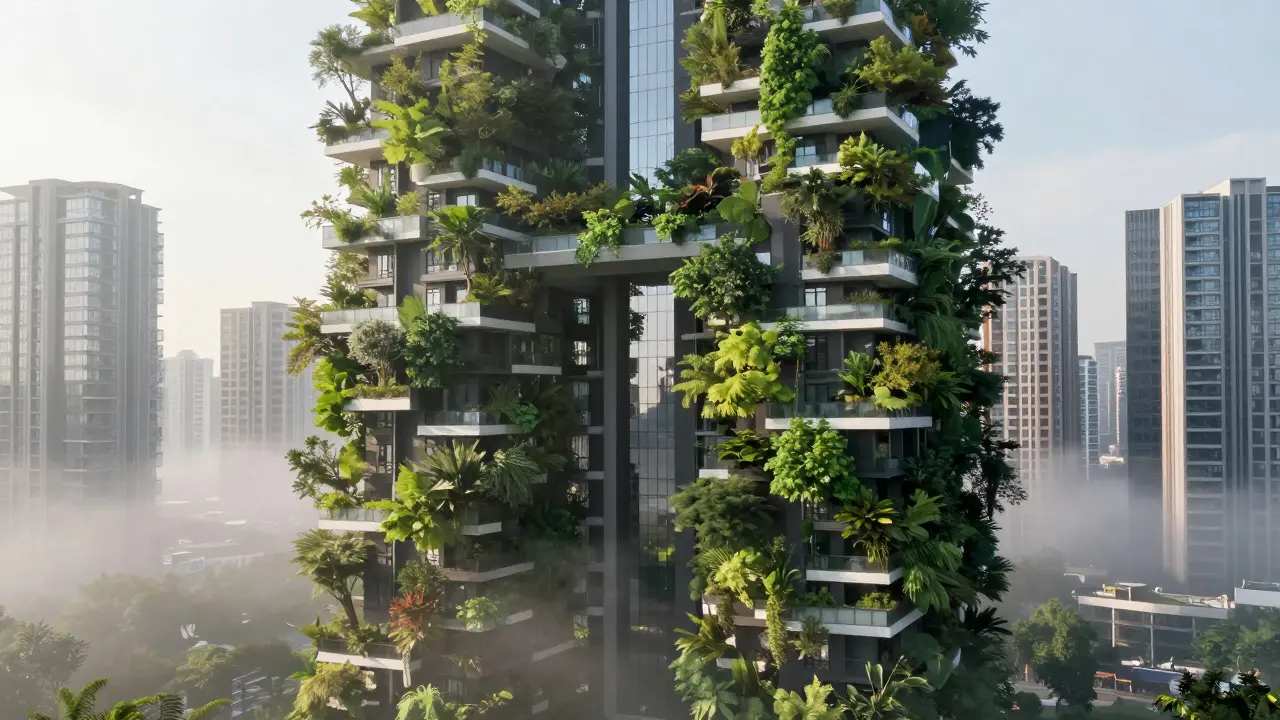
Consider vertical forests. Projects like Bosco Verticale in Milan integrate thousands of trees and shrubs into residential towers. These plants absorb CO2, produce oxygen, and provide natural insulation. The building acts as a lung for the city. This approach turns architecture into an active participant in climate mitigation, rather than a passive consumer of resources.
In Melbourne, where summers are hot and winters mild, neo-futuristic principles are being applied to passive house designs. Large overhangs calculated by parametric models block summer sun but let winter warmth in. Smart ventilation systems pre-cool air before it enters the home. The result is comfort without excessive energy use.
Challenges and Criticisms
Despite its benefits, neo-futurism faces hurdles. The biggest one? Cost. Parametric design and custom fabrication are expensive. This often limits these projects to wealthy clients or government-backed initiatives, raising questions about accessibility.
There’s also the issue of maintenance. Complex facades with moving parts require specialized care. If a sensor fails in a dynamic shading system, who fixes it? Traditional construction trades may not have the skills needed, leading to potential long-term issues.
Some critics also point out that the aesthetic can feel alienating. Not everyone wants to live in a spaceship-like environment. There is a risk that these designs prioritize spectacle over community needs, creating beautiful islands disconnected from the surrounding neighborhood.
However, proponents argue that as technology becomes cheaper and more widespread, these costs will drop. Open-source parametric tools are already making design more accessible. And as younger generations grow up with digital interfaces, they may find fluid, tech-integrated spaces more intuitive and welcoming.
The Future of Neo-Futurism
Where does this go from here? We’re seeing a shift towards "adaptive reuse" combined with neo-futuristic upgrades. Instead of tearing down old buildings, architects are adding smart skins and new structural layers to existing structures. This preserves history while injecting modern performance.
We’ll also see more integration of AI in the design process. Imagine an AI that analyzes your daily habits and suggests a floor plan optimized for your lifestyle, then prints it locally. Personalized, efficient, and uniquely yours.
As we move further into 2026 and beyond, neo-futurism won’t just be a style-it will be a necessity. With climate pressures and urban growth, we need buildings that are smarter, greener, and more resilient. Neo-futurism offers a blueprint for that reality.
Is neo-futurism only about aesthetics?
No. While visually striking, neo-futurism focuses heavily on functionality, sustainability, and user experience. The unusual shapes are often driven by performance criteria like wind resistance, solar gain, and structural efficiency.
How does neo-futurism differ from brutalism?
Brutalism uses raw concrete, heavy masses, and rigid geometric forms. Neo-futurism favors lightweight materials, smooth curves, and high-tech integration. Brutism feels solid and permanent; neo-futurism feels dynamic and responsive.
Can I incorporate neo-futuristic elements into my home?
Yes. You don’t need a curved skyscraper. Incorporate smart home technology, use energy-efficient windows, add green roofs, and choose open-plan layouts with fluid transitions between rooms. Even simple parametric-inspired furniture can bring the vibe indoors.
Who are the most famous neo-futurist architects?
Key figures include Zaha Hadid, Norman Foster, Santiago Calatrava, and Rem Koolhaas. Their works consistently push the boundaries of what is structurally and technologically possible.
Is neo-futurism expensive to maintain?
It can be, especially for buildings with complex mechanical facades or specialized materials. However, the energy savings from optimized design often offset some of these costs over time. Proper planning and local expertise are crucial for managing maintenance.