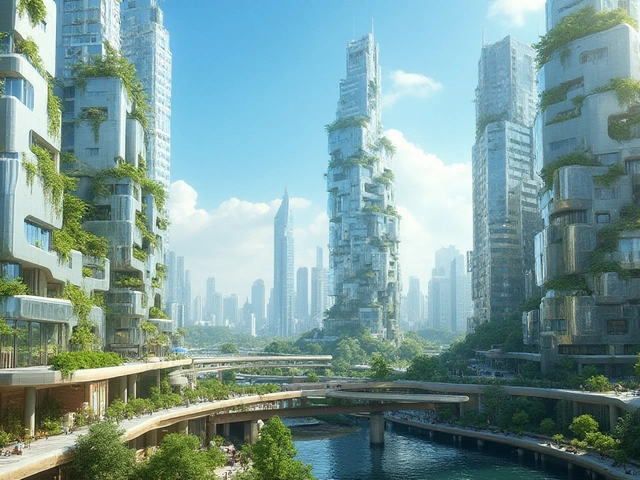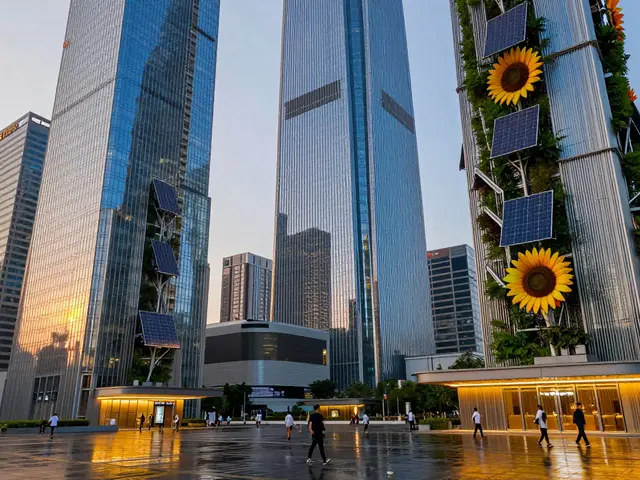
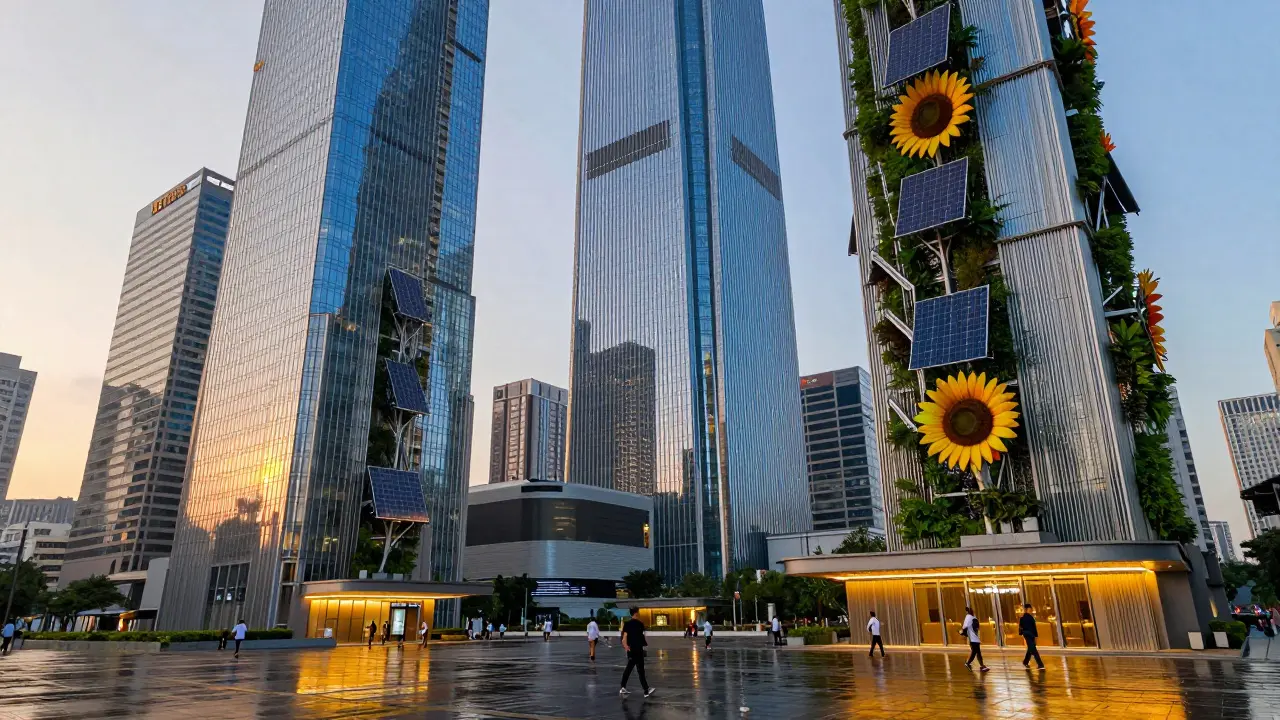
Walk through any major city today, and you’ll see buildings that don’t just stand there-they respond. Windows adjust their tint based on sunlight. Facades breathe with solar panels that shift angle like sunflowers. Elevators predict where people are going before they even press a button. This isn’t science fiction. It’s high-tech architecture, and it’s reshaping how cities work, live, and breathe.
What Exactly Is High-Tech Architecture?
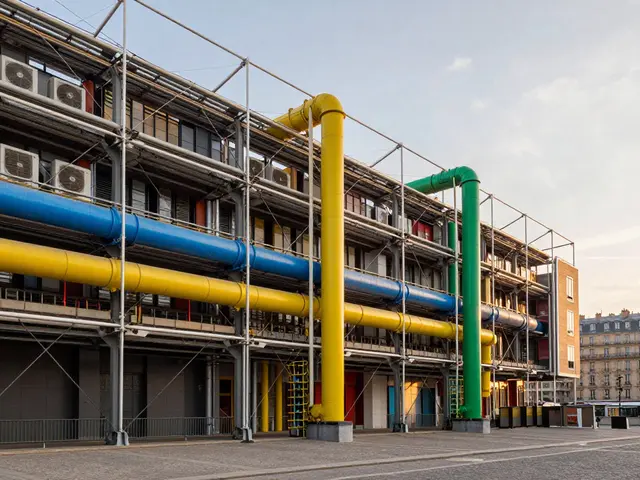
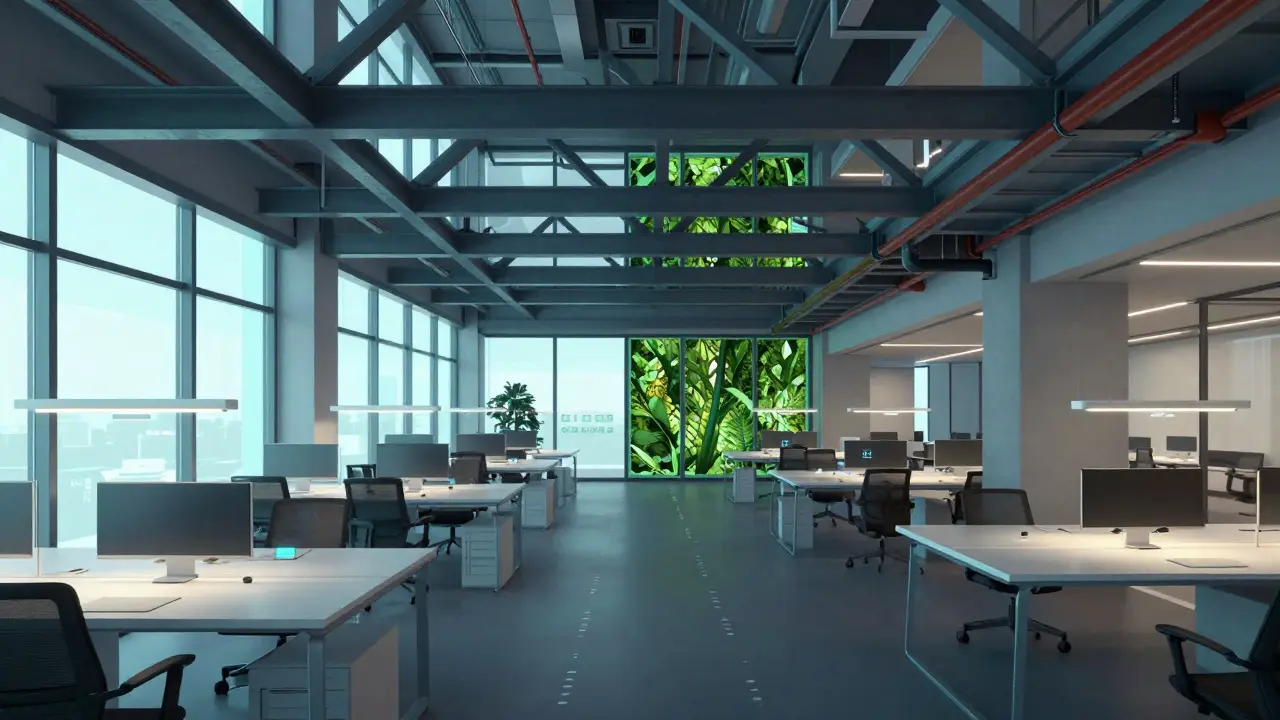
High-tech architecture isn’t just about using fancy gadgets. It’s a design philosophy that makes the building’s structure, systems, and services visible-almost like an exposed skeleton. Think of it as architecture that shows its work. Instead of hiding pipes and ducts behind walls, high-tech buildings put them on display, turning engineering into art.
This style took off in the 1970s with buildings like the Pompidou Center in Paris, where color-coded pipes and escalators run along the outside. But today’s version is smarter, leaner, and more integrated. Modern high-tech buildings use real-time data to optimize energy use, air quality, and even crowd flow. They’re not just made of steel and glass-they’re made of sensors, AI, and responsive materials.
Unlike traditional architecture that treats a building as a static object, high-tech architecture treats it like a living system. It adapts. It learns. It reacts.
How It’s Changing City Skylines
Urban centers are under pressure. Population growth, climate change, and aging infrastructure mean cities can’t afford inefficient buildings anymore. High-tech architecture offers a solution: buildings that use less energy, generate their own power, and reduce waste.
In Singapore, the Oasia Hotel Downtown doesn’t just have greenery on its balconies-it has a living facade that cools the building naturally. Its aluminum mesh skin supports over 20 types of plants, cutting air conditioning use by nearly 30%. In London, the Bloomberg European Headquarters uses a smart ventilation system that adjusts airflow based on occupancy sensors, reducing energy use by 40% compared to standard office towers.
These aren’t exceptions. They’re becoming the standard. Cities like Tokyo, Dubai, and Copenhagen are now requiring new commercial buildings to include real-time energy monitoring and adaptive envelopes. In Houston, the new Memorial Hermann Innovation Tower uses predictive algorithms to manage HVAC loads based on patient flow patterns and weather forecasts-cutting utility costs by 35% in its first year.
What’s changing isn’t just the materials. It’s the mindset. Developers no longer ask, “How do we build this?” They ask, “How does this building perform?”
The Tech Behind the Walls
High-tech architecture doesn’t rely on one innovation-it’s built on layers of them.
- Parametric design lets architects generate complex shapes using algorithms. Instead of drawing a curve by hand, they define rules-like wind patterns or sunlight angles-and let software generate the optimal form. The Heydar Aliyev Center in Baku is a famous example, its flowing curves shaped by computational modeling.
- Smart facades use electrochromic glass that darkens automatically in bright sun, reducing glare and heat gain. Some even generate electricity from embedded photovoltaic cells.
- Building Information Modeling (BIM) isn’t just a design tool anymore. It’s a live database that tracks every component-from the bolts in the steel frame to the firmware in the lighting controls-throughout the building’s life.
- AI-driven energy systems analyze usage patterns and weather forecasts to adjust heating, cooling, and lighting before anyone even notices a change. The Edge in Amsterdam, often called the smartest office building in the world, uses over 30,000 sensors to monitor everything from desk occupancy to coffee machine usage.
These technologies don’t just make buildings greener-they make them more human. Light levels adjust for circadian rhythms. Air quality sensors trigger purification when CO2 rises. Elevators learn your routine and arrive before you press the button.
Why It’s the Future of Urban Development
Urban development isn’t just about adding more buildings. It’s about making cities work better for people. High-tech architecture delivers on that.
Take congestion. In dense cities, traffic jams waste hours and burn fuel. But high-tech buildings can reduce the need to travel. The 1000 Museum in Miami includes rooftop gardens, co-working spaces, and medical clinics inside the tower-so residents can work, relax, and get care without leaving the building. That cuts car trips by up to 20% per household.
Resilience matters too. With extreme weather becoming more common, buildings need to adapt. The Bullitt Center in Seattle is designed to survive 100-year storms. Its foundation is raised, its roof collects and filters rainwater, and its solar array powers the entire building-even during outages.
And let’s not forget economics. Yes, high-tech buildings cost more upfront. But they save money over time. A 2025 study by the Urban Land Institute found that smart commercial buildings in North America had 22% lower operating costs and 18% higher tenant retention rates than conventional ones. That’s not just good for the planet-it’s good for the bottom line.
Who’s Building It-and Who’s Left Behind
This movement isn’t limited to corporate headquarters. Universities, hospitals, and even public libraries are adopting high-tech principles. The new Vancouver Public Library uses motion-sensitive lighting and automated climate zones that only heat occupied areas. In Houston, the Houston Public Library’s new Central Branch includes a digital twin-a live digital replica of the building that helps staff predict maintenance needs before they become problems.
But not everyone can afford it. Retrofitting old buildings with smart systems is expensive. Small towns and low-income neighborhoods still rely on 1980s-era HVAC systems. That’s the challenge: making high-tech architecture accessible, not just elite.
Some cities are stepping in. Chicago’s Smart Buildings Initiative offers grants to nonprofits and community centers for retrofitting with low-cost sensors and energy monitors. In Austin, modular high-tech pods are being tested for affordable housing-prefab units with solar roofs, air purification, and automated climate control that can be stacked and scaled.
The goal isn’t to replace all architecture. It’s to raise the bar. To show that even modest buildings can be smarter, cleaner, and more responsive.
What Comes Next?
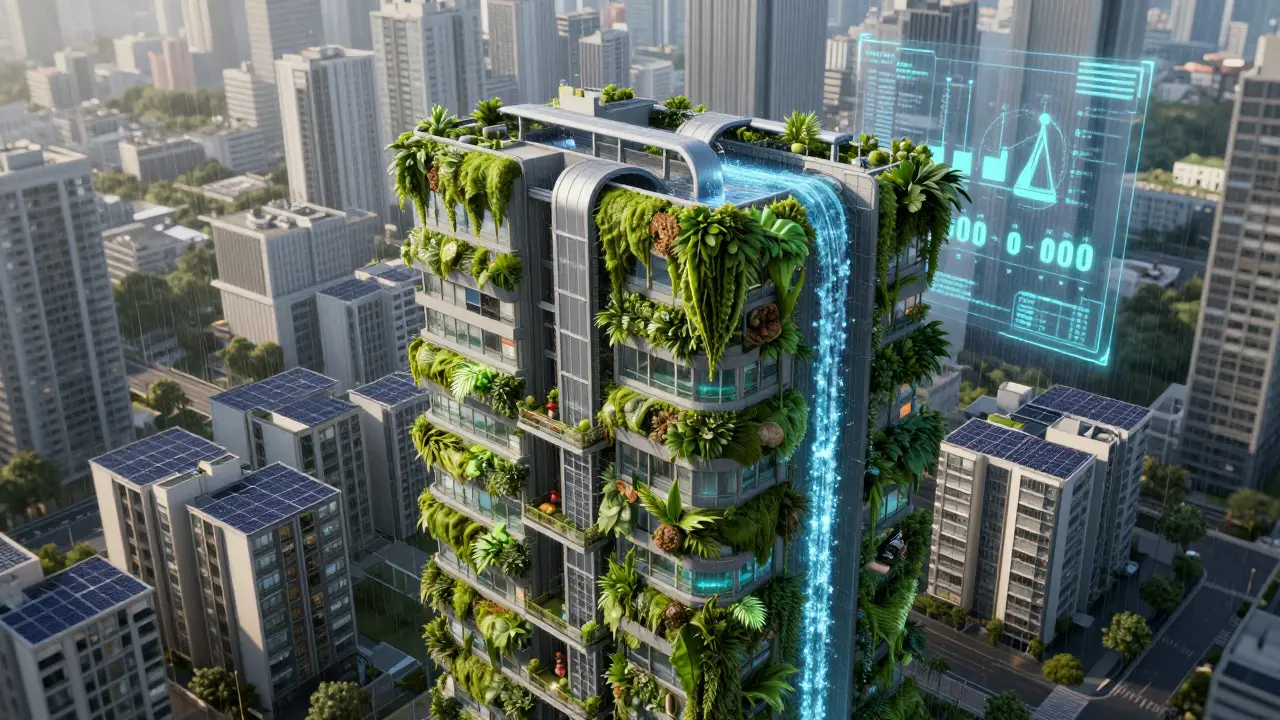
High-tech architecture is still evolving. The next frontier? Buildings that generate more energy than they use, purify the air around them, and even grow their own materials.
Researchers at MIT are testing self-healing concrete that uses bacteria to seal cracks. In Rotterdam, a prototype tower uses algae in its outer panels to absorb CO2 and produce biofuel. In Singapore, a new residential tower is being designed to harvest humidity from the air and turn it into drinking water.
These aren’t lab experiments anymore. They’re pilot projects. And they’re moving fast.
The biggest shift? We’re no longer just designing buildings for people. We’re designing them for the planet-and for the future. Buildings that don’t just house life, but support it.
Is High-Tech Architecture Right for Everyone?
It’s not a magic fix. High-tech buildings require skilled operators, regular software updates, and ongoing maintenance. A poorly managed smart building can become a liability-overheating because sensors glitch, or locking people out because the system crashes.
That’s why training matters. Cities are starting to require certification for building managers who operate smart systems. The International Society of High-Tech Building Operators now offers a credential for professionals who understand both the tech and the human side of these systems.
And while the tech is impressive, the best high-tech buildings still prioritize people. The most successful ones don’t feel like robots. They feel alive-quietly responsive, intuitively comfortable, and deeply connected to their surroundings.
High-tech architecture isn’t about showing off. It’s about serving. And that’s what makes it the next big thing.
What’s the difference between high-tech architecture and sustainable architecture?
Sustainable architecture focuses on reducing environmental impact-using recycled materials, passive cooling, and energy efficiency. High-tech architecture adds intelligence: sensors, automation, real-time data, and adaptive systems. A building can be sustainable without being high-tech (like a straw-bale house). But high-tech architecture almost always includes sustainability as a core goal. The best buildings today combine both.
Are high-tech buildings more expensive to maintain?
Initially, yes. Smart systems need software updates, sensor calibration, and trained staff. But over time, they cost less. A 2025 study of 120 commercial buildings found that high-tech buildings saved an average of $18 per square foot annually in energy and maintenance costs. The upfront cost pays back in 5-7 years for most mid-to-large buildings.
Can older buildings be upgraded to high-tech standards?
Absolutely. Retrofitting is one of the fastest-growing areas in this field. Adding smart thermostats, occupancy sensors, LED lighting with daylight harvesting, and energy monitoring systems can transform a 1970s office tower into a high-performing building. The key is starting small-focus on one system at a time, like lighting or HVAC, and scale from there.
Do high-tech buildings use more electricity because of all the tech?
No-the tech is designed to reduce overall usage. Sensors turn off lights in empty rooms. AI adjusts cooling based on weather forecasts. Smart glass blocks heat before it enters. The electricity used by the systems themselves is typically less than 5% of the building’s total consumption. In fact, most high-tech buildings are net-zero or net-positive in energy use.
What cities are leading in high-tech architecture right now?
Singapore, Copenhagen, Tokyo, and Amsterdam are at the front. Singapore leads in integrating green tech into dense urban fabric. Copenhagen focuses on carbon-neutral districts. Tokyo blends traditional design with cutting-edge robotics in buildings. Amsterdam’s The Edge is a global benchmark for smart offices. In the U.S., New York, San Francisco, and Houston are rapidly adopting high-tech standards, especially in healthcare and commercial sectors.
High-tech architecture isn’t coming. It’s already here. And the cities that embrace it won’t just look different-they’ll work better, live cleaner, and last longer.