Key Takeaways
- Focuses on organic, flowing lines inspired by plants and flowers.
- Aims for a "total work of art" where everything from the door handle to the roof is designed.
- Relied heavily on new industrial materials like iron and glass, used artistically.
- Peaked during the Belle Époque, bridging the gap between traditionalism and Modernism.
The Philosophy of the Living Line
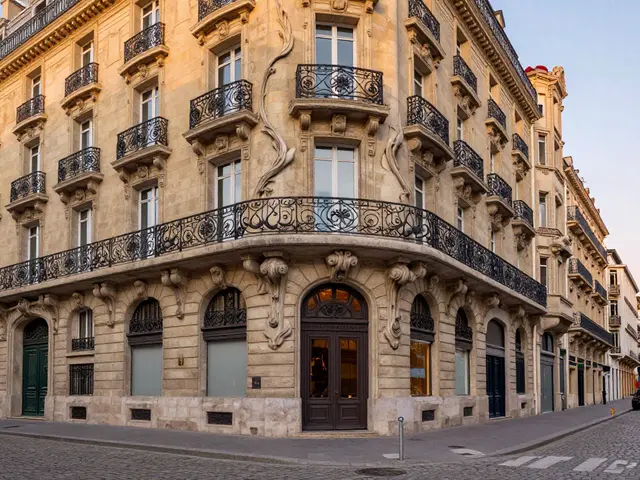
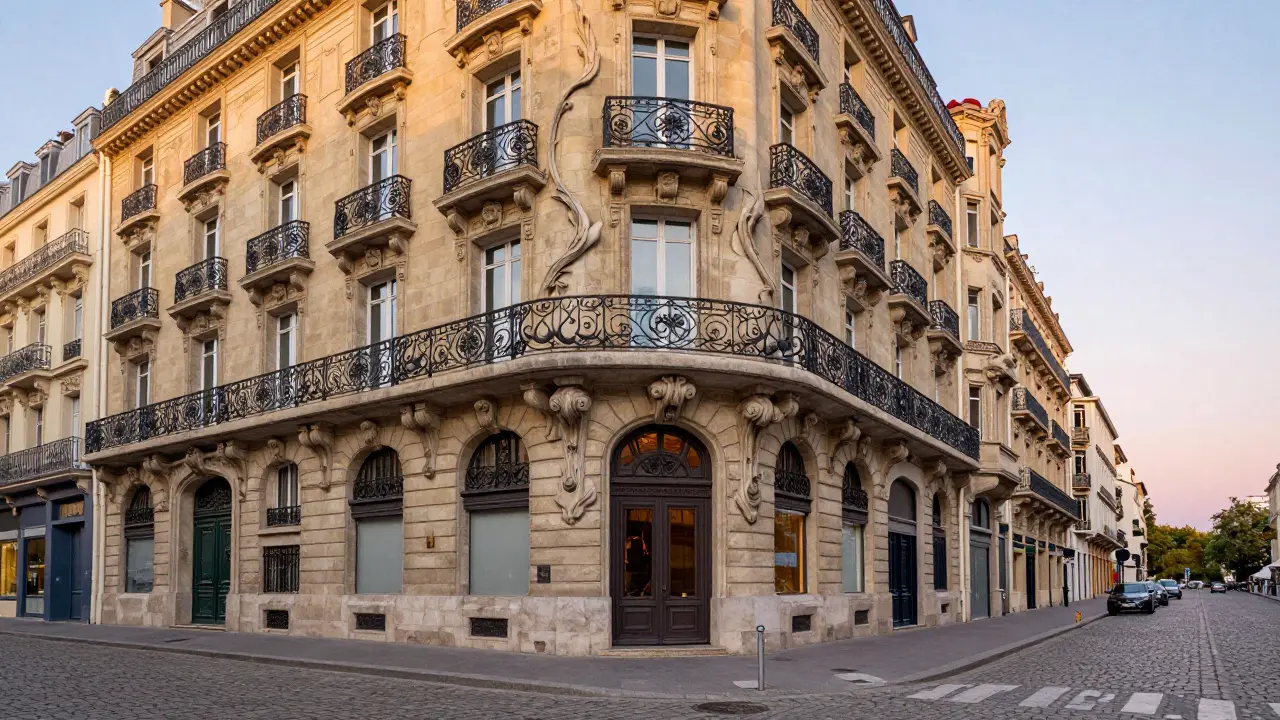
At its core, Art Nouveau was about breaking the rules. For centuries, architects relied on symmetry and the "correct" way to build based on historical periods. The creators of this new style asked: why should a building look like a stone box when a lily or a dragonfly is so much more interesting? They introduced the "whiplash curve," a dynamic, undulating line that looks like a snap of a whip. This wasn't just for show; it was an attempt to bring a sense of movement into static stone. By studying botany and biology, architects realized that nature doesn't work in right angles. A tree branch doesn't grow at 90 degrees, and neither should a balcony. This approach transformed cities into galleries, where the architecture itself became a sculpture.Mastering the Total Work of Art
One of the most fascinating parts of this movement is the concept of Gesamtkunstwerk is a German term meaning "total work of art," where the architect designs every single element of a building, including furniture, wallpaper, and lighting. If you stepped into an Art Nouveau home, you wouldn't just see a pretty room; you'd see a curated environment. For instance, if the walls featured a carved oak motif of ivy, the chairs would have legs that curved like stems, and the stained glass windows would cast leaf-shaped shadows across the floor. This created a seamless transition between the structure and the objects inside it. It turned the act of living into an immersive artistic experience, removing the boundary between "high art" like painting and "applied art" like carpentry.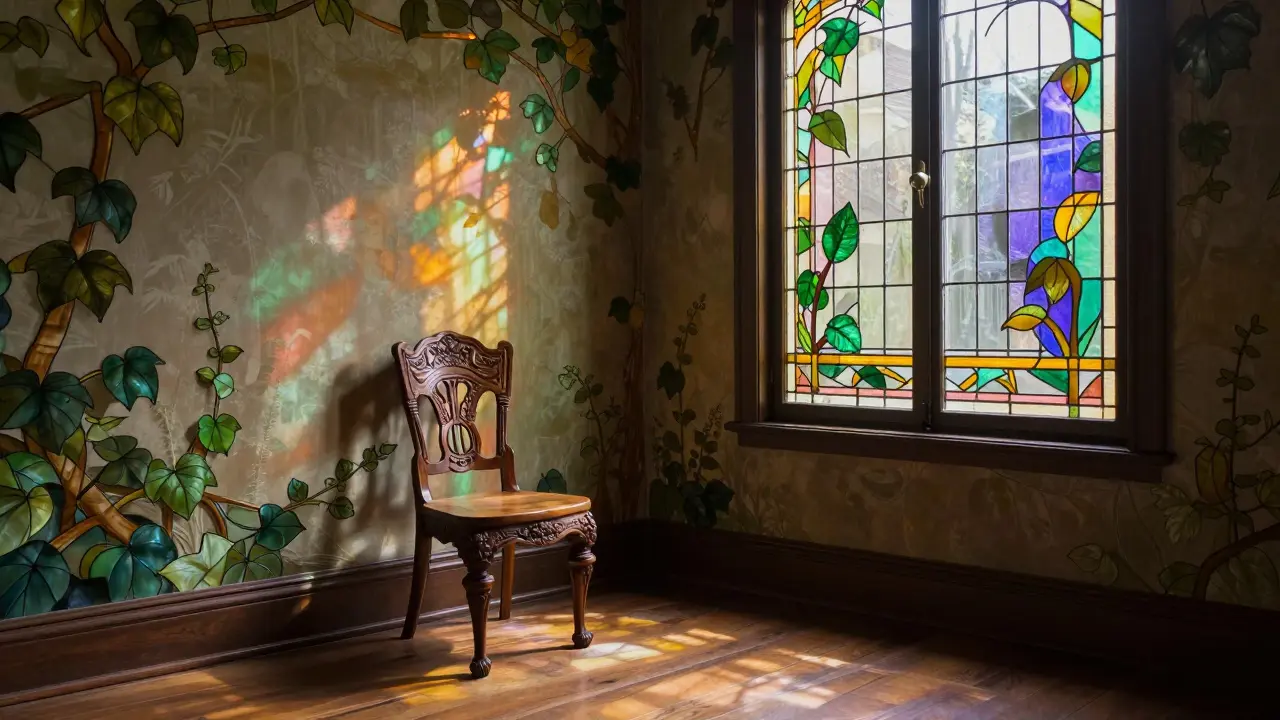
The Pioneers and Their Playgrounds
Different cities embraced this style in unique ways, creating distinct regional flavors. In Brussels, Victor Horta is a Belgian architect and a pioneer of Art Nouveau, famous for bringing iron structures into the interior of residential homes. His Hôtel Tassel is often cited as the first true Art Nouveau building. He didn't just hide the iron beams; he exposed them and turned them into elegant, swirling vines that held up the ceiling. Meanwhile, in Barcelona, the movement took a surreal turn with Antoni Gaudí is a Catalan architect known for his highly individualistic and organic style, most notably seen in the Sagrada Família. Gaudí took organicism to the extreme. He hated straight lines, famously saying they didn't exist in nature. His work, like Casa Batlló, looks less like a house and more like a skeletal organism or a colorful reef, utilizing a technique called trencadís-using broken ceramic shards to create shimmering, iridescent mosaics.| Architect | Primary Influence | Key Material | Defining Work |
|---|---|---|---|
| Victor Horta | Industrial iron & Botany | Wrought Iron | Hôtel Tassel |
| Antoni Gaudí | Nature & Catalan Gothic | Stone & Ceramic | Casa Milà |
| Hector Guimard | Plant-like structures | Cast Iron | Paris Metro Entrances |
Industrial Materials Meet Natural Forms
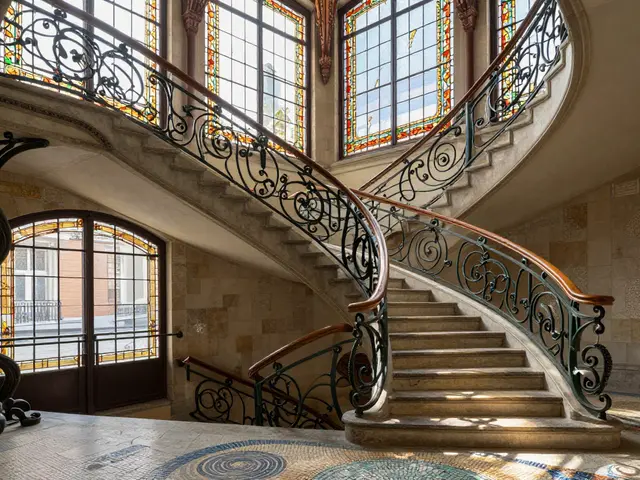
It might seem strange that a style so obsessed with nature relied so heavily on the Industrial Revolution. But that's exactly where the magic happened. The availability of Cast Iron is a mass-produced iron alloy that allowed architects to create complex, curved shapes that were previously impossible with stone. Iron allowed for thinner supports and larger expanses of glass. This is why you see so many stunning greenhouses and sunrooms from this era. Architects used iron to mimic the stems of plants, creating structures that felt light and airy rather than heavy and oppressive. The addition of Stained Glass is colored glass used to create decorative windows, often featuring floral or mythical themes in Art Nouveau design. meant that light was filtered through nature-inspired patterns, bathing interiors in a soft, ethereal glow. This marriage of factory-made materials and hand-crafted artistry is what gave the style its unique tension.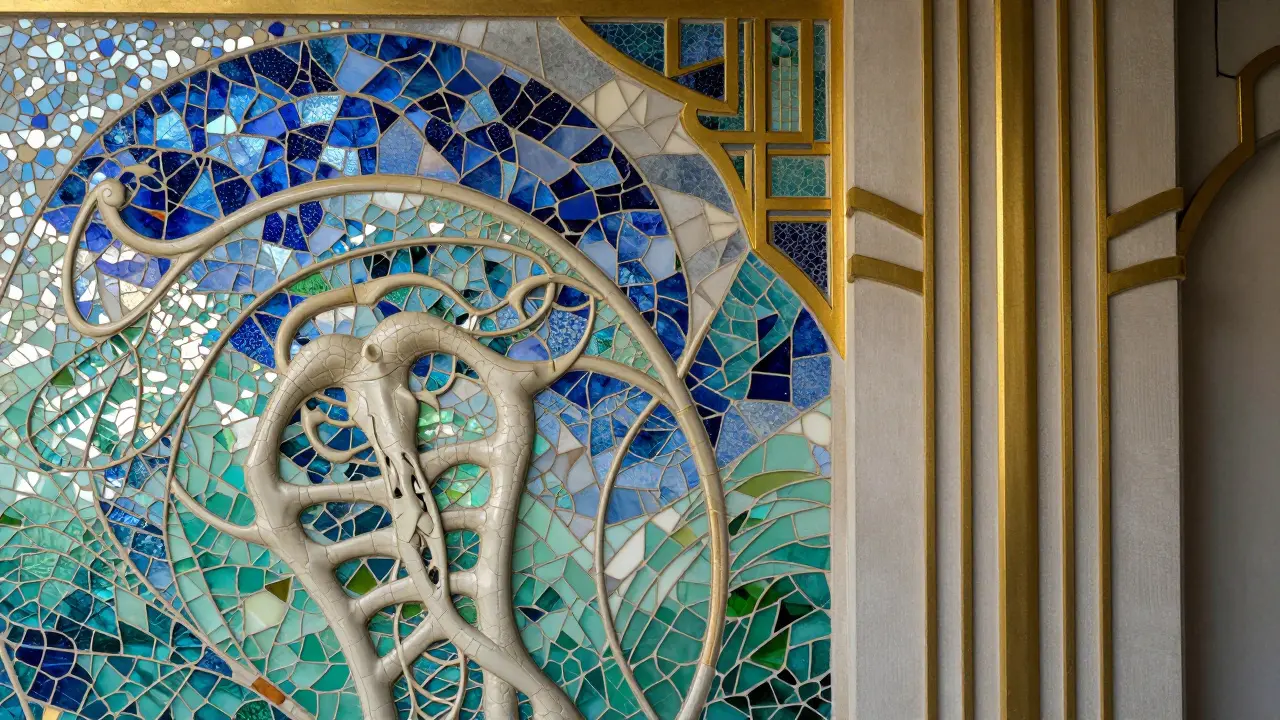
The Influence of the Belle Époque
To understand why this style happened, you have to look at the Belle Époque is the "Beautiful Era" in Europe, roughly between 1871 and 1914, characterized by optimism, peace, and cultural innovation. People were feeling optimistic about the future. There was a booming middle class with money to spend on beautiful things, and a general sense that the world was becoming more open and experimental. Art Nouveau captured this spirit. It was a style of pleasure and luxury. It showed up in the grand cafes of Vienna, the metro stations of Paris, and the townhouses of Brussels. It wasn't just for the elite, either; the style bled into advertising posters, jewelry, and furniture. It was an attempt to democratize beauty, making the everyday environment a source of inspiration rather than just a place of utility.Why the Style Faded (and How It Returned)
By the start of World War I, the party was over. The flowing, expensive curves of Art Nouveau started to feel impractical and overly decadent. The world was moving toward a new kind of efficiency. This led to the rise of Art Deco is a style of visual arts and architecture that emerged in the 1920s, favoring geometric shapes, symmetry, and streamlined forms. If Art Nouveau was a winding vine, Art Deco was a skyscraper-straight, sharp, and fast. However, the influence of the organic line never truly died. You can see its DNA in mid-century modern design and even in today's parametric architecture, where software allows architects like Zaha Hadid to create the same fluid, "impossible" shapes that Gaudí dreamed of using stone and clay. The obsession with integrating the building into its natural environment is a direct descendant of the Art Nouveau philosophy.What are the most common symbols used in Art Nouveau architecture?
The style relies heavily on botanical and zoological imagery. You'll frequently see lilies, iris flowers, poppies, and vines. Animals like peacocks, swans, and dragonflies are also common because of their elegant shapes and iridescent colors, which translated well into stained glass and mosaics.
How does Art Nouveau differ from Art Deco?
The easiest way to tell them apart is by the lines. Art Nouveau is all about organic, curving, asymmetrical lines (think of a growing plant). Art Deco is about geometry, symmetry, and straight lines (think of a machine or a skyscraper). Art Nouveau looks natural; Art Deco looks industrial.
Where can I see the best examples of Art Nouveau today?
Barcelona is the gold mine, especially with Gaudí's Sagrada Família and Casa Milà. Brussels is another hub, specifically the works of Victor Horta. Paris is famous for Hector Guimard's metro entrances, and Prague has some stunning hidden gems in its residential districts.
Was Art Nouveau expensive to build?
Yes, it was incredibly costly. Because it emphasized the "total work of art," most elements were custom-made by skilled craftsmen. You couldn't just buy "Art Nouveau windows" off a shelf; an artist had to design and blow the glass specifically for that building, which is why it was primarily adopted by the wealthy bourgeoisie.
Did Art Nouveau influence modern sustainable architecture?
Absolutely. The concept of biomimicry-designing buildings that mimic biological processes-starts with the organicism of Art Nouveau. Modern architects who use natural ventilation or shapes that optimize sunlight are essentially following the path Gaudí started by studying the efficiency of nature's shapes.
Next Steps for Exploration
If you've fallen in love with these flowing lines, here is how to dive deeper:- The City Walk: If you're visiting Europe, look for "Modernisme" in Spain or "Jugendstil" in Germany and Austria-these are the local versions of Art Nouveau.
- Interior Design: Look for "organic modernism" in current furniture trends; you'll see a lot of the same curved silhouettes and natural materials.
- Museum Visits: Search for the works of Alphonse Mucha; while he was a painter and poster artist, his visual language is the perfect companion to the architecture of the era.