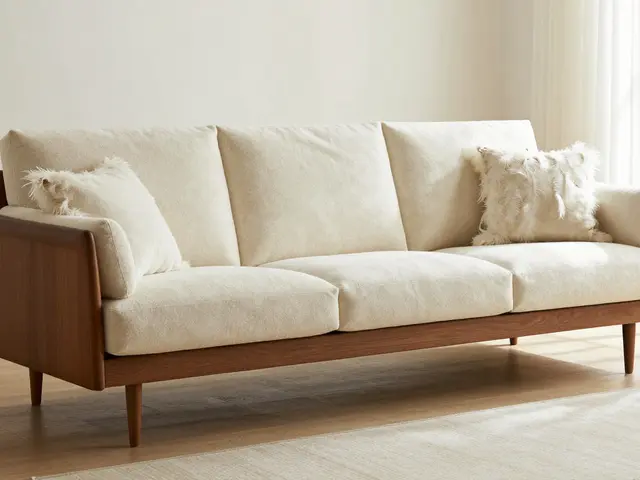
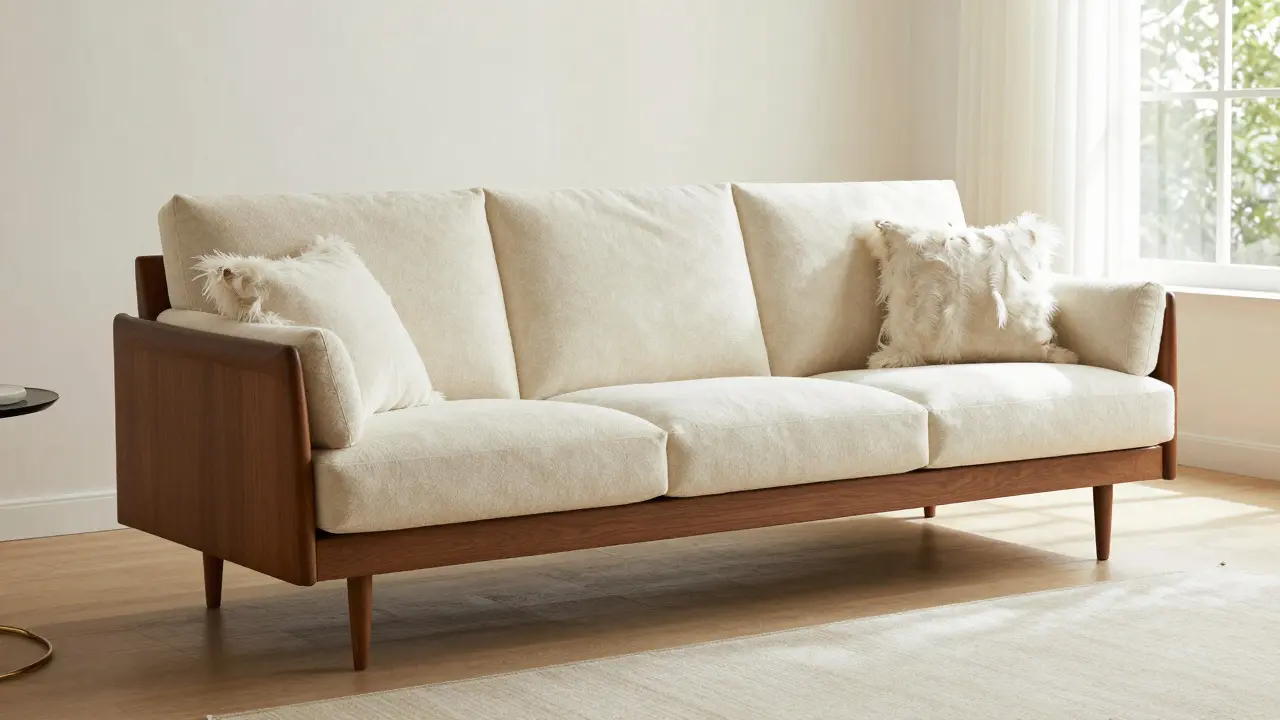
Choosing the right mid-century modern sofa isn’t just about picking something that looks good in a photo. It’s about finding a piece that fits your life-your space, your habits, and your sense of comfort. Too many people buy these sofas because they love the style, then regret it a month later when the cushions collapse, the legs wobble, or the fabric starts pilling. The truth is, not all mid-century modern sofas are created equal. Some are built to last decades. Others are cheap imitations dressed up with clean lines and tapered legs.
Understand What Makes a True Mid-Century Modern Sofa
Mid-century modern (MCM) design exploded between the 1940s and 1970s. It wasn’t just about looks-it was about function, materials, and honesty in construction. A real MCM sofa has three core traits: clean lines, low profile, and wooden legs that taper outward like a pencil. The frames are usually solid hardwood-think walnut, teak, or oak-not particleboard or plywood glued together. The cushions aren’t stuffed with foam that turns to mush after six months. They’re layered: high-density foam over springs, sometimes with feather blends for softness without sinking.
Look for pieces with visible joinery. No hidden screws or plastic brackets. The legs should be attached with dowels or mortise-and-tenon joints, not just glued. If you see a sofa labeled "mid-century inspired," that’s often code for "made in China with synthetic materials." Real MCM pieces were designed to last. Today’s best reproductions follow the same rules.
Measure Your Space Before You Fall in Love
Here’s where most people mess up. They see a gorgeous Eames-style sofa online, click "Buy," and then realize it won’t fit through their doorway. Or worse-it fills the whole living room, leaving no room to walk around. Start with measurements.
- Measure the width of your doorway and hallways. Most MCM sofas are low-slung, so they’re wider than they are tall, but the arms can be bulky.
- Measure the space where the sofa will sit. Leave at least 18 inches between the sofa and coffee table for easy movement.
- Check ceiling height if you’re considering a sectional. Some MCM sectionals have tall backrests that can feel overwhelming in rooms under 8 feet.
Standard MCM sofa sizes range from 66 to 84 inches wide. A three-seater typically fits in spaces 8 to 10 feet wide. If you have a smaller room, go for a loveseat (50-60 inches) or a compact two-seater. Don’t force a large sofa into a tight space-it’ll make the room feel cramped.
Test the Cushion Firmness (Don’t Just Trust the Photos)
One of the biggest mistakes? Choosing a sofa based on how it looks in a showroom or Instagram post. You need to sit on it. Not for five seconds. Sit for at least 10 minutes. Lean back. Cross your legs. Pretend you’re watching TV after a long day.
Good MCM cushions should give slightly under your weight but still offer support. If you sink in too far, the foam is too soft. If it feels like sitting on a plank, it’s too firm. The sweet spot? A cushion that cradles you without swallowing you whole.
Ask about the foam density. Look for at least 2.5 lb/ft³. Anything below 2.0 is going to flatten in under a year. Higher-end pieces use 3.0-3.5 lb/ft³ foam with a layer of down or polyester fiber for softness. Avoid sofas that say "memory foam" unless they’re clearly labeled as a modern update. Traditional MCM doesn’t use memory foam-it’s too slow to rebound.

Check the Frame and Legs
The legs are the first thing people notice. But they’re also the first thing that breaks if the frame isn’t solid.
- Wood legs should be solid, not hollow. Tap them lightly. A solid wood leg sounds like a thud. A hollow one sounds like a drum.
- Look at the angle. True MCM legs taper gently from top to bottom. If they’re straight or too thick, it’s likely a modern reinterpretation.
- Check how the legs attach. They should be screwed into a wooden apron or frame-not just glued to the bottom of the cushion base.
For the frame itself, ask if it’s made of hardwood. Walnut, teak, and beech were the originals. Avoid anything labeled "engineered wood" or "composite." Even if it’s stained to look like walnut, it won’t last. A solid frame should feel heavy. If you can lift it with one hand, it’s probably not built to endure.
Choose the Right Fabric
Original MCM sofas often used wool, cotton, or leather. Today, you’ve got more options-but not all are equal.
- Performance fabrics: These are your best bet for families or pet owners. Look for brands like Crypton, Sunbrella, or Revolution. They repel stains, resist fading, and clean easily.
- Wool blends: Authentic and durable. They breathe well and develop a nice patina over time. But they’re pricey and need occasional vacuuming.
- Cotton duck: Classic MCM look. Easy to clean, but fades in sunlight. Best for rooms with low light.
- Leather: True leather ages beautifully. Choose full-grain, not top-grain or bonded. It’s more expensive but lasts 20+ years. Avoid faux leather-it cracks after a few years and looks cheap.
Pro tip: Lighter colors show dirt faster. If you’re not meticulous about cleaning, go for charcoal, olive, or navy. They hide stains and match almost everything.
Know Where to Buy (and What to Avoid)
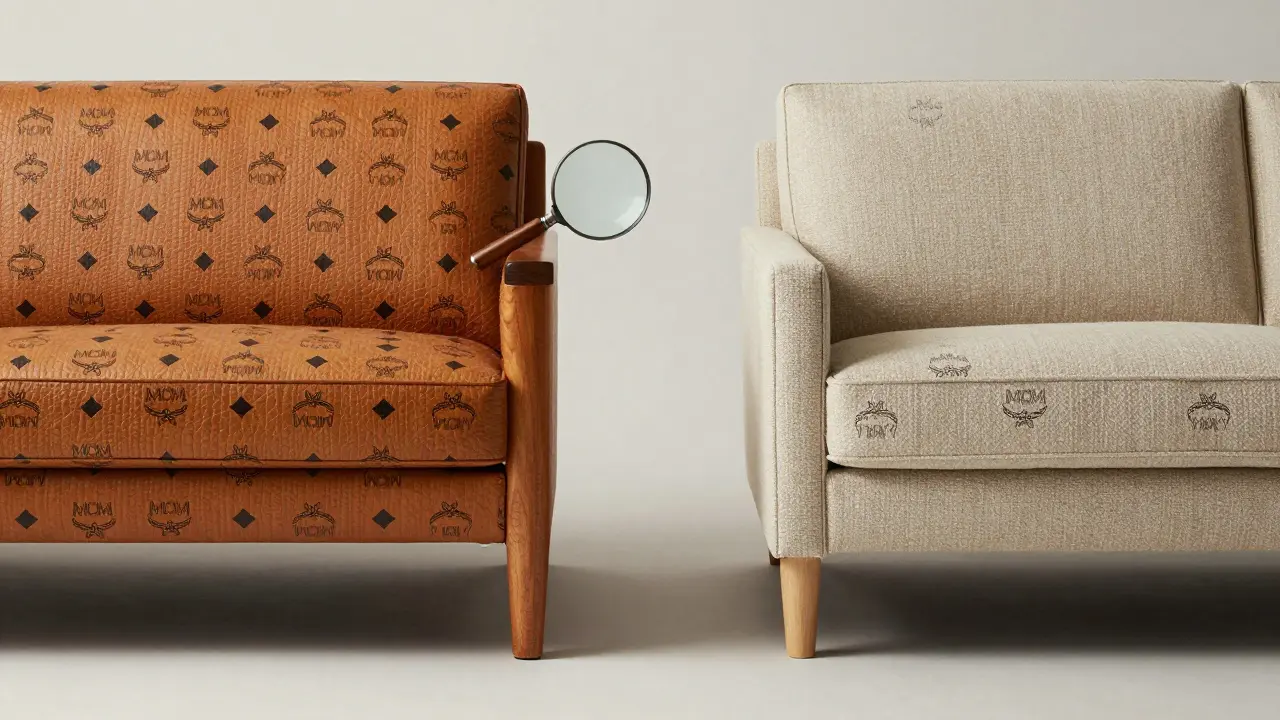
You’ve got three real options: vintage, reproduction, and modern MCM-inspired.
- Vintage: Hunt at estate sales, thrift stores, or online marketplaces like Chairish or 1stdibs. You’ll pay more, but you’re getting original craftsmanship. Look for pieces made between 1950-1975. Brands like Herman Miller, Knoll, and Eames are worth the investment.
- Reproduction: Companies like West Elm, Article, and Joybird make high-quality reproductions. They’re more affordable than vintage, use modern materials for comfort, and still follow MCM design rules. Check their specs: solid wood? High-density foam? Performance fabric?
- Modern MCM-inspired: Avoid big-box stores like IKEA or Target if you want real durability. Their "MCM" sofas are usually plastic legs, thin foam, and synthetic covers. They look good for a year, then look sad.
Always ask for material specs. Don’t settle for "premium fabric" or "solid wood finish." Demand details: "What type of wood? What foam density? What fabric brand?" If they can’t answer, walk away.
Think Long-Term
A mid-century modern sofa isn’t a purchase you replace every five years. It’s meant to be passed down. That’s why the best ones cost more upfront. But they save you money over time. A $1,200 sofa that lasts 20 years costs $60 a year. A $500 sofa that falls apart in 3 years? That’s $166 a year.
Consider repairability. Can the cushions be reupholstered? Are the legs replaceable? A good MCM sofa should be serviceable. If the frame is solid, you can swap out the fabric later. That’s the real beauty of the style-it’s timeless because it’s built to adapt.
Don’t rush. Spend time looking. Sit on multiple options. Compare specs. Read reviews from people who’ve owned the sofa for a year. The right one will feel like it was made for your home-not just your timeline.