You’ve probably walked past one without noticing. That house down the street with the wide, curved roof often signals something specific about its history. It’s not just any old home; it carries the weight of the Dutch Colonial Revival Architecture style, which has quietly made a massive comeback in recent years. People are gravitating toward designs that feel timeless yet practical, and this particular style hits both notes perfectly.
The fascination isn’t new, but the context has shifted. In the early 20th century, Americans looked back at their history to find identity. Now, in 2026, we are looking back for comfort and durability. Understanding why this style persists requires more than just spotting a roof shape. It involves tracing the lineage from the original settlers to the modern homeowner trying to balance heritage with modern living needs.
Tracing the Roots: From New Netherland to Suburbia
To understand the revival, you have to look at where it started. The origins go back to the mid-1600s when the Dutch established settlements along the Hudson River Valley. They brought building traditions from the Netherlands that adapted quickly to the harsh North American climate. These early structures were distinct from the British colonial buildings found further south or east.
The primary innovation was the Gambrel Roofa roof type with two slopes on each side, designed to increase attic space. Unlike a standard gable roof, this design allowed for a much larger second floor without requiring a steep pitch that could collapse under heavy snow loads. It was a practical solution that eventually became an aesthetic statement. Over time, these vernacular structures evolved, blending European techniques with local timber availability.
By the late 1800s, interest waned as Victorian styles took over. However, the early 1900s sparked a patriotic desire to reconnect with America’s founding eras. Architects began mixing the original Dutch forms with Georgian symmetry. This hybrid became known as Dutch Colonial Revival. It wasn’t strictly historically accurate; it was a romanticized version of the past, tailored for middle-class homeowners who wanted charm without the rustic limitations of actual farmhouses.
Defining Characteristics You Can Spot
If you want to identify a genuine example versus a modern imitation, focus on the core architectural elements. While variations exist, certain features remain non-negotiable for authenticity. The most obvious marker remains the roof profile, but other details tell the full story.
- The Gambrel Roof: This is the headline feature. The lower slope is steeper, while the upper slope is shallower, creating extra headroom inside. It looks distinctively like a barn roof but refined for residential use.
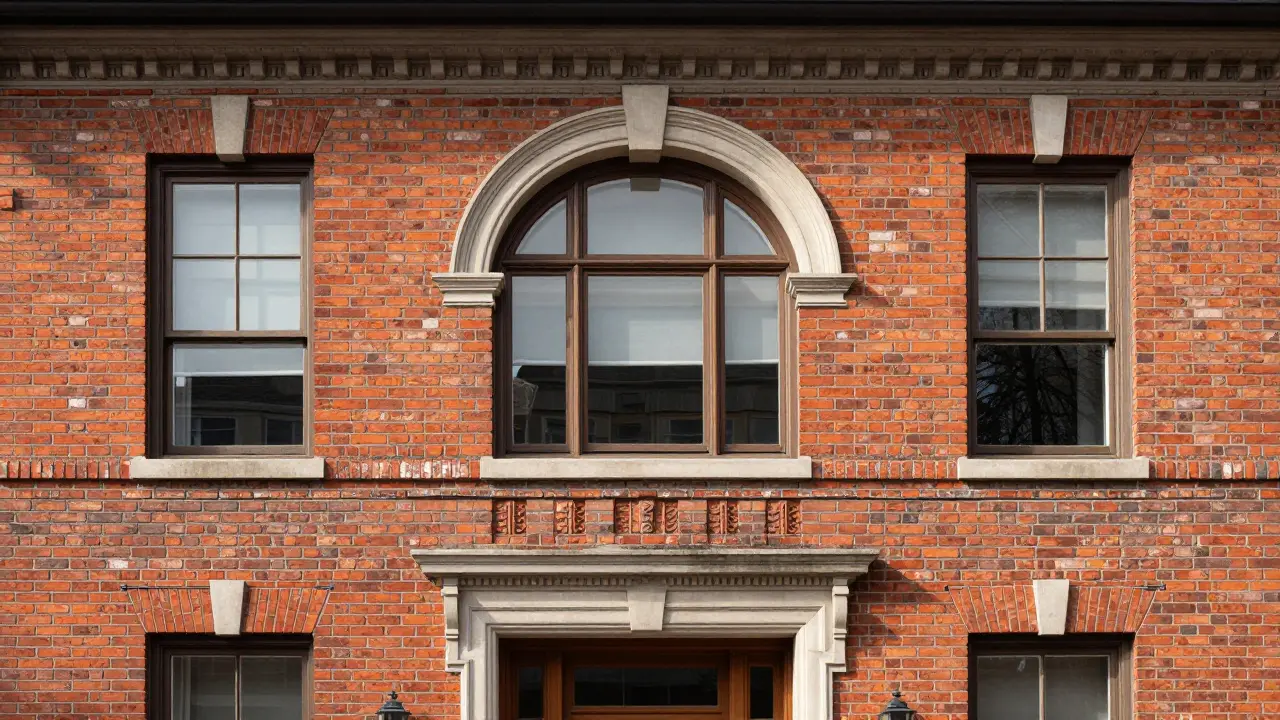
- Palladian Windows: Often centered on the front facade, these are large windows divided into three sections. The center pane is usually arched, giving the house a formal, classical touch that contrasts with the utilitarian roof.
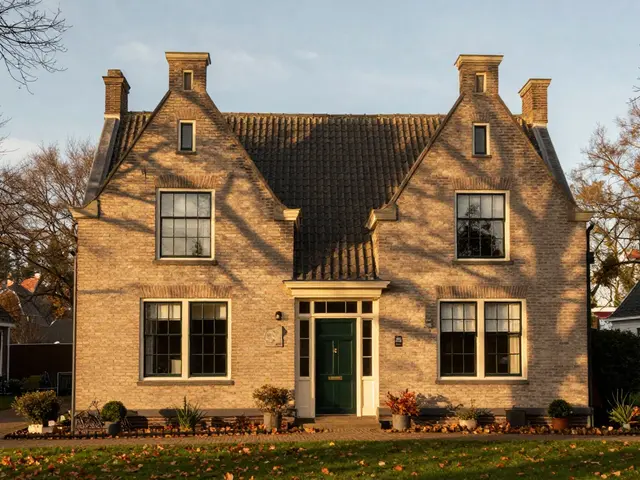
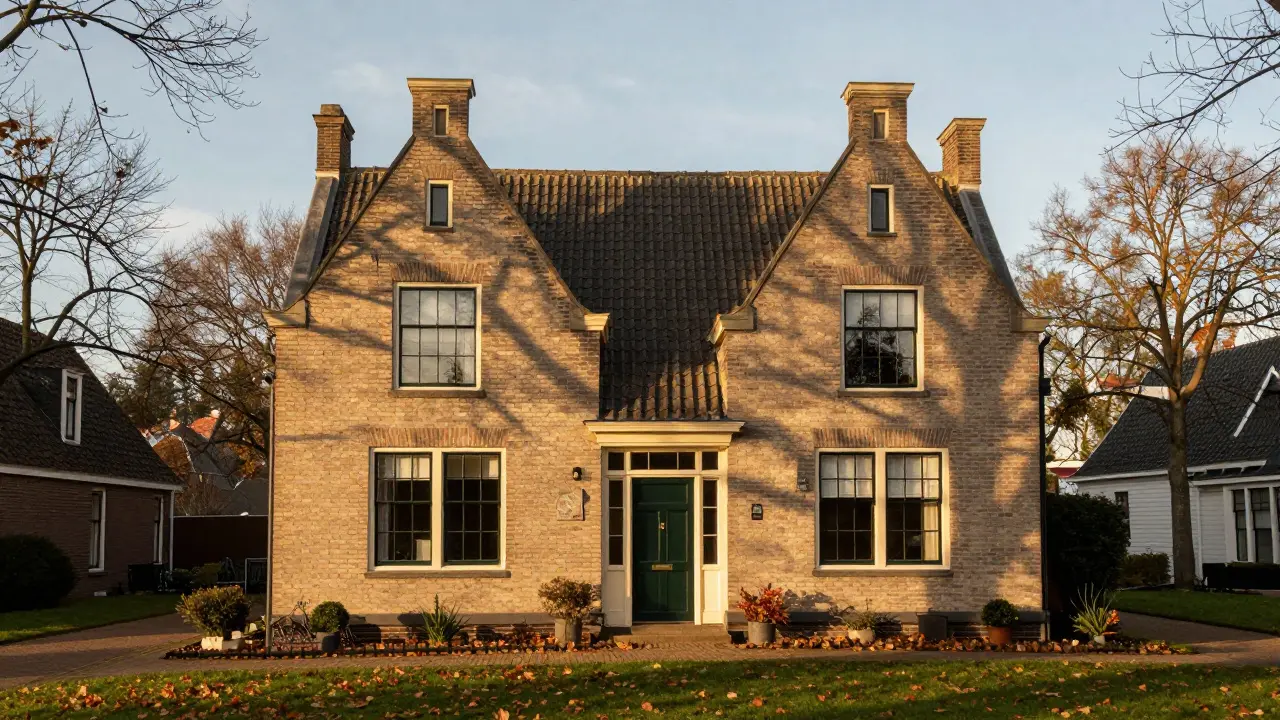
- Brick Facade: While wood siding exists, brick is a staple of the style, particularly in the Northeastern US. It adds texture and durability. Many original homes feature light-colored bricks laid in specific bonding patterns.
- Symmetrical Entryways: The front door is almost always centered. Flanking it are sidelights or narrow windows, topped by a transom window above the frame. This creates a grander entrance than typical colonial cottages.
- Dormers: You will frequently see dormer windows piercing the lower slope of the roof. These provide natural light to the attic level, confirming that the upper floor was intended for living space rather than storage.
Notice how these elements work together? The roof dictates the volume, while the facade provides the ornamentation. If a house has a gambrel roof but lacks the symmetrical entry or proper fenestration, it might be a Craftsman bungalow or another style borrowing the shape.
The Early 20th Century Resurgence
The term "Revival" implies something died and came back. Between 1915 and 1930, this style saw a massive peak in popularity. During World War II, housing needs shifted to speed and cost-efficiency, pushing the ornate revival styles aside again. Post-war suburbs leaned heavily on Ranch styles until nostalgia returned in the late 1980s and 90s.
Why did it return? The economic boom of the 1920s gave developers room to experiment with historical themes. Homebuyers wanted status. Living in a house that evoked the "Founding Fathers" era suggested stability and patriotism. Developers used pattern books to mass-produce these homes, spreading them beyond New York into places like Connecticut, Maryland, and even parts of Virginia.
This period solidified many features we associate with the style today. The Palladian window, for instance, became standardized during this time. Originally imported from Italian Renaissance architecture, it was stripped of some complexity to make construction easier. Despite being a hybrid of different eras, it created a cohesive look that defines American suburbia for generations.
| Feature Comparison | |
|---|---|
| Origin Period | Revival Period (1900+) |
| Mid-17th to Mid-19th Century | 1915 to 1930 Peak |
| Rustic, Functional Farmhouses | Refined, Symmetrical Mansions |
| Lumber and Shingle Siding | Brick and Stucco Facades |
| Simple Wood Frame | Classical Columns and Pediments |
Modern Applications and Restorations in 2026
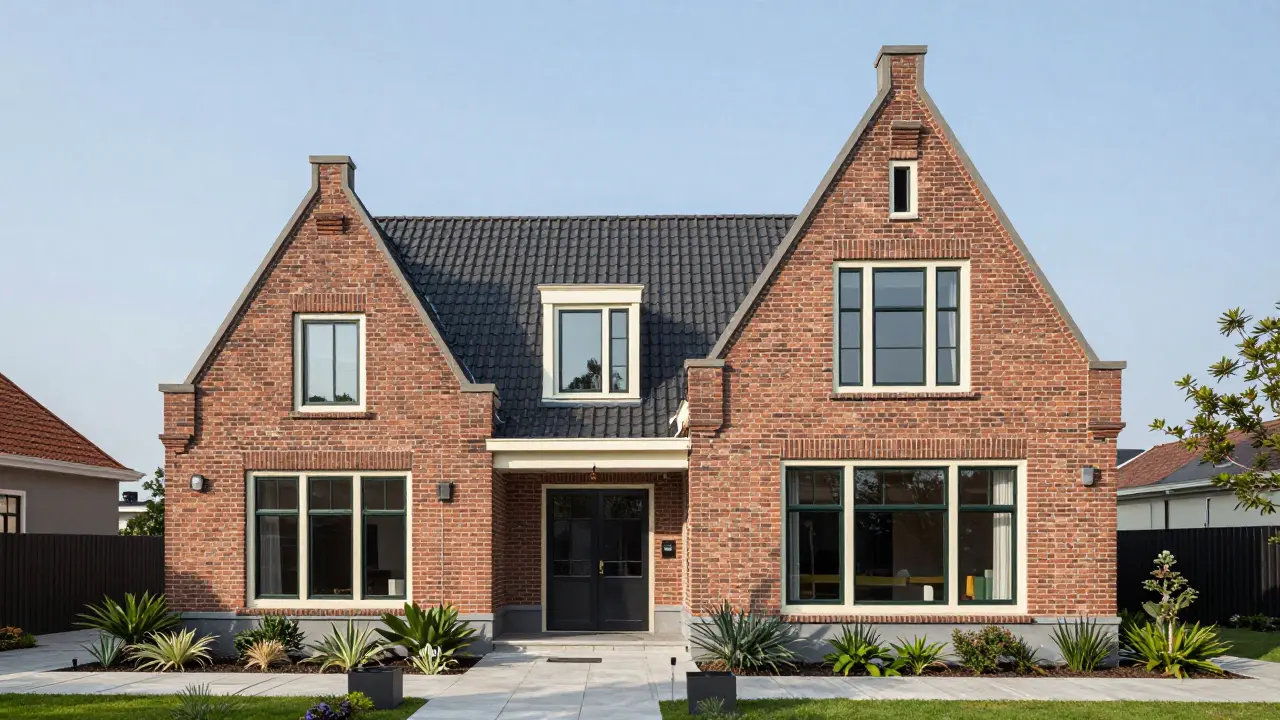
Fast forward to today, and the trend isn’t about slavishly copying the past. It’s about adapting the aesthetic to modern standards. We are seeing a spike in “Neo-Dutch” designs. Builders keep the external shell-that iconic roofline and classic front porch-but gut the interior completely.
Open floor plans clash with traditional small rooms. Modern renovations remove load-bearing walls to create great rooms. Energy efficiency is another driving force. Older gambrel attics trapped heat poorly. Today, builders incorporate spray foam insulation between rafters and install high-performance windows that mimic the look of the originals but meet 2020s energy codes.
Sustainability also plays a role. Reusing brick from demolished sites reduces waste. Timber framing techniques are being reintroduced because they allow for longer-lasting structures compared to stick framing. The National Register of Historic Places offers tax incentives for preserving genuine historic properties. This financial benefit makes restoring a true 1920s example viable again, not just a cosmetic facelift.
However, there is a risk of dilution. Some custom builds slap a gambrel roof on a generic box house. Without the underlying proportions-the height relative to width, the placement of the dormers-it feels costume-like. True appreciation involves understanding the scale. A gambrel roof works best when the house has enough width to support the span; forcing it onto a narrow lot creates structural awkwardness.
Maintaining the Heritage
Owning a property in this style brings specific maintenance challenges. The complex roofing system sheds water differently than a standard gable. You need vigilant inspection of the valleys where the slopes meet. Flashing failures here lead to rot that ruins the ceiling joists before anyone notices.
Brick masonry also requires attention. Mortar deteriorates over decades. Tuckpointing should match the original composition to prevent moisture intrusion. Modern cement mortar is too hard for soft historic bricks; it traps moisture and causes cracking. Using lime-based mortar preserves breathability.
Windows are another critical area. While vinyl replacements save money, they ruin curb appeal and thermal performance isn’t always better. High-end wood-clad windows offer the best balance. They maintain the aesthetic lines while providing double-glazing for comfort. For listed properties, local ordinances may mandate keeping original sashes, requiring professional conservation rather than replacement.
Ultimately, the enduring appeal lies in the balance between shelter and form. The gambrel roof offers functional living space without sacrificing vertical drama. As housing markets shift and people seek permanence, these designs stand out as stable choices in a volatile world. They remind us that beauty doesn’t require complexity, but rather thoughtful adaptation to environment and function.
What defines a Dutch Colonial Revival home?
The primary definition centers on the gambrel roof, which consists of two slopes on each side. Other key features include a symmetrical facade, Palladian windows, and centered doorways with transoms. While materials vary, brick or shingle siding is common.
Is the gambrel roof better for snowy climates?
Yes, the design originated partly for climate reasons. The shape allows snow to slide off the lower section easily while preventing wind uplift on the upper flatter section. It maximizes usable space in the attic floor without compromising structural integrity.
When did the style first become popular in the US?
While the roots trace back to 1600s settlements, the official architectural revival peaked between 1915 and 1930. This period saw developers mass-producing these homes as suburban expansions grew across the Northeast and Mid-Atlantic regions.
Can I add a gambrel roof to a modern house?
You can, but it must align with the structural proportions. Retrofitting a standard square house can look unbalanced. The foundation must support the wider span required for the roof’s base to look authentic.
Are there tax benefits for restoring historic Dutch Colonials?
If the property is listed on the National Register of Historic Places, owners may qualify for federal income tax credits regarding rehabilitation expenses. State and local programs often provide additional grants depending on the property’s designation.