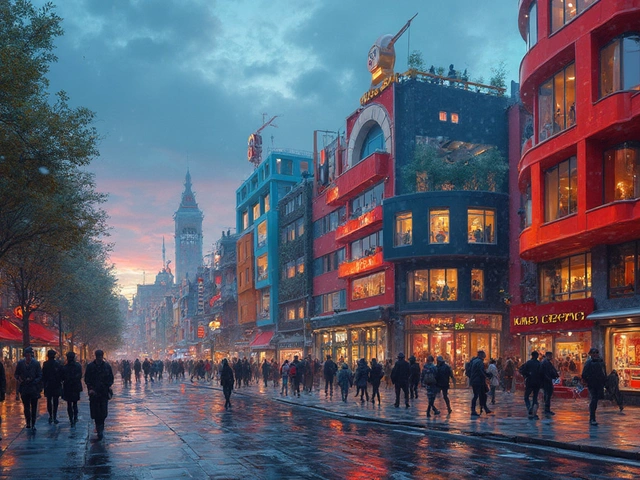
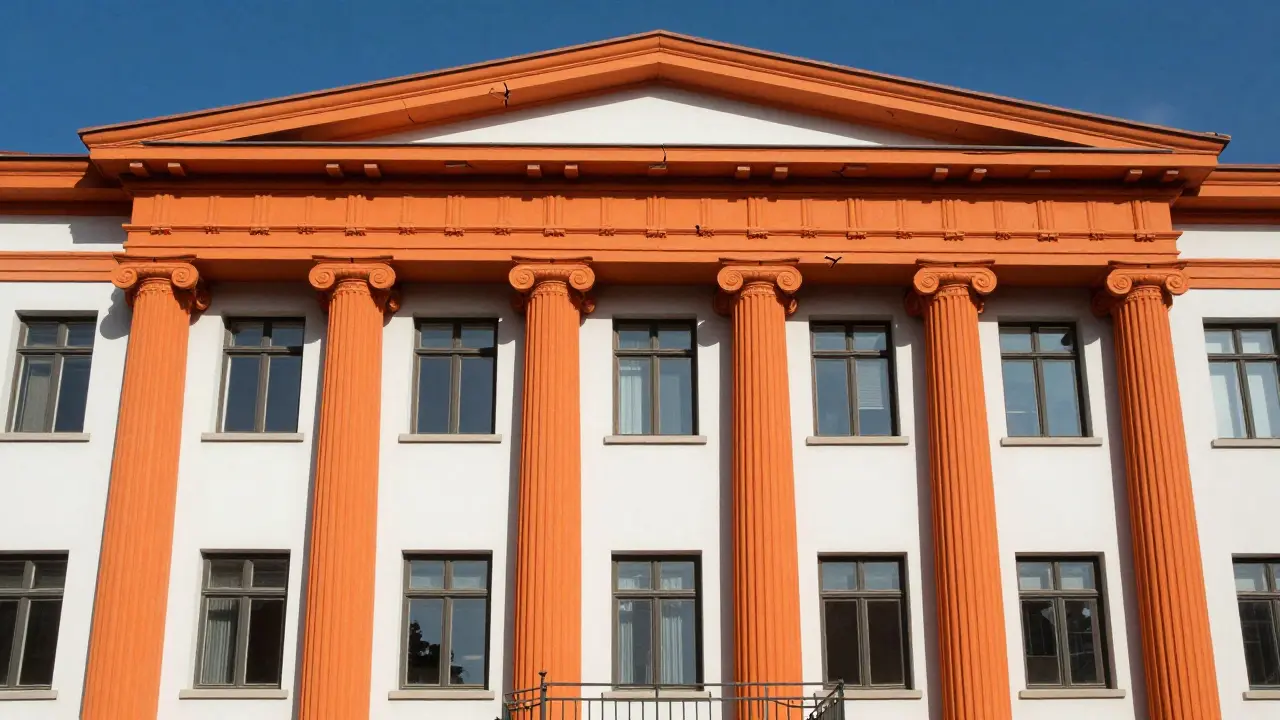
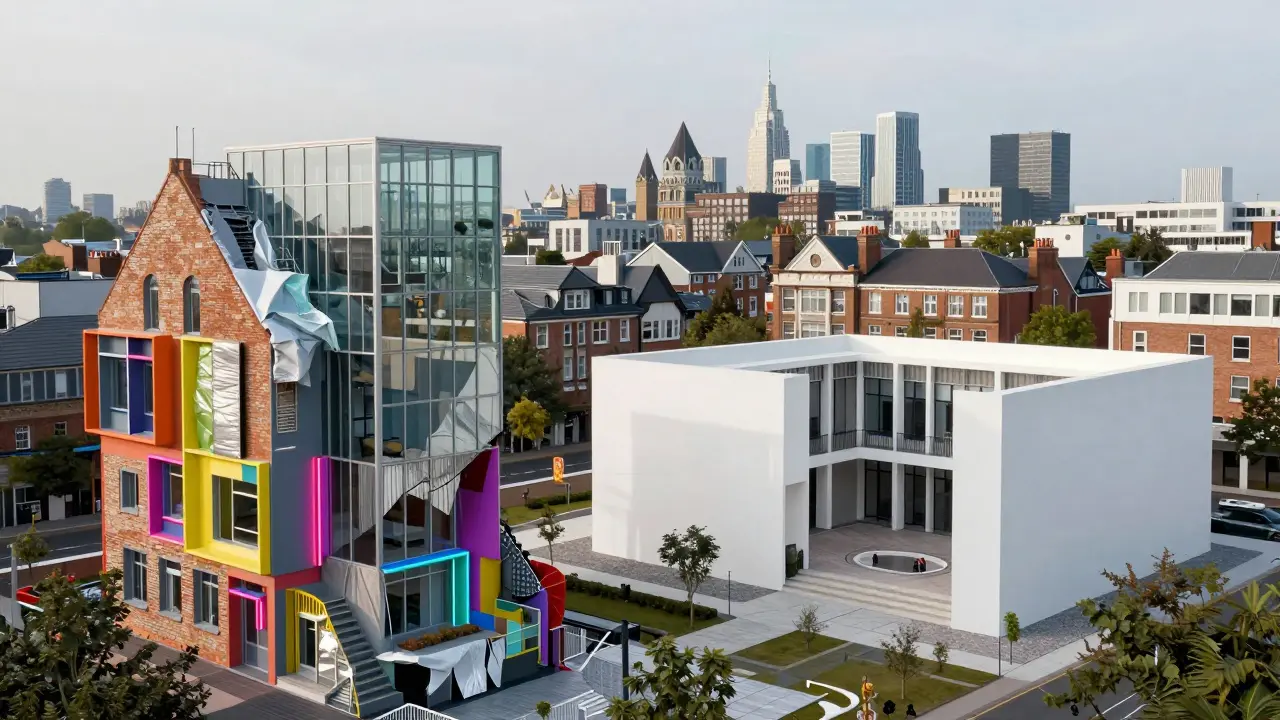
You walk past a building that looks like it’s wearing a suit with polka-dot buttons. It has columns, but they’re painted bright orange. The roofline is classical, yet the windows are arranged in a way that makes no structural sense. You might think you’ve stumbled into a theme park or a movie set. But if this happened in the late 1980s, you were likely looking at Postmodern Architecture, a style that rejected the cold minimalism of modernism by mixing historical references with playful, often ironic forms.
For decades, architects believed that form should follow function. Glass boxes, steel frames, and open plans dominated cities from New York to Tokyo. But by the mid-20th century, many people felt these buildings were soulless. They looked the same everywhere. Postmodernism emerged as a reaction against this uniformity. It didn’t just want to build structures; it wanted to communicate ideas, evoke emotions, and sometimes, make us laugh.
The Birth of an Anti-Movement
To understand why Postmodern Architecture matters, you have to look at what came before it. The International Style, led by figures like Le Corbusier and Ludwig Mies van der Rohe, prioritized efficiency and industrial materials. Ornament was considered a crime. As Mies famously said, "Less is more."
But not everyone agreed. In 1966, Robert Venturi published a book titled Complexity and Contradiction in Architecture. He flipped the script, arguing that "Less is a bore." This became the rallying cry for a new generation of designers who wanted to bring complexity back into their work. They weren't interested in pure functionality alone; they cared about symbolism, context, and history.
Venturi didn't just write about it; he built it. His house for his mother in Philadelphia featured a pediment that was slightly cracked and oversized. It wasn't structurally necessary. It was a wink to the viewer, a reference to classical Greek temples twisted into something domestic and quirky. This approach marked a shift from viewing architecture as a machine for living to seeing it as a language.
Key Characteristics of Postmodern Design
If you want to spot Postmodern Architecture on your next city walk, look for specific traits that distinguish it from both the rigid Modernism it reacted against and the high-tech futurism that followed.
- Ironic Historical References: Architects used classical elements like columns, arches, and pediments, but often exaggerated them or placed them in unexpected contexts. A column might be doubled up, painted brightly, or truncated.
- Bright Colors and Patterns: Gone were the white walls and gray concrete. Postmodern buildings embraced bold hues-reds, yellows, blues-and graphic patterns. Color wasn't just decoration; it was a tool to define space and create visual interest.
- Asymmetry and Fragmentation: While Modernism loved clean lines and symmetry, Postmodernism enjoyed breaking rules. Facades might appear fragmented, with parts sticking out at odd angles or overlapping in confusing ways.
- Humor and Playfulness: Many buildings included jokes or puns. Windows might look like eyes. Cornices might mimic cartoonish eyebrows. The goal was to engage the public, not intimidate them with corporate power.
- Mixed Materials: Traditional stone and brick were mixed with aluminum, plastic, and neon signs. This combination highlighted the tension between old and new, past and present.
These characteristics weren't random. They were deliberate choices to make architecture more accessible and human. By referencing familiar forms, architects hoped to connect buildings to their surroundings and to the cultural memory of the people using them.
Iconic Examples That Define the Style
Seeing is believing. Several buildings stand out as perfect examples of how Postmodern Architecture blended past and present.
| Building | Architect | Location | Key Feature |
|---|---|---|---|
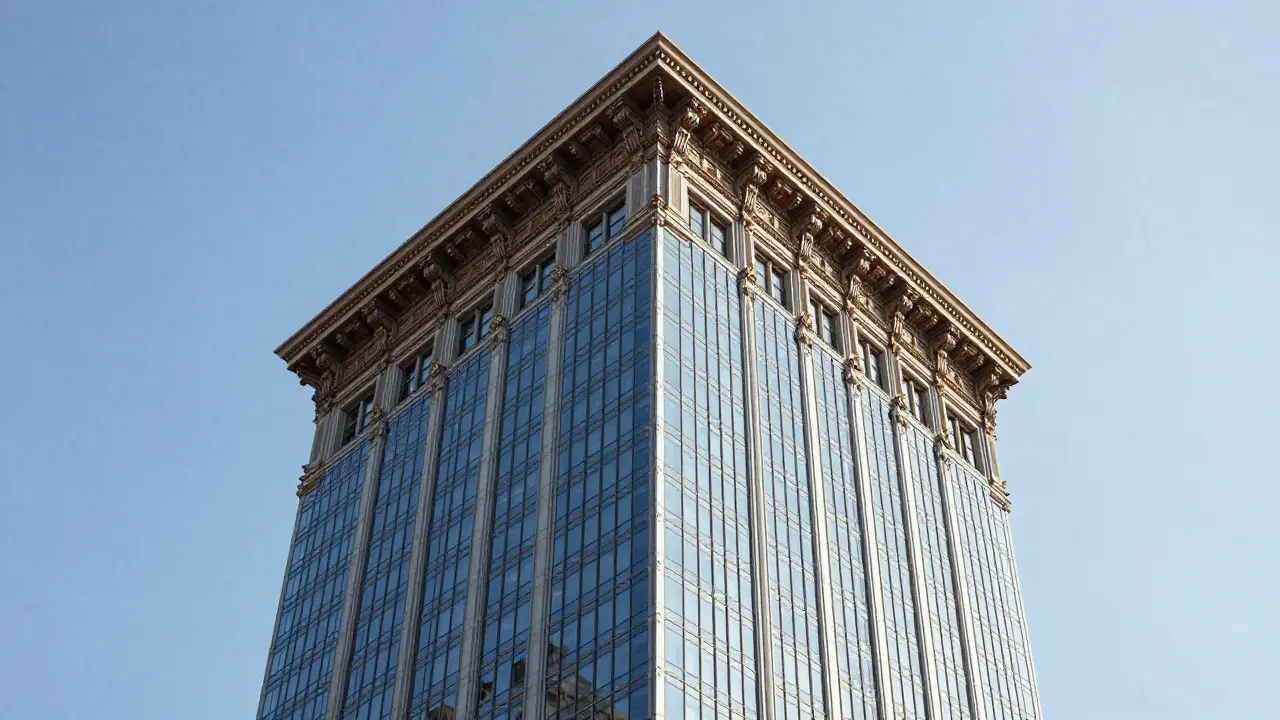
| AT&T Building (now 550 Madison Avenue) | Philip Johnson | New York City, USA | A massive Chippendale-style broken pediment atop a glass skyscraper. |
| Portland Building | Michael Graves | Portland, Oregon, USA | Bright green terra-cotta facade with giant pilasters and horizontal bands. |
| Piazza d'Italia | Charles Moore | New Orleans, Louisiana, USA | A theatrical plaza with stainless steel statues and neon-lit colonnades. |
| Hutong Hotel | Richard Meier | Beijing, China | White geometric forms inspired by traditional Chinese courtyard houses. |
The AT&T Building, designed by Philip Johnson, caused a stir when it opened in 1984. Johnson, who had previously championed Modernism, suddenly topped his sleek glass tower with a giant wooden-looking cornice. Critics called it absurd. Fans called it iconic. It showed that even the biggest players in architecture could change direction overnight.
Michael Graves’ Portland Building is another landmark. Its heavy, colorful facade looked nothing like the typical office towers around it. Some critics hated it, calling it a "dumb box." Others praised it for bringing color and identity to a city known for rain and gray skies. Regardless of opinion, it proved that architecture could be controversial and still shape public discourse.
Why Did Postmodernism Fade?
By the 1990s, the excitement around Postmodern Architecture began to cool. Why did a movement so full of energy lose its momentum?
Part of the problem was excess. When everything is ironic, nothing means anything. Buildings started feeling gimmicky rather than meaningful. People grew tired of the constant visual noise. Additionally, economic pressures pushed developers toward simpler, cheaper designs that were easier to construct and maintain.
Another factor was the rise of Deconstructivism, led by architects like Frank Gehry and Zaha Hadid. Their work offered a different kind of complexity-one based on fragmentation and dynamic forms rather than historical quotes. At the same time, sustainability concerns began to dominate the industry. Postmodernism’s decorative elements often added cost without improving energy efficiency.
However, saying Postmodernism "failed" isn’t quite right. Instead, it evolved. Its core idea-that architecture should communicate and respond to context-lives on. Today’s architects may not paint their columns orange, but they still think about how buildings relate to history, culture, and community.
The Legacy in Contemporary Design
You don’t need to travel far to see Postmodernism’s influence today. Look at any contemporary museum or cultural center. Many use bold shapes, vibrant colors, and symbolic gestures that trace their roots back to the 1970s and 80s.
Consider the work of Rem Koolhaas or Bjarke Ingels. While their styles differ significantly from early Postmodernists, they share the belief that architecture can be playful, provocative, and deeply connected to urban life. Even digital architecture and virtual reality spaces borrow from Postmodernism’s love of simulation and irony.
In Melbourne, where I live, you can find echoes of this style in various civic buildings and retail complexes. The city’s mix of Victorian heritage and modern developments creates a natural backdrop for architectural experimentation. Postmodernism taught us that we don’t have to choose between respecting the past and embracing the future-we can do both, simultaneously.
How to Appreciate Postmodern Architecture Today
If you’re curious to explore this style yourself, here are some practical tips:
- Look Up: Pay attention to rooftops and cornices. Postmodern architects often hid their most dramatic statements above eye level.
- Notice the Details: Check out window frames, doorways, and signage. Small touches often reveal the humor and intent behind larger forms.
- Read the Context: Ask yourself how the building relates to its neighbors. Does it contrast sharply? Does it try to blend in? Both approaches are valid in Postmodern theory.
- Visit Museums: Institutions like the Museum of Modern Art in New York or the V&A in London have excellent collections of architectural models and drawings from this period.
- Explore Online Archives: Websites dedicated to architectural history offer high-resolution images and essays that help decode the symbolism in famous buildings.
Understanding Postmodern Architecture doesn’t require a degree in design. It just requires curiosity. Once you start noticing the jokes, the references, and the contradictions, you’ll begin to see cities as conversations rather than collections of objects.
Who is considered the father of Postmodern Architecture?
Robert Venturi is widely regarded as the father of Postmodern Architecture due to his influential writings and pioneering designs that challenged Modernist principles.
What is the main difference between Modernist and Postmodern architecture?
Modernist architecture emphasizes minimalism, functionalism, and universal solutions, while Postmodern architecture embraces ornamentation, historical references, and contextual specificity.
Is Postmodern Architecture still popular today?
While pure Postmodernism is less common now, its ideas heavily influence contemporary architecture, especially in terms of using symbolism, color, and engaging with local context.
Why did Postmodern Architecture decline in popularity?
It declined due to perceptions of being overly gimmicky, rising construction costs associated with complex details, and the emergence of new movements like Deconstructivism and sustainable design.
Can you find Postmodern buildings in Australia?
Yes, cities like Sydney and Melbourne feature notable Postmodern structures, including commercial centers and government buildings constructed during the 1980s and early 1990s.