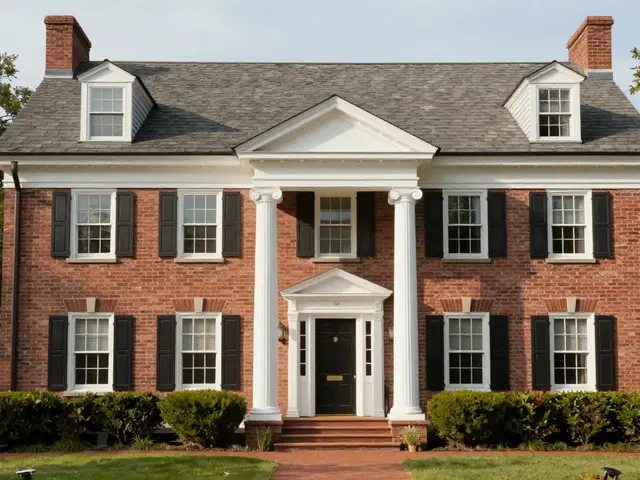
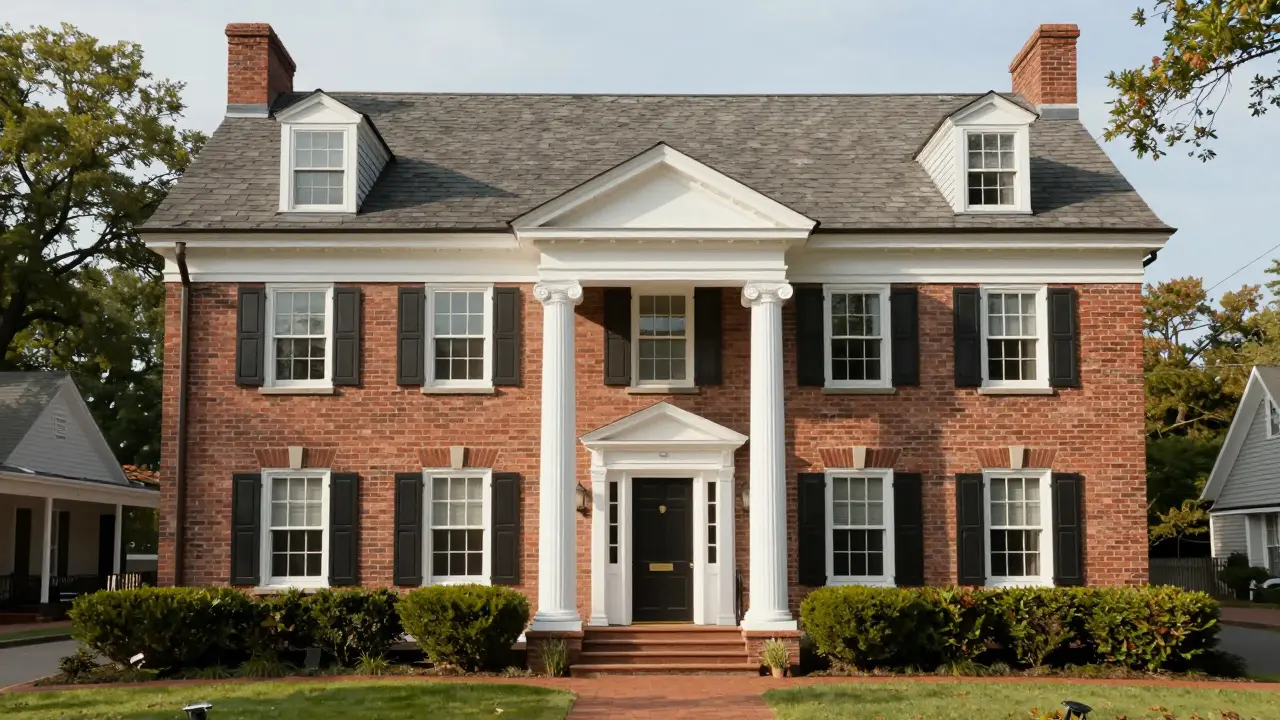
Walk through any historic neighborhood in Boston, Charleston, or even suburban Dallas, and you’ll see it: houses with white columns, symmetrical windows, and grand front doors crowned by little triangular roofs. These aren’t just old homes-they’re part of a design movement that refused to fade. Colonial Revival architecture didn’t just copy the past. It revived it, reshaped it, and made it stick around for over a century. And it’s still being built today.
Where Did Colonial Revival Come From?
It started in the 1870s, right after the Centennial Exposition in Philadelphia. People were nostalgic for America’s early days. They weren’t just reminiscing-they were rebuilding. Architects and homeowners looked back at 17th- and 18th-century British colonial buildings in the American Northeast and Mid-Atlantic. But they didn’t copy them exactly. They simplified, exaggerated, and modernized them. Think of it like remixing an old song with new instruments.
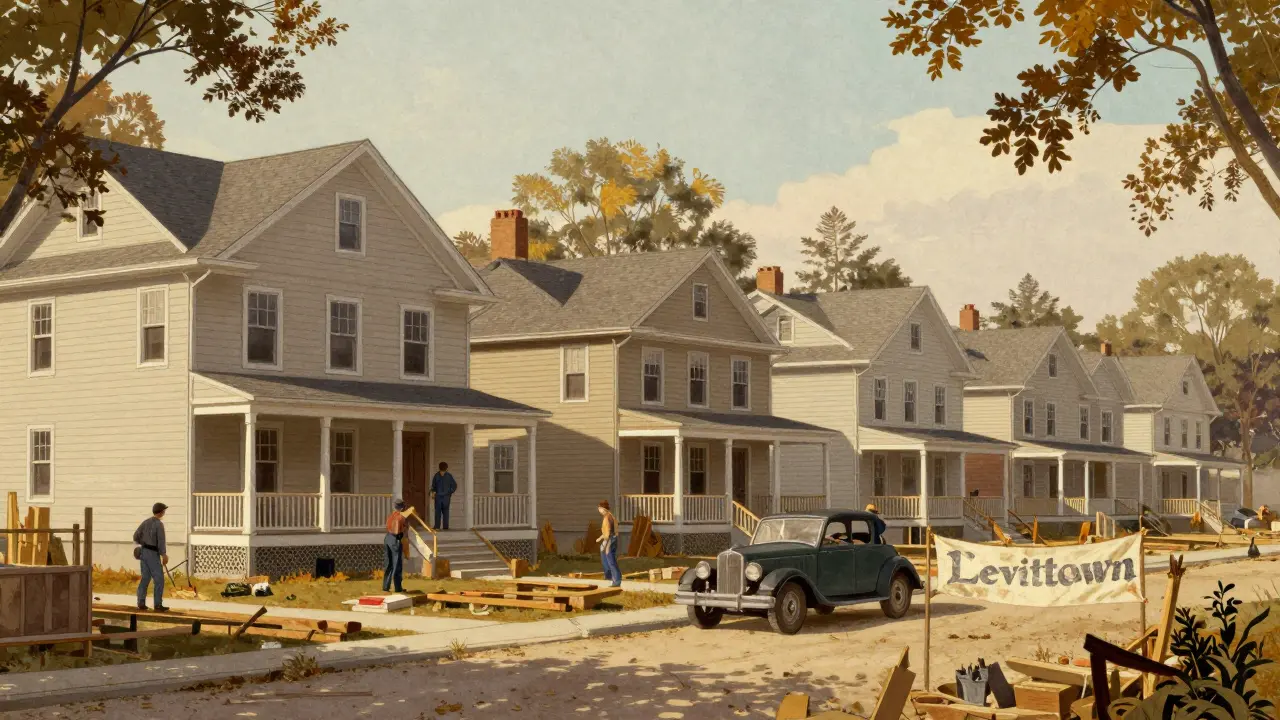
By the 1920s, Colonial Revival exploded. After World War I, returning soldiers and middle-class families wanted homes that felt stable, respectable, and rooted in tradition. Builders used mass-produced materials-brick, wood siding, double-hung windows-to make these homes affordable. Real estate developers in places like Levittown, New York, used Colonial Revival as the default style for entire neighborhoods. It wasn’t just architecture. It was identity.
What Makes It Look Like Colonial Revival?
You can spot a Colonial Revival house even if you’ve never studied architecture. It has a clear set of rules:
- Symmetry-windows and doors line up perfectly on both sides of the front entrance. No off-center balconies or weird bumps.
- Pedimented entryways-the front door often has a little roof above it, shaped like a triangle. Sometimes it’s supported by columns.
- Multi-pane windows-typically double-hung, with six panes over six panes (6/6) or eight over eight (8/8). Later versions simplified to 2/2 or even single panes.
- Brick or clapboard siding-brick was common in the Northeast; wood clapboard ruled in the South and Midwest.
- Central chimney-many older versions had one big chimney in the middle, though later homes used side chimneys for easier heating.
- Rectangular shape-two or two-and-a-half stories tall, with a steep or moderate pitched roof.
Some houses add a portico-like a covered porch with columns-stretching across the front. Others have dormer windows poking through the roofline. These aren’t random choices. They’re deliberate nods to Georgian and Federal styles from the 1700s.
Why Did This Style Last So Long?
Colonial Revival didn’t just survive-it thrived. Why? Because it felt safe.
In times of rapid change-industrialization, urban sprawl, world wars-people clung to architecture that whispered, “We’re still the same.” It was the architectural equivalent of a family recipe passed down for generations. Real estate agents loved it. Builders loved it. Homeowners loved it. It promised order, dignity, and permanence.
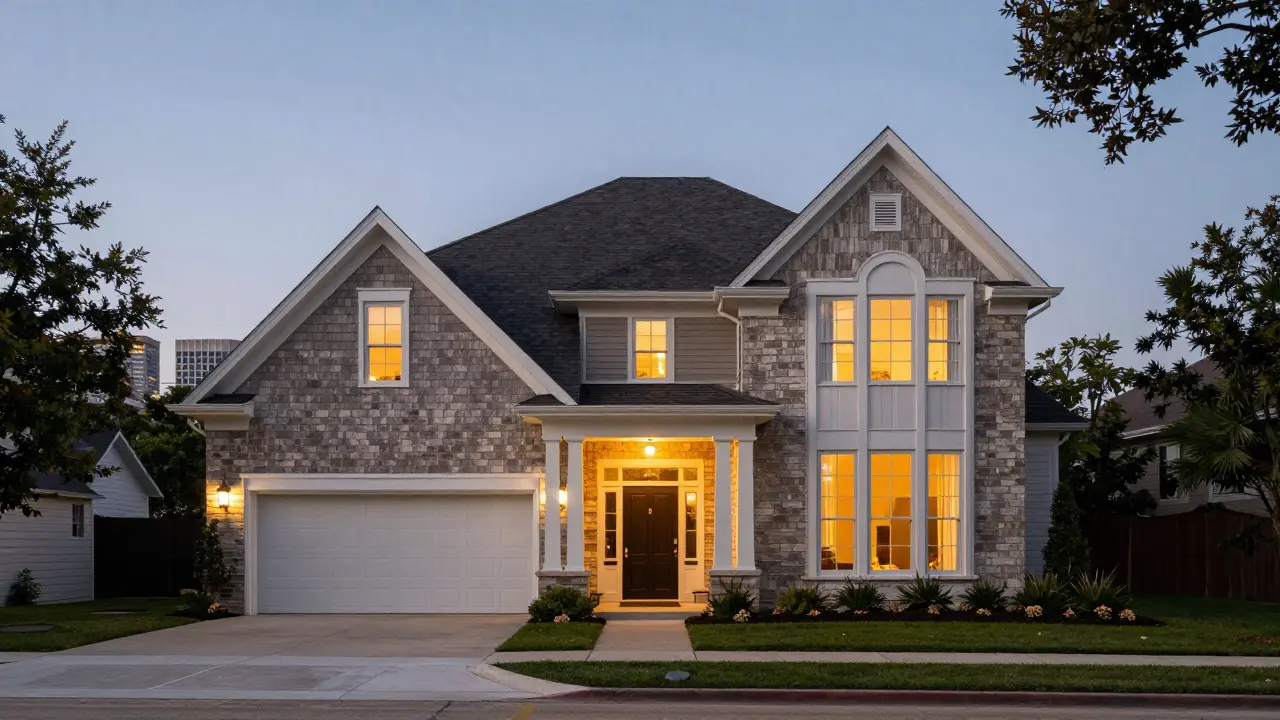
Even after World War II, when ranch houses and split-levels took over, Colonial Revival didn’t disappear. It adapted. Developers kept the symmetrical facade, the front porch, and the classic door, but they swapped brick for vinyl siding and added two-car garages. The bones stayed. The skin changed.
Today, you’ll find Colonial Revival homes in suburbs from Ohio to California. They’re often called “Colonial” on MLS listings. Buyers don’t always know the difference between Georgian, Federal, and Colonial Revival-but they recognize the look. And they pay more for it.
Colonial Revival vs. True Colonial
It’s easy to confuse Colonial Revival with the original colonial homes built between 1600 and 1800. But here’s the key difference:
| Feature | Original Colonial (1600s-1800s) | Colonial Revival (1880s-Present) |
|---|---|---|
| Materials | Hand-hewn timber, local brick, stone, wood shingles | Mass-produced brick, clapboard, vinyl siding, modern insulation |
| Windows | d>Small, irregular panes due to glass limitations | Larger, uniform panes; often double-glazed |
| Roof Pitch | Steep, for snow shedding | Moderate to steep; sometimes flat or low-pitched in later versions |
| Chimneys | One large central chimney | One or two side chimneys; sometimes decorative |
| Size | Small, one or two rooms per floor | Larger, often 2,500+ sq. ft. with modern layouts |
| Ornamentation | Minimal; functional design | Decorative columns, pediments, fanlights, sidelights |
Original colonial homes were built for survival-heat, defense, storage. Colonial Revival homes were built for image-status, comfort, nostalgia.
Where You’ll Find It Today
Colonial Revival isn’t just a museum piece. It’s alive.
In New England, you’ll find original 18th-century homes with Colonial Revival additions-like a 1750 saltbox with a 1920s portico tacked on. In the South, it blends with Greek Revival elements: wider porches, taller columns, more ornate railings. In the Midwest and West, it’s the default suburban style. Look at any subdivision built between 1980 and 2010. Chances are, the builder used Colonial Revival as a template.
Dallas has its own version. You’ll see it in neighborhoods like Highland Park, Preston Hollow, and even newer developments near Uptown. These homes often have larger lots, brick exteriors, and two-story porches. They’re not exact copies of Boston townhouses-they’re Dallas interpretations. That’s the magic of Colonial Revival: it’s flexible enough to fit anywhere.
Why It Still Matters
Some architects call Colonial Revival “safe.” Others call it boring. But here’s the truth: it works.
It’s easy to maintain. It’s easy to sell. It’s easy to live in. The layout-central hallway, rooms on either side-makes sense. The proportions feel right. The materials last. Even today, when minimalist glass boxes dominate design magazines, people still choose Colonial Revival for their forever homes.
It’s not about pretending we’re living in 1776. It’s about valuing balance, order, and craftsmanship. In a world of open-concept chaos and asymmetrical weirdness, Colonial Revival offers something rare: calm. It doesn’t shout. It doesn’t try to be trendy. It just stands there, steady and sure.
And that’s why it’s still being built.
Is Colonial Revival architecture the same as Georgian style?
No. Georgian architecture refers to homes built in America between 1714 and 1830, during the reigns of British kings George I-IV. It’s the original style that Colonial Revival copied. Colonial Revival is a 19th- and 20th-century reinterpretation-simpler, larger, and often more decorative. Think of Georgian as the original painting and Colonial Revival as a modern poster version.
Can you modernize a Colonial Revival home without losing its character?
Absolutely. Many homeowners add energy-efficient windows, open up the kitchen, or install a basement while keeping the symmetrical facade, front door, and columned porch. The key is preserving the exterior form. Interior changes are fine as long as you don’t remove original moldings, staircases, or door surrounds. Real estate experts say homes that keep their classic shell but update the inside sell faster and for higher prices.
Why do Colonial Revival homes have six-over-six windows?
The 6/6 window (six panes above, six below) was originally used because large sheets of glass were expensive and hard to make. Smaller panes were easier to produce and install. Colonial Revival homes kept this style as a nod to tradition-even though modern glass is now available in huge, single sheets. Today, many builders use 2/2 or even single-pane windows for efficiency but still mimic the divided-light look with grilles on the glass.
Are Colonial Revival homes more expensive to build?
Not necessarily. While the details-like columns and pediments-can add cost, many builders use standardized plans and materials to keep prices competitive. In fact, Colonial Revival is often cheaper than custom modern designs because it uses familiar, repeatable elements. The real cost difference comes from location and lot size. A Colonial Revival home in a historic district may cost more due to restrictions, but in a new suburb, it’s often one of the most affordable options.
What’s the difference between Colonial Revival and Federal style?
Federal style, popular from 1780 to 1830, is more delicate. It uses finer details: fanlights over doors, delicate moldings, oval or circular rooms, and thinner columns. Colonial Revival is bolder-bigger porches, heavier brick, more symmetry, and often a more imposing front entrance. Federal homes feel elegant and refined. Colonial Revival homes feel solid and traditional. They’re cousins, not twins.