When you look around your home today, chances are you are surrounded by objects influenced by the Bauhaus was a German art school operational from 1919 to 1933 that combined crafts and the fine arts. It changed how we think about buildings and furniture forever. Its clean lines and lack of clutter feel normal now, but they were radical when first introduced. This movement didn't just change painting; it rewired the way industry meets art. You don't need an art degree to see its fingerprints on everything from your smartphone to high-rise offices. Understanding this style means seeing the world differently, noticing where beauty meets utility.
The Origins of a Revolutionary School
The story begins after World War I, during a time of immense social and political turmoil in Germany Weimar Republic European nation where the school was founded. Walter Gropius Architect Founder and director of the Bauhaus school established the school in Weimar in 1919. He wanted to break down the barriers between artists, craftspersons, and builders. Before this, architects designed buildings separately from the people who made the tiles or chairs inside them. Gropius believed art should serve society, not just decorate wealthy homes. He sought to create a "total work of art" where every element fit together perfectly.
The school moved locations twice before shutting down in 1933. It started in Weimar, then moved to Dessau, and finally Berlin. The move to Dessau marked a significant shift toward industrial production. In Weimar, the focus was on handcraftsmanship. By Dessau, the philosophy evolved toward mass manufacturing. This transition set the stage for the modern consumer goods we buy today. The closure came under pressure from the Nazi regime, which condemned the school's internationalist ideals as "degenerate." Despite the forced end, many teachers fled to America, spreading these ideas globally.
Core Principles That Changed Everything
You cannot discuss this style without talking about its core rule: form follows function. This idea suggests that the shape of an object should primarily relate to its purpose. If a chair is uncomfortable, it is not good design, no matter how pretty it looks. Ornamentation was seen as a distraction. Why add unnecessary patterns when the material itself is beautiful? Wood grain, steel joints, and glass transparency became the decoration.
- Unity of Art and Technology: Machines were embraced as tools for creativity, not enemies of art.
- Simplicity: Removing anything non-essential creates clarity and reduces cost.
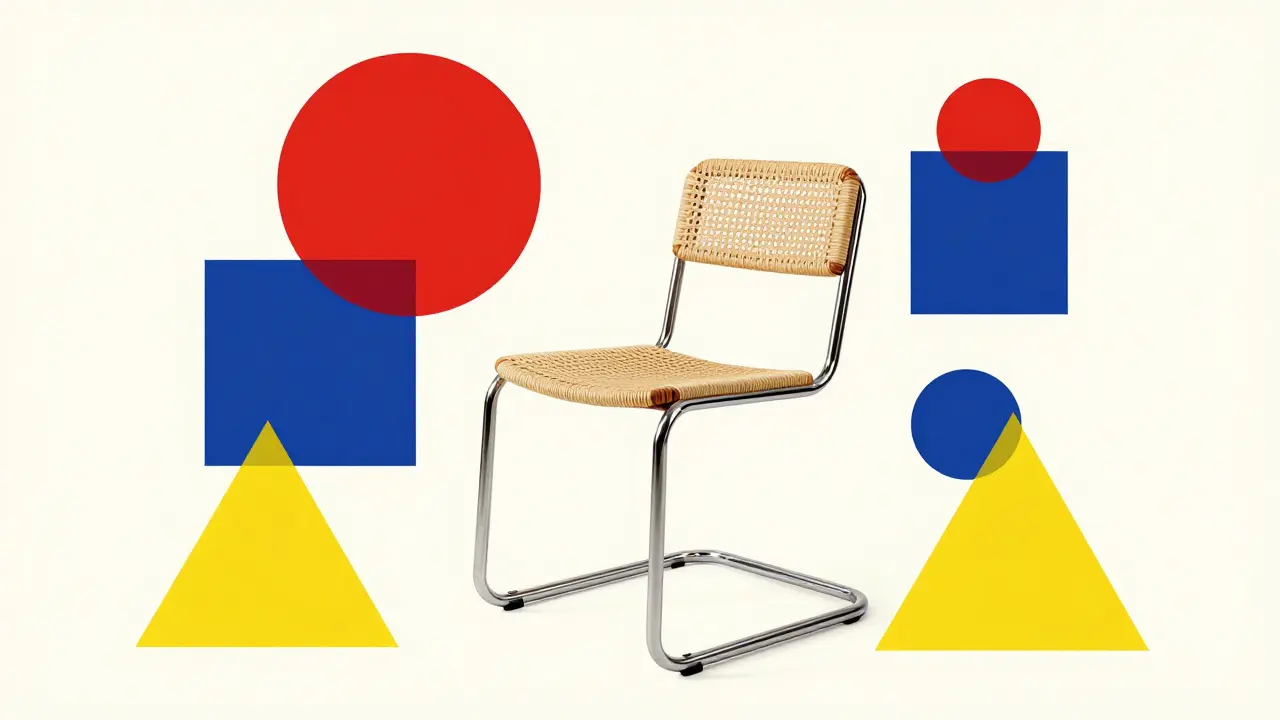
- Geometric Foundations: Circles, squares, and triangles formed the basis of all visual composition.
- Color Theory: Primary colors (red, blue, yellow) combined with black and white dominated the palette.
These principles created a visual language that was honest. If a building used concrete, the concrete was left visible rather than painted over to look like stone. This honesty became a hallmark of trust in design. It communicated reliability to the viewer. When you walk past a modern office block, you are seeing this logic applied on a massive scale.
Key Figures and Their Contributions
Gropius laid the foundation, but he wasn't the only mind shaping this movement. László Moholy-Nagy Artist and Educator German-Mexican artist known for his work in photography and typography brought a focus on photography and typography. He argued that light and air were materials just like steel or glass. His workshop pushed students to experiment with new media. Without his influence, modern advertising and graphic design would look entirely different today.
Another major player was Marcel Breuer Architect and Furniture Designer Known for the Wassily Chair and tubular steel furniture. Breuer worked in the cabinetmaking shop and realized steel tubing could be bent and shaped like wood. He famously took inspiration from bicycle handlebars to make chairs. The resulting tubular steel chairs are durable, lightweight, and stackable. This invention revolutionized seating arrangements in public spaces and homes alike. Even if you haven't sat on a Breuer chair, you have certainly seen the style replicated in cafes worldwide.
Mies van der Rohe Architect Last director of Bauhaus and proponent of modernism became the third director. He is famous for the phrase "less is more." Under his leadership, the curriculum focused heavily on construction and industrial technique. His own buildings, like the Barcelona Pavilion, showcased open floor plans and glass walls that blurred the boundary between inside and outside. These concepts define luxury minimalism today.
The Visual Language of Minimalism
If you want to identify a piece of design instantly, look for the Minimalism Design Philosophy Approach emphasizing simple forms and limited palettes associated with this era. Rectangles, circles, and straight lines dominate compositions. Curves appear but are usually mathematical rather than ornamental. Asymmetry is common because it creates dynamic tension without added decoration.
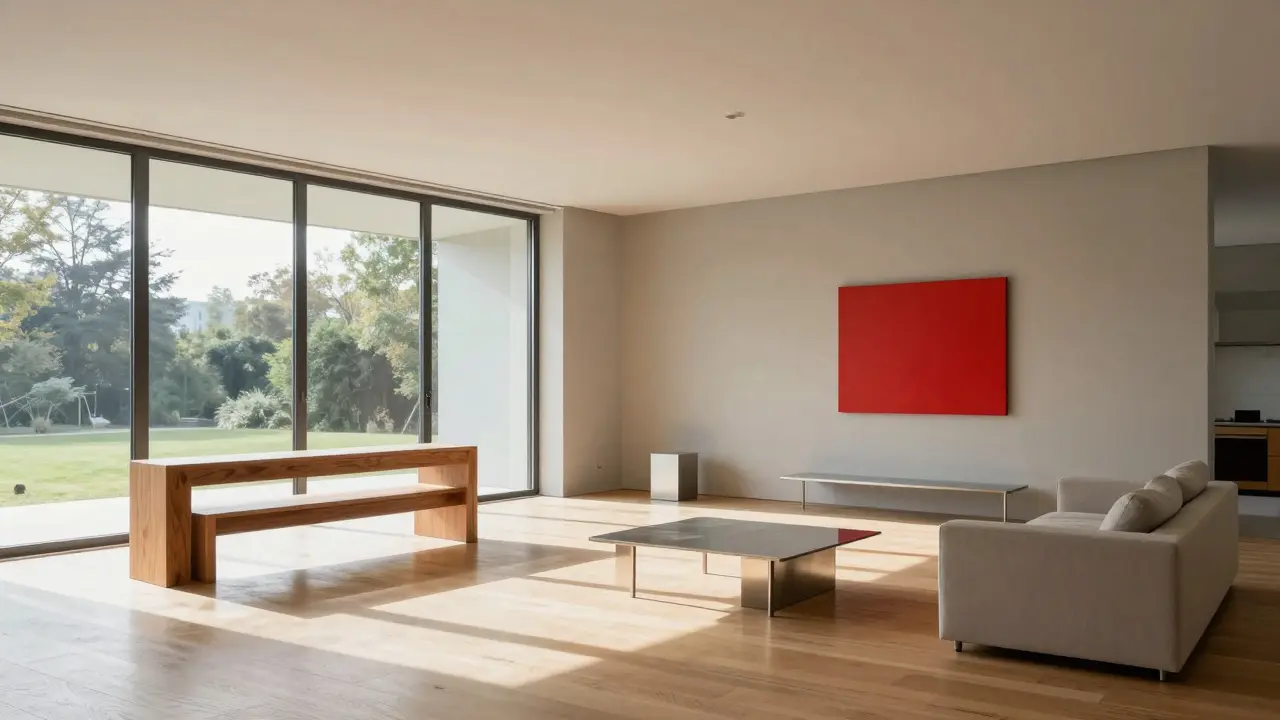
Color plays a specific role here. Artists like Wassily Kandinsky Painter Russian painter and art theorist taught color theory classes. They explored how red can stimulate energy while blue calms the eye. This was scientific study applied to art. In interiors, you often see neutral backgrounds with bold pops of primary color. A grey room might feature a single bright red lamp. This contrast guides the viewer's eye intentionally.
| Feature | Traditional Design | Bauhaus Approach |
|---|---|---|
| Ornament | Elaborate carvings | No ornamentation |
| Materials | Hid natural textures | Celebrates raw materials |
| Production | Handcrafted individually | Standardized for industry |
| Color Palette | Muted or pastel tones | Primary colors + Monochrome |
Lasting Impact on Modern Living
The influence extends far beyond museums. Think about the software interface you use daily. Apple and Google design teams often cite Bauhaus principles when simplifying user interfaces. Buttons are rectangles or pills. Icons are simplified geometric shapes. Text is sans-serif and legible. This reduction of digital noise helps users process information faster. The same logic that dictated the design of a kitchen cabinet now dictates the layout of an app screen.
In housing, the concept of open floor plans traces back to these experiments. Walls were removed to allow light and air to flow freely through the space. Large windows replaced heavy drapes. Today, selling a house often highlights these features explicitly. Real estate agents call it "modern living," but it is essentially a continuation of the ideology started in Weimar nearly a century ago. Even the flat-pack furniture trend relies on the modular thinking developed during the Dessau years.
You will find echoes of this in sustainable design movements as well. Using fewer materials leads to less waste. Focusing on durability means objects last longer. While original manufacturers prioritized mass production, today we value the longevity those designs promised. Restoring old pieces from this era is a booming market because their quality holds up. Unlike fast fashion, these items were built to survive generations.
Frequently Asked Questions
Who founded the Bauhaus school?
Walter Gropius founded the school in Weimar in 1919. He envisioned a total work of art that combined crafts and fine arts.
What are the main colors of the Bauhaus style?
The palette typically includes primary colors-red, blue, and yellow-alongside black, white, and gray. These create high contrast and visual balance.
Is Bauhaus considered modernism?
Yes, it is the most prominent example of Modernism in architecture and design. It emphasizes functionality, simplicity, and rejection of historical styles.
Where is the Bauhaus building located?
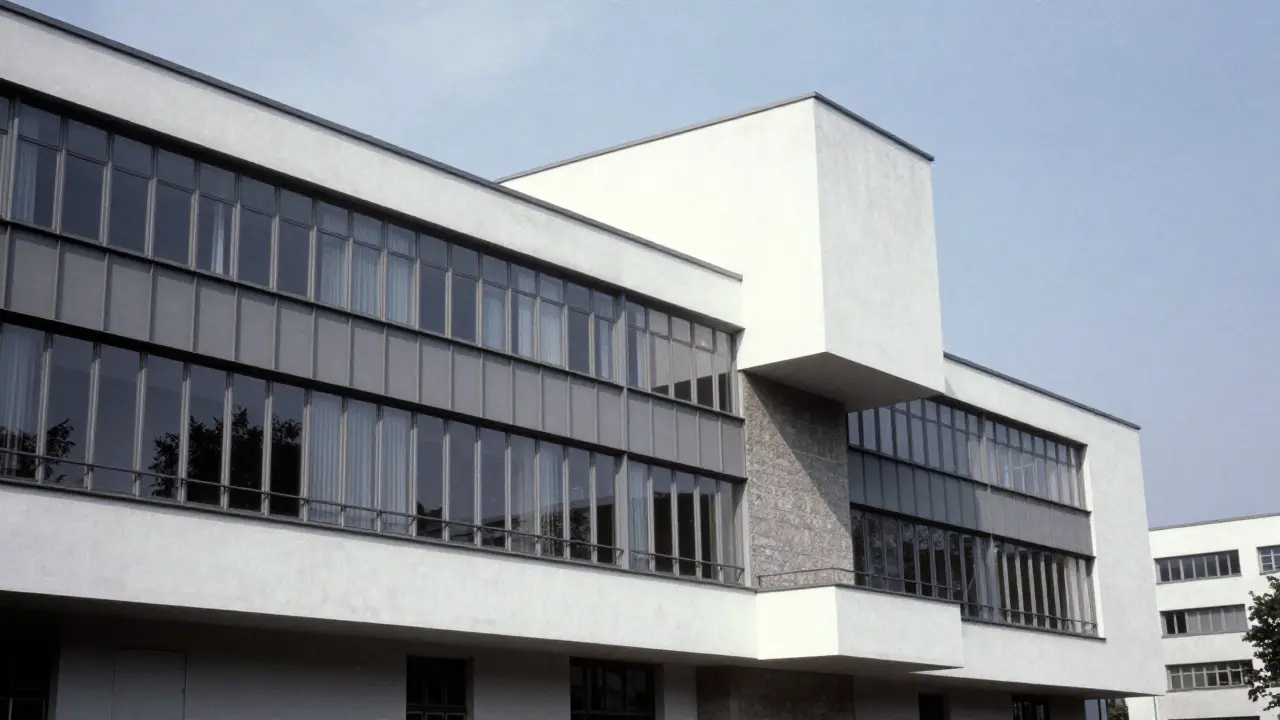
The iconic Bauhaus building is located in Dessau, Germany. Designed by Walter Gropius, it is a UNESCO World Heritage site.
Did the school close permanently?
The school closed in 1933 due to Nazi pressure. However, its faculty spread across the globe, continuing to teach its principles until today.