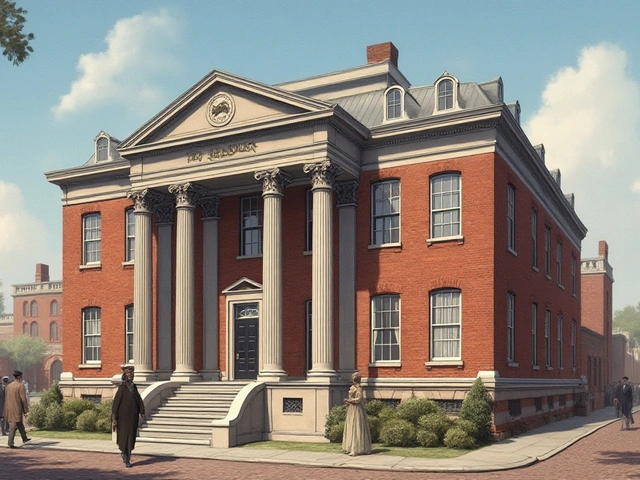
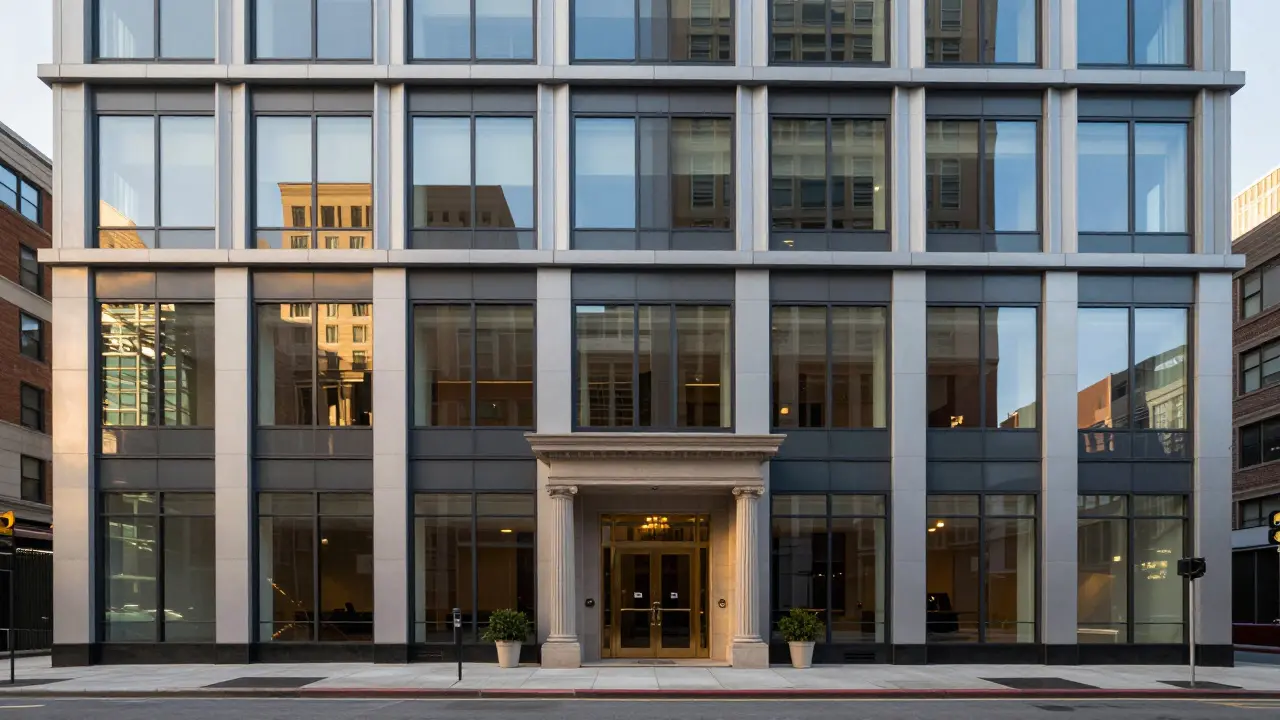
When you walk through a modern city center and notice a building with clean lines, a centered door, and evenly spaced windows, you’re seeing the quiet legacy of federal architecture. It’s not flashy. It doesn’t shout. But it’s everywhere - in apartment buildings, banks, schools, and even coffee shops. This style, born in the late 1700s and early 1800s in the United States, didn’t just fade into history. It became the quiet backbone of what we now call modern design.
What Federal Architecture Actually Is
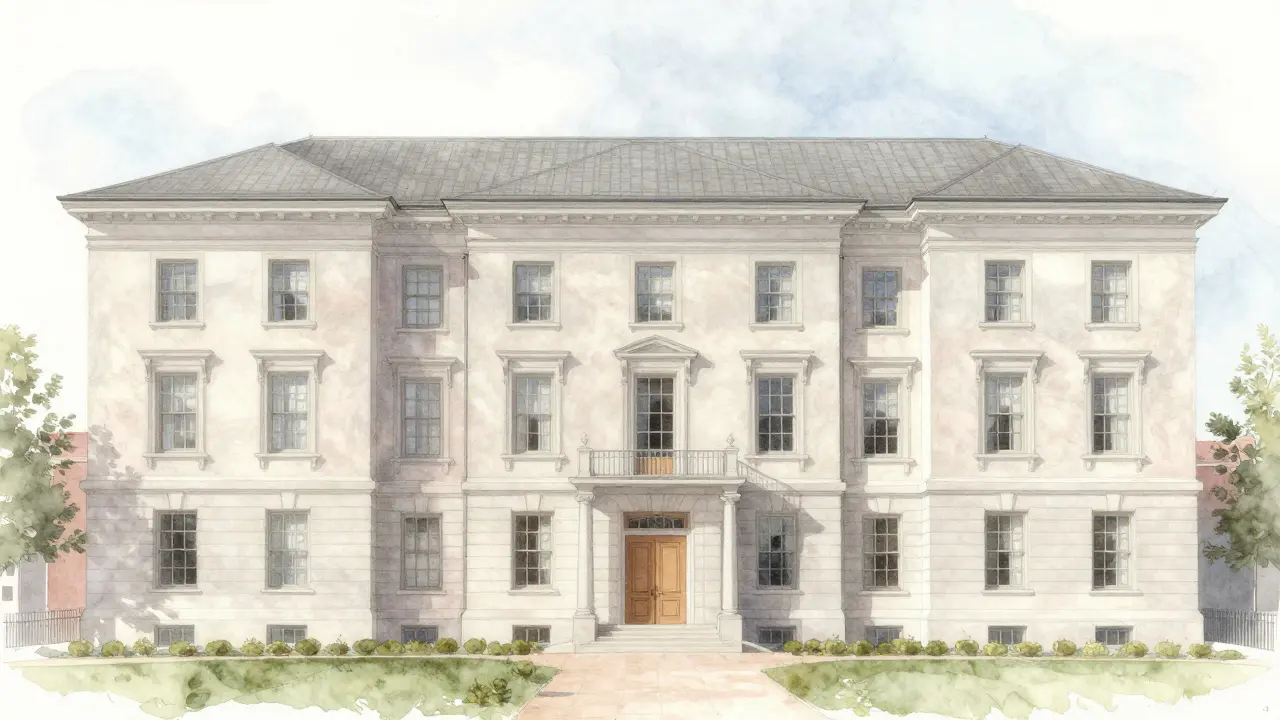
Federal architecture, also called Adam style in the U.S., emerged after the American Revolution. It was the country’s first attempt to create a national aesthetic - something that felt both elegant and democratic. Unlike the heavy, ornate Georgian style that came before it, federal buildings were lighter, more refined. They borrowed from ancient Rome and Greece, but stripped away the excess. Think columns, but not giant ones. Pediments, but not towering. Symmetry, but not rigid.
Key features include:
- Rectangular or square shapes with balanced facades
- Delicate decorative elements like swags, urns, and fanlights
- Large windows arranged in even rows
- Low-pitched roofs, often hidden behind parapets
- Centered front doors with semi-circular or semi-elliptical windows above them
Buildings like the Massachusetts State House (1798) and the Octagon House in Washington, D.C., are textbook examples. These weren’t just homes for the rich - they were public buildings meant to reflect the ideals of the new republic: order, reason, and restraint.
The Shift from Ornament to Function
Modern design in the 20th century, especially after World War II, pushed for simplicity. Architects like Mies van der Rohe said, “Less is more.” But they weren’t inventing simplicity from scratch. They were refining something that already existed - federal architecture.
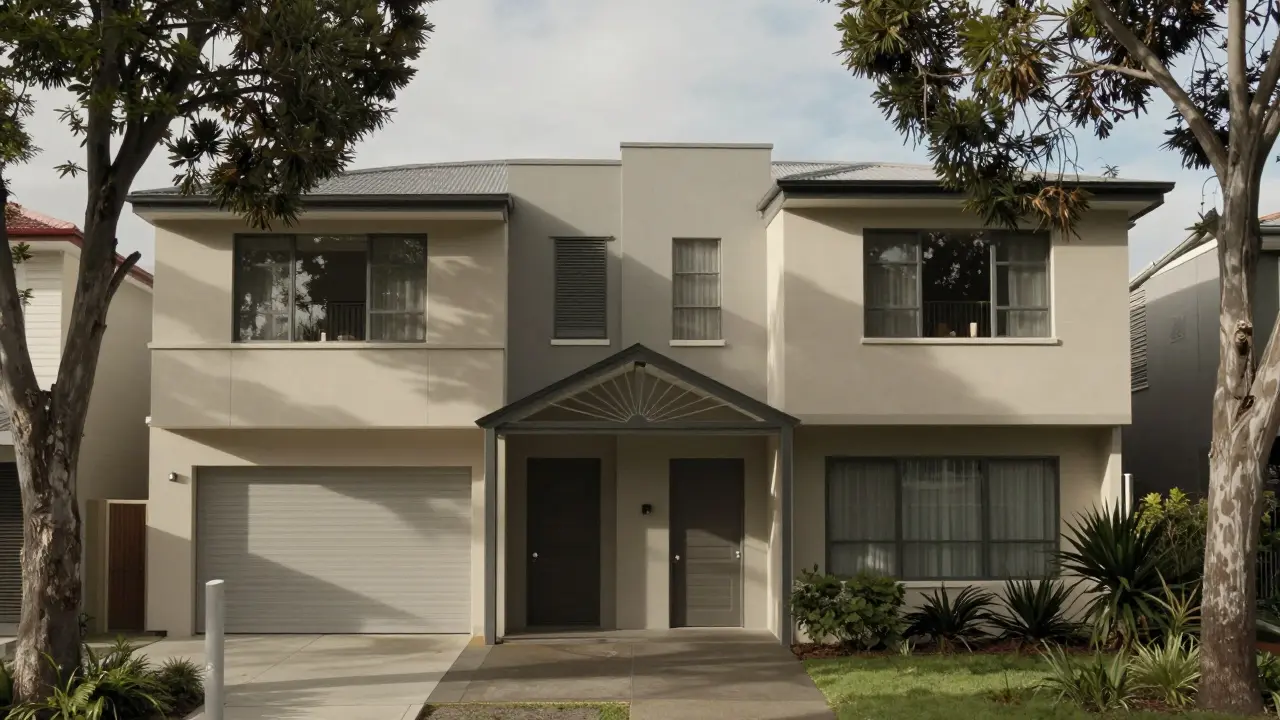
Where federal style used carved wood and plaster to show elegance, modern design used glass and steel. But the underlying logic stayed the same: proportion, balance, and clarity. A modern office building with evenly spaced windows? That’s federal. A house with a centered entrance and a clean, uncluttered facade? That’s federal too.
The difference? Federal architecture decorated its symmetry. Modern architecture just lived in it.
Why Symmetry Still Matters
Modern architects talk about “visual weight” - how elements in a design feel balanced. Federal architects figured this out 200 years ago. A door in the middle of a facade isn’t just convenient - it creates calm. Windows spaced evenly? They guide the eye smoothly across the building. This isn’t coincidence. It’s psychology.
Studies in environmental psychology show that people feel more comfortable in spaces with symmetry. A 2021 study from the University of Melbourne found that people rated buildings with balanced proportions as 37% more “trustworthy” than asymmetrical ones - even if they couldn’t explain why.
That’s why you see federal principles in modern hospitals, schools, and even tech campuses. Apple’s headquarters? The symmetry. Google’s New York offices? The centered entrance. It’s not about copying old buildings. It’s about using the same invisible rules that made people feel safe and calm two centuries ago.
Materials Changed, But the Rules Didn’t
Federal buildings were made of brick, wood, and stone. Today, we use concrete, steel, and glass. But the way we arrange them? Still federal.
Take the 2023 renovation of the historic Federal Courthouse in Portland, Oregon. The original 1880s structure had a central portico and double-hung windows. The architects kept those features - but replaced the wooden sash windows with energy-efficient double-glazed units. The brick was cleaned, not covered. The symmetry? Left untouched.
That’s the pattern: modern renovations don’t erase federal design. They upgrade it. The same goes for new construction. A modern library in Denver, built in 2022, has a flat roof and steel beams - but its front facade is divided into thirds, with a centered entrance and windows spaced exactly like a federal townhouse from 1810.
The Quiet Influence on Everyday Buildings
You don’t need to visit a museum to see federal architecture’s influence. Look at your local bank. Or the public library. Or the apartment complex you live in.
Most suburban homes built between 1990 and 2010 used a simplified version of federal design: a centered door, a small porch, evenly spaced windows, and a gable roof. It’s the default look because it works. It’s familiar. It feels stable.
Even in Australia, where federal architecture never took root as a national style, developers use its principles. In Melbourne’s inner suburbs, you’ll find new townhouses with symmetrical facades, fanlights above doors, and double-hung windows - all borrowed from American federal design. Why? Because it’s proven. It doesn’t go out of style.
What Modern Design Learned - and What It Forgot
Modern architecture took federal’s order and stripped away its warmth. Many contemporary buildings feel cold because they lost the human scale. Federal architecture didn’t just care about balance - it cared about detail.
Look at a federal-era doorway. The fanlight above it wasn’t just decorative. It let light into the hallway. The sidelights flanking the door? They made the entrance feel more welcoming. Modern architects often skip these. They go for big glass walls, but forget the small touches that made people feel at home.
The lesson? You can be minimalist without being empty. You can be clean without being cold. Federal architecture proves that. It’s not about adding more. It’s about knowing what to keep.
Why It Still Works Today
There’s a reason federal architecture never died. It’s because it solved problems we still have:
- How do you make a building feel dignified without being intimidating?
- How do you create order without monotony?
- How do you design for light, airflow, and comfort - before air conditioning existed?
The answers were all in federal design. And now, as we face climate challenges and the demand for sustainable buildings, those old solutions are more relevant than ever.
Modern architects are rediscovering passive design: natural ventilation, orientation for sunlight, thermal mass. Federal buildings did this naturally. Thick brick walls stored heat. High ceilings let hot air rise. Shutters blocked summer sun. These weren’t green innovations - they were just smart design.
Today’s sustainable homes in California and Melbourne are copying these exact tricks - not because they’re old, but because they work.
Federal architecture didn’t disappear. It just went underground. It’s in the bones of every balanced, calm, well-proportioned building you pass every day. You don’t notice it - because it’s done its job too well.
Is federal architecture the same as Georgian architecture?
No. Georgian architecture came first, from about 1714 to 1790. It’s heavier, with more ornamentation - think brick, bold cornices, and large central chimneys. Federal architecture, which followed from 1780 to 1830, is lighter. It uses finer details like delicate moldings, fanlights, and smaller windows. Federal style was a reaction against Georgian’s formality - it wanted to feel more refined and democratic.
Why is federal architecture so common in American government buildings?
After the Revolution, the U.S. needed a visual identity that felt independent from Britain but still connected to ideas of democracy. Ancient Rome and Greece were seen as models of republics. Federal architecture borrowed from those classical traditions - columns, symmetry, order - to suggest stability, reason, and civic virtue. It wasn’t just style. It was symbolism.
Can federal architecture be used in modern homes?
Absolutely. Many modern homeowners blend federal principles with contemporary materials. A flat-roofed house with a centered door, sidelights, and evenly spaced windows can feel both classic and current. You don’t need to replicate 1800s details - just the underlying logic: balance, proportion, and clarity. It’s a timeless formula.
Did federal architecture influence other countries?
Yes, though indirectly. While federal architecture was distinctly American, its clean, classical style spread through international design circles in the 19th century. Architects in Europe and Australia adopted its restrained elegance, especially in public buildings. Today, you see its fingerprints in government buildings from Canada to Singapore - not because they copied it, but because its principles are universally effective.
What’s the biggest misconception about federal architecture?
That it’s outdated. People think it’s just for museums or historic districts. But federal design isn’t about age - it’s about structure. Its emphasis on symmetry, natural light, and human scale makes it one of the most adaptable styles ever created. You’re living with it right now - even if you don’t realize it.