When you walk past a building with pointed arches, flying buttresses, and stained glass that seems to glow from within, you’re seeing Gothic Revival architecture in action. It’s not just old-style churches-it’s a movement that reshaped cities from London to Melbourne in the 1800s. People didn’t just copy medieval designs; they reimagined them for a new age of industry, faith, and national pride. This style didn’t fade. It became a symbol of permanence, grandeur, and spiritual ambition. And today, some of the most recognizable buildings in the world still wear its signature look.
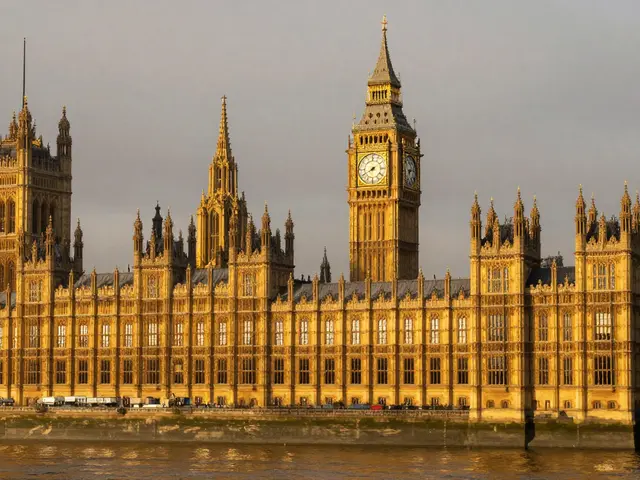
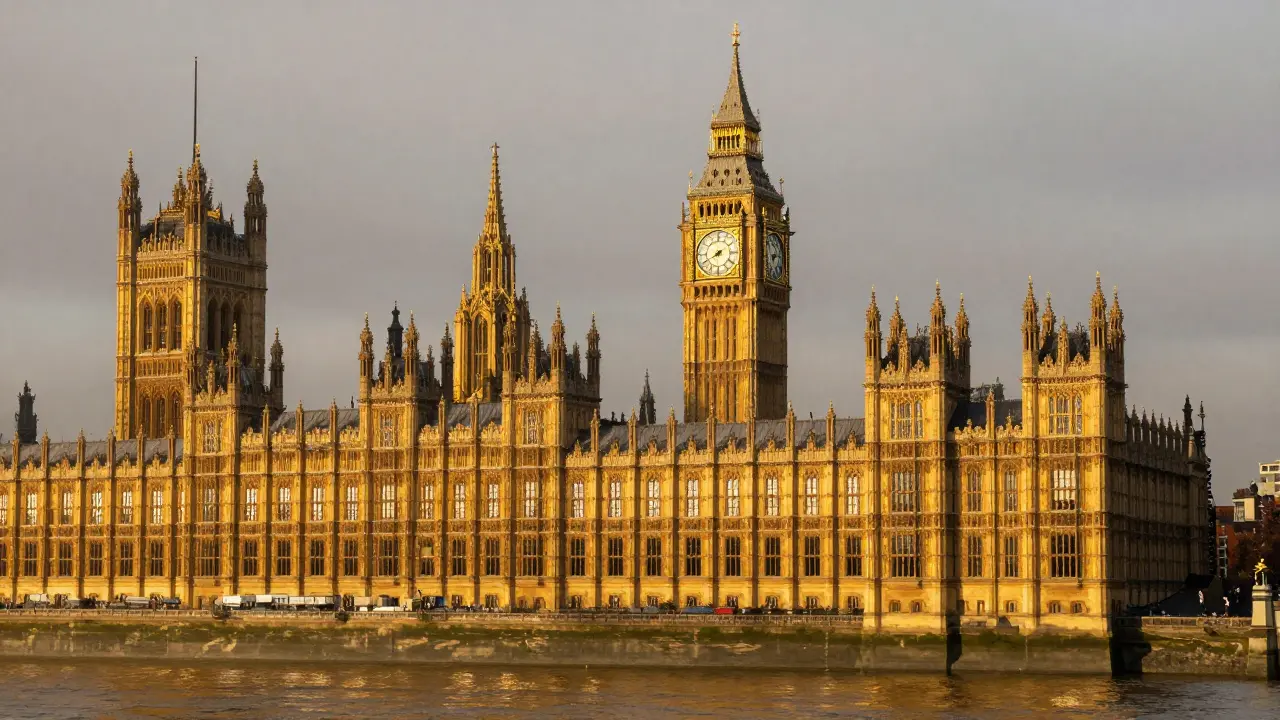
Palace of Westminster, London
The most famous example of Gothic Revival isn’t a church-it’s a government building. After a fire destroyed the old Houses of Parliament in 1834, architect Charles Barry won the commission to rebuild it. He teamed up with Augustus Welby Pugin, a true Gothic purist, to design something that looked like it had stood for centuries. The result? Over 1,100 rooms, 100 staircases, and the iconic Big Ben clock tower. Every stone, every gargoyle, every tracery window was chosen to echo 14th-century English Gothic. It wasn’t just about beauty-it was about connecting modern democracy to England’s medieval past. Today, it’s a UNESCO World Heritage Site and the visual shorthand for British political power.
Notre-Dame Cathedral, Paris
Notre-Dame wasn’t built in the 1800s-it was built between 1163 and 1345. But its revival is what made it famous today. In the 1840s, architect Eugène Viollet-le-Duc led a massive restoration after centuries of neglect and revolution-era damage. He didn’t just repair it-he reinvented it. He added the spire that collapsed in 2019, designed new statues, and restructured the flying buttresses to make them taller and more dramatic. His work turned Notre-Dame from a crumbling relic into the definitive image of French Gothic. The 2019 fire brought the world’s attention back to Viollet-le-Duc’s additions, proving how deeply his 19th-century vision became part of the building’s identity.
St. Patrick’s Cathedral, New York City
When Irish immigrants poured into New York in the mid-1800s, they wanted a cathedral that matched their faith and pride. The result, completed in 1878, stands as the largest Gothic Revival cathedral in North America. Designed by James Renwick Jr., it has a 330-foot spire, 120 stained-glass windows, and a nave long enough to hold 2,200 people. The interior glows with light filtered through blue and gold glass, and the exterior is carved with more than 1,000 statues of saints and biblical figures. Unlike many European examples, this cathedral was built with American materials and labor. It wasn’t just a place of worship-it was a statement: Catholicism had arrived, and it wasn’t going away.
University of Toronto’s King’s College Chapel
In 1843, the Church of England wanted to establish a Protestant alternative to secular universities. The answer? A Gothic Revival chapel at the heart of the new University of Toronto. Designed by Frederic Cumberland, the chapel’s interior is a masterpiece of woodwork and stone. The hammerbeam roof, carved with angels and foliage, looks like it came straight from Oxford. The stained glass, added later, depicts Canadian saints and historical figures. It’s a quiet building, but its presence changed the tone of higher education in Canada. For decades, students walked under its arches not just to study, but to feel part of something older and more enduring than textbooks.
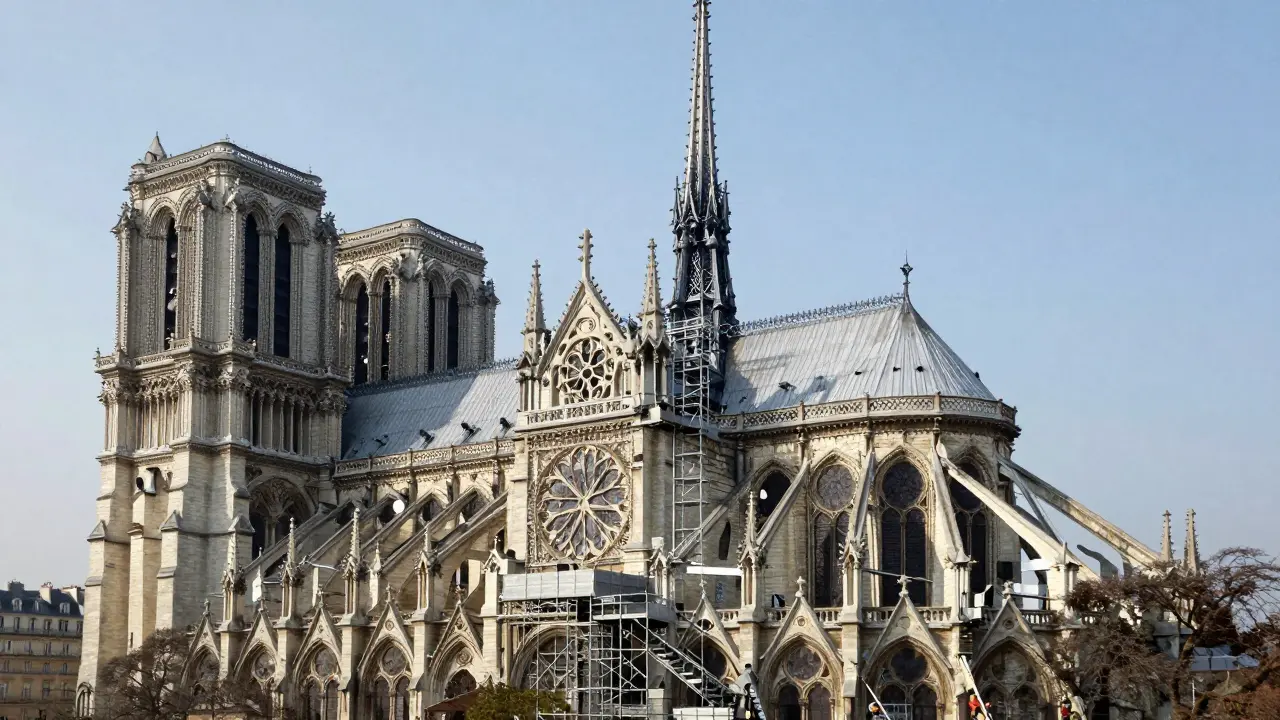
Chicago’s Holy Name Cathedral
Chicago’s original cathedral burned down in the Great Fire of 1871. The replacement, completed in 1875, was a bold statement of resilience. Designed by Patrick Keely, one of America’s most prolific church architects, Holy Name Cathedral features a 225-foot spire, a 300-foot-long nave, and 14 side chapels. The exterior is made of limestone quarried in Indiana, while the interior uses marble from Italy. What makes it stand out is how it blends traditional Gothic elements with American scale. The stained glass windows are larger than most European cathedrals, and the organ, installed in 1883, was the largest in the U.S. at the time. It’s not a copy-it’s an American reinterpretation of Gothic grandeur.
St. Giles’ Cathedral, Edinburgh
St. Giles’ is one of the oldest churches in Scotland, dating back to the 12th century. But its current look? That’s all 19th-century Gothic Revival. After years of neglect, architect William Burn led a major restoration in the 1870s. He added the crown spire-the iconic symbol of Edinburgh’s skyline-and redesigned the interior to reflect the ideals of the Scottish Reformation. The result is a building that feels both ancient and newly revived. Inside, the stone carvings of Scottish kings and bishops tell a story of national identity. Outside, the spire rises above the Royal Mile like a beacon. It’s not just a church-it’s a monument to Scottish pride.
Parliament Buildings, Ottawa
When Canada became a nation in 1867, it needed a capital-and a parliament building that reflected its new identity. The choice? Gothic Revival. Designed by Thomas Fuller and Chilion Jones, the Centre Block (completed in 1866) blends English, French, and Canadian influences. The Peace Tower, added in 1927 after a fire, is the most photographed part, standing 92 meters tall with its clock and carillon bells. Inside, the Library of Parliament is a jewel of ironwork and stained glass, modeled after the Bibliothèque Sainte-Geneviève in Paris. The building’s design was intentional: it linked Canada to Britain’s imperial past while asserting its own distinct voice. Even today, the flags on the Peace Tower fly at half-mast only for national mourning.
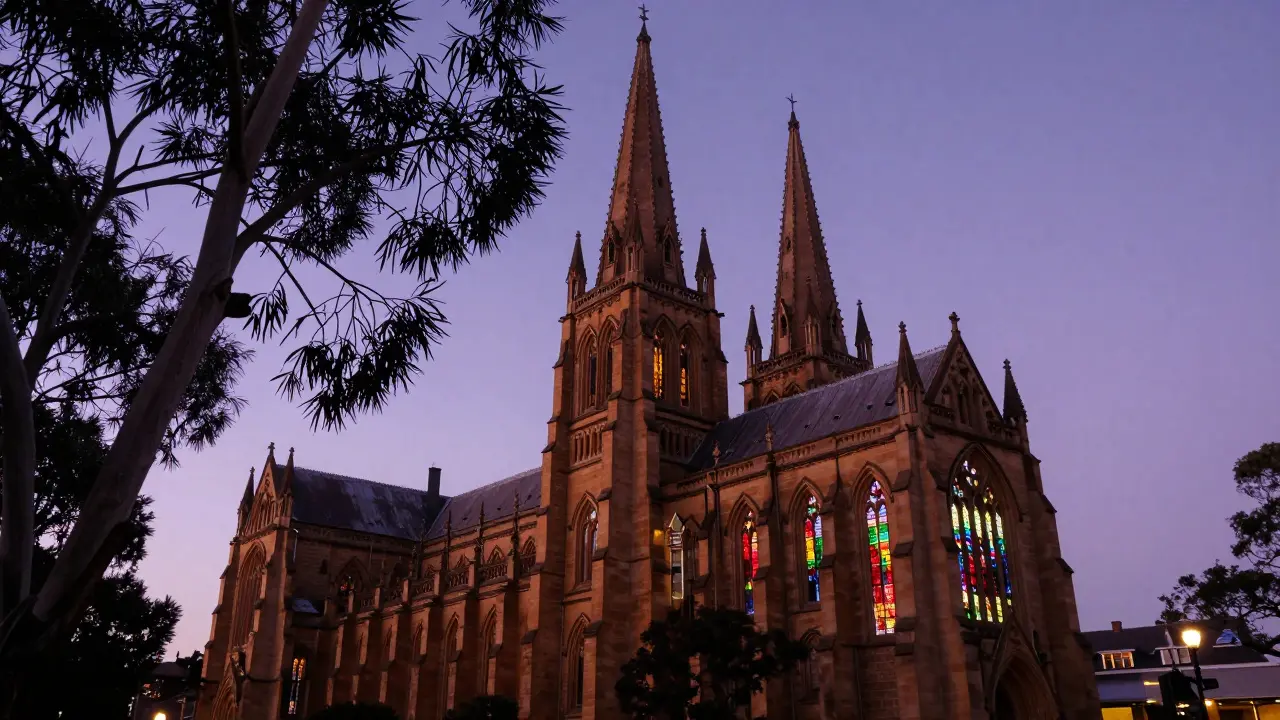
St. Mary’s Cathedral, Sydney
Construction began in 1868 and didn’t finish until 1928-longer than most Gothic cathedrals in medieval Europe. Designed by William Wardell, a former pupil of Pugin, St. Mary’s is Australia’s largest cathedral. Its twin spires, each 80 meters tall, dominate the Sydney skyline. The interior is cool and dim, lit by stained glass from Munich and Belgium. The nave is supported by 48 marble columns, and the altar is carved from Carrara marble. What’s surprising is how the design adapted to its environment. The thick stone walls help keep the interior cool in Australia’s heat. The cathedral wasn’t built to impress tourists-it was built to serve a growing Catholic community in a distant colony. It still does.
Washington National Cathedral, Washington D.C.
Started in 1907 and finished in 1990, this is the longest-running Gothic Revival project in American history. Built by the Episcopal Church, it was meant to be a national house of prayer. Its 100-foot-high vaulted ceilings, 240 stained-glass windows, and 112 gargoyles make it the second-largest cathedral in the world. What makes it unique is how it blends medieval forms with American innovation. The stones were quarried in Ohio and Indiana. The carvings include astronauts, dragons, and even a Darth Vader grotesque (added in 1985). The cathedral hosted the funerals of three U.S. presidents and became a symbol of unity during times of national grief. It’s not just architecture-it’s a living memorial.
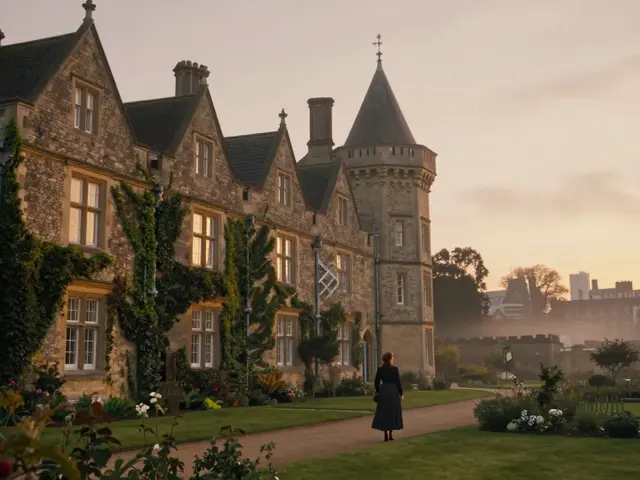
Castle Howard, Yorkshire
Castle Howard isn’t a cathedral or a parliament-it’s a country house. But it’s one of the most striking examples of Gothic Revival outside religious or civic buildings. Built between 1699 and 1712, it was redesigned in the 1840s by architect Charles Barry (the same man behind London’s Parliament). He added pointed arches, battlements, and a 120-foot tower to what was originally a Baroque mansion. The result? A hybrid of romance and function. The house became a setting for novels, films, and TV dramas-not because it was medieval, but because it felt like it belonged to another time. Today, it’s a reminder that Gothic Revival wasn’t just for churches. It was for anyone who wanted to feel like they lived in a story.
Why Gothic Revival Still Matters
These buildings aren’t just relics. They’re active parts of modern life. People get married in them. Students study in their libraries. Tourists stand in awe beneath their spires. They survived wars, fires, and neglect because they were built to last-not just in stone, but in meaning. Gothic Revival didn’t just revive an old style; it gave new purpose to old forms. It told people that beauty, faith, and history still mattered in an age of steam engines and factories. Today, in a world of glass towers and minimalist design, these buildings remind us that architecture can carry memory, emotion, and identity.