Art Nouveau architecture didn’t just appear out of nowhere. It erupted in the late 1800s like a vine breaking through concrete-organic, bold, and impossible to ignore. It was a rebellion against the stiff, copied styles of the past. No more straight lines. No more carved marble columns pretending to be Roman. Instead, architects started bending metal like reeds, turning staircases into flowing water, and carving facades that looked like they were grown, not built. And behind this movement were a handful of people who refused to follow the rules. These were the pioneers-the ones who turned buildings into living things.
Hector Guimard: The Parisian Visionary
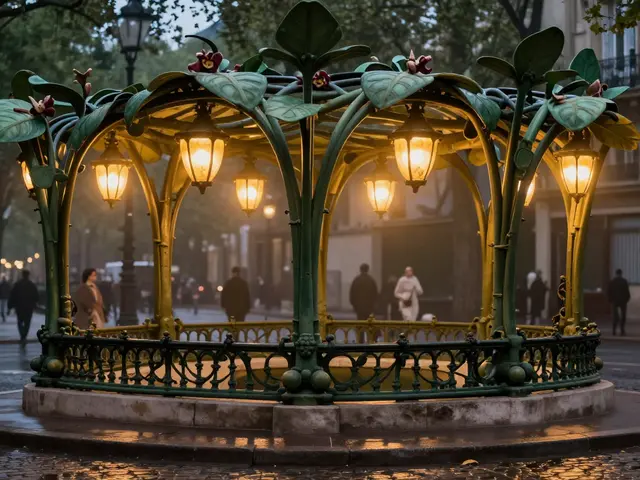
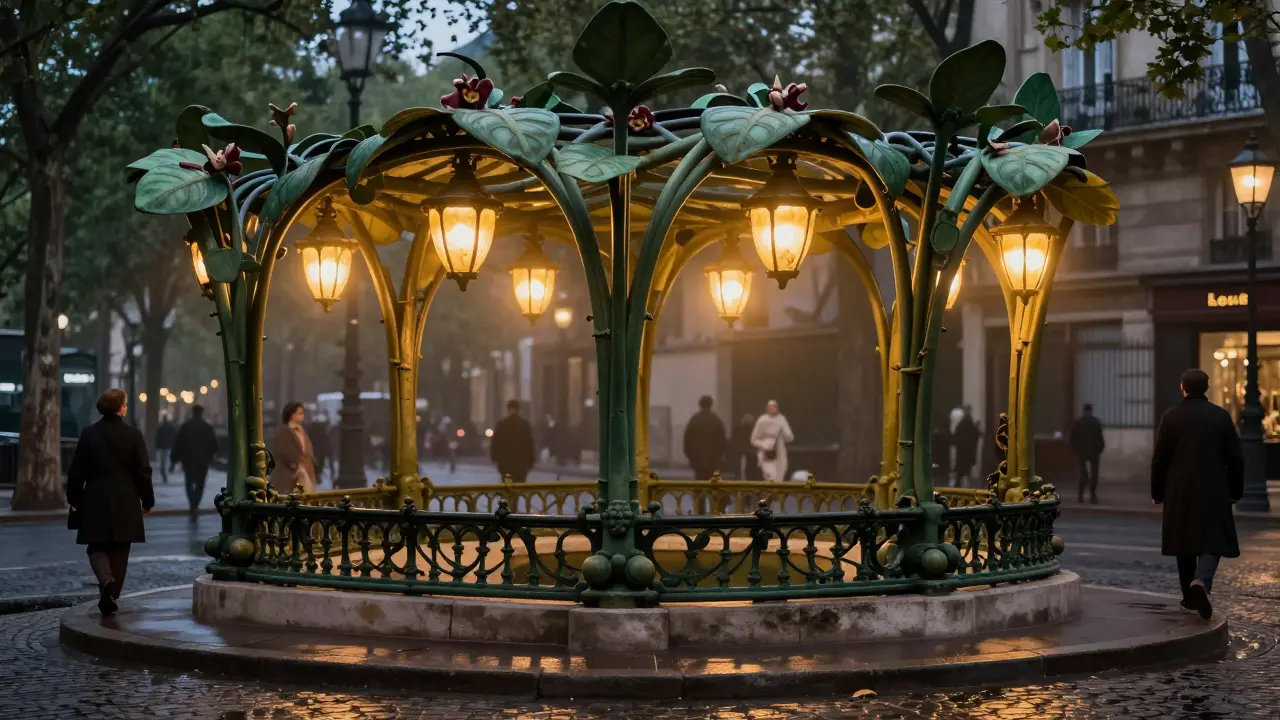
If you’ve ever stood under the curving iron canopies of a Paris Métro entrance, you’ve seen Guimard’s work. He didn’t just design subway stations-he gave Paris a new kind of skin. Between 1899 and 1905, he built over 140 entrances for the new metro system. Each one used cast iron shaped like stems and leaves, with glass lanterns that glowed like fireflies at night. People called them entrées du métropolitain, but locals just called them Guimard’s lilies. He didn’t care about symmetry. He didn’t care about tradition. He cared about movement. His designs were inspired by orchids and dragonflies, not classical temples. And they worked. Millions of Parisians passed under them every day, never realizing they were walking through a work of art.
Antoni Gaudí: The Architect Who Talked to Nature
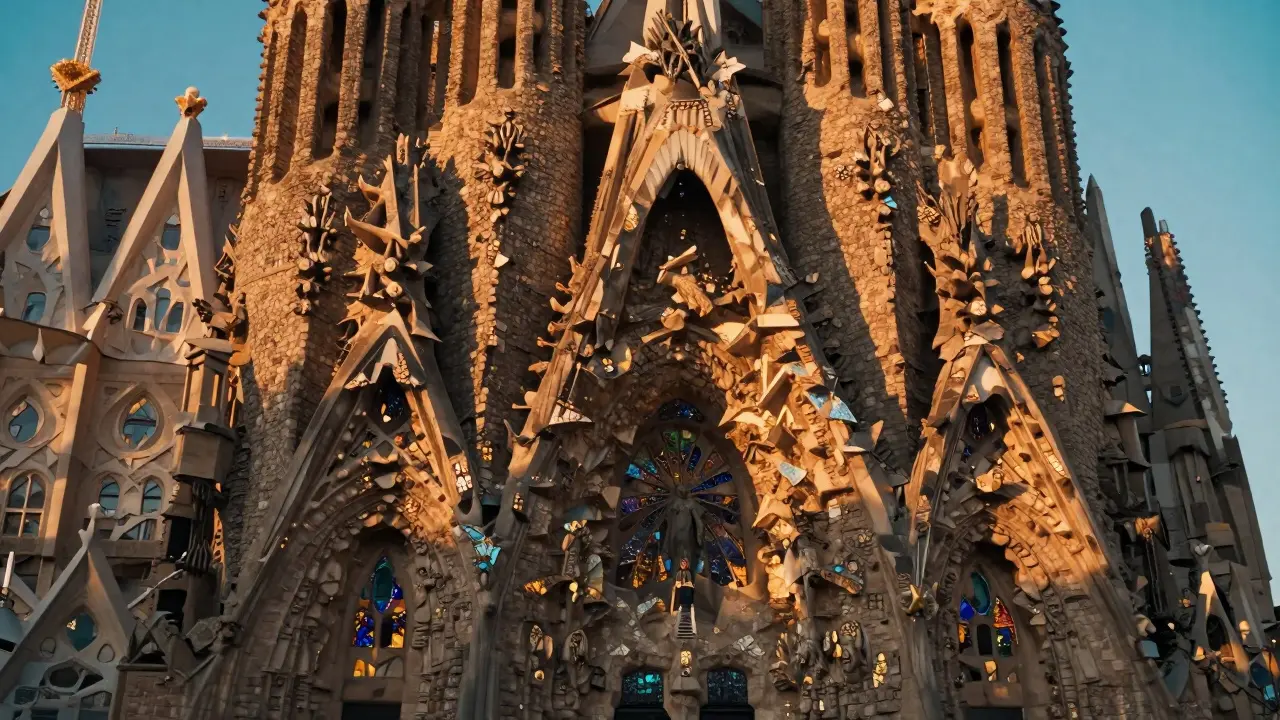
Gaudí didn’t sketch buildings-he listened to them. He spent years studying the curves of tree branches, the strength of honeycombs, and the way light bent through shells. Then he built them. His Sagrada Família in Barcelona isn’t just a church. It’s a forest made of stone. The columns look like trunks branching into a canopy of light. The facades are covered in mosaics that shift color with the sun. He used catenary arches-shapes found in hanging chains-because they were stronger and more natural than right angles. He even built models out of string and weights to figure out how to make walls hold themselves up. Critics called him mad. But today, his buildings are UNESCO World Heritage sites, visited by over 4 million people a year. He didn’t just design architecture. He made nature into architecture.
Victor Horta: The Man Who Turned Iron into Silk
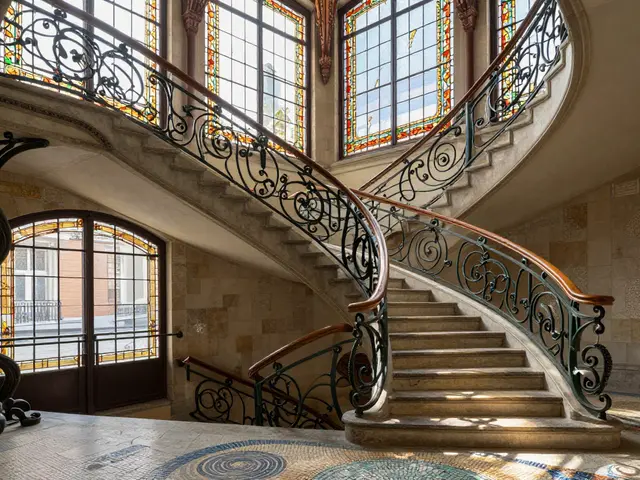
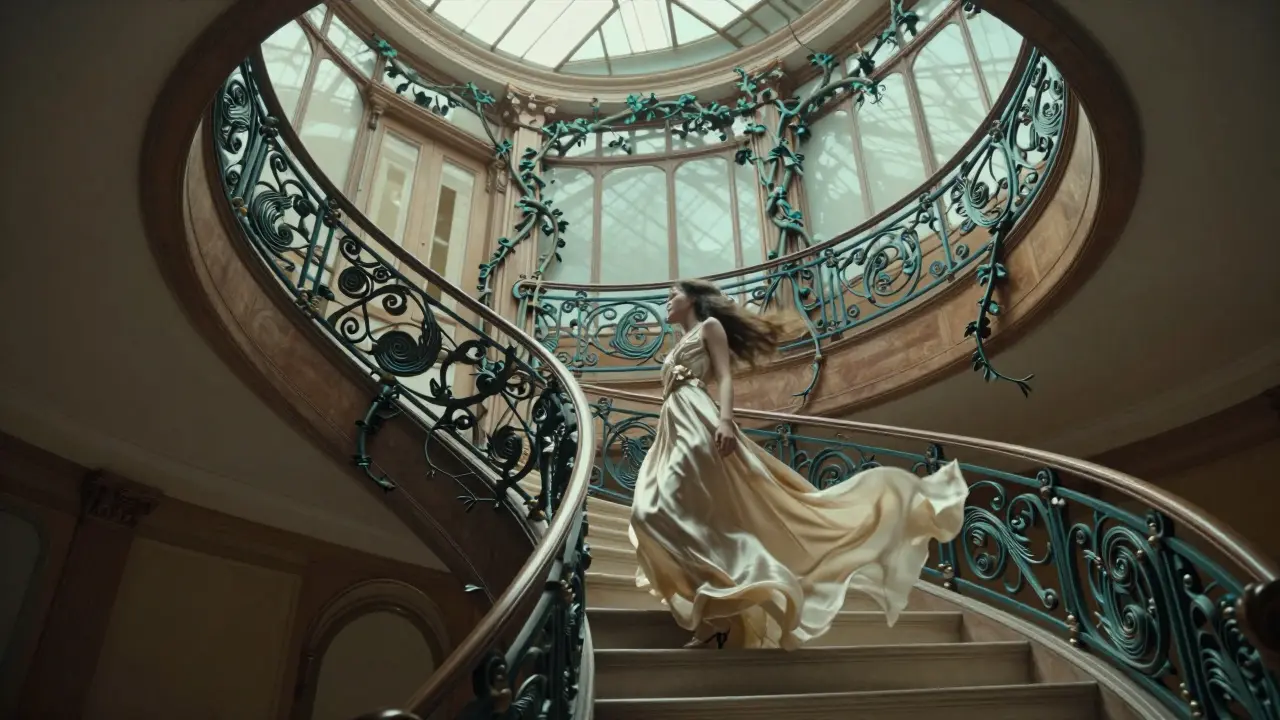
In Brussels, Horta turned a simple townhouse into a revolution. His Hôtel Tassel, built in 1893, was the first building in the world to fully embrace Art Nouveau from the inside out. The iron railings on the stairs curled like vines. The windows were framed in flowing lines that led your eye up to the skylight. Even the doorknobs were shaped like flower buds. He didn’t use paint to hide the structure-he made the structure the decoration. His use of iron wasn’t industrial. It was poetic. He showed that metal could be soft, that steel could bend like reeds, and that a staircase could feel like a dance. His work inspired architects from Vienna to Glasgow. He didn’t just build houses-he built experiences.
Charles Rennie Mackintosh: The Quiet Rebel of Glasgow
While others went wild with curves, Mackintosh went quiet. He stripped Art Nouveau down to its bones. His buildings in Glasgow-like the Glasgow School of Art-looked like they were carved from a single piece of charcoal. Sharp angles. High, narrow windows. Geometric floral patterns etched into wood. He didn’t copy nature. He abstracted it. His furniture looked like skeletons of flowers. His lamps looked like lanterns made from glass and iron. People thought his style was cold. But it wasn’t. It was precise. It was elegant. It was the kind of beauty that made you pause. He didn’t want to overwhelm you. He wanted to make you feel something. His work influenced modernist designers decades later. Even Le Corbusier admitted he was inspired by Mackintosh’s restraint.
Otto Wagner: The Engineer Who Believed Beauty Was Practical
In Vienna, Wagner didn’t see Art Nouveau as decoration. He saw it as engineering made visible. His Postal Savings Bank, built in 1904, was one of the first buildings to use aluminum, marble, and glass in a way that screamed modernity. The facade was covered in smooth, flat tiles. The railings were made of steel, polished to a mirror finish. He didn’t hide the pipes or the wiring. He made them part of the design. He wrote, “Art is not a luxury. It is a necessity.” And he proved it. He turned a bank into a temple of efficiency. His buildings had no ornament for ornament’s sake. Every curve had a purpose. Every line served a function. He showed that modern materials could be beautiful-not despite their function, but because of it.
Why These Five Changed Everything
These five didn’t just build buildings. They changed how people thought about space, materials, and beauty. Guimard made public infrastructure feel magical. Gaudí turned sacred spaces into natural ecosystems. Horta made homes feel alive. Mackintosh proved that simplicity could be powerful. Wagner showed that industry and art could marry. Together, they broke the idea that buildings had to be copies of the past. They proved that architecture could be personal, emotional, and alive. Their work didn’t just look different-it felt different. You didn’t just walk into one of their buildings. You stepped into a new way of seeing the world.
What Happened After?
By 1910, Art Nouveau was already fading. The world was heading toward war. People wanted efficiency, not elegance. The rise of the International Style-clean boxes, no decoration-pushed Art Nouveau to the edges. But its DNA didn’t disappear. It lived on in the curves of Frank Lloyd Wright’s Prairie homes. In the organic forms of Eero Saarinen’s furniture. In the flowing lines of contemporary Japanese architecture. Today, when you see a café with a stained-glass ceiling that looks like a peacock’s tail, or a railing that twists like a vine, you’re seeing the ghost of these pioneers. They didn’t just create a style. They created a language. And we’re still learning to speak it.
Who is considered the father of Art Nouveau architecture?
There’s no single "father," but Victor Horta is often credited as the first to fully realize Art Nouveau in architecture with his Hôtel Tassel in Brussels (1893). He was the first to integrate iron, glass, and organic forms into every part of a building-from the stairs to the doorknobs-making it a total work of art. Others like Guimard and Gaudí followed closely, but Horta’s design was the first to break completely from historical styles.
Why did Art Nouveau architecture fall out of favor?
Art Nouveau faded because it was expensive, labor-intensive, and seen as too decorative. The outbreak of World War I shifted priorities toward practicality. The rise of modernism in the 1920s-led by architects like Le Corbusier and Mies van der Rohe-rejected ornament entirely. They favored clean lines, steel, and glass. Art Nouveau’s handcrafted details didn’t fit the industrial age. But it wasn’t erased. Its influence quietly lived on in later movements, especially in organic modernism and mid-century design.
Are there any Art Nouveau buildings still in use today?
Yes, many are still in active use. Hector Guimard’s Paris Métro entrances still guide millions of riders daily. Antoni Gaudí’s Sagrada Família is under construction after 140 years and is now one of the world’s most visited churches. Victor Horta’s Hôtel Tassel is a museum. Charles Rennie Mackintosh’s Glasgow School of Art, though damaged by fire in 2014 and 2018, is being restored and still houses students. Otto Wagner’s Postal Savings Bank in Vienna remains a working bank. These aren’t relics-they’re living architecture.
What materials were most commonly used in Art Nouveau architecture?
Art Nouveau architects favored materials that could be shaped fluidly: wrought iron for railings and facades, stained glass for windows and skylights, ceramics for decorative tiles, and carved wood for interiors. They also used new industrial materials like reinforced concrete, aluminum, and plate glass. Unlike earlier styles that relied on stone and marble, Art Nouveau embraced modernity. The beauty came from how these materials were shaped-not from how expensive they were.
How did Art Nouveau differ from Victorian architecture?
Victorian architecture was about layering-carved wood, heavy drapes, ornate moldings, and cluttered details. It copied past styles, often mixing Gothic, Renaissance, and Romanesque elements. Art Nouveau rejected that. It was unified, not layered. It drew inspiration from nature-not from history. Its lines were continuous, not broken into pieces. It didn’t just add decoration; it made the structure itself decorative. Where Victorian buildings looked busy, Art Nouveau buildings felt alive.