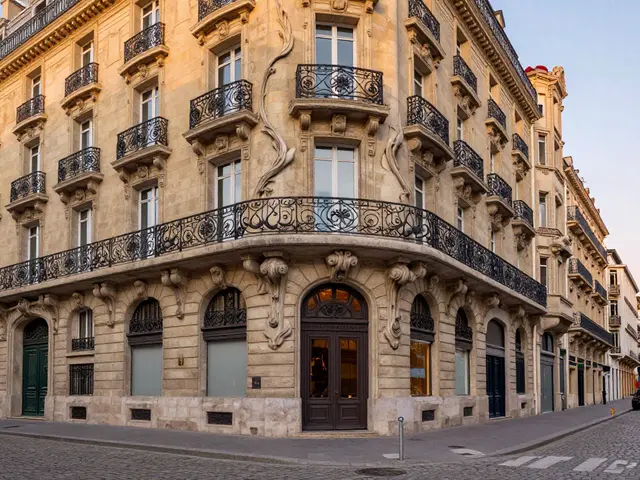

Walk down any street in Brussels, Barcelona, or Paris, and you might spot something that looks like it stepped out of a dream. Curved lines twist like vines. Flowers bloom in stone. Windows curl like petals. This isn’t fantasy-it’s Art Nouveau architecture, and it’s still standing, breathing, and whispering to anyone who slows down enough to look.
Art Nouveau wasn’t just a style. It was a rebellion. In the late 1800s, architects and designers were tired of copying the past. No more Gothic revival. No more rigid neoclassical columns. They wanted something alive. Something that looked like nature, not a rulebook. And so, they turned to plants, insects, and flowing water for inspiration. The result? Buildings that didn’t just house people-they felt like they were growing.
Where Nature Became Structure
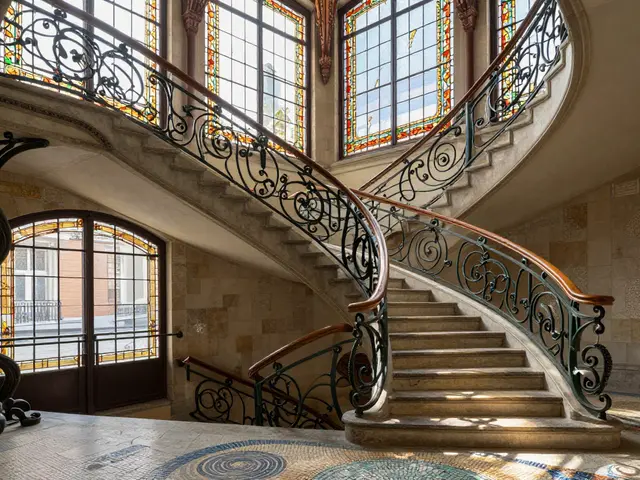
Forget straight lines. Art Nouveau architecture bends, swells, and spirals. Door frames aren’t rectangular-they’re shaped like the stem of a lily. Balconies twist like tendrils climbing a trellis. Staircases rise like the spine of a dragon. This wasn’t decoration added on. It was structure itself, reshaped.
Take the Hector Guimard is a French architect and designer who pioneered Art Nouveau in Paris, especially through his iconic Métro entrances. His Métro stations in Paris aren’t just transit points-they’re sculptures. Cast iron flows like seaweed. Glass domes mimic dragonfly wings. People didn’t just ride the subway; they walked through living art.
In Barcelona, Antoni Gaudí is a Catalan architect whose organic, curvilinear buildings define Art Nouveau in Spain, especially Casa Batlló and Casa Milà took it further. Casa Batlló’s roof looks like the scaled back of a dragon. Its windows are uneven, as if the building was molded by wind. Even the doorknobs are shaped like seashells. Gaudí didn’t draw blueprints-he sketched ideas from nature, then built them.
The Iron That Breathes
One of the most recognizable features of Art Nouveau is wrought iron. But it’s not the cold, industrial kind. This iron is soft. It curves. It dances. You’ll see it on balconies, stair railings, and street lamps-every piece unique, never mass-produced.
In Brussels, the Hôtel Tassel is a residence designed by Victor Horta in 1893, widely considered the first true Art Nouveau building by Victor Horta uses iron like lace. The railings twist into ferns and vines. Light filters through them, casting shadows that move like leaves in the wind. This wasn’t just aesthetic. It was a statement: beauty could be structural, not just surface-deep.
Compare that to the ironwork on the Secession Building is a Vienna-based building designed by Joseph Maria Olbrich in 1898, serving as the exhibition hall for the Vienna Secession art movement in Vienna. Here, the iron is more geometric, but still fluid. Gold leaf glimmers on the surface. The entire building is crowned with a golden crown of laurel leaves-a symbol of artistic freedom.

Color That Comes Alive
Art Nouveau didn’t shy away from color. In fact, it embraced it. Stained glass wasn’t just for churches. It was for homes, shops, and theaters. Glass panels in the Paris Métro entrances are designed by Hector Guimard, featuring organic shapes and green-tinted glass that mimic plant life glow with muted greens and amber tones, like sunlight filtering through a forest canopy.
In the Casa Batlló is a residential building in Barcelona designed by Antoni Gaudí, known for its undulating facade and colorful mosaic tiles, the tiles aren’t just decorative-they’re part of the building’s skin. Blues, greens, and whites shimmer like ocean waves. The roof, covered in broken ceramic pieces, looks like a dragon’s back. Gaudí didn’t paint the building. He made it glow.
Even the interiors were painted with care. Walls weren’t white. Ceilings weren’t plain. Murals of peacocks, lilies, and flowing hair covered ceilings. Floors were inlaid with mosaics of natural shapes. Every room felt like stepping into a living painting.
Why It Faded-And Why It Still Matters
By the 1910s, Art Nouveau started to fade. It was expensive. Handmade details meant high costs. Mass production didn’t fit its soul. The rise of modernism-with its clean lines and steel frames-made Art Nouveau seem old-fashioned.
But here’s the thing: it never really disappeared. Cities like Brussels, Barcelona, and Nancy fought to preserve it. Today, UNESCO lists entire neighborhoods as World Heritage Sites. The Villa Majorelle is a house in Nancy, France, designed by Henri Sauvage and decorated by Louis Majorelle, showcasing Art Nouveau’s integration of architecture and decorative arts in Nancy is still lived in. The Palau Güell is a mansion in Barcelona designed by Antoni Gaudí, featuring intricate wrought iron and parabolic arches in Barcelona still draws crowds. People don’t just visit-they pause. They touch the railings. They stare at the stained glass. They wonder how anyone could make a building feel so alive.
That’s the secret of Art Nouveau. It wasn’t about looking fancy. It was about making the everyday beautiful. It said: your front door doesn’t have to be a rectangle. Your staircase doesn’t have to be stiff. Your home can breathe.

Where to See It Today
If you want to walk through Art Nouveau, here’s where to go:
- Brussels, Belgium - Hôtel Tassel, Hôtel Solvay, and the entire Saint-Gilles neighborhood. Look up at the balconies. Look down at the street lamps. They’re all originals.
- Barcelona, Spain - Casa Batlló, Casa Milà, and Palau Güell. Book a guided tour. The light changes everything.
- Paris, France - The Métro entrances. They’re free. They’re everywhere. And they’re still the most beautiful subway stops in the world.
- Nancy, France - Villa Majorelle and the École de Nancy. This city was the heart of Art Nouveau craftsmanship.
- Vienna, Austria - The Secession Building and the Stoclet Palace. Less ornate, but no less powerful.
You don’t need to travel far. Even in smaller towns, you’ll find fragments-a curved window here, an iron gate there. Look closely. You’ll see the hand of the artist. The love for nature. The refusal to settle for ordinary.
What Makes Art Nouveau Different?
It’s not just curves. It’s not just flowers. It’s the intention. Every detail was chosen with care. Every curve had meaning. A leaf wasn’t just a pattern-it was a reminder that beauty lives in growth, not perfection.
Modern buildings are efficient. Art Nouveau buildings are alive. They don’t just shelter people. They speak to them. They make you feel like you’re part of something bigger-something natural, something timeless.
Is Art Nouveau architecture still being built today?
No, true Art Nouveau architecture stopped around 1910. But its influence lives on. Modern architects still use organic shapes, flowing lines, and handcrafted details inspired by Art Nouveau. You’ll see echoes of it in boutique hotels, luxury homes, and even furniture design. It’s not being copied-but its spirit is still guiding design.
Why is Art Nouveau so expensive to restore?
Because every piece was handmade. There are no molds, no factory replacements. Restoring a wrought iron railing means finding a craftsman who can replicate the original design by hand. Glass panels need custom blowing. Murals require pigment matching. It’s not just labor-it’s artistry. A single balcony restoration can cost tens of thousands of dollars. But that’s why they’re preserved: they’re irreplaceable.
How is Art Nouveau different from Art Deco?
Art Nouveau is organic. Curves. Plants. Flow. Art Deco is geometric. Sharp angles. Symmetry. Metallic finishes. Art Nouveau came first, around 1890-1910. Art Deco followed in the 1920s and 30s. One feels like a forest; the other, like a machine. They’re opposites in spirit.
Can I visit Art Nouveau buildings without a tour?
Yes. Many exteriors are public. The Paris Métro entrances? Free to walk through. The facades of Casa Batlló and Hôtel Tassel? You can admire them from the sidewalk. Some interiors require tickets, but the outside alone is worth the trip. Look up. Look closely. You don’t need a guide to feel the magic.
What’s the most photographed Art Nouveau building?
Casa Batlló in Barcelona. Its undulating facade, colorful mosaic tiles, and dragon-shaped roof make it instantly recognizable. But Hôtel Tassel in Brussels and the Paris Métro entrances are just as iconic among architecture lovers. Each has its own character-just not as much social media exposure.