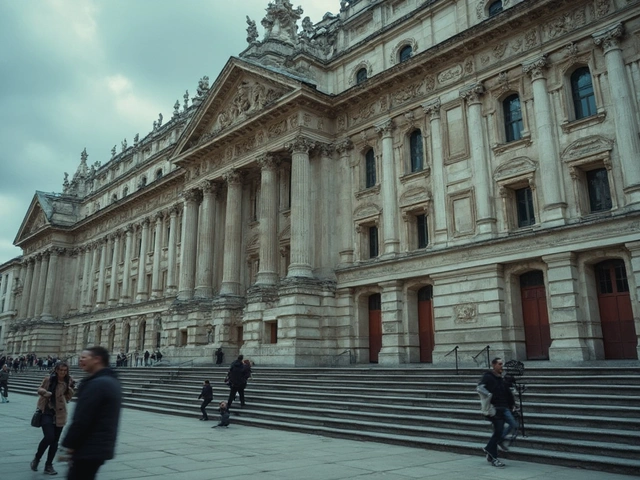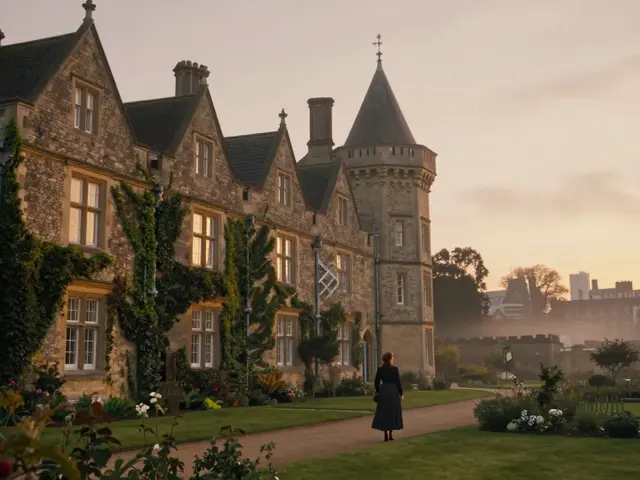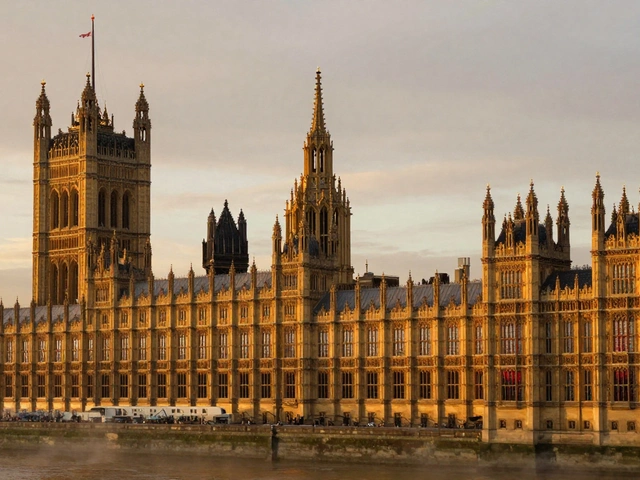
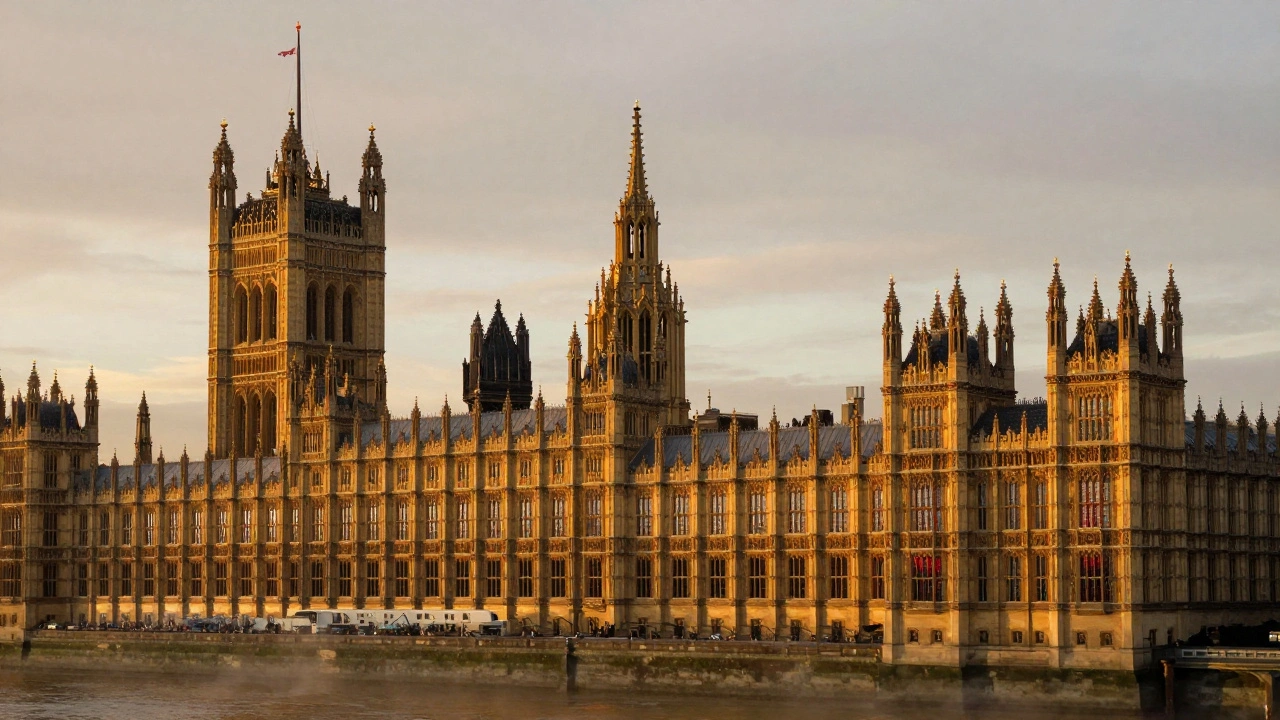
Gothic Revival architecture didn’t just copy old churches-it reshaped how entire nations saw themselves. In the 1800s, as industrial cities exploded with factories and iron bridges, people looked back to stone spires, pointed arches, and stained glass not as relics, but as symbols of identity. This wasn’t nostalgia. It was a deliberate movement to reconnect with a past they believed held moral clarity, craftsmanship, and spiritual depth. From Parliament Hill in Ottawa to the University of Melbourne’s Old Quadrangle, Gothic Revival became the language of institutions that wanted to be seen as enduring, serious, and rooted in tradition.
Why Gothic? Why Then?
The Gothic style didn’t come back by accident. It rose during a time of rapid change. The Industrial Revolution was turning villages into cities, handcraft into mass production, and local customs into standardized routines. Architects like Augustus Welby Pugin in England and Richard Upjohn in America argued that the medieval Gothic style-born between the 12th and 16th centuries-was morally superior. They claimed its hand-carved stonework, structural honesty, and integration of art and function reflected Christian values, unlike the cold, mechanical aesthetics of modern industry.
Pugin’s 1836 book Contrasts showed side-by-side images: a tidy, pious medieval town versus a grimy, chaotic Victorian city. It wasn’t just architecture he was criticizing-it was society. His ideas spread fast. By the 1840s, churches, universities, courthouses, and even train stations were being built in Gothic Revival style. The style wasn’t about copying the Middle Ages. It was about using its form to say something about the present.
How It Became a Symbol of Power
When governments and universities adopted Gothic Revival, they weren’t just choosing a pretty style-they were making a statement. The British Parliament’s rebuilding after the 1834 fire wasn’t just a construction project. It was a political act. Charles Barry and Augustus Pugin designed the new Houses of Parliament in a grand, ornate Gothic style to tie the British state to its medieval roots. The pointed arches and flying buttresses weren’t decorative. They were visual arguments: democracy had ancient legitimacy.
In the United States, Yale, Princeton, and the University of Chicago built their campuses in Gothic Revival to signal intellectual seriousness. These weren’t random choices. They were deliberate efforts to link American education to the European scholarly tradition. Even in Australia, where colonial identity was still forming, the University of Sydney’s main building-completed in 1862-used Gothic Revival to claim cultural authority. It was a way of saying: we may be far from London, but we belong to the same civilizational lineage.
The Craftsmanship That Defined It
What made Gothic Revival different from earlier styles was its obsession with detail. Every capital, every finial, every tracery panel was hand-carved. Masons spent years training to replicate medieval techniques. Stained glass windows weren’t just colorful-they told biblical stories in vivid, symbolic colors. Ironwork wasn’t hidden behind walls; it was shaped into elaborate railings and gates that echoed the organic forms of vines and branches.
At the Cathedral of St. John the Divine in New York, construction began in 1892 and is still ongoing. That’s not because of poor planning-it’s because the builders refused to compromise on craftsmanship. Even modern additions follow the original medieval-inspired designs. This wasn’t about speed or cost. It was about legacy.
Today, these buildings are preserved not just for their beauty, but because they represent a time when architecture was seen as a moral act. The carvings of saints and scholars weren’t just art-they were lessons. The height of the spires wasn’t just to impress-it was to lift the eyes upward, literally and spiritually.
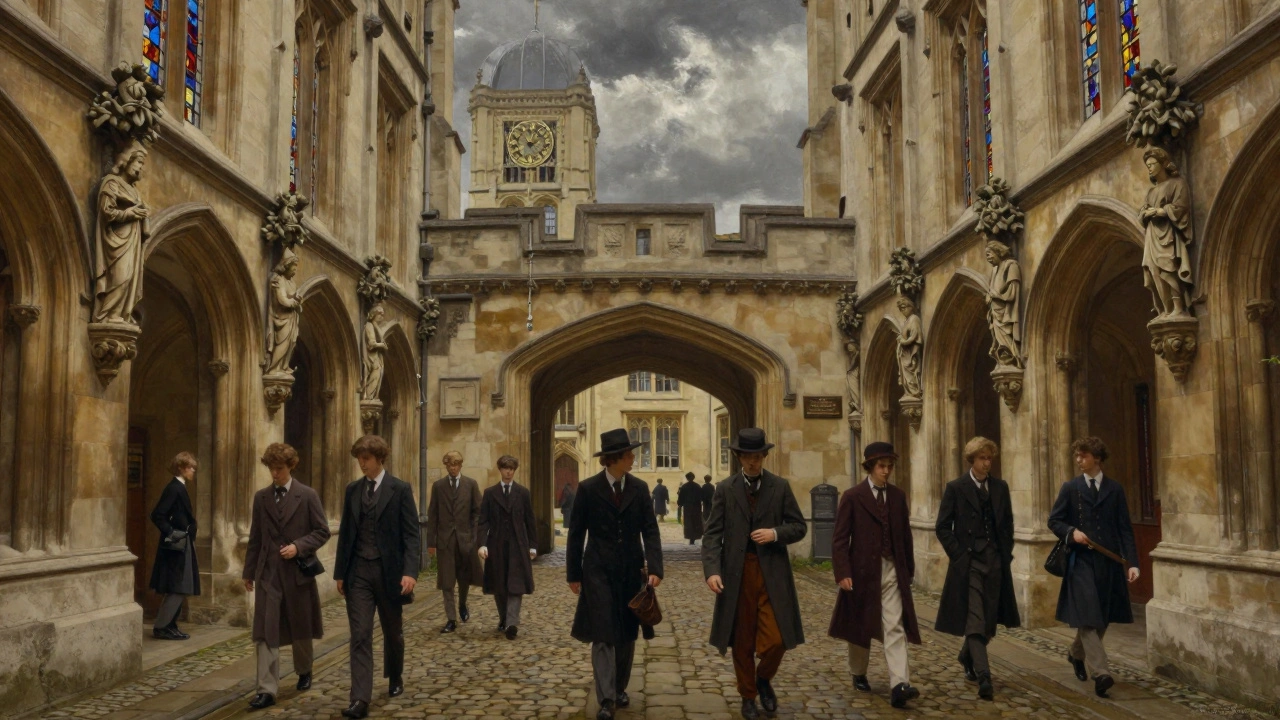
Where You Can Still See It Today
Walk through any major city in the English-speaking world, and you’ll find Gothic Revival buildings standing tall. In London, the Palace of Westminster and the Albert Memorial are textbook examples. In Paris, the Basilica of Sacré-Cœur, though built later, draws heavily from the style. In Canada, the Canadian Parliament Buildings in Ottawa are among the largest Gothic Revival complexes in the world.
Australia has its own treasures. The Melbourne Town Hall, built in 1870, with its clock tower and intricate stonework, was designed to reflect civic pride. The State Library of Victoria’s domed reading room, though more classical in layout, uses Gothic arches and stained glass to create a sense of reverence for knowledge. Even smaller towns like Ballarat and Bendigo have Gothic Revival churches that still host Sunday services, their original pews and altars unchanged for over 150 years.
These aren’t museums. They’re living spaces. People work in them, pray in them, study in them. That’s what makes them part of cultural heritage-not just their age, but their continued use.
Why It Still Matters
Today, when we talk about cultural heritage, we often think of ancient ruins or untouched villages. But Gothic Revival buildings remind us that heritage isn’t just about what survives-it’s about what we choose to rebuild. These structures were made in a time of upheaval, and they were built to last. They were meant to outlive the industrial age they were reacting against.
They also show us that architecture can carry meaning. A pointed arch isn’t just a shape. It’s a symbol of aspiration. A stained glass window isn’t just colored glass-it’s a story told in light. When we restore these buildings, we’re not just fixing brick and mortar. We’re preserving a way of thinking about beauty, community, and purpose.
Modern architects sometimes dismiss Gothic Revival as outdated or overly ornate. But when you stand inside one of these spaces-when the sun hits a 150-year-old window and casts a red and gold pattern across the floor-you understand why people fought to keep them alive. They’re not just old buildings. They’re places where history still breathes.

The Legacy in Modern Design
You don’t have to build a full Gothic cathedral to feel its influence. Many modern buildings borrow its principles: vertical emphasis, natural light through large windows, handcrafted details, and the blending of art with structure. The high ceilings in contemporary libraries, the use of stone in civic buildings, even the way some office towers rise in stepped tiers-all echo Gothic Revival’s desire to create spaces that feel meaningful, not just functional.
And in a world where so much is digital and temporary, these buildings remind us that some things are meant to endure. They were built to last centuries, not decades. That’s a radical idea today.
When UNESCO lists a Gothic Revival church as a World Heritage Site, it’s not just recognizing its age. It’s recognizing the values it represents: craftsmanship, spiritual depth, and the belief that architecture can shape how people live and think.
| Feature | Description | Example Building |
|---|---|---|
| Pointed Arches | Structural and symbolic, directing the eye upward | Parliament Hill, Ottawa |
| Flying Buttresses | External supports allowing taller walls and larger windows | University of Sydney, Main Building |
| Stained Glass Windows | Colorful narratives of religious or historical scenes | Manchester Town Hall, UK |
| Ornate Carvings | Figures of saints, animals, and foliage on capitals and walls | State Library of Victoria, Melbourne |
| Towers and Spires | Vertical emphasis symbolizing aspiration and divine connection | Cathedral of St. John the Divine, New York |
Preservation Challenges
Keeping these buildings alive isn’t easy. Many are made of soft sandstone or limestone that weathers quickly. Pollution, acid rain, and temperature swings crack the stone. Original materials like handmade bricks and natural pigments are hard to source. Modern restoration often uses concrete or synthetic finishes that look similar but don’t age the same way.
In Australia, the restoration of Melbourne’s Flinders Street Station’s Gothic-inspired facade in the 2010s cost over $20 million. Experts had to source stone from the same quarry used in the 1880s. Even the mortar had to be mixed to match the original lime-based formula. That’s not just maintenance-it’s archaeology.
And then there’s the cost. Few cities can afford to maintain these buildings without public support. That’s why community advocacy groups play such a big role. In places like Adelaide and Hobart, local heritage societies have fought to save Gothic Revival churches from demolition, turning them into libraries, galleries, or community centers instead.
What makes Gothic Revival different from actual medieval Gothic architecture?
Medieval Gothic architecture (12th-16th centuries) evolved naturally over time, with regional variations across Europe. Gothic Revival, which began in the 1740s and peaked in the 1800s, was a deliberate, often idealized reinterpretation. Revival architects borrowed elements like pointed arches and stained glass but combined them with modern materials (like iron frames) and new functions (like train stations or universities). They weren’t copying-they were reinventing the style to fit 19th-century values.
Why did Gothic Revival become popular in Australia?
In the 1800s, Australia was still a collection of British colonies. Gothic Revival was the style of the Empire-used in Parliament, cathedrals, and universities back home. By adopting it, Australian cities signaled they were part of a respected cultural tradition. It wasn’t just fashion-it was identity. Buildings like the University of Sydney’s Main Building were meant to show that the colony could match Europe in sophistication and permanence.
Are there any Gothic Revival buildings still in active use today?
Yes-many. The Houses of Parliament in London, the University of Chicago’s campus, the Cathedral of St. John the Divine in New York, and Melbourne’s Town Hall are all still used for their original purposes. Even smaller churches and libraries built in the 1870s continue to serve their communities. Their continued use is what makes them part of living heritage, not just museum pieces.
Was Gothic Revival only used for religious buildings?
No. While churches were the most common, the style was also used for universities, courthouses, train stations, libraries, and even private homes. The idea was that any important public building should reflect dignity and permanence. The Melbourne General Post Office and the Royal Exhibition Building in Carlton are prime examples of secular Gothic Revival.
How did Gothic Revival influence modern architecture?
It introduced the idea that architecture could carry moral or cultural meaning. Modern architects like Frank Lloyd Wright and Louis Kahn borrowed its emphasis on craftsmanship, verticality, and the integration of light and structure. Even today, when designers want to convey gravitas-like in law courts or universities-they often use tall windows, stone facades, and asymmetrical towers, all rooted in Gothic Revival principles.
What Comes Next?
As climate change and urban development pressure historic buildings, the question isn’t whether to preserve Gothic Revival architecture-but how. Some argue for strict restoration. Others say adaptive reuse is the only way forward. But the truth is, these buildings survived because people cared enough to keep them. That’s the real lesson.
They weren’t saved because they were cheap. They weren’t saved because they were easy. They were saved because they meant something. And that’s why, even in 2025, they still matter.