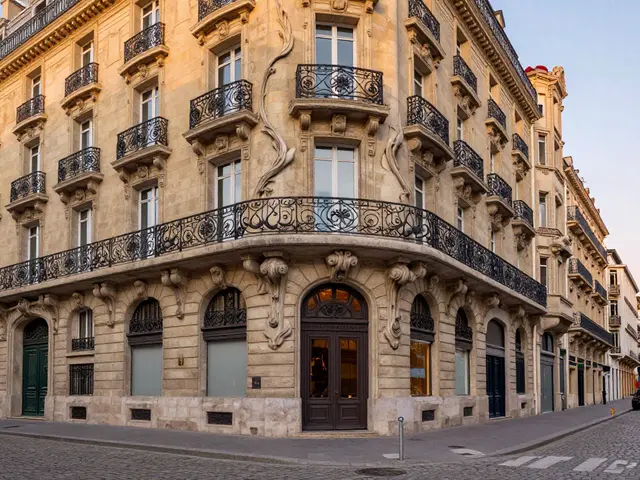
Have you ever walked past a building that felt less like a structure and more like a living organism? Maybe the windows looked like giant flower petals, or the railings twisted into vines that seemed to grow right out of the stone. If so, you were likely looking at Art Nouveau architecture, a style that rejected rigid symmetry in favor of flowing, natural lines. This movement didn't just change how buildings looked; it changed how we thought about space, light, and material. It was a brief but explosive moment in history, roughly between 1890 and 1910, where architects decided that nature was the ultimate blueprint.
The Core Philosophy: Nature as Blueprint
At its heart, Art Nouveau was a rebellion. Before this era, architecture was often stuck in historical repetition-copying Greek columns, Gothic arches, or Renaissance facades. Architects wanted something new for the modern age. They looked at plants, insects, and waves for inspiration. The goal wasn't just to decorate a building with leaves; it was to make the building itself behave like a plant.
This philosophy relied on three main pillars:
- Asymmetry: Unlike classical architecture which loved balance and mirroring, Art Nouveau embraced imbalance. A window might be taller on one side, or a balcony might curve unpredictably. This created a sense of movement and life.
- Curved Lines: Straight lines were considered cold and industrial. Curves, especially the famous "whiplash" line-a sharp S-curve that snaps back-became the signature motif. You see it in door handles, staircases, and facade details.
- Total Work of Art (Gesamtkunstwerk): This German concept meant that every part of the building had to work together. The exterior, interior, furniture, lighting, and even the wallpaper were designed by the same hand to create a unified experience.
Think about your last visit to a museum. Did the ticket booth feel separate from the gallery? In Art Nouveau, that separation didn't exist. The architect designed the doorknob to match the stained glass to match the floor tiles. It was an immersive environment.
Materials That Changed Everything
You can't have Art Nouveau without industrial materials. This style emerged right when iron and glass manufacturing became cheaper and stronger. Architects stopped hiding these materials behind plaster and started celebrating them.
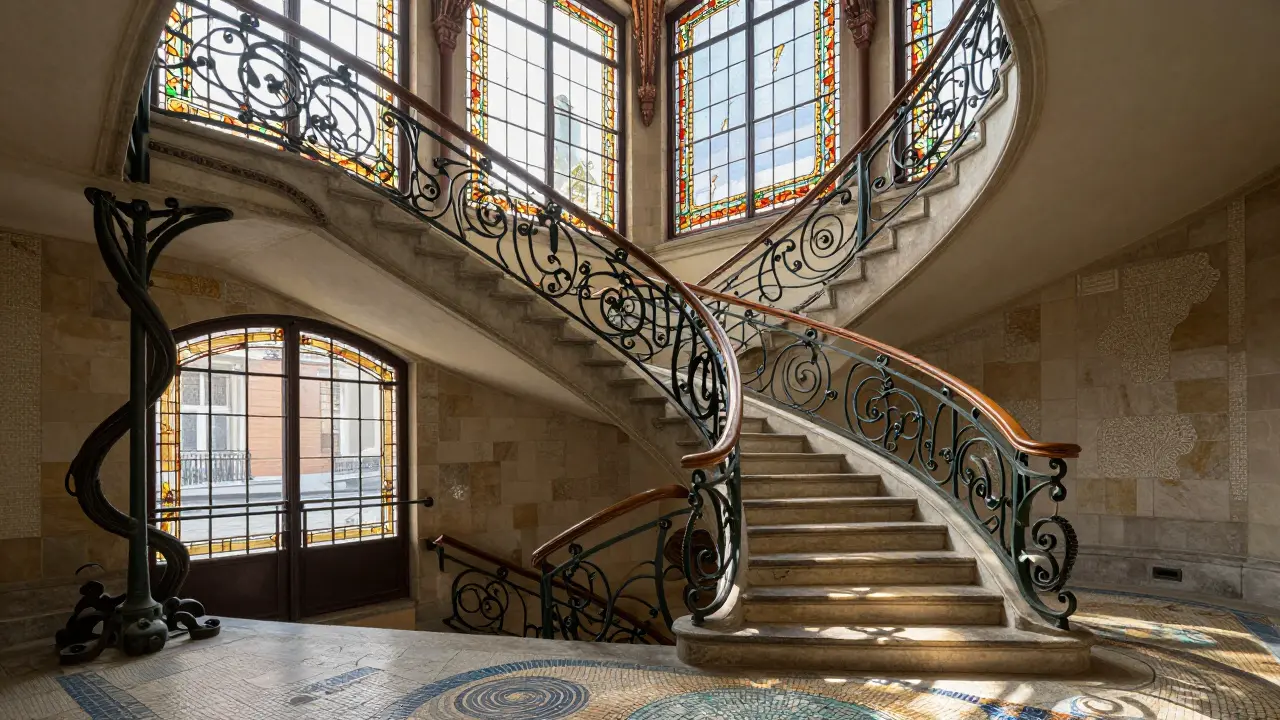
Wrought iron became the star player. Because it could be heated and bent into complex shapes, it allowed for those intricate, vine-like railings and support structures. Imagine a staircase railing that looks like a bundle of twisting branches-that’s wrought iron doing what stone never could.
Glass also played a huge role. Large panes of glass let in more light, making interiors feel airy and open. Stained glass windows weren't just religious symbols anymore; they depicted sunflowers, dragonflies, and abstract color patterns. This combination of iron and glass created skeletons for buildings that were lighter and more flexible than anything before.
Ceramics and mosaics added texture. Instead of smooth, plain walls, architects covered surfaces in colorful tiles shaped like scales or petals. This gave buildings a tactile quality that invited touch and close inspection.
Regional Flavors: One Style, Many Voices
While the core ideas were shared across Europe, Art Nouveau looked different depending on where you stood. Each city put its own stamp on the movement, creating distinct regional variations.
| Region/City | Local Name | Key Characteristics | Famous Architect |
|---|---|---|---|
| Brussels, Belgium | Style Nouvel | Heavy use of iron frameworks, asymmetrical facades, floral motifs in metalwork. | Victor Horta |
| Barcelona, Spain | Modernisme | Whimsical shapes, mosaic tiles (trencadís), organic curves inspired by Catalan culture. | Antoni Gaudí |
| Munich, Germany | Jugendstil | More geometric and stylized than other regions, focus on poster art and printed media influence. | Hermann Obrist |
| Lyon, France | Style Lyon | Emphasis on ceramics and faience, robust structural expression, less delicate than Parisian styles. | Tony Garnier |
| Vienna, Austria | Wiener Secession | Geometric abstraction, clean lines, move towards modernism, less ornate. | Otto Wagner |
In Brussels, Victor Horta used iron to create open, light-filled interiors. His Tassel House is a perfect example: the entrance hall feels like a greenhouse because the iron supports are thin and elegant, holding up glass ceilings that flood the space with daylight.
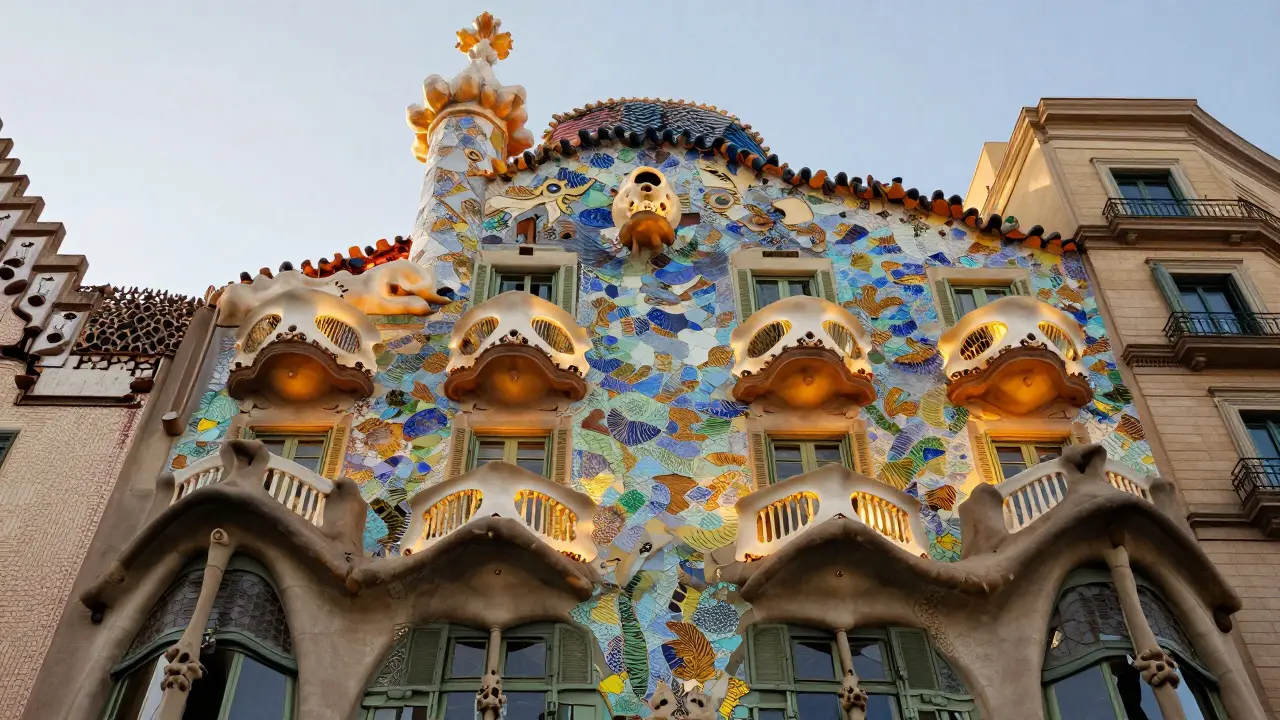
In Barcelona, Antoni Gaudí took things further. He didn't just copy nature; he tried to become nature. His buildings look like they grew out of the ground. Sagrada Família, though primarily a church, shows his mastery of organic forms. But his residential works, like Casa Batlló, show how he turned balconies into skulls and windows into masks, all while maintaining structural integrity.
Meanwhile, in Vienna, the Secession group moved away from heavy ornamentation. They liked the idea of simplicity and geometry. This branch of Art Nouveau eventually paved the way for Modernism, showing how the style evolved over time.
Iconic Buildings You Should Know
To truly understand Art Nouveau architecture, you need to look at specific examples. These buildings aren't just pretty; they solve real problems of space and light in creative ways.
- Tassel House (Hôtel Tassel) - Brussels: Designed by Victor Horta, this is often called the first true Art Nouveau building. The key feature is the "free plan." Walls don't bear weight; the iron frame does. This means rooms can flow into each other without thick, blocking walls. The staircase is a sculpture in itself, with glass panels above letting light cascade down.
- Sagrada Família - Barcelona: Antoni Gaudí’s masterpiece. While still under construction, it showcases hyperbolic paraboloids and catenary arches-mathematical curves found in hanging chains and tree branches. The columns split like trees at the top to support the roof. It’s a forest made of stone.
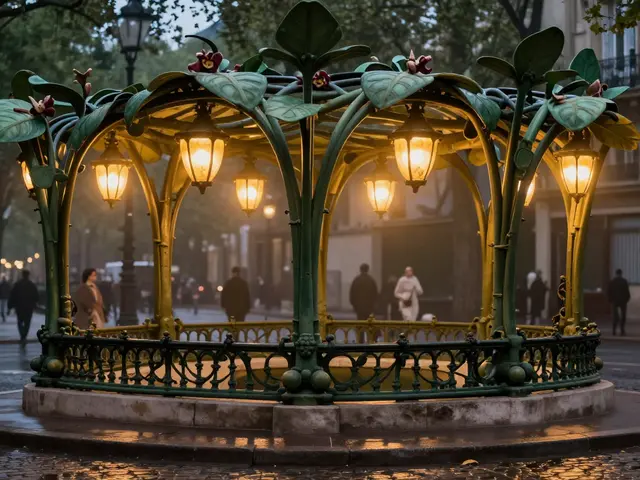
- Paris Metro Entrances - Paris: Hector Guimard designed the iconic green entrances. Made of cast iron and glass, they look like stems emerging from the earth. They proved that even small public infrastructure could be beautiful and artistic.
- Casa Batlló - Barcelona: Another Gaudí gem. The facade has no straight lines. The balconies resemble masks, and the roof looks like a dragon's back. Inside, the light wells are covered in blue and green tiles that mimic water depth, changing color throughout the day.
- Palais Stoclet - Brussels: Designed by Josef Hoffmann, this represents the later, more geometric phase of Art Nouveau. It’s cleaner, more minimalist, and shows the transition toward the Bauhaus style. The murals by Gustav Klimt inside add a layer of high art to the architectural experience.
Why Did It Disappear?
If Art Nouveau was so innovative, why isn't it the dominant style today? The short answer is cost and context. Art Nouveau was incredibly expensive. Hand-crafting ironwork, making custom stained glass, and fitting unique ceramic tiles required skilled artisans who charged premium rates. Only the wealthy could afford such homes.
Then came World War I. The war disrupted trade, killed many young artists, and shifted societal values. People wanted efficiency, not decoration. They wanted housing that was cheap, fast to build, and functional. This led to the rise of Modernism and the International Style, which stripped away ornamentation entirely.
Art Nouveau was seen as too frivolous, too soft for the hard realities of the 20th century. However, it didn't die completely. Its ideas survived in smaller ways-in jewelry, graphic design, and occasional residential projects. Today, we’re seeing a revival of interest because people are tired of sterile, boxy modern buildings. We crave the warmth and humanity that Art Nouveau provided.
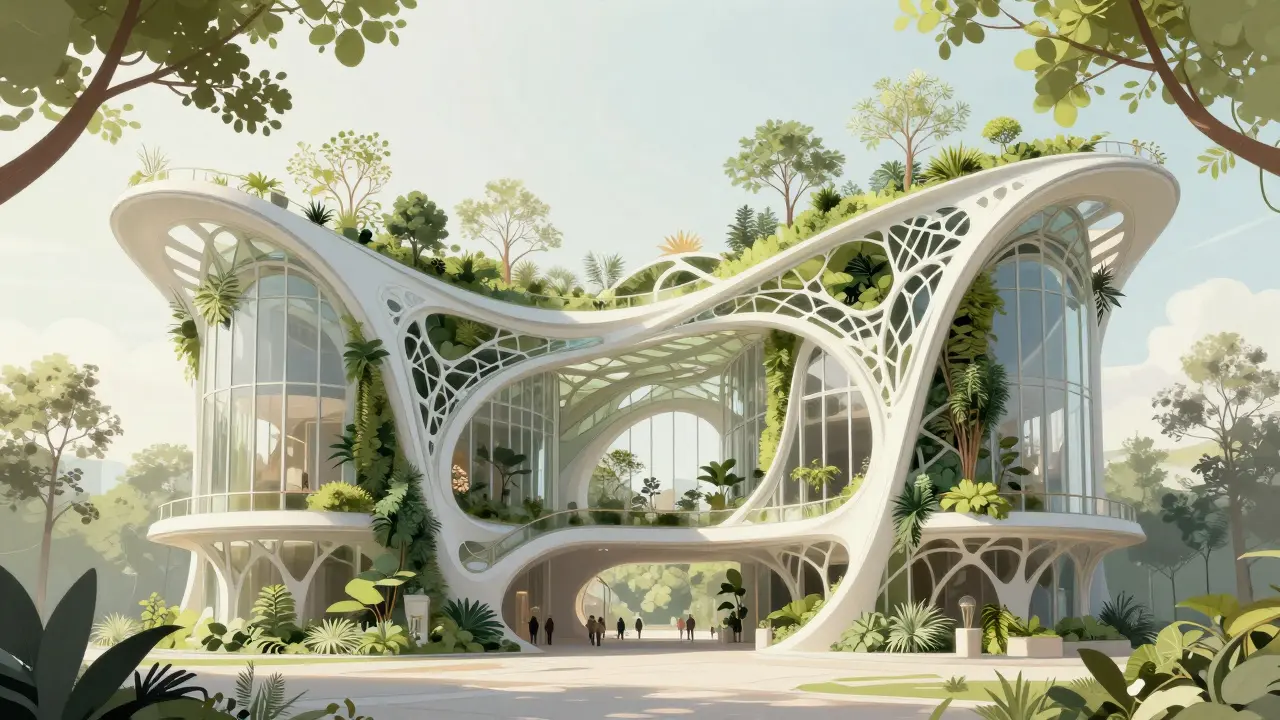
How to Spot Art Nouveau Today
You don’t need to travel to Europe to appreciate this style. Many cities around the world have Art Nouveau gems. Here’s how to identify them when you’re walking down the street:
- Look at the Entrance: Is the doorway framed by curved ironwork? Are there floral motifs in the metal? Check the doorknobs-are they shaped like flowers or fruits?
- Check the Windows: Do they have stained glass with natural themes? Are the window frames curved rather than rectangular?
- Observe the Roofline: Does it have decorative chimneys or dormers that look like shells or leaves?
- Examine the Facade: Is it covered in textured tiles or mosaics? Does it lack strict symmetry?
In the US, cities like San Francisco, New York, and Chicago have notable examples. The Old City Hall in San Francisco features elaborate terracotta decorations. In New York, the Loew’s Jersey Theatre lobby retains much of its original Art Deco-influenced Art Nouveau detailing. Even in Russia, the Ryabushinsky House in Moscow shows how the style traveled globally, adapting to local materials like brick and stone.
The Legacy: From Ornament to Experience
Art Nouveau taught us that architecture doesn't have to be serious to be respected. It showed that emotion matters in design. When you walk into a well-designed Art Nouveau space, you feel calm, inspired, or even playful. That emotional connection is what modern designers are trying to recapture.
Today’s sustainable architecture borrows heavily from Art Nouveau’s respect for nature. Biophilic design-the practice of connecting people to nature through buildings-uses similar principles: natural light, organic shapes, and indoor plants. Art Nouveau was the grandfather of biophilia.
Moreover, the emphasis on craftsmanship resonates now. In an age of mass production, there’s a growing appreciation for handmade details. Restoring Art Nouveau buildings requires specialized skills, keeping traditional trades alive. This preservation effort ensures that future generations can experience the creativity of this fleeting era.
So next time you see a building that seems to twist and turn like a living thing, take a closer look. You might just be standing in front of a piece of history that dared to dream differently.
What is the difference between Art Nouveau and Art Deco?
Art Nouveau uses organic, flowing lines inspired by nature, like vines and flowers. Art Deco, which came later, uses geometric shapes, zigzags, and bold colors. Art Nouveau is soft and curvy; Art Deco is sharp and angular.
Who is the most famous Art Nouveau architect?
Antoni Gaudí is arguably the most famous, known for his work in Barcelona. Victor Horta in Brussels and Hector Guimard in Paris are also highly influential figures in the movement.
Is Art Nouveau architecture expensive to build today?
Yes, authentic Art Nouveau details require skilled craftsmen for ironwork, glass, and tile setting. Mass-produced imitations are cheaper but lack the quality and uniqueness of original pieces.
Where can I find Art Nouveau buildings outside of Europe?
You can find significant examples in the United States (San Francisco, New York), Japan (Tokyo Station), and Russia (Moscow). The style spread globally during its peak years.
Why did Art Nouveau decline after World War I?
The war caused economic hardship and a shift towards functional, efficient design. Art Nouveau was seen as too decorative and costly for the post-war era, leading to the rise of Modernism.