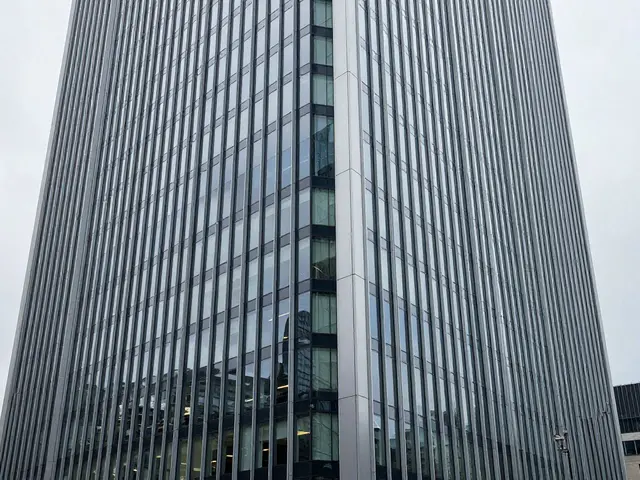
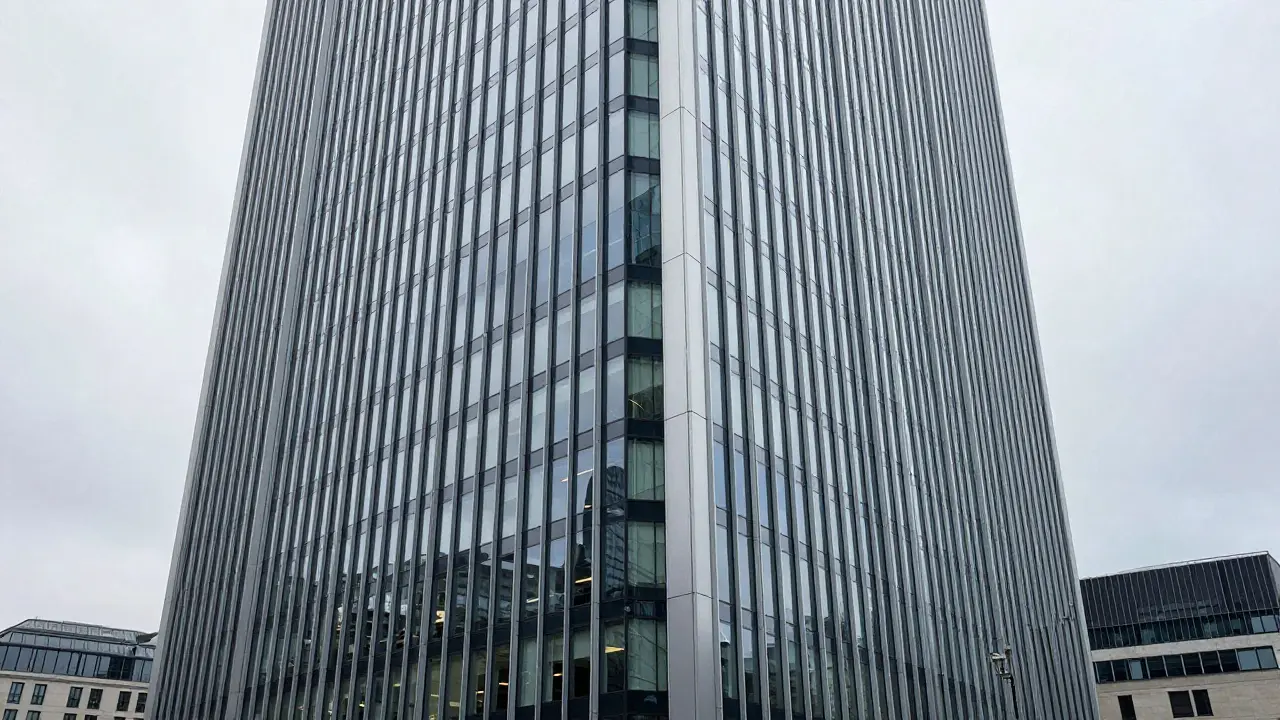
Look around your city. Chances are you’ve passed a building with floor-to-ceiling windows, clean lines, and zero ornamentation. That’s not just a random design choice-it’s the legacy of International Style, a movement that redefined how we build, live, and work in the 20th century.
You might think "modern" means brand new or futuristic. But in architecture, "modern" often points back to a specific era between the 1920s and 1950s. This style stripped away history, decoration, and regional quirks to focus on function, structure, and space. It wasn’t just about looking cool; it was a reaction to the industrial age, the trauma of World War I, and the need for affordable, efficient housing.
If you’re curious about why skyscrapers look the way they do, or why your office building feels so open, you’re asking questions rooted in this movement. Let’s break down what International Style actually is, who built it, and why it still dominates our skylines today.
The Origins: From Europe to New York
The story starts in post-war Europe. Architects were tired of heavy stone facades and ornate details that served no practical purpose. They wanted buildings that reflected the machine age-efficient, honest, and universal. Key figures like Le Corbusier, a Swiss-French architect who championed the idea of houses as 'machines for living' and Ludwig Mies van der Rohe, a German-American architect known for his mantra 'less is more' began experimenting with steel frames and glass.
The term "International Style" itself came from an exhibition at the Museum of Modern Art (MoMA) in New York in 1932. Curated by Henry-Russell Hitchings and Philip Johnson, the show highlighted European architects who had fled fascism and settled in the US. Suddenly, these ideas weren’t just European-they were global. The style promised a universal language of design that could be applied anywhere, from Chicago to Tokyo.
This shift was crucial. Before this, architecture was deeply tied to local materials and traditions. International Style said, "No, let’s use steel, concrete, and glass everywhere." It was ambitious, sometimes arrogant, but undeniably influential.
Core Principles: What Defines the Look?
So, how do you spot an International Style building? It’s not just about being "minimal." There are specific rules that these architects followed religiously.
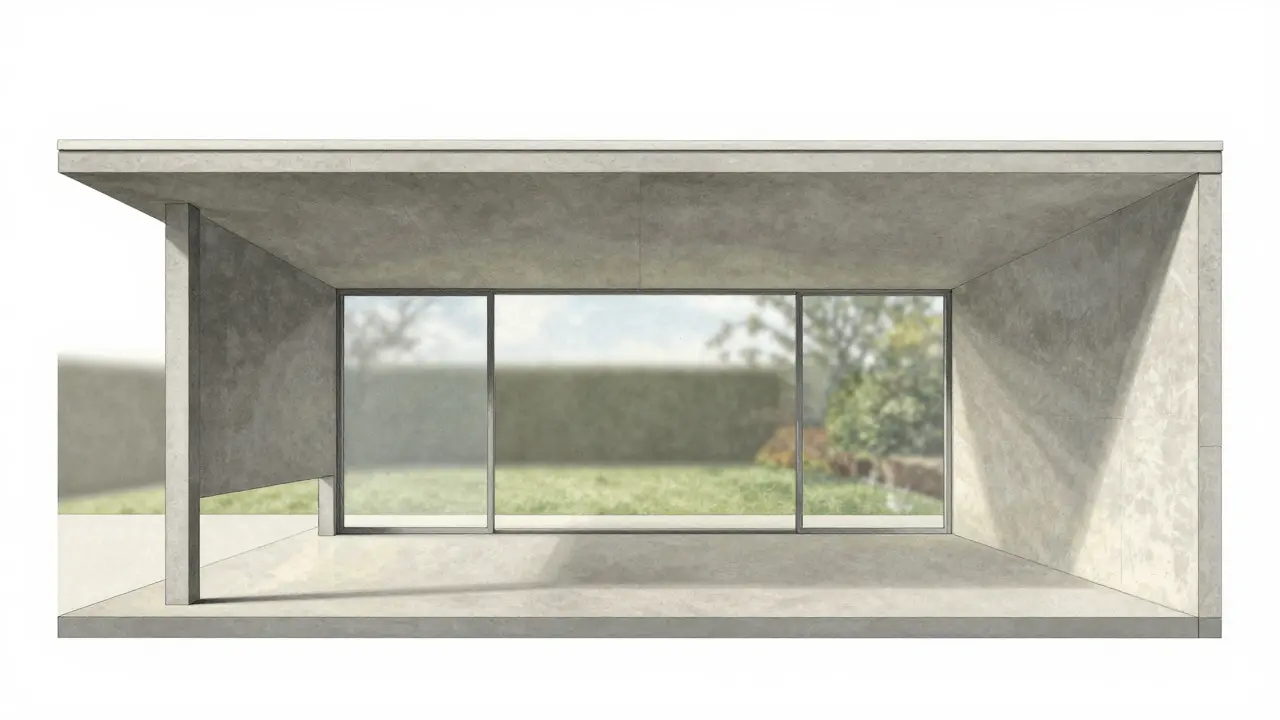
- Volume over Mass: Traditional buildings feel solid and heavy. International Style buildings feel light and airy. They emphasize the space inside rather than the walls outside.
- Regular Grid: The facade usually follows a strict grid pattern. Windows align perfectly, creating a rhythmic, orderly appearance.
- Open Plan: Inside, walls don’t have to support the roof. Steel beams take the load. This allows for flexible, open interior spaces without cluttering columns.
- No Ornament: Forget cornices, moldings, or decorative carvings. If it doesn’t serve a structural or functional purpose, it’s gone. Clean lines rule.
- Standardized Materials: Steel, reinforced concrete, and plate glass are the holy trinity. These materials allow for thin walls and large spans.
Think of the Seagram Building, a landmark skyscraper in New York City designed by Mies van der Rohe and Philip Johnson. It’s a bronze-and-glass box that looks almost too simple. Yet, that simplicity is its power. It hides the complexity of its engineering behind a calm, uniform facade.
The Glass Curtain Wall: Revolutionizing Facades
One of the biggest technical breakthroughs of International Style was the glass curtain wall, a non-structural exterior skin of a building made primarily of glass. In traditional construction, walls held up the building. In International Style, the steel frame does all the lifting. The walls are just a "curtain" hanging on the outside.
This changed everything. Architects could now cover entire buildings in glass. You get maximum natural light, panoramic views, and a sleek, transparent look. But there’s a catch. Glass doesn’t insulate well. Early International Style buildings were energy hogs, requiring massive heating and cooling systems.
Today, we’ve solved some of these issues with double-glazed units and smart coatings, but the basic principle remains. The curtain wall is still the default for commercial towers worldwide. It’s a testament to how deeply this style embedded itself in our urban fabric.
| Feature | Traditional Architecture | International Style |
|---|---|---|
| Materials | Stone, brick, wood | Steel, concrete, glass |
| Facade | Ornate, decorated, load-bearing | Plain, unadorned, non-structural (curtain wall) |
| Interior Layout | Rigid rooms defined by walls | Flexible, open plan |
| Philosophy | Regional, historical context | Universal, functionalist |
| Cost Efficiency | Higher labor costs for detailing | Lower cost through standardization |
Key Architects and Iconic Buildings
While many architects contributed, a few names stand out as the giants of this movement. Understanding their work helps you see the evolution of the style.
Ludwig Mies van der Rohe is arguably the most famous. His Farnsworth House in Illinois is a single-story glass box raised above a floodplain. It blurs the line between inside and outside. Later, he designed the Seagram Building, which set the template for corporate skyscrapers for decades.
Le Corbusier took a different approach. He loved pilotis (columns that lift the building off the ground) and free facades. His Unité d'Habitation in Marseille was a massive concrete housing block that included shops, schools, and apartments. It was controversial then, but it influenced high-density living forever.
Then there’s Philip Johnson, an American architect who helped popularize International Style in the US. He started as a disciple of Mies but later moved on to Postmodernism. Still, his early work, like the Glass House in Connecticut, remains a pure example of the style’s ideals.
Criticism: Was It Too Cold?
Not everyone loved International Style. As it spread, critics argued it was soulless. By ignoring local climate, culture, and history, buildings started to look identical whether they were in Berlin, Buenos Aires, or Beijing. This led to the term "International Style monotony."
In the 1960s and 70s, backlash grew. People wanted identity, warmth, and connection to place. This gave rise to Postmodernism, an architectural movement that reacted against the austerity of International Style by reintroducing ornament and historical references. Think of buildings with playful shapes, bright colors, and classical columns mixed with modern forms.
But here’s the twist: International Style didn’t disappear. It evolved. Today, we see "New Brutalism" or "Minimalism" borrowing from its roots. Even sustainable design uses its principles of efficiency and material honesty.
Impact on Contemporary Design
You don’t have to look far to see International Style’s fingerprints. Most modern office towers, airport terminals, and university campuses use its vocabulary. Why? Because it works. It’s scalable, cost-effective, and adaptable.
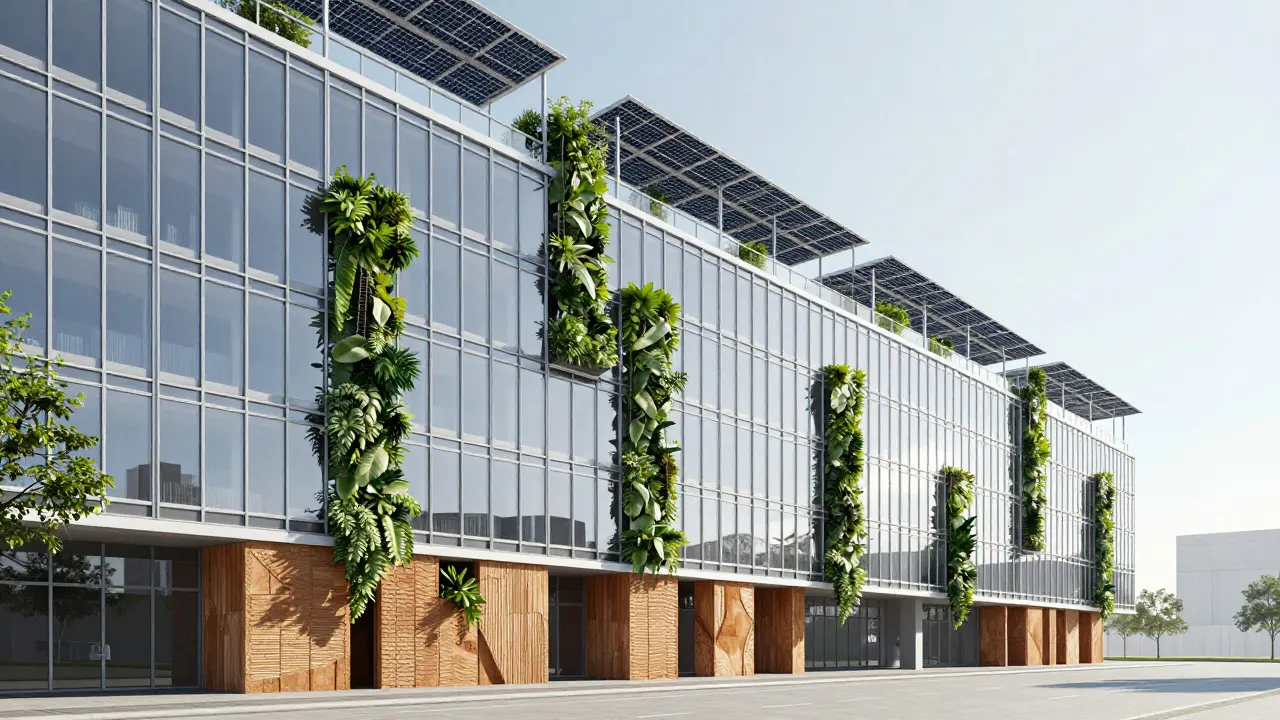
Consider Bjarke Ingels Group (BIG), a Danish architecture firm known for combining sustainability with bold, functional designs. Their projects often feature clean lines and open plans, echoing Mies’ ideals, but with added green roofs and social spaces. Or look at Apple Stores, retail locations designed with minimalist aesthetics inspired by International Style principles. Those glass cubes are direct descendants of the Farnsworth House.
Even residential architecture has been influenced. Many luxury homes today prioritize open-concept living, floor-to-ceiling windows, and hidden storage-all hallmarks of the International Style mindset.
Sustainability and Future Adaptations
One major criticism of International Style was its environmental impact. Glass boxes trap heat and lose cold, leading to high energy bills. But modern technology is changing that.
New low-e glass coatings reflect infrared heat while letting light in. Smart shading systems adjust automatically based on sun position. And cross-laminated timber (CLT) is replacing steel in some cases, reducing carbon footprints. So, the aesthetic survives, but the performance improves.
We’re also seeing a return to hybrid styles. Architects mix International Style’s clarity with local materials like rammed earth or bamboo. This creates buildings that feel both modern and grounded in their place. It’s a healthy evolution-one that respects the past while embracing innovation.
What is the difference between Modernism and International Style?
Modernism is a broad philosophical movement that rejects tradition in favor of innovation. International Style is a specific architectural subset of Modernism that emphasizes minimalism, glass curtain walls, and lack of ornament. All International Style buildings are Modernist, but not all Modernist buildings fit the International Style criteria.
Who coined the term 'International Style'?
The term was coined by Henry-Russell Hitchings and Philip Johnson for a 1932 exhibition at the Museum of Modern Art in New York. They used it to describe a group of European architects whose work shared common formal characteristics regardless of geographic origin.
Is International Style still relevant today?
Yes, absolutely. While pure International Style is rare, its principles dominate commercial architecture. Skyscrapers, corporate headquarters, and even tech retail stores rely on its core ideas of openness, transparency, and structural honesty. It has adapted to include sustainable technologies and local materials.
Why did people criticize International Style?
Critics argued it was sterile, impersonal, and ignored local context. Buildings looked the same everywhere, erasing cultural identity. Additionally, early versions were energy-inefficient due to extensive glass usage, leading to high operational costs and environmental impact.
Can you give examples of famous International Style buildings?
Key examples include the Seagram Building in New York, the Farnsworth House in Illinois, the Villa Savoye by Le Corbusier in France, and the Barcelona Pavilion by Mies van der Rohe. These structures exemplify the movement's emphasis on clean lines, open spaces, and industrial materials.