Walk into any old stone church in rural France, Spain, or Italy, and you’ll feel it immediately - the weight of centuries pressing down. The walls are thick enough to stop a siege. The windows are small, barely letting in light. The arches are round, not pointed. Everything feels grounded, solid, unshakable. This isn’t just old architecture. This is Romanesque - the first major style to sweep across Europe after the fall of Rome, and one that still holds secrets most people never notice.
What Makes Romanesque Architecture Different?
Before Gothic spires reached for the sky, Romanesque buildings hugged the earth. They didn’t aim for height. They aimed for strength. Between 800 and 1200 AD, builders across Europe used the same basic formula: thick stone walls, small windows, rounded arches, and massive pillars. These weren’t just aesthetic choices - they were engineering solutions.
Unlike the later Gothic style, which used flying buttresses to lift walls higher, Romanesque architects relied on sheer mass. The walls could be up to three meters thick in some cathedrals. Why? To hold up the heavy stone vaults above. Without modern steel or reinforced concrete, they had to make everything thicker to avoid collapse.
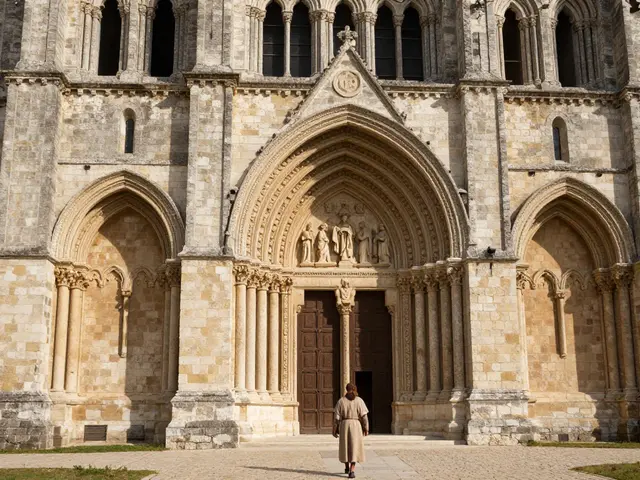
The rounded arch - borrowed directly from Roman aqueducts and baths - was the key. It spread weight evenly across the supports below. You’ll see it in doorways, windows, and arcades inside churches. It’s the most obvious fingerprint of Romanesque design. But look closer. The arches aren’t always perfect circles. They’re often slightly flattened, called segmental arches, to better fit the space. That’s a detail most guidebooks skip.
The Stone That Built a Century
Romanesque buildings were made from local stone. No imported marble. No fancy finishes. Builders used what was nearby: limestone in Normandy, sandstone in Germany, granite in Brittany. That’s why no two Romanesque churches look exactly alike. The color, texture, even the way the stones were laid varied by region.
In southern France, you’ll see large, roughly hewn blocks stacked with minimal mortar. In Tuscany, the stones are finely cut and fitted so tightly you can’t slide a knife between them. In England, builders often reused Roman bricks and tiles from abandoned ruins. That’s why some Romanesque churches have patches of red brick mixed into grey stone - a silent nod to the empire that came before.
The towers were another signature. Not decorative. Functional. They held bells, which called people to prayer. Many were square, not round. And they often rose directly from the church’s west end, forming a massive facade. Some, like the tower at Durham Cathedral, were built as separate structures, connected by covered walkways - a clever way to reduce pressure on the main walls.
Windows That Were Never Meant to Let Light In
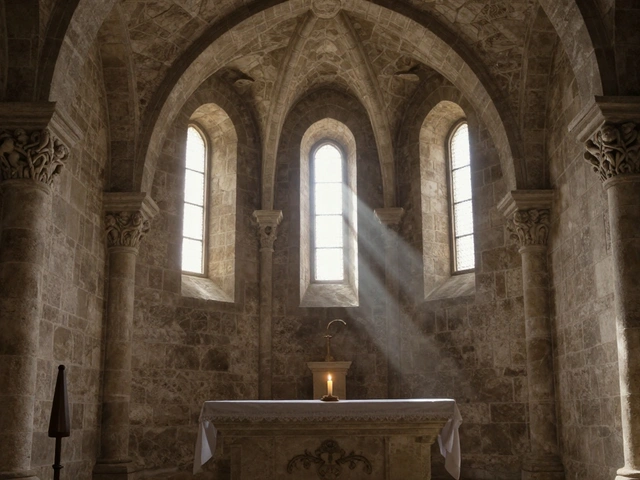
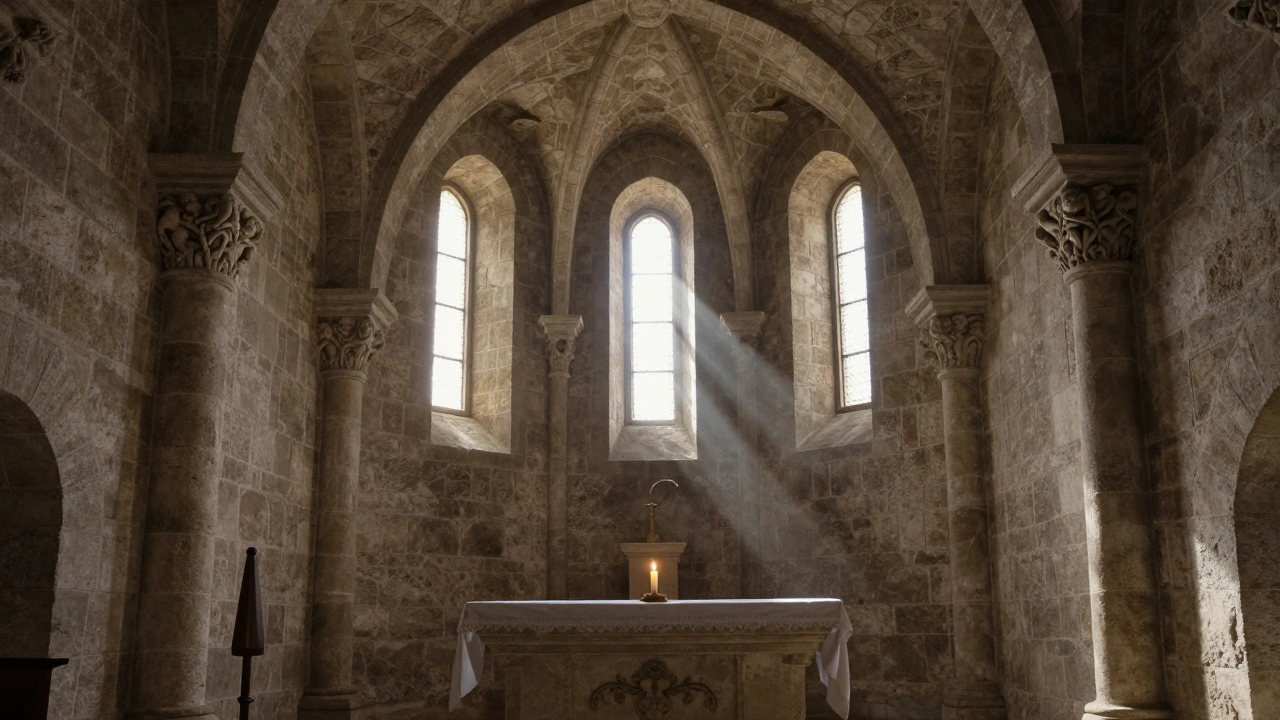
Modern churches have stained glass that glows like jewels. Romanesque churches had slits. Tiny, narrow openings - sometimes just a few inches wide - placed high up on the walls. Why? Because larger windows would have weakened the thick stone walls. Light was a side effect, not the goal.
But here’s the secret: they didn’t want total darkness. They wanted mystery. The dim, filtered light created an otherworldly atmosphere. Candles flickered on stone altars, casting long shadows. Pilgrims walking in from the bright outside felt like they were entering another world. That was intentional. The architecture wasn’t just shelter - it was a spiritual tool.
Some churches, like Saint-Sernin in Toulouse, had small clerestory windows near the ceiling. These were rare. Most light came from the nave’s side aisles, where the walls were thinner. That’s why the central space felt so enclosed - it was designed to be.
Decorative Carvings: More Than Just Ornament
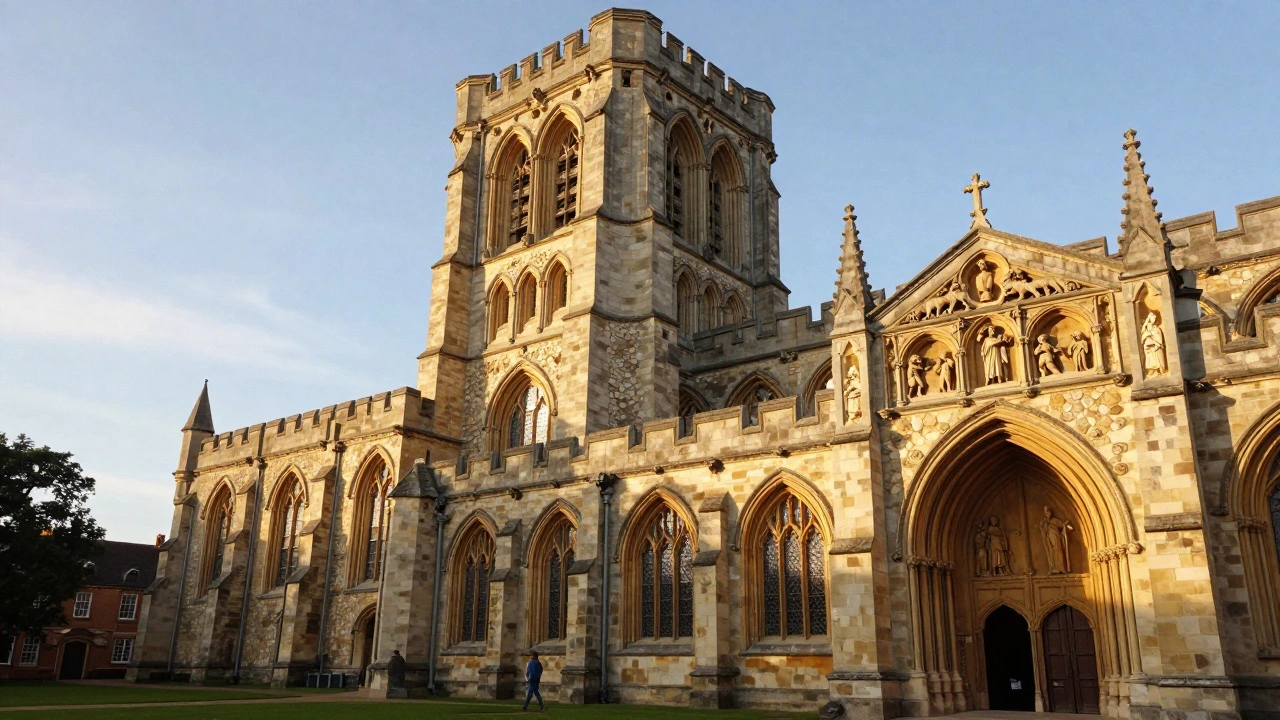
Don’t be fooled by the heavy stone. Romanesque buildings were covered in carvings. Not delicate filigree. Bold, deep reliefs. You’ll see lions with open jaws, dragons swallowing monks, and scenes from the Last Judgment carved above doorways.
These weren’t just art. They were sermons in stone. Most people couldn’t read. So the church used images to teach. A carving of a demon dragging a soul into hell wasn’t decoration - it was a warning. A scene of Christ surrounded by apostles wasn’t pretty - it was a map of salvation.
Capitals - the tops of columns - were especially rich. You’ll find vines twisting into human faces, birds pecking at snakes, or men wrestling beasts. Each had meaning. A vine meant Christ. A serpent meant sin. A lion meant resurrection. These weren’t random. They followed a visual language understood across Europe.
Why Romanesque Churches Look the Same Across Countries
From the Pyrenees to the Baltic, Romanesque churches shared the same DNA. Why? Because of pilgrimage routes. The most famous was the Camino de Santiago - the Way of St. James - leading hundreds of thousands of pilgrims to the shrine of St. James in northwestern Spain.
As people traveled, they carried ideas. Builders from Aquitaine copied designs from Lombardy. Monks from Cluny spread their architectural plans across France and Germany. The Abbey of Cluny, built in the 11th century, became the blueprint. Its massive size, rounded apse, and double side aisles were copied in dozens of churches.
Even the floor plans were standardized. Most had a Latin cross shape - a long nave, transept crossing, and rounded apse at the east end. Many had ambulatories - walkways around the apse - so pilgrims could circle the relics without disrupting services. That layout became the norm.
It wasn’t about copying. It was about connection. A pilgrim walking from Germany to Spain would recognize the architecture. They’d feel at home. The style unified a fragmented Europe under a shared spiritual language.
The Hidden Engineering Tricks
Behind the thick walls and heavy arches were clever fixes. Builders didn’t have calculus or blueprints. They used experience, trial, and a few simple rules.
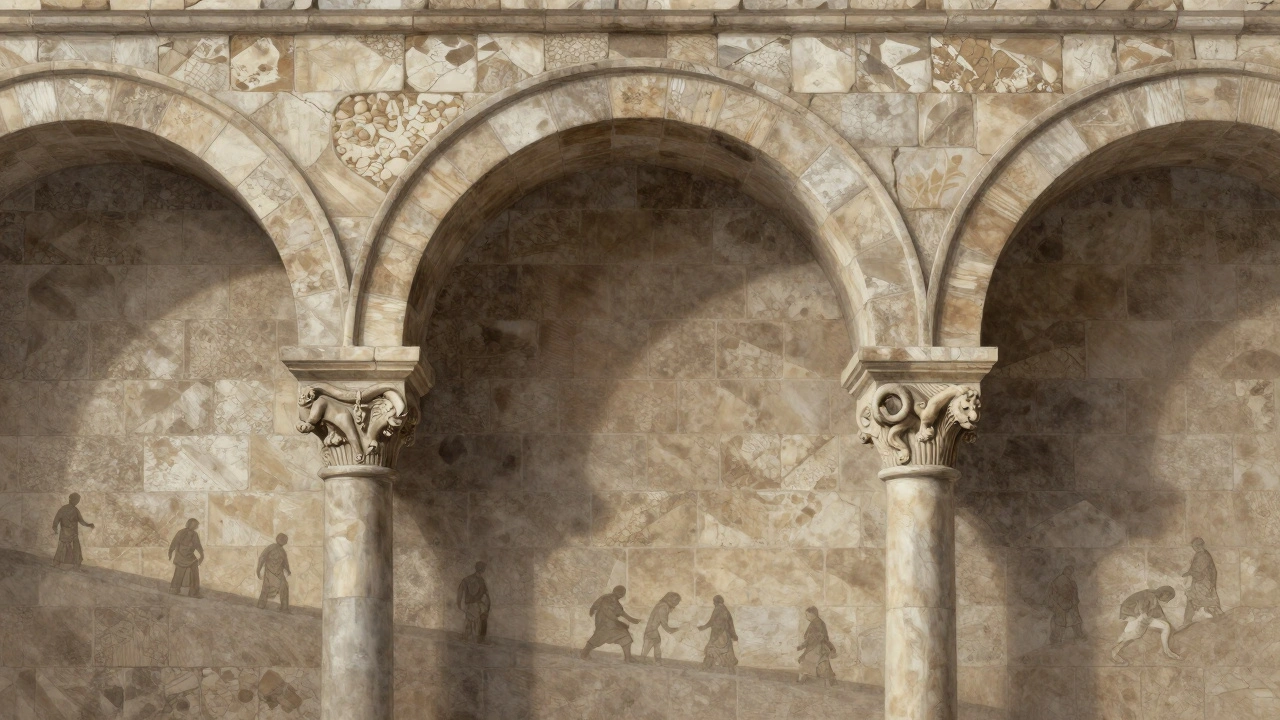
One trick: they built the walls slightly thicker at the base and tapered them as they rose. That reduced weight without sacrificing strength. Another: they used rubble cores - the inside of the wall filled with broken stone and mortar - while the outer faces were neatly cut. That saved time and material.
Vaults were another innovation. Early Romanesque churches had wooden ceilings. Later, they switched to barrel vaults - long, tunnel-like stone ceilings. But these pushed outward. So builders added thick side walls and buttresses. In some cases, they built double walls with empty space between - a primitive form of insulation and shock absorption.
At the Abbey of Saint-Étienne in Caen, they used a ribbed vault before Gothic architects made it famous. It wasn’t decorative. It was structural - a way to channel weight down to specific points. That small detail would later become the foundation of Gothic architecture.
Why Romanesque Architecture Still Matters
Today, we think of architecture as about beauty, light, and openness. Romanesque was the opposite. It was about safety, permanence, and awe. It didn’t try to impress with elegance. It impressed with endurance.
Many Romanesque churches are still standing - some for over 900 years. They’ve survived wars, earthquakes, and centuries of neglect. That’s not luck. It’s smart design. The same principles - thick walls, solid foundations, minimal openings - are used in modern earthquake-resistant buildings.
And the emotional impact? That’s still powerful. Walk into a Romanesque crypt, and the silence hits you first. Then the cold stone. Then the feeling that you’re standing where people stood when Europe was still being shaped. That’s not nostalgia. It’s architecture speaking across time.
Next time you see a round arch in an old building, don’t just call it ‘old-fashioned.’ Look at the stones. Count the windows. Notice how the light falls. You’re not just seeing a style. You’re seeing the first time Europe built something that was meant to last.
What are the key features of Romanesque architecture?
Romanesque architecture is defined by thick stone walls, small windows, rounded arches, massive pillars, barrel vaults, and decorative stone carvings. Buildings were low and heavy, designed for strength rather than height. Most churches followed a Latin cross plan with an apse at the east end and often included ambulatories for pilgrims.
How is Romanesque different from Gothic architecture?
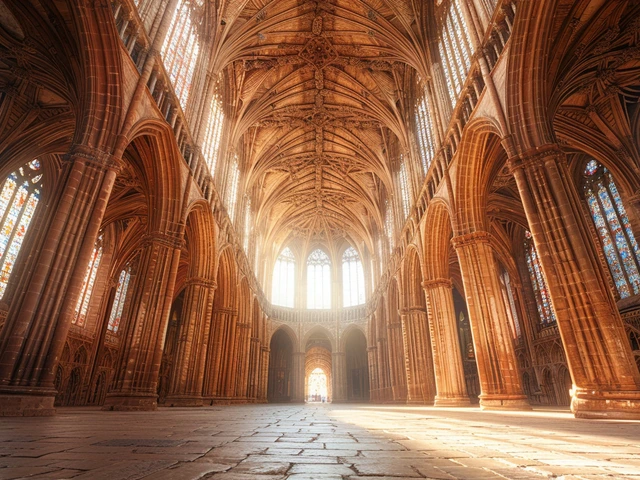
Romanesque buildings use rounded arches, thick walls, and small windows to support heavy stone roofs. Gothic architecture, which came later, uses pointed arches, flying buttresses, and large stained-glass windows to create taller, lighter spaces. Romanesque feels grounded; Gothic reaches upward. Romanesque was built for endurance. Gothic was built for awe.
Where can I see the best examples of Romanesque architecture?
Some of the finest examples include the Abbey Church of Saint-Sernin in Toulouse, France; Durham Cathedral in England; the Speyer Cathedral in Germany; and the Basilica of San Isidoro in León, Spain. The pilgrimage route to Santiago de Compostela is lined with Romanesque churches, many of which are still intact and open to visitors.
Why did Romanesque builders use so little glass?
Large windows would have weakened the thick stone walls needed to support heavy vaulted ceilings. Builders used small, high windows to let in just enough light for rituals without compromising structural integrity. The dim, shadowy interiors were intentional - they created a solemn, sacred atmosphere that matched the spiritual purpose of the space.
Did Romanesque architecture influence later styles?
Yes. Romanesque was the foundation for Gothic architecture. Builders learned how to use stone vaults, buttresses, and arches in Romanesque buildings - then refined them. The ribbed vault, first used experimentally in Romanesque churches like Saint-Étienne in Caen, became a hallmark of Gothic design. Even the layout of cathedrals - nave, transept, apse - came from Romanesque plans.
Are there any Romanesque buildings outside Europe?
True Romanesque architecture is almost entirely European, tied to the spread of Christianity and monastic orders between 800-1200 AD. However, some 19th-century revival buildings in the U.S. and Australia copied the style - like the Old Treasury Building in Melbourne - but these are Neo-Romanesque, not original. The real Romanesque style never crossed the Atlantic in its original form.