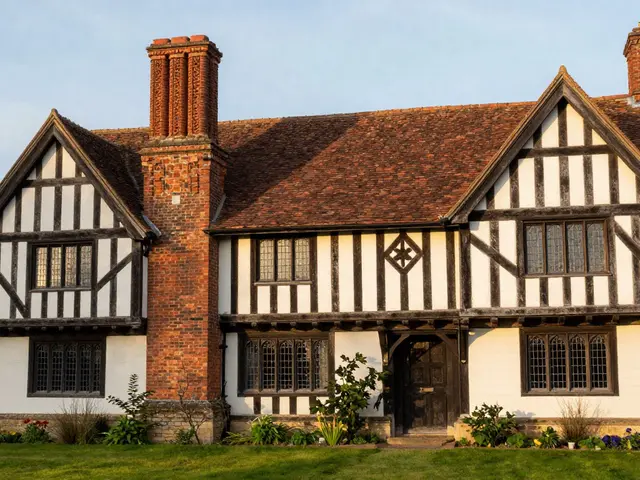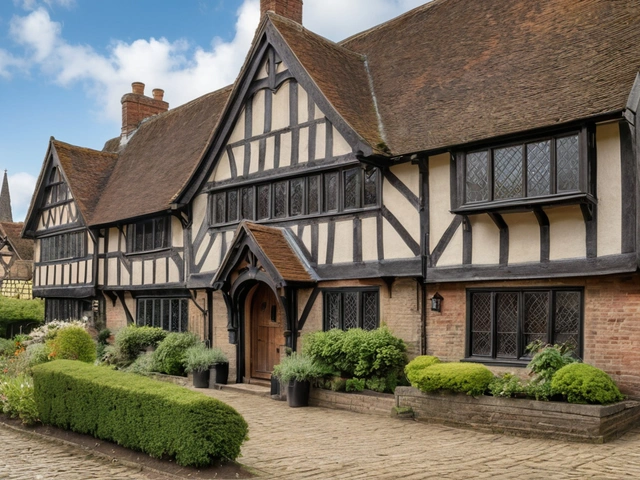
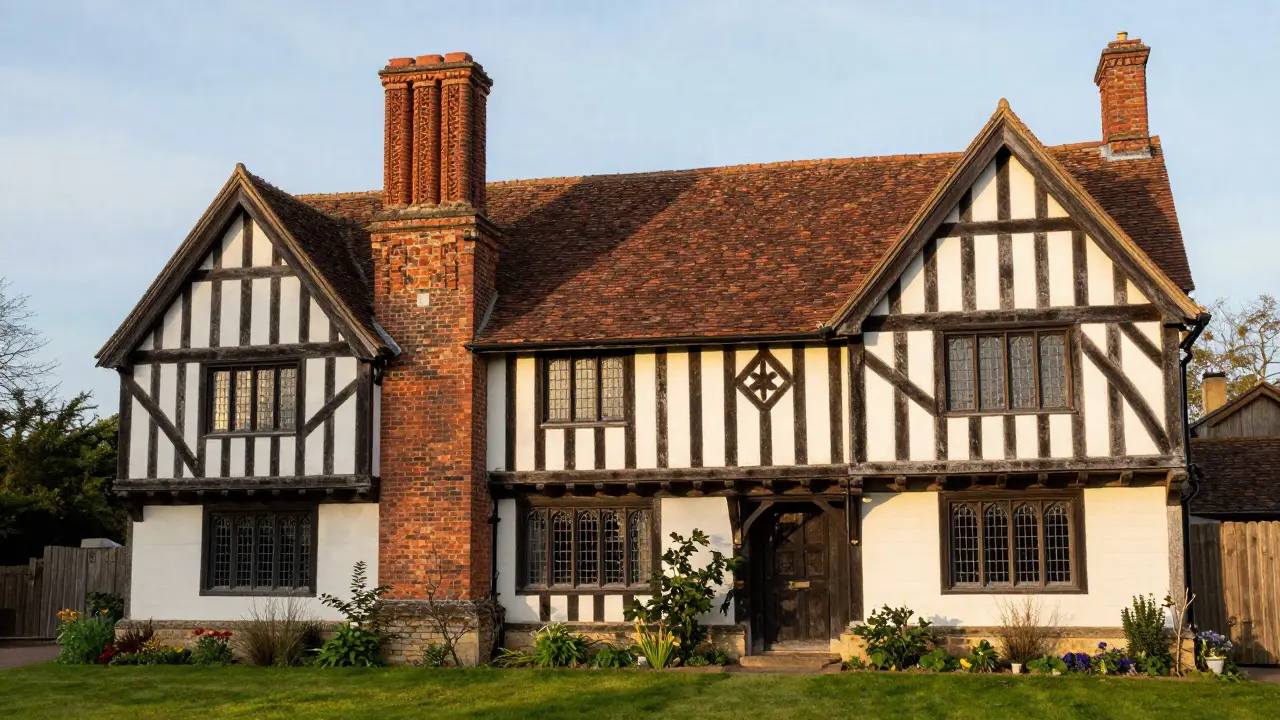
Picture a house that looks like it stepped out of a storybook. You see steeply pitched roofs, tall brick chimneys, and those distinctive black-and-white wooden beams crisscrossing the walls. This is Tudor architecture, a style that defines the visual identity of much of England’s historic landscape and has inspired countless homes across the globe. But what exactly makes a building "Tudor"? Is it just about the timber framing, or is there more to this enduring aesthetic?
The term refers to the period between 1485 and 1603, covering the reigns of Henry VII, Henry VIII, Edward VI, Mary I, and Elizabeth I. It was a time when England transitioned from the medieval Gothic style toward the early Renaissance. The result was a unique hybrid: sturdy, defensive structures evolving into comfortable, light-filled family homes.
The Origins: From Castles to Comfort
To understand Tudor architecture, you have to look at what came before. In the Middle Ages, most wealthy people lived in castles or fortified manors. These were cold, dark, and designed for defense. Windows were small slits to keep arrows out. Life inside was cramped.
Then came the Tudors. With the end of the Wars of the Roses, England became safer. Kings and nobles no longer needed fortresses; they wanted comfort. They started tearing down castle walls and replacing them with large windows. Glass was still expensive, but larger panes allowed more light into the rooms. The focus shifted from survival to status and luxury.
This shift changed how buildings looked. Instead of thick stone walls, architects began using brick and timber. The layout of the house also changed. Rooms were arranged around a central hall, which remained the heart of the home. Fireplaces became larger and more decorative, often made of stone or carved wood.
Key Visual Elements of Tudor Design
If you walk through a village in Cotswolds or Kent, you might spot several classic features. These elements are not just decorative; they served practical purposes in an era before modern heating and insulation.
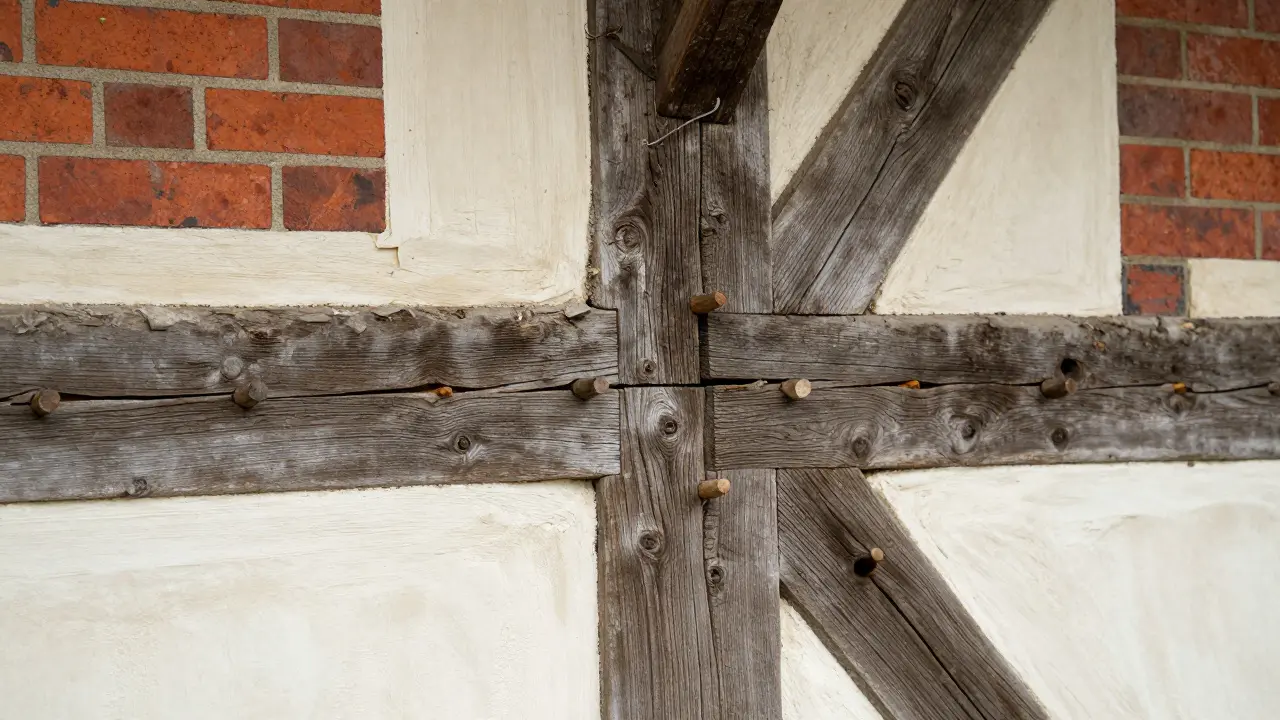
- Half-Timbering: This is the most recognizable feature. Wooden frames (timbers) are exposed on the outside, with spaces filled with wattle and daub (woven sticks covered in mud, straw, and lime). Later, brick infill became common. The patterns-diamonds, chevrons, and diagonal braces-are both structural and artistic.
- Steep Roofs: Tudor roofs are very steep, often over 60 degrees. This design helped shed rain and snow quickly. The roofs were usually covered with clay tiles or thatch. Overhangs extended beyond the walls, providing shelter from the elements.
- Tall Chimneys: Because fireplaces were the primary heat source, chimneys needed to be large to handle smoke. Tudor chimneys are often clustered together and decorated with intricate brickwork, sometimes forming geometric patterns or even spelling out initials.
- Mullioned Windows: Large windows divided by vertical bars (mullions) and horizontal bars (transoms) were a sign of wealth. Lead came glass was used, creating a grid-like appearance. Casement windows hinged on the side, unlike modern sash windows.
- Asymmetrical Facades: Tudor buildings rarely follow perfect symmetry. Wings might extend at odd angles, reflecting how the house grew over time as families expanded their needs.
Materials and Construction Techniques
The materials used in Tudor architecture tell a story of local resources and craftsmanship. Wood was abundant, especially oak, which was strong and durable. Timber frames were joined using mortise and tenon joints, secured with wooden pegs. No nails were used in the main structure.
Brickmaking improved during this period. Before the Tudors, bricks were irregular and weak. By the 16th century, kilns produced uniform, red bricks that could be laid in decorative patterns. Flemish bond-a pattern where headers and stretchers alternate-became popular for its strength and beauty.
For the infill between timbers, builders used wattle and daub. Wattle involved weaving flexible branches (like willow or hazel) into a lattice. Daub was a mixture of clay, sand, animal hair, and straw. Once dried, it formed a hard, weather-resistant surface. Plaster was then applied to smooth it out.
| Material | Primary Use | Advantages | Challenges |
|---|---|---|---|
| Oak Timber | Structural Frame | Strong, long-lasting, resistant to rot | Heavy, requires skilled joinery |
| Wattle & Daub | Wall Infill | Cheap, good insulation, breathable | Vulnerable to moisture, needs maintenance |
| Red Brick | Walls, Chimneys | Durable, fire-resistant, decorative potential | Expensive compared to stone/timber |
| Lead-Came Glass | Windows | Allowed large panes, sealed well | Fragile, costly to produce |
The Evolution: Early vs. Late Tudor
Tudor architecture did not stay static. It evolved significantly over 118 years. Early Tudor (late 1400s) retained many Gothic features. Pointed arches, ribbed vaults, and heavy stone work were still common. Buildings felt enclosed and fortress-like.
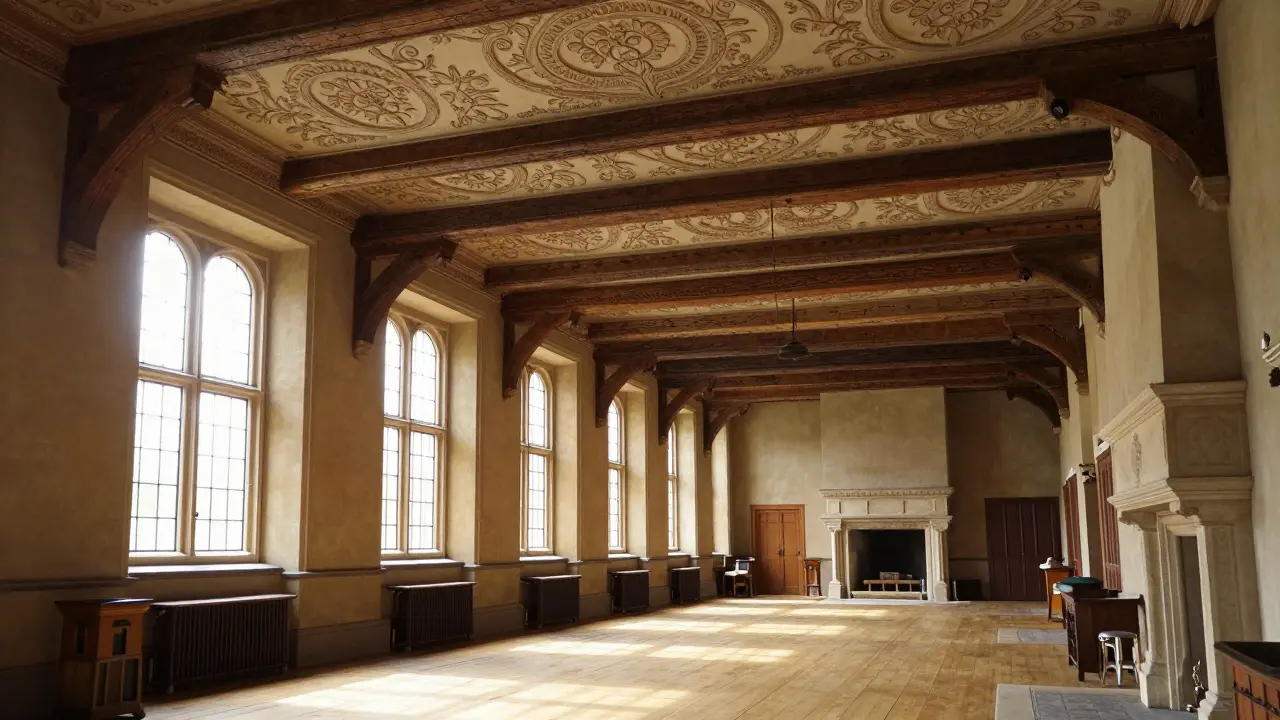
By the late Tudor period (late 1500s), influence from the European Renaissance began to seep in. Architects like Robert Smythson introduced classical elements. Symmetry became more important. Decorative plasterwork appeared inside, featuring scrolls, foliage, and mythological figures. The Long Gallery-a long, narrow room for walking and entertaining-became a staple of grand houses.
This transition marks the bridge between medieval and modern architecture. While the exterior might still look rustic with its timber framing, the interior reflected a new appreciation for art, light, and proportion.
Tudor Revival: A Global Phenomenon
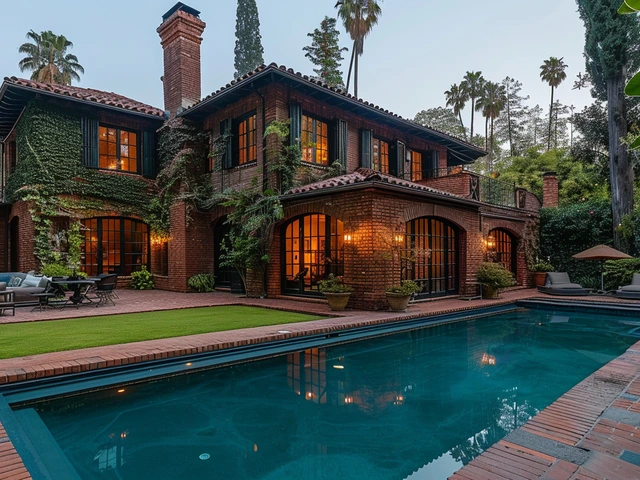
You don’t need to be in England to see Tudor-style homes. In the late 19th and early 20th centuries, the Tudor Revival swept across Britain, America, and beyond. Why did this old style come back?
During the Industrial Revolution, cities became crowded and polluted. People yearned for a return to simpler, rural times. The Arts and Crafts Movement, led by figures like William Morris, championed handmade quality and traditional methods. Tudor architecture fit this ideal perfectly.
In the United States, the Colonial Revival included Tudor elements. Suburbs in California, New York, and Texas featured stucco exteriors with faux timber framing. These homes offered the charm of the past without the high cost of authentic oak beams. Today, "Tudor-style" remains a popular choice for custom homes, valued for its cozy, inviting feel.
Preserving Tudor Heritage
Keeping original Tudor buildings standing is a challenge. Moisture is the enemy of wattle and daub. If water gets behind the plaster, the timber can rot. Regular maintenance is crucial. This includes repointing brickwork, repairing roof tiles, and ensuring gutters drain properly.
In the UK, many Tudor buildings are listed (protected) by Historic England. Any changes require permission. This ensures that historical integrity is maintained. However, it also means homeowners must use traditional materials and techniques, which can be expensive.
Modern adaptations often involve adding insulation behind the internal walls to improve energy efficiency without altering the external appearance. This balances heritage preservation with contemporary living standards.
Why Tudor Architecture Endures
There is something timeless about Tudor design. It feels human-scaled, warm, and grounded. Unlike sterile modern boxes, Tudor homes have character. The irregularities-the crooked beam, the uneven brickwork-tell a story of human hands shaping space.
Whether you are visiting a historic estate like Hampton Court or buying a suburban cottage, Tudor architecture connects us to a specific moment in history. It reminds us of a time when homes were built to last generations, using local materials and skilled labor. That connection to place and craft is why the style continues to inspire designers and homeowners today.
What is the difference between Tudor and Jacobean architecture?
Jacobean architecture follows the Tudor period, named after King James I (James VI of Scotland). While similar, Jacobean styles tend to be more symmetrical and incorporate more classical Renaissance details. Tudor buildings are often asymmetrical with heavier Gothic influences. Jacobean facades might feature pediments and columns, whereas Tudor focuses on timber framing and steep gables.
Are all black-and-white houses Tudor?
Not necessarily. Half-timbering was used in medieval periods before the Tudors and continued after. However, the iconic black-and-white aesthetic is most strongly associated with the Tudor era due to its popularity among the rising merchant class. Some Victorian and 20th-century homes mimic this look through revival styles.
How do you maintain a Tudor-style home?
Regular inspection of the timber frame is essential to prevent rot. Check for dampness in the wattle and daub sections. Ensure the roof is watertight, as leaks can damage the structure quickly. Use breathable paints and plasters to allow moisture to escape. Avoid sealing the walls completely, as this traps humidity inside.
Who were the famous architects of the Tudor period?
While many Tudor buildings were constructed by master craftsmen rather than named architects, key figures include Robert Smythson, who designed Hardwick Hall, and John Thorpe, known for Longleat House. These men helped transition English architecture from Gothic to Renaissance styles.
Is Tudor architecture energy efficient?
Original Tudor homes are not naturally energy efficient by modern standards. Single-pane leaded windows lose heat, and wattle and daub provides moderate insulation. However, retrofitting with secondary glazing and internal wall insulation can significantly improve performance while preserving the historic exterior.