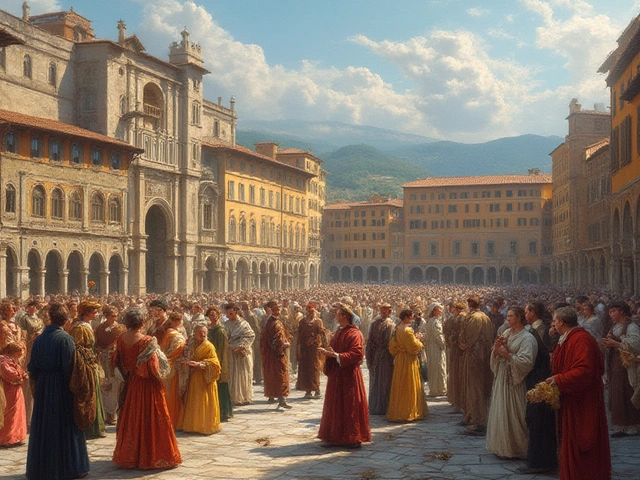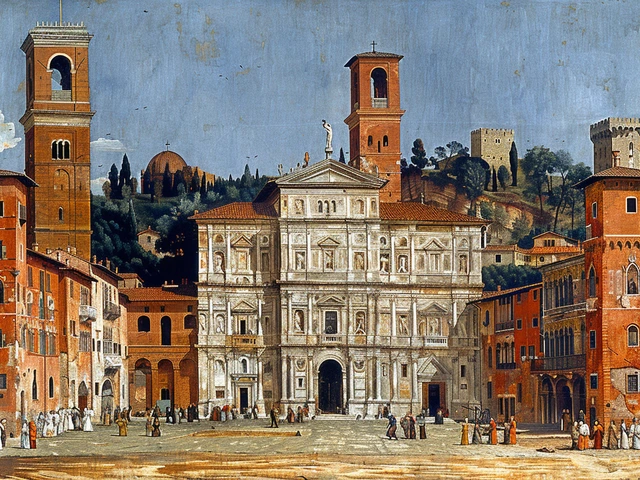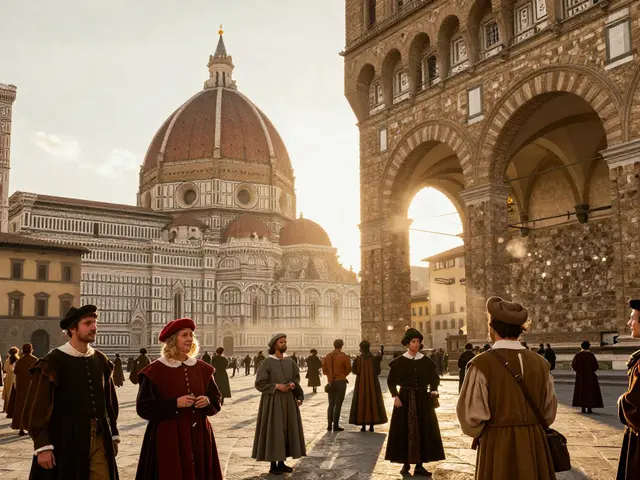
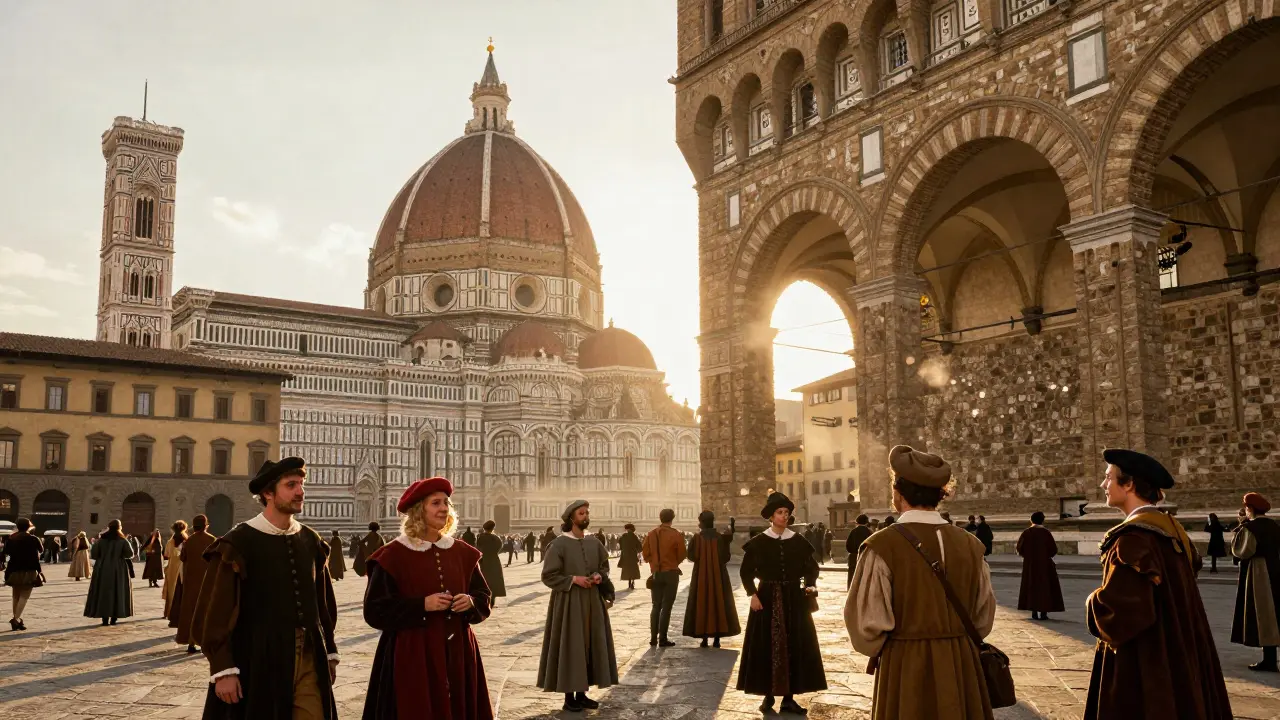
Imagine a world where the stars were just beginning to reveal their secrets, and artists were discovering that light and shadow could make paint look like flesh. This wasn't science fiction; it was the Renaissance, a period spanning roughly from the 14th to the 17th century that fundamentally reshaped Western civilization. It was not merely a time of pretty paintings or fancy buildings. It was a radical shift in how humans understood themselves, the universe, and their place within it. We often think of history as a straight line, but the Renaissance was more like a sudden burst of color in a monochrome sketch. It marked the transition from the Middle Ages to modernity, fueled by a renewed interest in classical antiquity and a growing confidence in human potential.
The Spark: Why Italy?
You might wonder why this explosion of creativity started in Italy rather than France or England. The answer lies in geography and money. Italy was a patchwork of independent city-states, each competing fiercely for prestige. Cities like Florence, Venice, and Milan were wealthy trade hubs connecting Europe to the East. This wealth didn't just buy spices and silk; it bought influence. Powerful families, most notably the Medici family in Florence, used their fortunes to patronize artists and scholars. They weren't just collecting art; they were investing in their legacy and civic pride. When you have merchants with millions of florins looking for ways to display their power, you get Brunelleschi’s dome and Michelangelo’s David. The political fragmentation meant no single king could suppress these ideas, allowing a diverse range of thought to flourish side-by-side.
Humanism: Putting People at the Center
If there is one core idea that defines the era, it is Humanism. Unlike the medieval focus on the afterlife and divine authority, humanists turned their gaze to the present life and human capabilities. They believed that individuals had the power to shape their own destinies through education and reason. This wasn't about rejecting religion; it was about reconciling Christian faith with classical philosophy. Scholars like Petrarch and Erasmus dug up ancient Greek and Roman texts that had been lost or ignored for centuries. They studied rhetoric, history, and poetry, arguing that understanding the past was key to improving the future. This intellectual movement created a new type of person: the "Renaissance Man," someone skilled in multiple fields, from painting to engineering to politics. It changed education forever, shifting curricula from pure theology to the studia humanitatis.
The Art of Realism
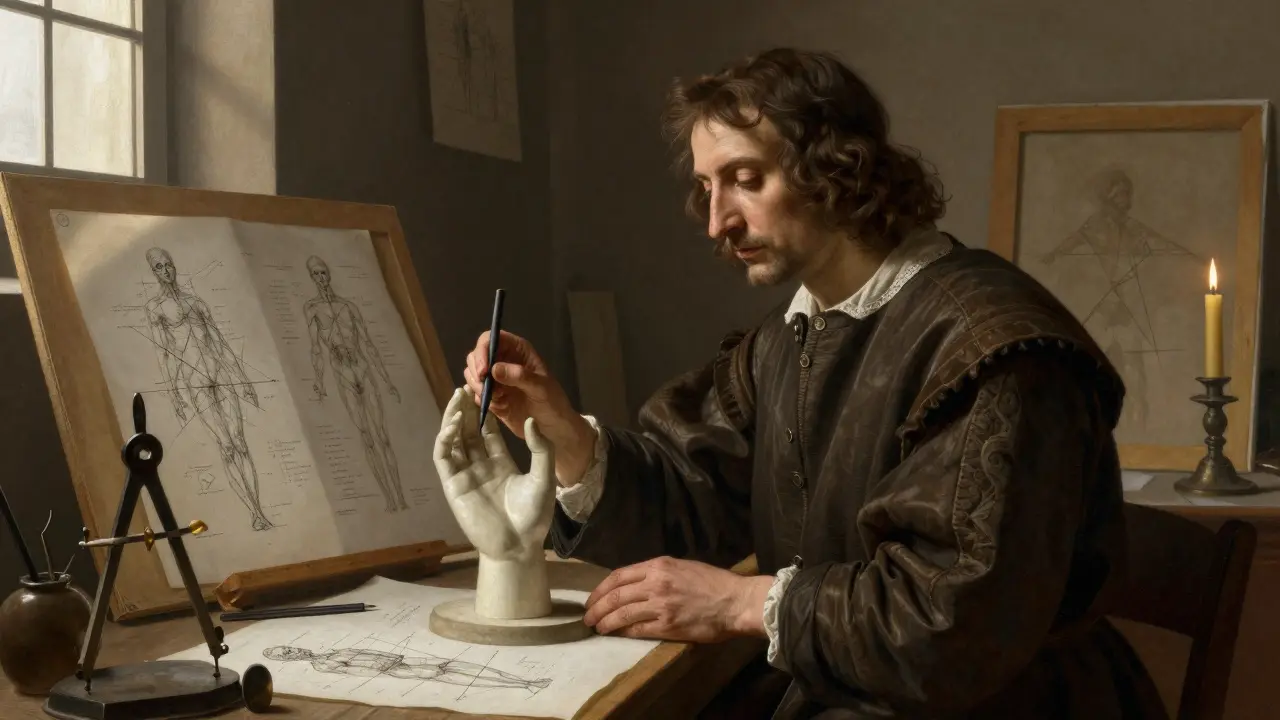
Walk into any major museum today, and you will see the direct lineage of Renaissance art. Before this period, religious figures looked stiff, flat, and symbolic. During the Renaissance, artists began to study anatomy, perspective, and light. They wanted to depict the world as it truly appeared to the eye. Linear perspective, a mathematical system developed by Filippo Brunelleschi, allowed painters to create the illusion of depth on a flat surface. Suddenly, a fresco could look like a window into another room. Leonardo da Vinci took this further by studying cadavers to understand muscle structure, resulting in works like the Mona Lisa and The Last Supper, which convey genuine emotion and psychological depth. Michelangelo’s Sistine Chapel ceiling isn't just decoration; it's a masterclass in anatomical precision and dynamic composition. These techniques didn't just improve art; they changed how we perceive reality visually.
| Innovation | Pioneer | Impact |
|---|---|---|
| Linear Perspective | Filippo Brunelleschi | Created realistic depth in 2D space |
| Anatomical Study | Leonardo da Vinci | Accurate depiction of human form |
| Chiaroscuro | Caravaggio (Late Renaissance) | Dramatic use of light and shadow |
| Oil Painting Techniques | Jan van Eyck (Northern) | Richer colors and finer details |
Science Meets Observation
Art and science were not separate disciplines back then. The same curiosity that drove painters to dissect bodies also drove astronomers to map the heavens. The Renaissance laid the groundwork for the Scientific Revolution. For centuries, people accepted the geocentric model-that Earth was the center of the universe-because it aligned with certain interpretations of scripture and ancient authority. Then came Nicolaus Copernicus, who proposed a heliocentric model where the Sun sat at the center. This was a dangerous idea. Galileo Galilei later supported it with his telescope observations, leading to conflict with the Church. But the method mattered more than the immediate result: observation and evidence began to challenge dogma. This shift encouraged experimentation, leading to advances in medicine, physics, and engineering that still underpin our modern world.
The Printing Press: Information Freedom
You cannot talk about the Renaissance without mentioning Johannes Gutenberg. Invented around 1440, the movable type printing press was the internet of its day. Before this, books were handwritten, rare, and expensive. Only the clergy and nobility could afford them. Gutenberg’s invention made books cheap and accessible. Ideas spread faster than ever before. Martin Luther’s 95 Theses, which sparked the Protestant Reformation, went viral because they were printed and distributed across Germany in weeks. Literacy rates climbed as people could read religious texts and secular literature in their own languages. This democratization of knowledge weakened the monopoly of the elite on information and fueled both religious reform and scientific debate. It created a public sphere where ideas could be challenged and refined openly.
Architecture: Harmony and Proportion
The Renaissance also transformed the skyline. Medieval architecture, with its Gothic spires and complex ribbed vaults, gave way to a style inspired by Roman ruins. Architects like Andrea Palladio and Leon Battista Alberti studied the proportions of temples and baths. They believed that beauty lay in symmetry, balance, and geometric harmony. Buildings featured columns, arches, and domes that reflected the order of the cosmos. St. Peter’s Basilica in Vatican City is the ultimate symbol of this architectural shift. It combined engineering prowess with aesthetic grandeur, showcasing the era’s belief that human design could mirror divine perfection. This style influenced government buildings, churches, and private homes for centuries, establishing the visual language of Western civic spaces.
Legacy Beyond Borders
The Renaissance did not stay in Italy. It spread north to France, England, and the Netherlands, adapting to local cultures. In Northern Europe, artists focused more on domestic interiors and detailed landscapes, using oil paints to capture textures like fur and water. In England, Shakespeare wrote plays that explored the complexities of human nature, reflecting the humanist concern with individual experience. Even as the era faded into the Baroque period, its impact remained. The emphasis on critical thinking, artistic realism, and scientific inquiry became the foundation of modern Western culture. We live in a world shaped by Renaissance ideals: the value of education, the pursuit of knowledge, and the belief in human potential.
When exactly did the Renaissance happen?
The Renaissance is generally dated from the 14th century to the 17th century. It began in Italy around 1300-1350 and spread to the rest of Europe over the next two centuries, ending roughly around 1600 when the Baroque period began.
Who were the most important figures of the Renaissance?
Key figures include Leonardo da Vinci and Michelangelo in art, Niccolò Machiavelli in politics, Nicolaus Copernicus and Galileo Galilei in science, and William Shakespeare in literature. Patrons like the Medici family were also crucial for funding these endeavors.
What is the difference between the Renaissance and the Reformation?
The Renaissance was a cultural and intellectual movement focused on art, science, and humanism. The Reformation was a religious movement that split the Catholic Church, led by figures like Martin Luther. While distinct, they influenced each other, as the printing press helped spread both humanist ideas and Protestant reforms.
Why is the Renaissance considered a 'rebirth'?
It is called a rebirth because it revived interest in the classical art, literature, and philosophy of ancient Greece and Rome, which had been largely neglected during the Middle Ages. This revival led to new ways of thinking about humanity and the natural world.
How did the Renaissance affect women?
While still limited by societal norms, some women gained access to education and patronage. Figures like Artemisia Gentileschi in art and Christine de Pizan in literature made significant contributions, though they faced greater barriers than their male counterparts.