Bauhaus Composition Checker
Evaluate Your Photo Composition
How well does your photo follow Bauhaus principles? Answer a few questions about your composition to see if it embodies the movement's core ideas.
Composition Assessment
Principles Applied
Strengths
Suggestions for Improvement
When you think of Bauhaus, you probably picture clean lines, geometric shapes, and minimalist furniture. But the Bauhaus school didn’t just change architecture and furniture-it rewrote the rules of photography too. Between 1919 and 1933, the Bauhaus became a laboratory for visual experimentation, and photography was one of its most radical tools. Not as a way to capture reality, but to question it.
Photography as a Bauhaus Medium
At first, photography wasn’t even part of the Bauhaus curriculum. It was seen as a mechanical craft, not an art form. But that changed when László Moholy-Nagy arrived in 1923. He didn’t just teach photography-he redefined it. For him, the camera wasn’t a recorder of the world. It was an eye that could see differently. He called it the new vision.
Moholy-Nagy’s work turned everyday objects into abstract patterns. A glass of water became a maze of light. A typewriter turned into a grid of shadows. He didn’t care about pretty pictures. He cared about how light, angle, and perspective could break the ordinary. He shot from above, below, and at impossible angles. He used photograms-images made without a camera-by placing objects directly onto photosensitive paper. These weren’t just experiments. They were manifestos.
The Bauhaus Approach to Composition
Bauhaus photography rejected traditional rules. No centered subjects. No soft focus. No staged drama. Instead, it embraced structure, balance, and function. The grid became king. Symmetry wasn’t decorative-it was logical. Asymmetry wasn’t messy-it was intentional.
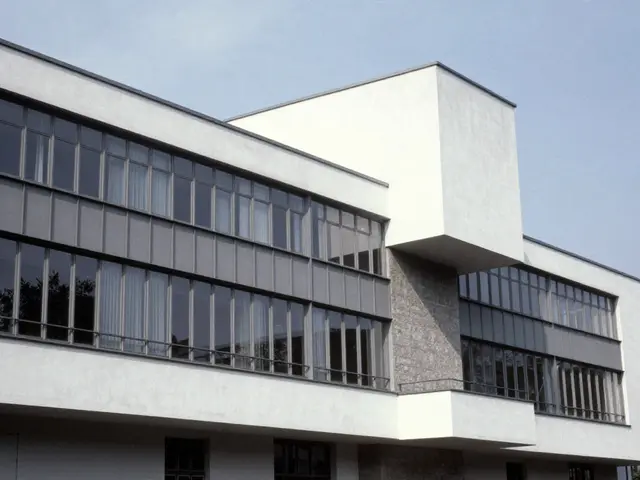
Take the work of Lucia Moholy. She photographed Bauhaus buildings with precision. Her images didn’t glorify the architecture. They showed it as a system of forms: walls, windows, stairs, and railings arranged like musical notes. Her photos were documentation, yes-but also design. Each frame was a lesson in how space could be organized.
Students at Bauhaus were told to shoot like engineers. What’s the shape? What’s the line? Where does the light hit? What’s the negative space? These weren’t artistic questions-they were design questions. And the answers shaped how generations would see the world through a lens.
Techniques That Changed Everything
Bauhaus photographers didn’t wait for technology to catch up. They pushed it. They used double exposures to layer realities. They cropped tightly to eliminate distraction. They printed in high contrast to turn gray into black and white drama. They printed on unusual surfaces-metal, fabric, even glass-to break the idea that photos had to be on paper.
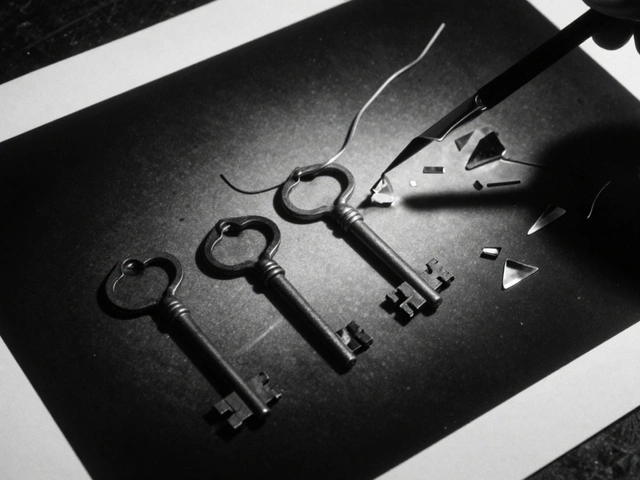
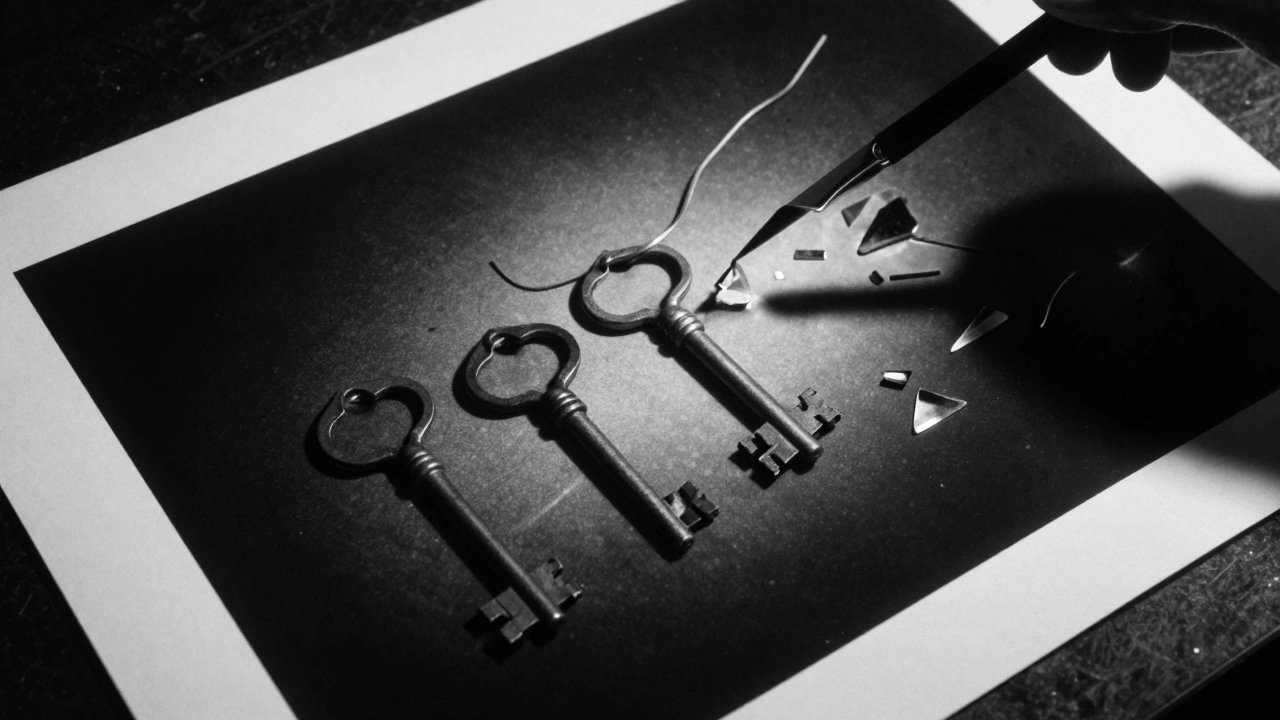
One of the most influential techniques was the photogram. Without a camera, you placed objects-keys, wires, hands-on light-sensitive paper and exposed them to light. The result was a silhouette with unexpected texture. Moholy-Nagy called these light drawings. They were abstract, unpredictable, and deeply modern. Today, you see their influence in fashion editorials, album covers, and digital collage work.
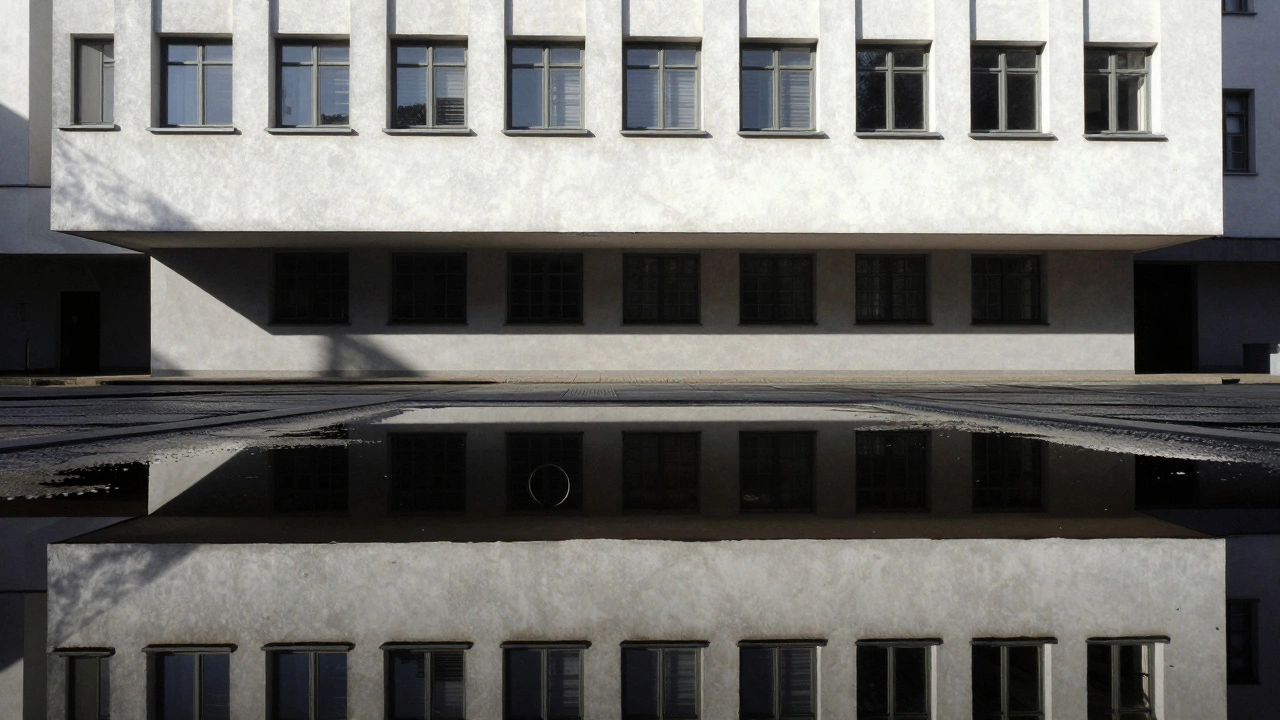
Another key technique: the use of reflection. Mirrors, puddles, glass doors-Bauhaus photographers turned reflective surfaces into portals. A face in a broken mirror wasn’t a portrait. It was a fracture of identity. A building reflected in a puddle wasn’t a scene. It was a second architecture.
Who Were the Key Figures?
Bauhaus photography wasn’t the work of one person. It was a collective effort.
- László Moholy-Nagy-The visionary. His book Painting, Photography, Film became a bible for modernist photographers.
- Lucia Moholy-The documentarian. Her photos preserved the Bauhaus buildings after the school was shut down. Without her, we’d have far less visual record of its architecture.
- Walter Peterhans-The teacher. He brought technical rigor to the course. He taught students to see detail: the curve of a spoon, the grain of wood, the shadow of a wire.
- Anna Riwkin-Brick-The portraitist. She photographed students and staff with a quiet intensity. Her images weren’t about glamour. They were about presence.
Each of them had a different focus, but they all shared the same belief: photography could be both art and science.

How Bauhaus Photography Influenced Today’s Visual Language
You don’t need to study art history to see Bauhaus in your daily life. Look at Apple product photos. Notice how the iPhone is shot against a white background, with sharp shadows and no clutter. That’s Bauhaus. Look at IKEA catalogs. The flat-lay shots of kitchen utensils arranged in perfect grids? Bauhaus.
Modern advertising, fashion photography, and even Instagram aesthetics owe their clean lines and bold contrasts to Bauhaus. The rise of minimalism in digital design? That’s Bauhaus too. Even smartphone cameras now include grid overlays to help users compose shots like a Bauhaus student would.
But it’s not just about looks. It’s about thinking. Bauhaus taught photographers to ask: What’s essential? What’s unnecessary? What does this shape communicate? These aren’t just photography questions. They’re design questions. And they’re still being asked every day.
Why Bauhaus Photography Still Matters
In a world flooded with images-selfies, filters, AI-generated scenes-Bauhaus photography feels like a reset button. It reminds us that photography doesn’t need to be pretty to be powerful. It doesn’t need to be real to be true. A shadow, a reflection, a grain of sand caught in light-those can be more meaningful than a perfectly lit portrait.
The Bauhaus school was closed by the Nazis in 1933. Its teachers scattered. But their ideas didn’t die. They traveled. They were taught in New York, Tokyo, and Sydney. Today, photography students at art schools around the world still learn Moholy-Nagy’s photograms. Designers still use his grids. Photographers still shoot from below to make a building look monumental.
Bauhaus didn’t just influence photography. It gave us a new way to see. And that’s why, over 90 years later, it still shapes how we capture the world.
What is the main goal of Bauhaus photography?
The main goal was to break away from traditional, romanticized photography and instead use the camera as a tool for experimentation and clarity. Bauhaus photographers wanted to reveal the underlying structure of objects and spaces-using light, angle, and composition to show how things truly functioned, not just how they looked.
Did Bauhaus photographers use color?
Most Bauhaus photography was black and white. Color film was expensive, slow, and unreliable in the 1920s and 30s. More importantly, the Bauhaus focused on form, contrast, and texture-elements that are most clearly seen without color. When color was used, it was usually in hand-tinted prints or experimental projects, but it was never the norm.
How did Bauhaus photography differ from pictorialism?
Pictorialism, popular before Bauhaus, aimed to make photos look like paintings-soft focus, blurred edges, dramatic lighting. Bauhaus rejected that entirely. It wanted sharpness, clarity, and geometric precision. Where pictorialists sought emotion, Bauhaus sought logic. Where pictorialists hid the mechanics of photography, Bauhaus celebrated them.
Can you practice Bauhaus photography today without special equipment?
Absolutely. You don’t need a vintage camera. Start by shooting everyday objects from unusual angles-above, below, or through reflections. Use your phone’s grid feature to compose with clean lines. Try making a photogram by placing keys or leaves on your phone screen under bright light and taking a photo. The principles are simple: simplify, structure, and see differently.
Why is Lucia Moholy less known than Moholy-Nagy?
Lucia Moholy took most of the iconic photos of Bauhaus buildings and students, but for decades, they were credited to her husband, László. Her work was used in publications without proper attribution. It wasn’t until the 1970s that historians began to recognize her critical role. Today, she’s seen as one of the most important documentarians of modernist design.