When you see a house with a steep, curved gable roof that looks like it was lifted straight out of 17th-century Amsterdam, you're not looking at a European import-you're seeing Dutch Colonial Revival architecture. This style didn’t just show up in America by accident. It was a deliberate nod to early settlers who brought their building traditions from the Netherlands, then adapted them to the New World. Today, it’s one of the most recognizable-and charming-styles in historic neighborhoods from New England to the Mid-Atlantic.
What Makes Dutch Colonial Revival Unique?
The most unmistakable feature of Dutch Colonial Revival homes is the gambrel roof. Unlike a standard pitched roof, a gambrel roof has two slopes on each side: a steep lower slope and a shallower upper slope. This design wasn’t just for looks-it solved a real problem. In the 1600s, builders in New Netherland (modern-day New York and New Jersey) needed more attic space without adding extra stories. The gambrel roof gave them extra headroom for storage or living space, all while keeping the overall height manageable.
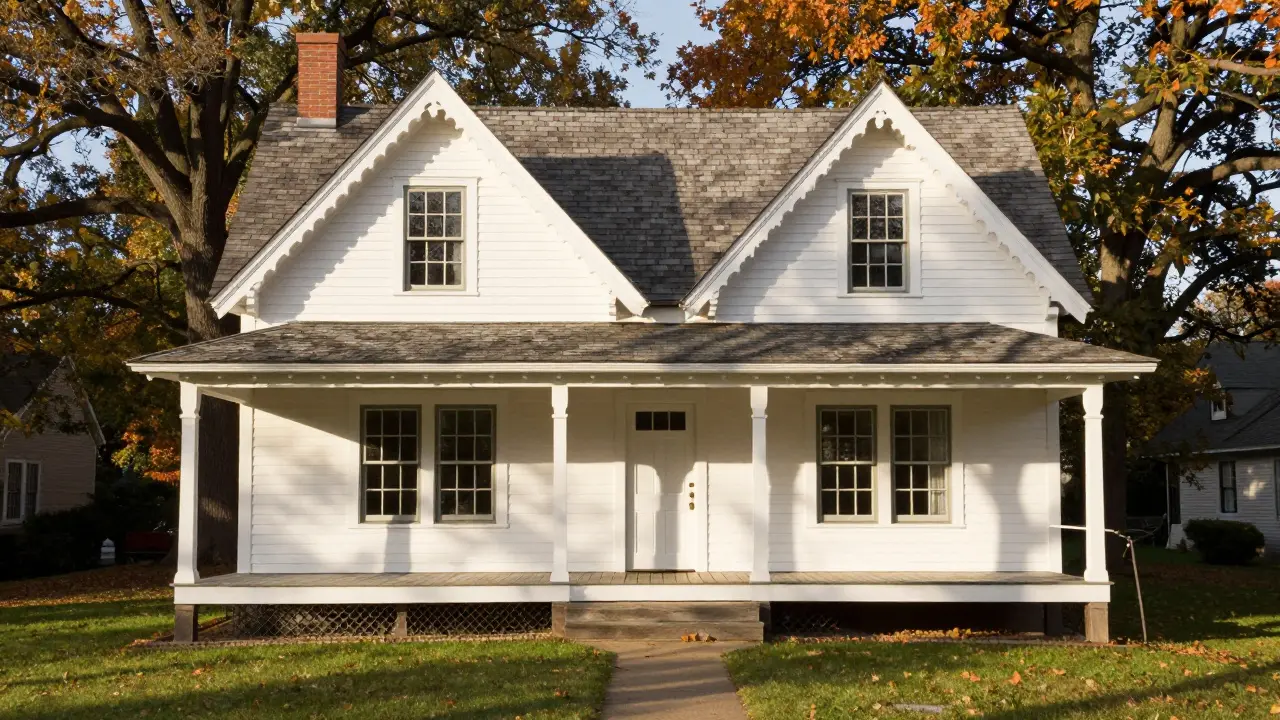
These homes also typically have wide, overhanging eaves, often with decorative shingles or carved bargeboards. Many feature a central chimney, sometimes flanked by smaller ones, and wide clapboard siding that runs horizontally. Windows are usually double-hung, arranged symmetrically, and often have small panes of glass-what we now call "six-over-six" or "nine-over-nine."
One of the most practical aspects of Dutch Colonial Revival homes is their durability. Built with thick timber frames and sturdy materials, many of these homes have lasted over 200 years. They were designed to withstand harsh winters and heavy snow loads, which is why the gambrel roof’s shape works so well-it sheds snow naturally.
The Origins: From Amsterdam to the Hudson Valley
The roots of this style go back to the Dutch settlers who arrived in North America in the early 1600s. They built homes in what was then New Netherland using techniques familiar to them: stone foundations, timber frames, and those signature gambrel roofs. These early homes were simple but functional, often with a central hearth and a single room on each floor.
By the late 1800s, America was rediscovering its colonial past. The centennial of the Declaration of Independence in 1876 sparked a national interest in historic architecture. Architects and homeowners began reviving old styles-not as exact copies, but as romanticized interpretations. The Dutch Colonial Revival movement took off between 1880 and 1930. It wasn’t just about nostalgia. People wanted homes that felt grounded, sturdy, and distinctly American, yet with a touch of Old World charm.
By the 1920s, builders were mass-producing Dutch Colonial Revival homes using kit designs sold through catalogs. These weren’t just for the wealthy. Middle-class families in places like Philadelphia, Boston, and even rural towns could buy a set of plans and build a house that looked like it had been there since the Revolutionary War.
Key Design Elements You Can’t Miss
- Gambrel roof: The defining feature. Often covered in wood shingles or slate.
- Flared eaves: The roof extends outward, sometimes with decorative trim underneath.
- Central chimney: Usually brick, sometimes with decorative caps or flues.
- Clapboard siding: Horizontal wooden boards, often painted white or gray.
- Double-hung windows: Symmetrical, with small panes, usually in a 6-over-6 or 9-over-9 pattern.
- Paneled front door: Often centered, with a transom window above.
- Full-width porch: Especially common in later revivals, sometimes supported by square wooden posts.
Some homes even include a Dutch door-a door split horizontally so the top half can open while the bottom stays shut. This was practical for ventilation and keeping children or animals inside while letting in air. You still see them in restored homes today.
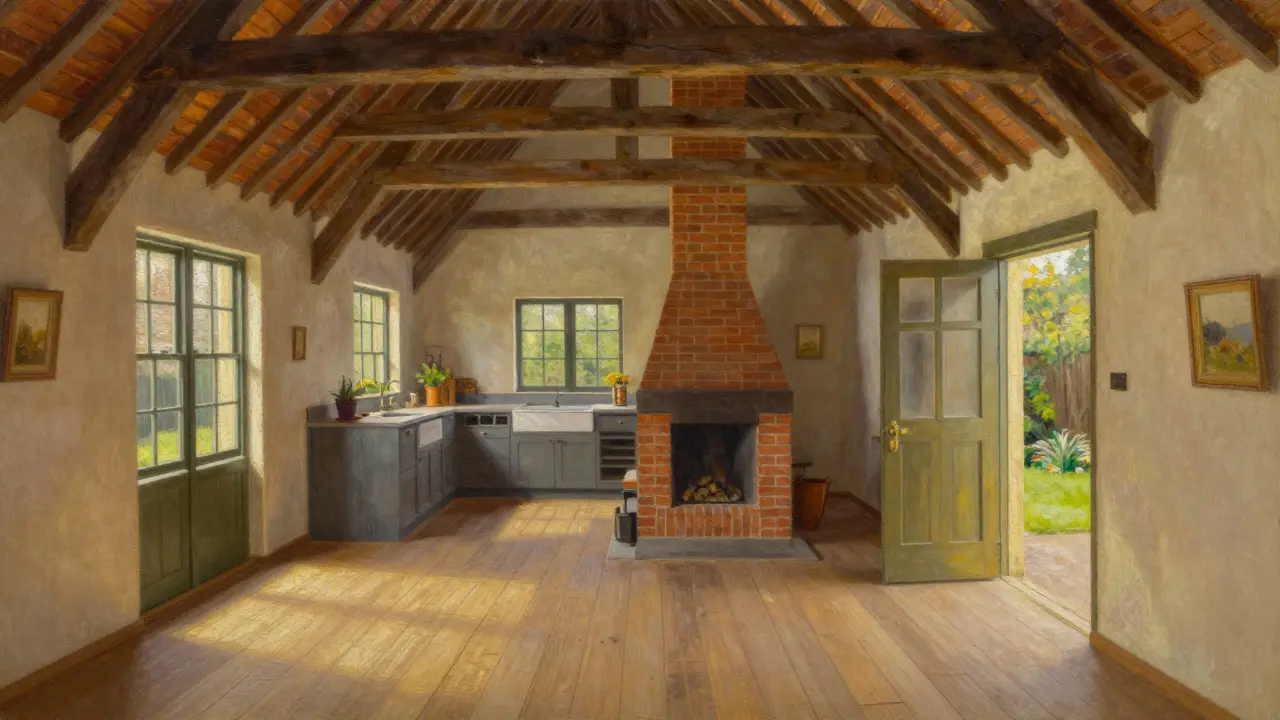
Where to Find Dutch Colonial Revival Homes Today
These homes are most common in the Northeastern U.S., especially in states like New York, New Jersey, Pennsylvania, Connecticut, and Massachusetts. In fact, towns like Sleepy Hollow, Nyack, and Salem still have entire blocks of original or restored Dutch Colonial Revival homes.
But you don’t need to travel to New England to find them. Many were built in the early 20th century across the country. In the Midwest, you’ll find them in older suburbs of Chicago and Detroit. Even in Southern cities like Richmond and Charleston, you can spot them tucked into quiet neighborhoods.
One of the best places to study the style is the Historic District of Hudson, New York, where over 200 Dutch Colonial Revival homes were built between 1900 and 1930. Many have been restored with period-appropriate details: wrought iron lanterns, original shutters, and even restored gambrel rooflines that had been hidden under modern siding.
Why It Still Resonates Today
Modern homeowners are drawn to Dutch Colonial Revival homes for more than just aesthetics. The layout is practical: the gambrel roof creates a spacious second floor, often perfect for bedrooms or a home office. The wide eaves provide natural shade in summer, and the thick walls offer excellent insulation.
Compared to the boxy symmetry of Victorian homes or the minimalist lines of mid-century modern, Dutch Colonial Revival strikes a balance. It’s warm, inviting, and has a sense of permanence. It doesn’t shout for attention-it quietly commands respect.
Today’s restorers often combine original features with modern upgrades. A home might keep its original gambrel roof and clapboard siding but have updated insulation, energy-efficient windows, and a modern kitchen tucked into the back. That’s the beauty of this style: it adapts without losing its soul.
Restoring a Dutch Colonial Revival Home
If you own one, restoring it isn’t about turning it into a museum. It’s about honoring its history while making it livable. Here’s what to focus on:
- Roof integrity: Check for rot under the shingles. Gambrel roofs are prone to water pooling where the slopes meet.
- Original woodwork: Preserve or replicate the clapboard siding and trim. Avoid vinyl replacements-they kill the character.
- Windows: Restore original double-hung windows instead of replacing them. Modern storm windows can improve efficiency without changing appearance.
- Chimney: Have it inspected for structural integrity. Many were built with soft brick that deteriorates over time.
- Doors: Dutch doors are rare but highly valuable. If yours is missing, consider recreating it-it adds instant authenticity.
There are also tax incentives in many states for restoring historic homes. In New York, for example, homeowners who follow state guidelines for preservation can get up to 20% back in tax credits.
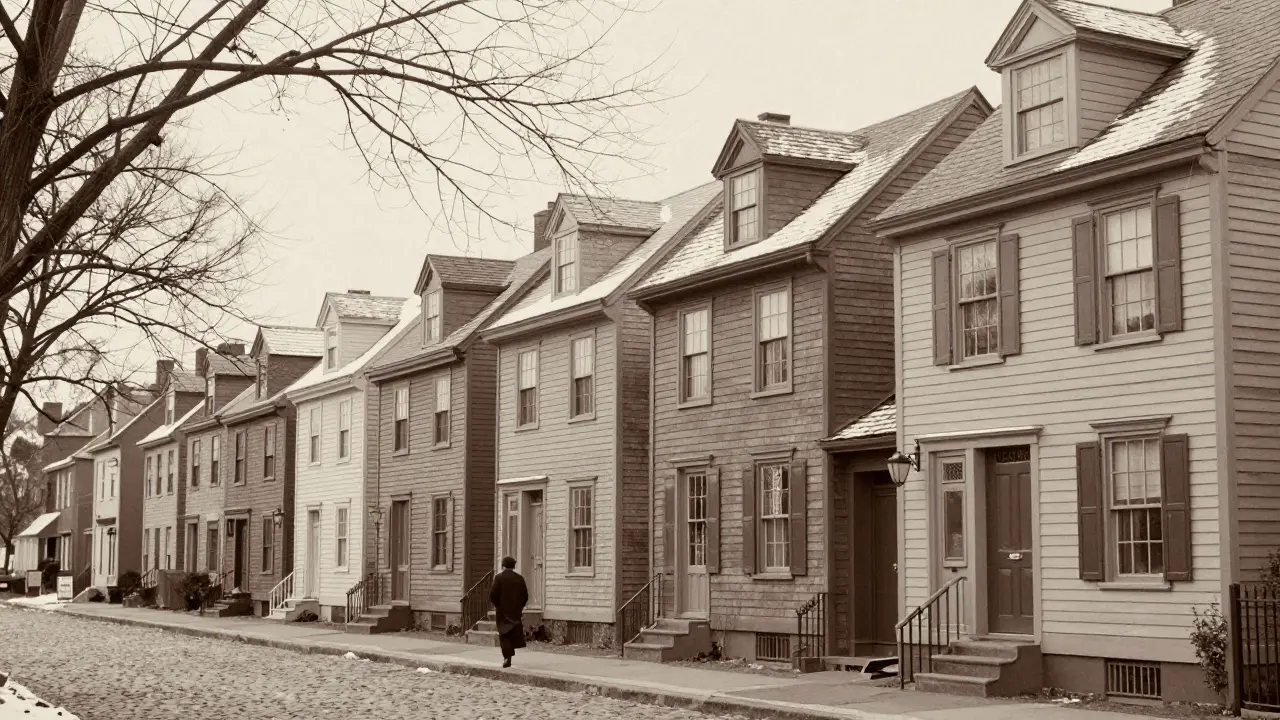
What’s Not Dutch Colonial Revival
It’s easy to confuse this style with others. Here’s how to tell them apart:
- Georgian: Has a center hall, symmetrical windows, and a pitched roof-not a gambrel.
- Federal: More delicate details, fanlights over doors, and often brick construction.
- Shingle Style: Uses continuous wood shingles over the entire exterior, no distinct gable shape.
- Colonial Revival: A broader category that includes Georgian and Dutch styles. Dutch Colonial is a subtype.
The key is the roof. If it doesn’t have a gambrel, it’s not Dutch Colonial Revival.
Modern Twists on a Classic
Contemporary architects are reimagining the style for today’s needs. Some new builds use steel frames under traditional gambrel roofs for added strength. Others combine the Dutch Colonial silhouette with open floor plans, solar panels disguised as roof tiles, and smart-home systems hidden behind original moldings.
In places like Portland, Oregon, and Austin, Texas, you’ll find new homes that borrow the gambrel roof but use modern materials like fiber-cement siding and large glass panels. These homes prove the style isn’t stuck in the past-it’s evolving.
Final Thoughts
Dutch Colonial Revival architecture isn’t just about old houses. It’s about craftsmanship, adaptability, and a quiet kind of beauty. It survived because it worked. It’s still popular because it still works-today, just as it did in 1720.
Whether you’re restoring one, buying one, or just admiring it from the sidewalk, this style reminds us that good design doesn’t need to be loud. Sometimes, the most enduring homes are the ones that simply do their job-well, and beautifully.
What is the difference between Dutch Colonial and Dutch Colonial Revival?
Dutch Colonial refers to the original 17th-century homes built by Dutch settlers in North America. Dutch Colonial Revival is a 20th-century architectural movement that copied and adapted those designs, often with modern materials and updated layouts. The revival style added porches, larger windows, and more decorative trim that weren’t common in the originals.
Are Dutch Colonial Revival homes expensive to maintain?
They can be, if you insist on using period-correct materials. Original wood shingles, hand-split clapboard, and traditional lime mortar are costly and hard to source. But many homeowners save money by using modern equivalents-fiber-cement siding instead of wood, synthetic shingles that mimic slate, and energy-efficient windows that match the original style. The key is prioritizing what matters: the roof shape, symmetry, and overall silhouette.
Can you add a second story to a Dutch Colonial Revival home?
Technically, yes-but it’s not advisable. The gambrel roof is designed to create usable space on the second floor without needing a full second story. Adding another floor would break the roofline and ruin the home’s historic proportions. If you need more space, expanding the basement or adding a rear extension is a better option.
Do Dutch Colonial Revival homes have basements?
Many original Dutch Colonial homes had partial basements, often used for storage or as a root cellar. In the revival period, basements became more common, especially in homes built after 1910. Most modern restorations include full basements for mechanical systems, but they’re designed to stay hidden-no exposed concrete walls or basement windows that disrupt the historic facade.
Why is the gambrel roof so important?
The gambrel roof isn’t just decorative-it’s functional. It creates more usable attic space than a standard pitched roof, without increasing the building’s height. This was crucial for early settlers who needed storage for crops and livestock. Today, it gives homeowners extra room for bedrooms, offices, or lofts without building out. It also sheds snow efficiently, which is why it’s still common in colder climates.