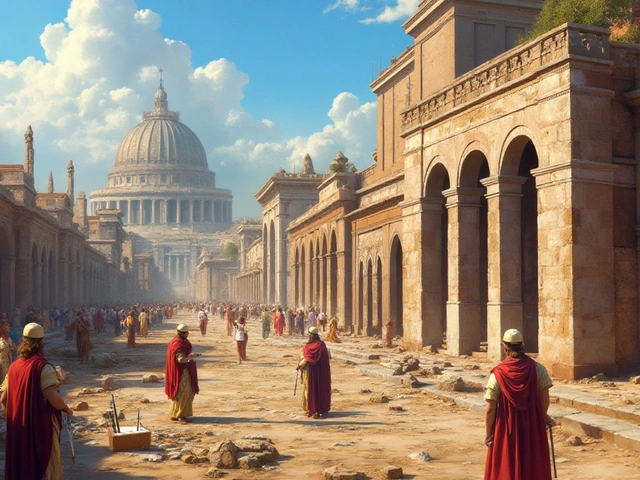
When you walk through any modern city, you’re surrounded by the quiet legacy of ancient Rome. The arches holding up your local bridge, the dome over the city hall, the stadium where crowds gather - these aren’t just design choices. They’re direct descendants of Roman innovation. Ancient Roman architecture didn’t just build buildings; it built the blueprint for how the Western world constructs space, power, and public life.
The Colosseum: More Than a Stadium
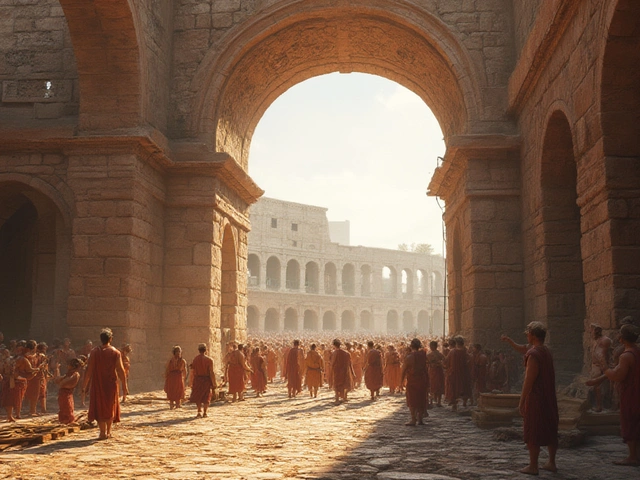
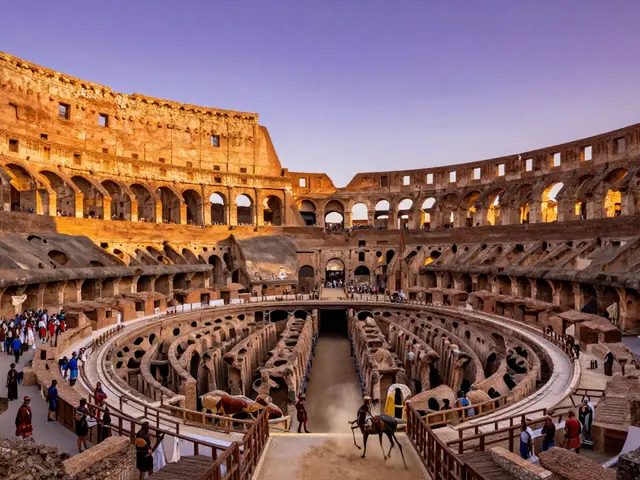
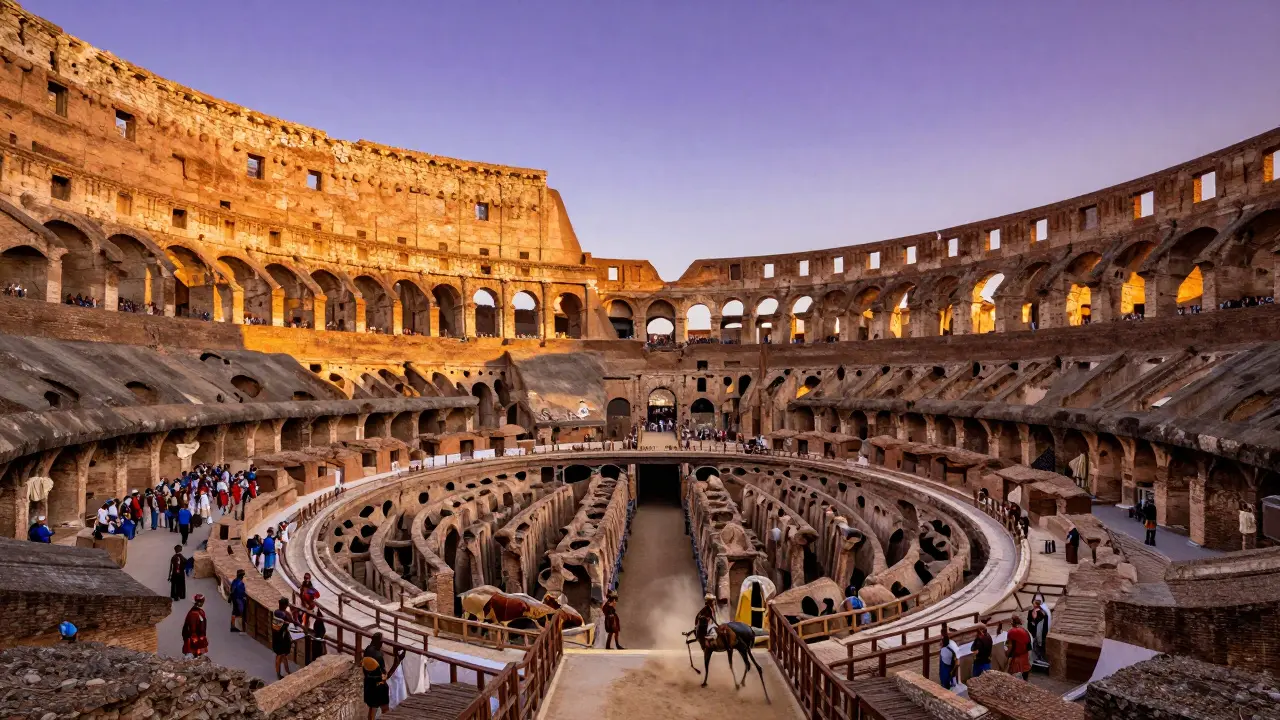
The Colosseum in Rome isn’t just an old ruin. It’s the world’s first large-scale, multi-tiered amphitheater designed for mass entertainment. Built between 70 and 80 AD, it held up to 80,000 spectators. What made it revolutionary wasn’t just its size - it was its engineering. The Colosseum used a complex system of vaulted arches and radial corridors to move crowds in and out quickly. No other structure before it could handle that kind of flow. Even today, modern stadiums copy its layered seating and exit design.
The outer walls had 80 arched entrances, each numbered so spectators could find their seats with ease - an early version of ticketing and seating zones. The floor wasn’t solid ground; it was a wooden platform covered in sand, hiding a maze of tunnels below where gladiators, animals, and props were lifted into view. This level of mechanical complexity was unmatched until the 19th century.
Roman Aqueducts: Engineering the Everyday
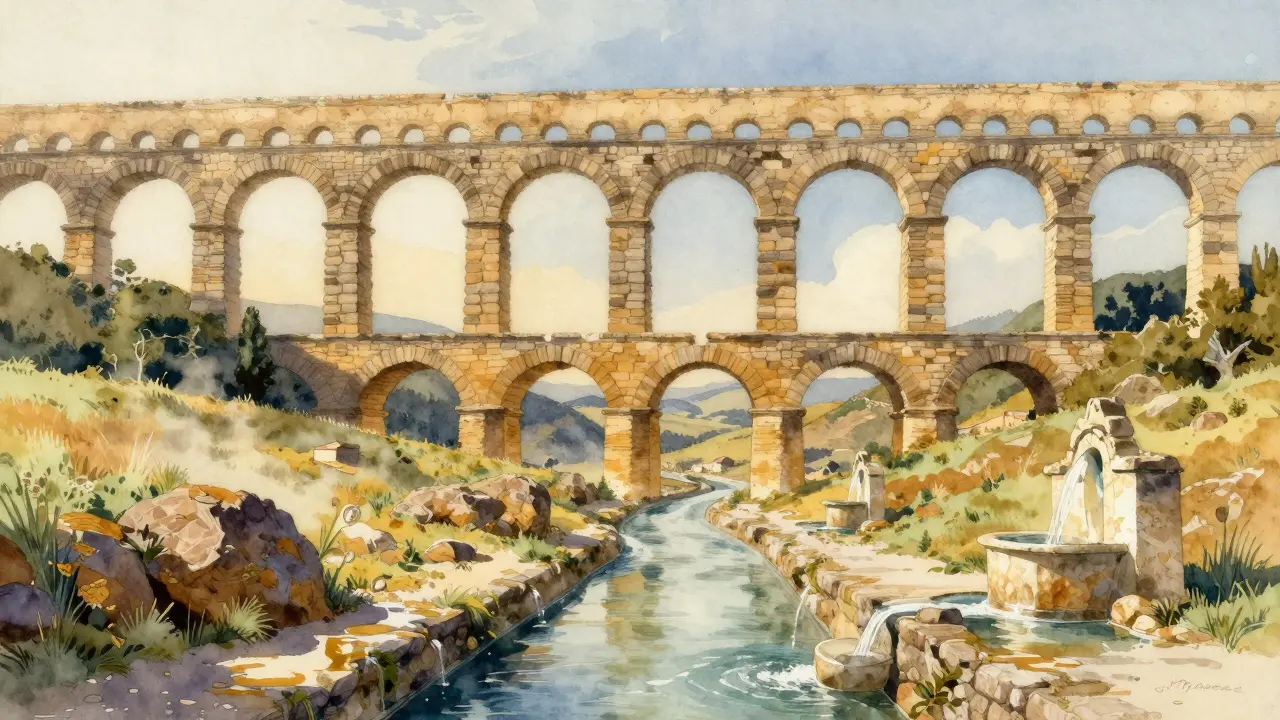
Rome didn’t just build for spectacle. It built for survival. The city’s population grew to over a million people by 100 AD. To feed that many people, you needed clean water. That’s where aqueducts came in. The Romans built over 500 kilometers of aqueducts across their empire, some stretching over 90 kilometers from mountain springs to city fountains.
These weren’t just pipes. They were precision-engineered channels, often built with a gentle slope of just 1 in 3,000. Too steep, and the water would erode the channel. Too flat, and it wouldn’t flow. They used gravity alone - no pumps, no electricity. The Aqua Appia, built in 312 BC, was Rome’s first. The Aqua Claudia, finished in 52 AD, stood over 45 meters tall in places, supported by towering arches that still stand today.
These aqueducts didn’t just supply drinking water. They fed public baths, fountains, latrines, and even private homes of the wealthy. The Romans understood that public health was tied to infrastructure - a lesson the modern world still follows.
The Pantheon: The Power of the Dome
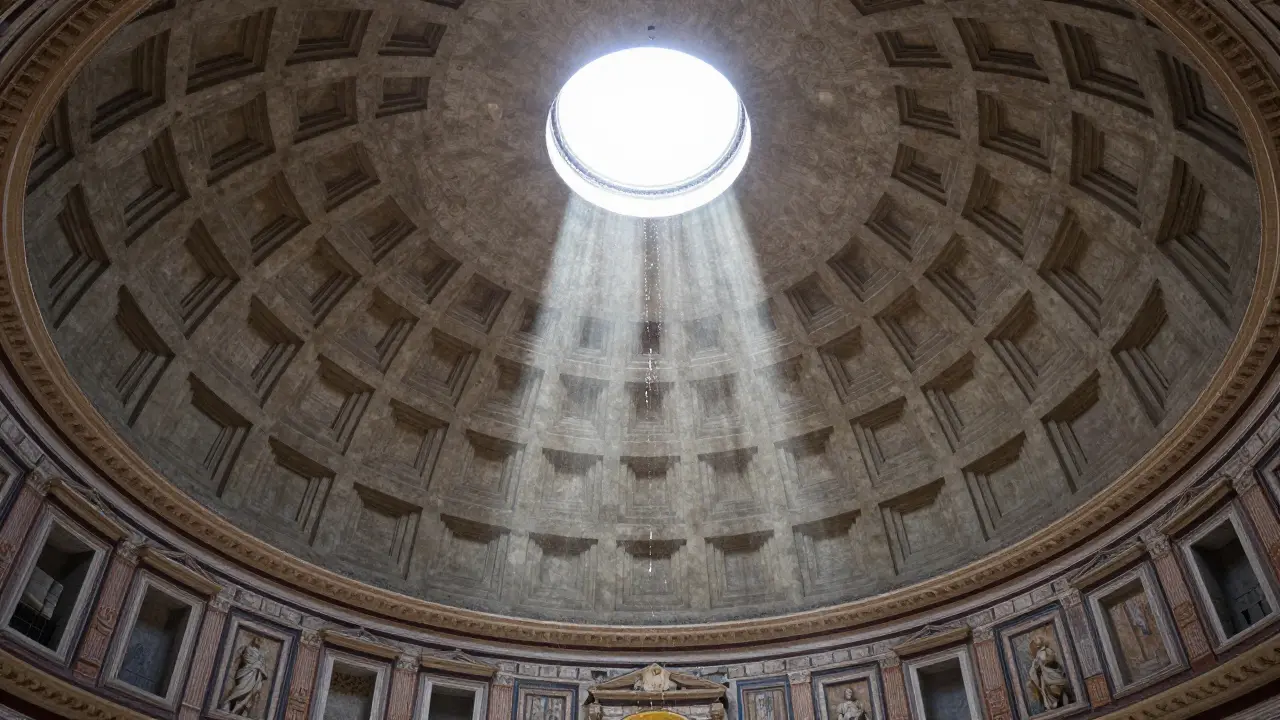
For over 1,800 years, the Pantheon’s dome was the largest unreinforced concrete dome in the world. Built around 126 AD under Emperor Hadrian, its 43.3-meter span remained unmatched until the 19th century. What makes it even more astonishing is the oculus - a 9-meter-wide circular opening at the top. It’s the only source of natural light and rain enters through it, yet the floor drains perfectly.
The secret? Roman concrete. Unlike modern concrete, which uses Portland cement, Roman concrete used volcanic ash from Mount Vesuvius mixed with lime and seawater. This created a material that didn’t just harden - it got stronger over time. Scientists studying the Pantheon’s walls found that the ash reacted with seawater to form new minerals that healed tiny cracks. Modern engineers are now trying to copy this recipe for sustainable building.
The Pantheon’s dome wasn’t just an architectural marvel - it was a statement. It represented the heavens, and the oculus was the eye of the gods. It’s still used today as a church, and its design influenced everything from the U.S. Capitol to the Paris Panthéon.
Architectural Innovation: The Arch and the Vault
Before the Romans, most buildings relied on post-and-lintel construction - heavy stone beams resting on vertical supports. It limited how wide a space could be. The Romans changed that with the arch. By using wedge-shaped stones (voussoirs) and a central keystone, they could span wider gaps with less material. The arch wasn’t new, but the Romans perfected it and turned it into a system.
They stacked arches to create vaults - curved ceilings that could cover large interior spaces without needing columns. The Basilica of Maxentius in Rome used barrel vaults and groin vaults to create a 70-meter-long interior that felt open and airy. This technique became the foundation for medieval cathedrals and later, train stations and factories.
They also used the arch not just as a structural element but as a decorative one. Triumphal arches - like the Arch of Constantine - celebrated military victories. They were covered in carved reliefs and inscriptions, turning architecture into propaganda. Today, you see the same idea in city gates, university entrances, and even corporate headquarters.
Roman Concrete: The Forgotten Supermaterial
Modern concrete cracks. It degrades. It needs steel reinforcement. Roman concrete? It’s still standing after two millennia. The difference lies in the ingredients. Roman builders used lime, volcanic ash (pozzolana), and chunks of rock from local quarries. The volcanic ash contained minerals like aluminous tobermorite, which slowly formed inside the mix and strengthened the structure over time.
Researchers at the University of Utah and MIT have replicated this material in labs. They found that Roman concrete self-heals when water seeps in - the ash reacts with water to form new crystals that fill cracks. Modern concrete doesn’t do that. It just gets worse.
Why did we forget this? When the Roman Empire fell, the knowledge of how to source and mix pozzolana was lost. Modern cement, developed in the 1800s, was faster and cheaper to produce - even if it didn’t last. Today, engineers are revisiting Roman recipes to build more durable, eco-friendly structures. The past isn’t just history - it’s a blueprint for the future.
Public Baths: The Social Heart of Rome
Roman baths weren’t just places to wash. They were community centers. The Baths of Caracalla, built in 216 AD, covered 33 acres and could hold 1,600 bathers at once. They had hot rooms (caldarium), warm rooms (tepidarium), cold rooms (frigidarium), libraries, gardens, and even food stalls. People came to socialize, exercise, read, and relax.
The heating system was advanced. Underfloor heating (hypocaust) used hollow spaces under the tiles where hot air from furnaces circulated. Walls were also hollow to trap heat. This system kept entire rooms warm without smoke or soot. It’s the ancestor of modern radiant floor heating.
The baths were open to all classes - free of charge, funded by the state. This idea of public space as a right, not a luxury, shaped modern libraries, community centers, and even public swimming pools. The Romans didn’t just build buildings. They built culture.
Legacy in Today’s World
Look around. The arches on your local courthouse. The dome of your city’s museum. The concrete sidewalks and bridges. The way your local stadium organizes seating. All of it traces back to Rome.
Modern architects don’t copy Roman designs because they’re old. They copy them because they work. The Romans solved problems we still face: how to move people, how to deliver water, how to build something that lasts, how to make public space feel grand yet welcoming.
What’s remarkable isn’t just that they built these things - it’s that they built them with materials and methods that were sustainable, scalable, and smart. We’re only now catching up.
What made Roman architecture different from Greek architecture?
Roman architecture borrowed from the Greeks - columns, symmetry, and proportions - but went further in function. Greeks built temples for gods; Romans built aqueducts, baths, and roads for people. Romans also mastered concrete and the arch, which let them create larger, more complex structures. Greek buildings were often open-air and decorative. Roman ones were engineered for utility and mass use.
Did Roman architecture influence modern skyscrapers?
Not directly in height, but in structure. The use of arches and vaults evolved into the steel-frame skeletons that support skyscrapers. The way Romans distributed weight through arches is the same principle behind load-bearing walls and columns in tall buildings. Even the concept of vertical circulation - moving people up and down efficiently - mirrors how Roman amphitheaters handled crowd flow.
Why are Roman aqueducts still standing today?
They were built with durable materials and smart design. Roman engineers used local stone and concrete that hardened over time. The gentle slope prevented erosion, and the arches distributed weight evenly. Many were built on bedrock foundations, and their maintenance was prioritized by the state. Even after centuries of neglect, their core structures remain intact.
Is Roman concrete still used today?
Not in its original form, but modern scientists are recreating it. Researchers are mixing volcanic ash or fly ash with lime to replicate Roman concrete’s self-healing properties. Some test projects in Europe and the U.S. have used these mixes for bridges and coastal structures. It’s not mainstream yet, but it’s gaining attention for its durability and lower carbon footprint.
What’s the most surprising Roman architectural feature still in use?
The hypocaust - underfloor heating. It’s the direct ancestor of modern radiant heating systems used in homes, hospitals, and even greenhouses. The Romans heated air under stone floors, and today’s systems use water pipes or electric coils in the same way. The idea hasn’t changed - just the technology behind it.