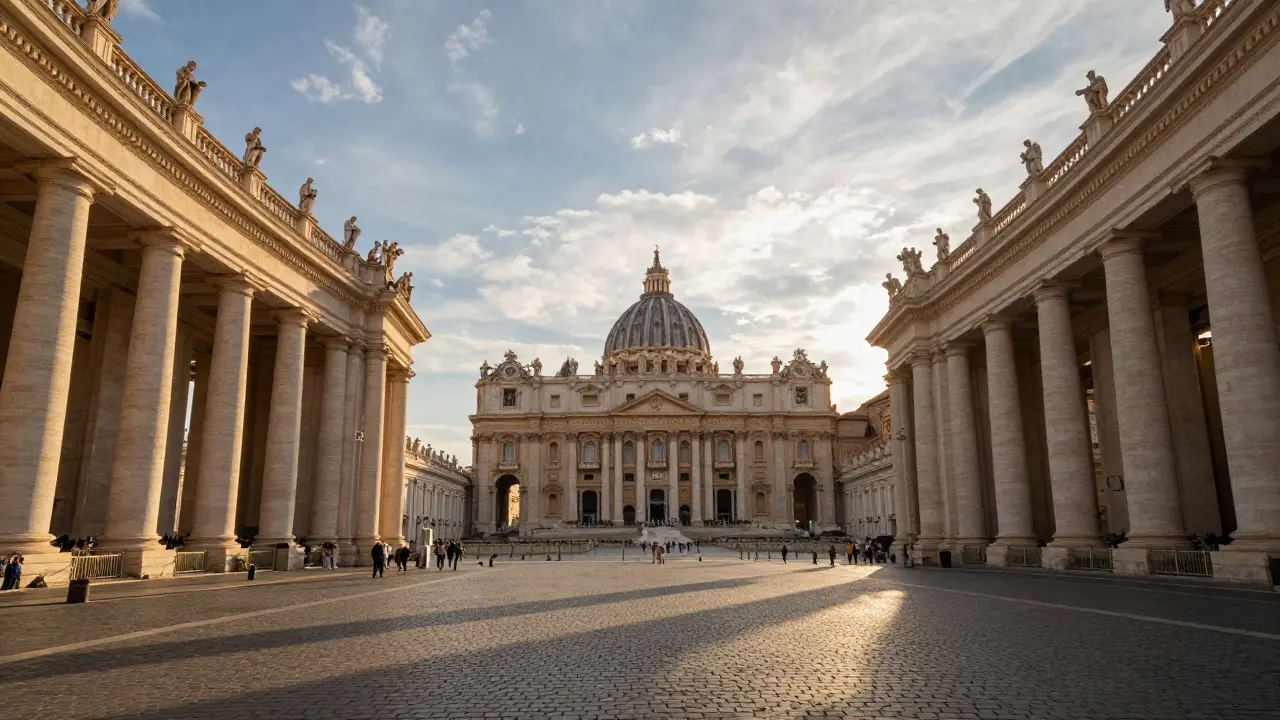
Walk into St. Peter's Square in Rome, and you don't just see a building; you feel an embrace. Two massive colonnades stretch out like giant arms, pulling you toward the basilica. This isn't accidental design. It is theater. It is emotion engineered in stone. This is the heart of Baroque architecture, a style defined by movement, dramatic lighting, and emotional intensity rather than static symmetry. Born in early 17th-century Italy, this style didn't just change how buildings looked-it changed how people felt when they stood inside them.
The Birth of Spectacle
To understand why Baroque architecture looks so different from the calm, balanced Renaissance styles that came before it, you have to look at who was paying the bills. The Catholic Church was under threat. The Protestant Reformation had split Europe, and the Vatican needed a way to win back believers. They didn't do it with pamphlets. They did it with awe.
The Council of Trent (1545-1563) set the stage, but the execution happened through architects who understood psychology as well as geometry. The goal was simple: make the divine feel immediate, powerful, and undeniable. If a person walked into a church and gasped, the Church won. This shift turned architecture into propaganda. Every curve, every beam of light, and every statue was calculated to evoke wonder.
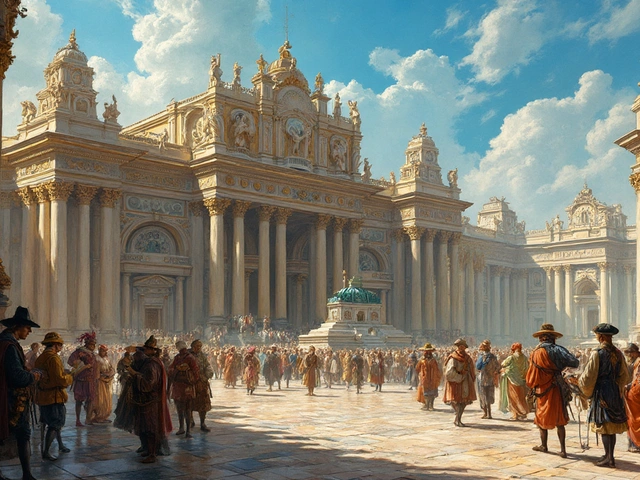
This wasn't limited to religion. Absolute monarchs across Europe-like Louis XIV of France-adopted the style to project power. If God could use drama to inspire faith, kings could use it to inspire loyalty. The result was a built environment that refused to let you stand still or think quietly. It demanded your attention.
Key Visual Elements That Define the Style
You can spot Baroque architecture from a mile away because it breaks the rules of restraint. Here are the specific traits that separate it from other styles:
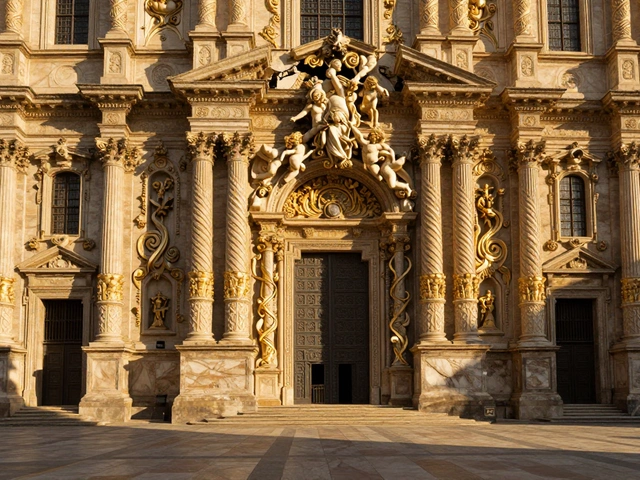
- Dramatic Light and Shadow (Chiaroscuro): Architects used deep niches, heavy cornices, and strategic window placement to create high contrast. This made facades look sculpted and dynamic rather than flat.
- Curved and Broken Facades: Straight lines were boring. Baroque walls often bulge outward (convex) or cave inward (concave), creating a sense of motion even when the building is stationary.
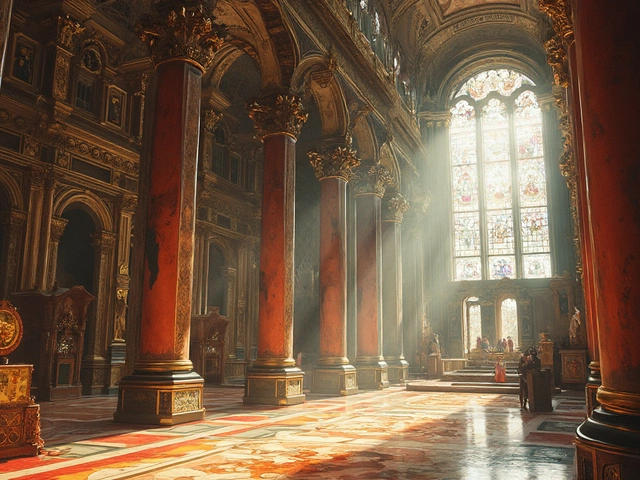
- Grandeur and Scale: Everything is bigger than life. High ceilings, massive staircases, and oversized columns were designed to make the individual feel small and the institution feel eternal.
- Integration of Arts: Architecture, sculpture, and painting merged. Ceilings weren't just painted; they became open skies. Statues weren't just placed on pedestals; they interacted with the architectural space around them.
- Rich Materials: Gold leaf, marble, velvet, and intricate stucco work added texture and luxury. The eye was never allowed to rest on a plain surface.
The Rivals: Bernini vs. Borromini
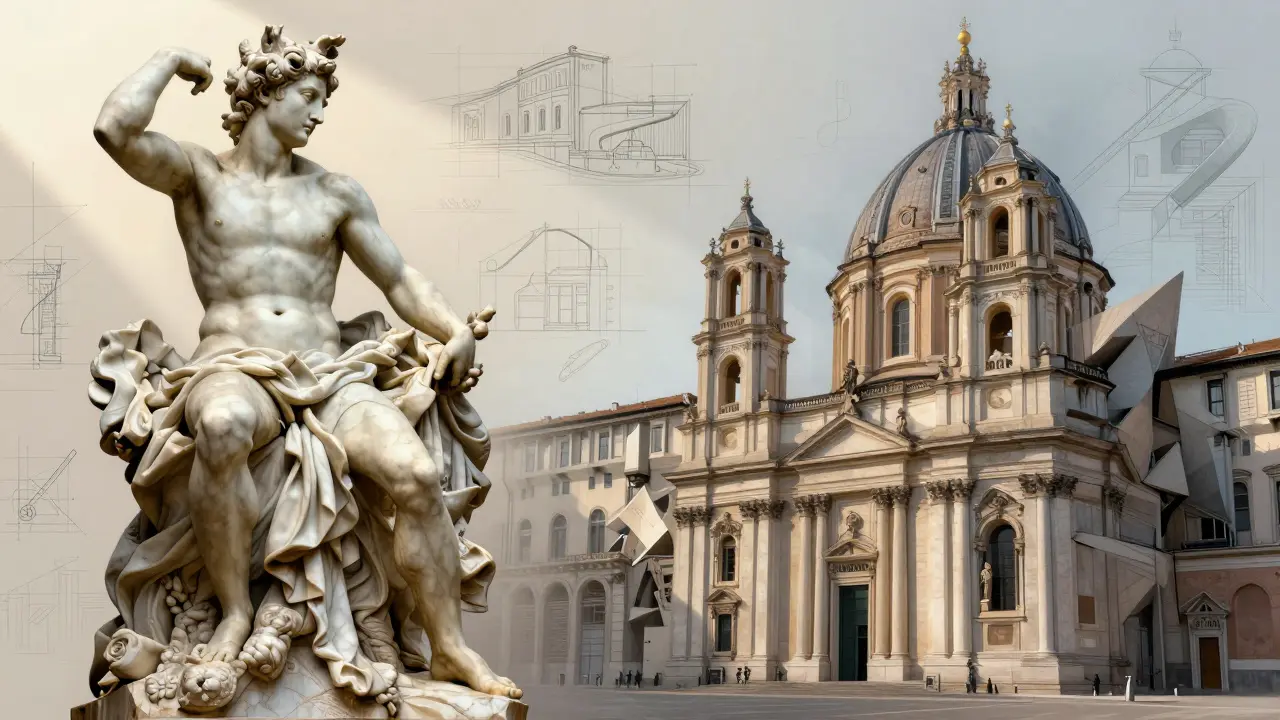
No discussion of Baroque architecture is complete without mentioning the two giants who shaped its soul: Gian Lorenzo Bernini and Francesco Borromini. These two men were contemporaries in Rome, and their rivalry drove much of the innovation of the era.
Bernini was the master of theatricality. He worked closely with popes and loved spectacle. His work feels organic, fluid, and emotionally charged. Think of his Ecstasy of Saint Teresa, where clouds, gold rays, and marble figures combine to create a spiritual moment that feels alive. In architecture, his design for St. Peter's Square exemplifies this approach: welcoming, grand, and perfectly orchestrated.
Borromini, on the other hand, was more intellectual and geometric. Where Bernini flowed, Borromini twisted. He experimented with complex shapes, like octagons and ellipses, creating interiors that felt like they were vibrating with tension. His church of San Carlo alle Quattro Fontane is a perfect example. The facade undulates like a wave, and the interior dome features a lantern that seems to float in a sea of light. While Bernini sought to comfort and impress, Borromini challenged the viewer’s perception of space.
| Feature | Gian Lorenzo Bernini | Francesco Borromini |
|---|---|---|
| Primary Focus | Theatrical emotion and narrative | Geometric complexity and spatial tension |
| Line Quality | Fluid, organic, soft | Angular, twisted, rigid yet dynamic |
| Use of Light | Dramatic highlights to guide focus | Diffused light to enhance form |
| Signature Work | St. Peter's Square | San Carlo alle Quattro Fontane |
The Illusion of Space: Quadratura and Frescoes
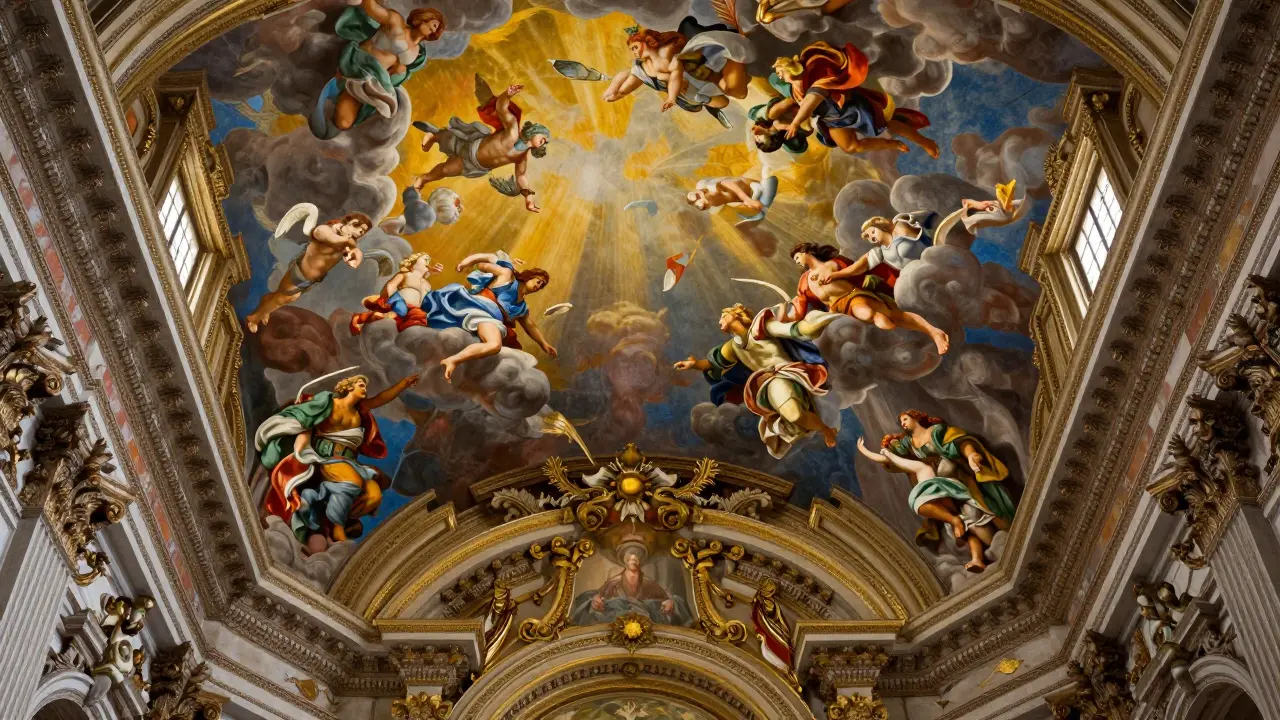
One of the most mind-bending aspects of Baroque architecture is the use of quadratura-a technique where painters create the illusion of three-dimensional architectural elements on flat surfaces. Combined with frescoes, this trick made ceilings disappear.
Imagine standing in a church looking up. Instead of seeing a flat painted ceiling, you see heaven opening above you. Angels seem to be falling down toward you, and saints are reaching out from clouds. The boundary between reality and art vanishes. Artists like Andrea Pozzo mastered this perspective trickery. His fresco in the Church of Sant'Andrea al Quirinale makes the solid roof look like it has been lifted away to reveal the sky.
This wasn't just artistic flair. It served a theological purpose. By blurring the line between earth and heaven, the architecture reinforced the idea that the divine was present in the physical world. It was a visual sermon that required no words.
Baroque Beyond Italy: Regional Variations
While Italy was the birthplace, Baroque architecture spread rapidly across Europe, adapting to local tastes and political needs.
In France, the style became more restrained and orderly. The Palace of Versailles reflects this "French Baroque" approach. It still uses grandeur and symmetry, but it lacks the wild curves of Rome. It was designed to reflect the absolute control of Louis XIV. The Hall of Mirrors is a masterpiece of reflection and light, but it feels more like a stage for courtly ritual than a spiritual experience.
In Austria and Germany, Baroque exploded into exuberance. Architects like Johann Bernhard Fischer von Erlach created buildings that seemed to dance. The Schönbrunn Palace in Vienna combines lavish decoration with garden landscapes, creating a total work of art. The interiors are filled with gold, pastel colors, and intricate stucco work that feels almost playful compared to the solemnity of Italian churches.
In Spain, the style took on a darker, more intense tone. Spanish Baroque often featured deep shadows and emotional fervor, reflecting the country's strong religious devotion and colonial ambitions. The Santiago de Compostela Cathedral's altarpiece is a whirlwind of silver and figures, overwhelming the senses with its density.
Why Baroque Matters Today
You might wonder why we should care about buildings from 400 years ago. The answer lies in how we experience space today. Modern architecture often prioritizes function and minimalism, which can feel sterile. Baroque reminds us that buildings can tell stories and evoke emotions.
Think about movie sets or theme parks. The way Disney designs Cinderella Castle or how Hollywood creates immersive environments draws directly from Baroque principles. It’s about controlling the viewer’s experience through scale, light, and detail. Even modern video games use Baroque-like aesthetics to create worlds that feel epic and magical.
Furthermore, studying Baroque teaches us about the power of context. These buildings weren't just pretty objects; they were tools for communication. They show how design can influence behavior, belief, and politics. In an age of digital screens, understanding how physical space affects our minds is more relevant than ever.
What is the main difference between Baroque and Renaissance architecture?
Renaissance architecture focuses on balance, symmetry, and proportion, inspired by classical Roman ideals. It feels calm and rational. Baroque architecture, in contrast, emphasizes movement, drama, and emotional impact. It uses curved lines, dramatic lighting, and rich decorations to create a sense of energy and awe.
Who was the most famous Baroque architect?
Gian Lorenzo Bernini is often considered the leading figure of Baroque architecture and sculpture. His work on St. Peter's Square and the Cornaro Chapel defines the style's theatrical nature. However, Francesco Borromini is equally important for his innovative geometric designs.
Where can I see the best examples of Baroque architecture?
Rome, Italy, is the heart of Baroque architecture. Key sites include St. Peter's Basilica, Trevi Fountain, and San Carlo alle Quattro Fontane. Other great cities for Baroque sights include Vienna (Schönbrunn Palace), Paris (Versailles), and Madrid (Royal Palace).
Did Baroque architecture only apply to churches?
No. While it began in religious contexts, Baroque was widely used for palaces, government buildings, theaters, and private homes. The style was adopted by monarchs and nobles to display wealth and power, not just by the Church.
How does Baroque architecture affect the viewer psychologically?
Baroque architecture is designed to overwhelm the senses and evoke strong emotions. Through the use of scale, light, and movement, it makes the viewer feel small in the presence of something greater, whether that be God or a monarch. It creates a sense of awe and immediacy.