Quick Highlights
- Structural Innovation: The shift from heavy Romanesque walls to flexible skeletons using flying buttresses.
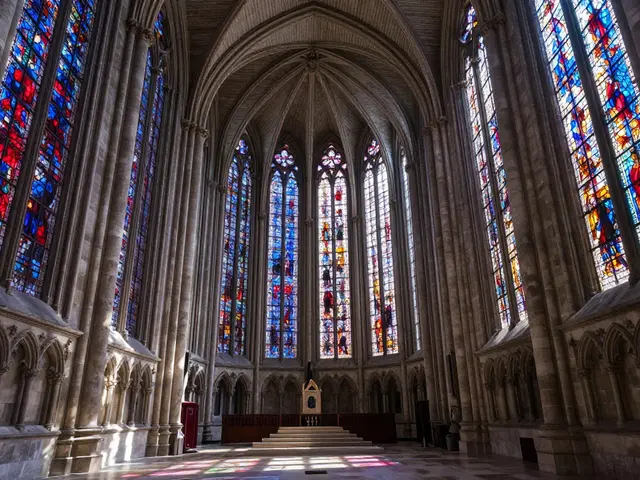
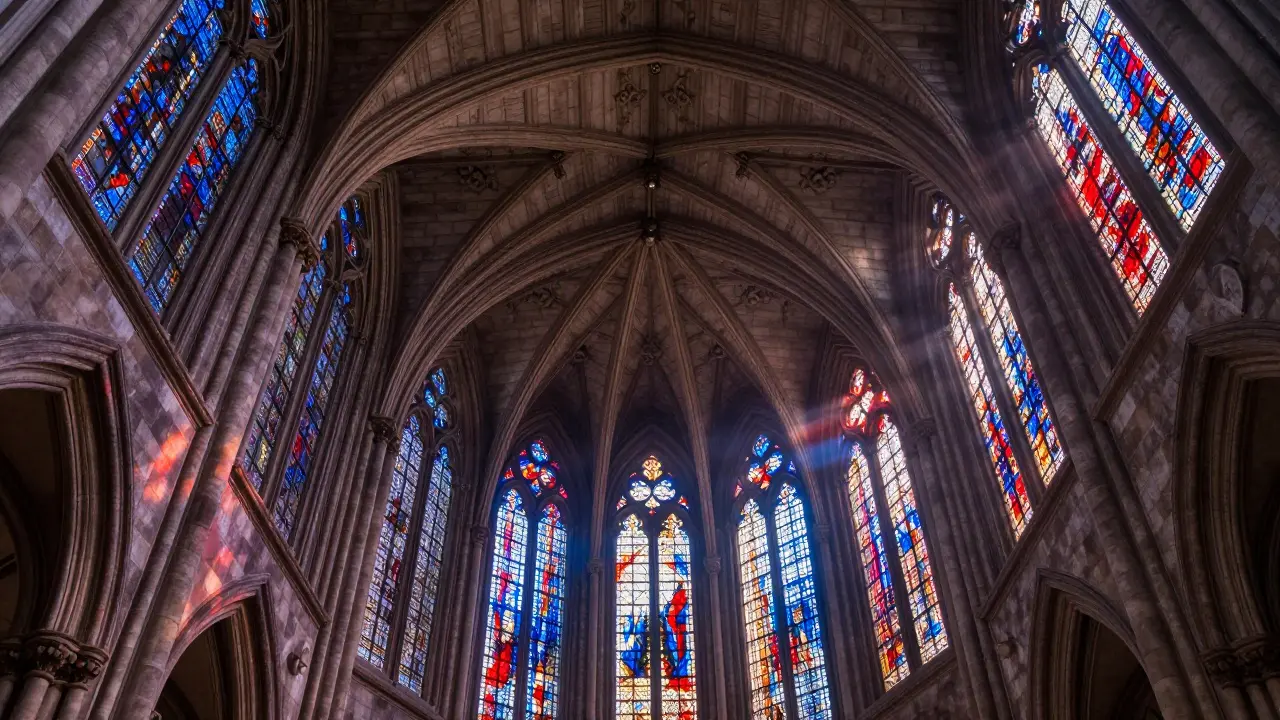
- Light and Color: The use of stained glass to tell stories and create emotional atmospheres.
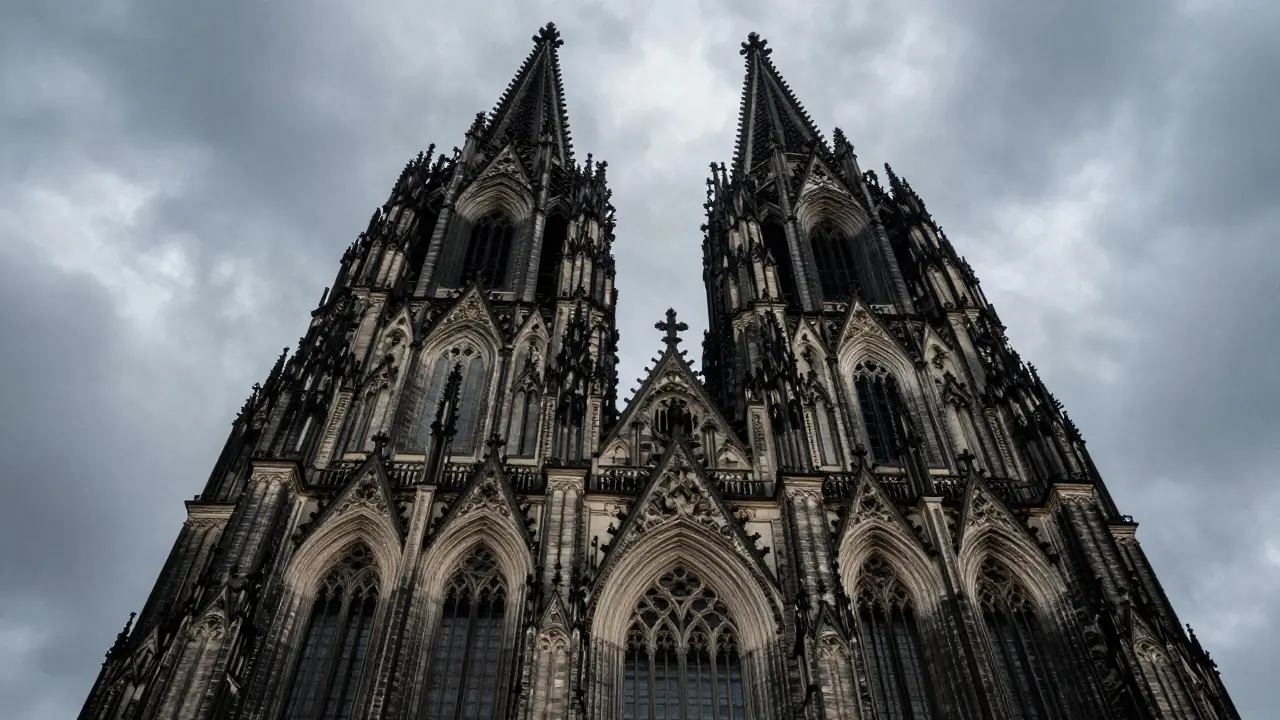
- Verticality: A relentless push toward the sky, symbolizing a reach toward the divine.
- Global Reach: While born in France, the style evolved into distinct regional versions across Europe.
To understand why these buildings look the way they do, we have to look at the Gothic architecture is an European architectural style that flourished during the high and late medieval periods, evolving from Romanesque architecture and characterized by the use of pointed arches, ribbed vaults, and flying buttresses. It first appeared in the 12th century in the Île-de-France region. The real breakthrough happened when builders stopped relying on thick, chunky walls to hold up the roof. Instead, they used a skeleton of supports that pushed the weight outward and downward, leaving the walls free to be filled with glass.
The Masterpieces of France
You can't talk about this style without starting in France. The Notre Dame de Paris is one of the most famous Gothic cathedrals in the world, known for its iconic twin towers and massive rose windows. Even after the devastating fire in 2019, its reconstruction has highlighted the incredible resilience of medieval limestone. When you look at its exterior, you see the flying buttresses is external arched supports that transmit the lateral force of a roof or vault across an intervening space to a heavy pier. These aren't just decorative; they are the only reason the walls don't buckle under the weight of the high ceilings.
Then there's Chartres Cathedral. If you visit, notice how the stained glass is almost entirely original from the 12th and 13th centuries. The deep "Chartres blue" is a color that modern chemists still struggle to perfectly replicate. The layout here is a classic example of the Latin Cross plan, which organizes the space to manage huge crowds of pilgrims moving toward the altar.
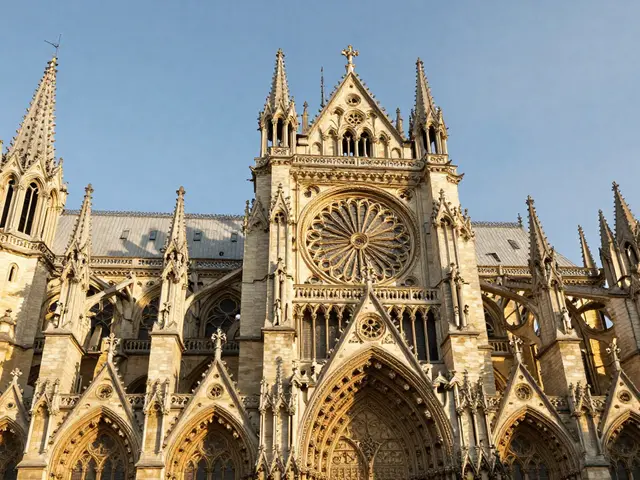
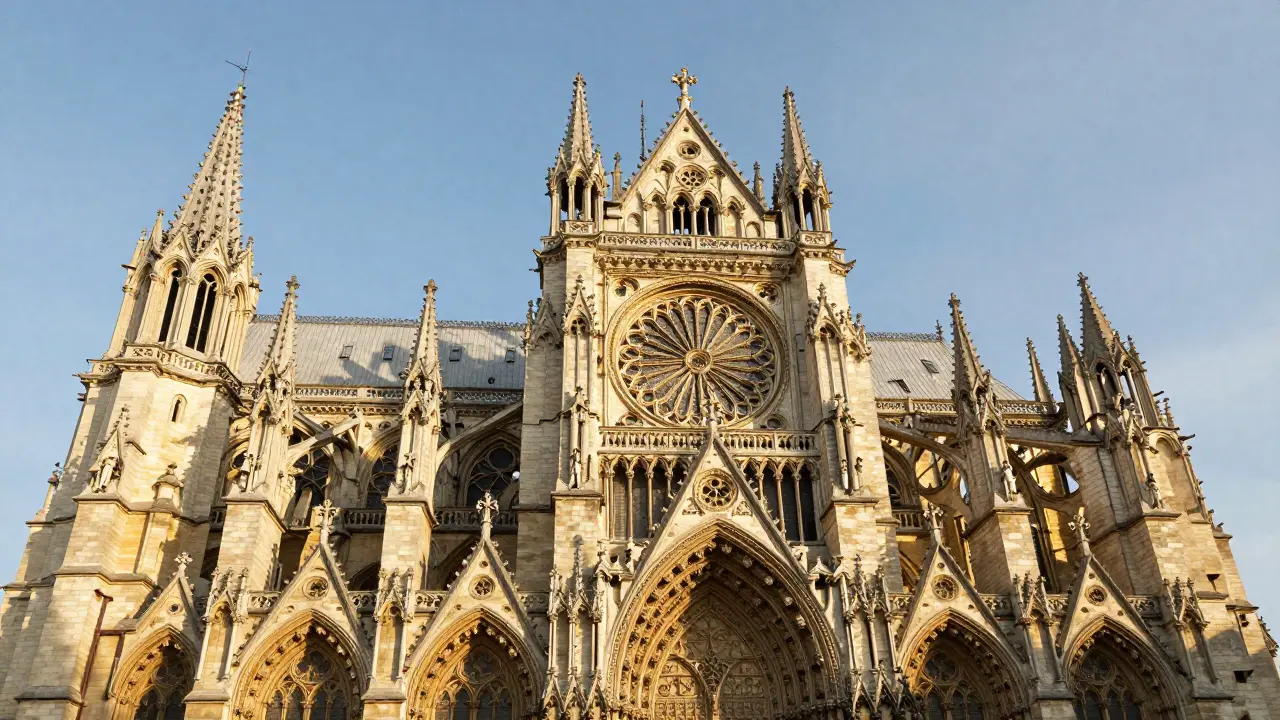
Lastly, Reims Cathedral is where French kings were crowned. It's a masterclass in the High Gothic style, where every inch of the facade is covered in sculptures. These aren't just statues; they served as a visual Bible for a population that couldn't read, turning the building itself into a teaching tool.
The English Twist on Tradition
Across the channel, the English took the French blueprint and made it wider and more ornate. Westminster Abbey is a prime example. While the French focused on sheer height, the English often played with length and complex ceiling patterns. In England, we see the rise of fan vaulting is a form of vaulting used in English Perpendicular Gothic architecture where the ribs are all the same curve and radiate from the center. It looks like a stone fan unfolding across the ceiling, creating a lace-like effect that feels more like jewelry than masonry.
Canterbury Cathedral offers another perspective. Its nave is a mix of styles because it was built over centuries. The transition from the rounded Romanesque arches to the sharp pointed arches is an arch with a pointed apex, which allows for greater height and more flexibility in the floor plan than semi-circular arches. This specific change allowed builders to create rectangles and irregular shapes, meaning they weren't stuck with perfect squares anymore.
York Minster is legendary for its scale. It has one of the largest expanses of medieval stained glass in the world. When the sun hits the Great East Window, the entire interior glows, proving that the goal of the architecture was always to manipulate light to create a spiritual experience.
Germanic Power and Precision
German Gothic often feels more imposing and focused. Cologne Cathedral is perhaps the most intimidating. It took over 600 years to fully complete, but the vision remained consistent. The two massive spires dominate the skyline, utilizing a verticality that makes the human observer feel tiny-a deliberate choice to emphasize the grandeur of the divine.
In contrast, St. Stephen's Cathedral in Vienna shows how the style adapted to local tastes. The roof is a colorful mosaic of tiles, blending the strictness of Gothic lines with a bit of Central European flair. The interior remains a place of deep shadows and sudden bursts of light, maintaining that classic Gothic contrast.
| Region | Key Priority | Signature Feature | Visual Vibe |
|---|---|---|---|
| France | Height & Light | Flying Buttresses | Ethereal & Airy |
| England | Length & Detail | Fan Vaulting | Intricate & Decorative |
| Germany | Scale & Power | Massive Spires | Imposing & Strict |
The Spanish and Italian Influence
Spain brought a bit more drama to the mix. Burgos Cathedral is a stunning blend of French influence and Spanish passion. The openwork spires are so delicate they look like they're made of lace rather than stone. It's a great example of how the style moved away from the "fortress" feel of earlier eras and toward an aesthetic of elegance.
Italy is the odd one out. Italians generally hated the idea of massive flying buttresses because they found them ugly. Instead, they used internal tie-rods to hold the walls up. Milan Cathedral, however, is the exception. It's a massive, white marble mountain of a building with 135 spires. It's far more eclectic than the French cathedrals, incorporating elements from across Europe but executing them with an Italian obsession for luxury materials.
Common Pitfalls and Misconceptions
People often confuse "Gothic" with "dark and scary." In reality, the architects of the 1200s were obsessed with luminosity. If a building feels dark today, it's usually because of centuries of soot from candles or later additions. The original intent was to use stained glass is colored glass used to form decorative windows, which served to both illuminate the interior and educate the illiterate through imagery. to create a "heaven on earth."
Another mistake is thinking these buildings were built quickly. Most took decades or centuries. This is why you often see a building that starts with rounded arches (Romanesque) and ends with pointed ones (Gothic). The style evolved while the builders were still working on the same project.
Practical Tips for Visiting Gothic Sites
If you're planning a trip to see these, don't just look at the walls. Look up. The ribbed vault is a structural system of intersecting stone ribs that support the weight of the ceiling, allowing for higher and thinner walls. is where the real engineering magic happens. Try to visit during the mid-afternoon when the sun is at its peak; this is when the stained glass performs its best, casting vivid colors across the stone floors.
Also, check out the ambulatories-the curved walkways behind the altar. These were designed specifically to let crowds of people move through the church without disturbing the main service, showing that these buildings were as much about crowd control as they were about art.
Why are the arches pointed instead of round?
Pointed arches are more efficient than round ones. They channel the weight of the roof more directly down into the ground rather than pushing the walls outward. This meant builders could make the walls thinner and the ceilings much higher without the whole thing collapsing.
What is the purpose of a gargoyle?
While they look like monsters to scare off evil spirits, they actually have a very practical job: they are rain spouts. The word "gargoyle" comes from the French "gargouille," meaning throat. They project water away from the building's walls to prevent the limestone from eroding due to water damage.
Is all Gothic architecture found in churches?
No, though churches are the most famous. Many town halls, universities, and palaces in the Middle Ages used Gothic elements. You can find beautiful Gothic guild halls in Belgium and Germany that were used for trade and government rather than worship.
What is the difference between High Gothic and Late Gothic?
High Gothic (around 1200-1250) focused on perfecting the balance of height and light, like at Chartres. Late Gothic became much more decorative and complex, leading to the "Flamboyant" style, where the stone carvings look like flickering flames and the vaulting becomes incredibly intricate.
How did the Black Death affect Gothic building?
The plague killed off a huge number of skilled stonemasons. This led to a dip in construction in some areas, but in others, it caused a shift toward the Perpendicular style in England, which used simpler, more repetitive lines that were easier and faster to build with a smaller workforce.
What to Explore Next
If you've enjoyed the soaring heights of the Gothic era, you might want to look into the Renaissance movement. It was a direct reaction to the Gothic style-trading the mysterious, vertical focus for the symmetry, circles, and mathematical harmony of ancient Rome and Greece. Alternatively, if you like the "darker" side of this aesthetic, exploring Neo-Gothic architecture (like the Houses of Parliament in London) shows how the 19th century tried to bring back the medieval feel in a modern world.