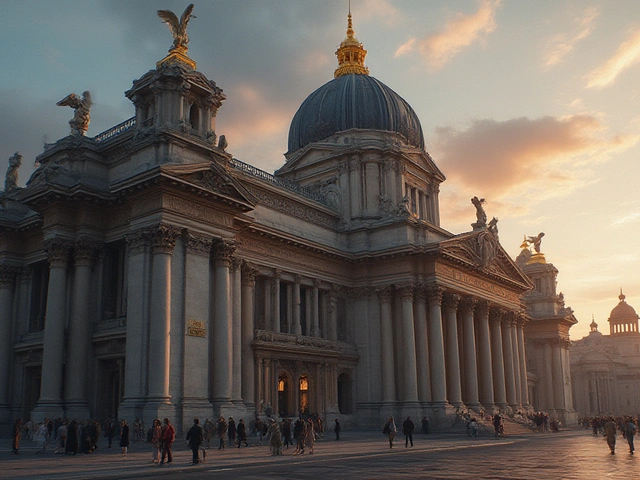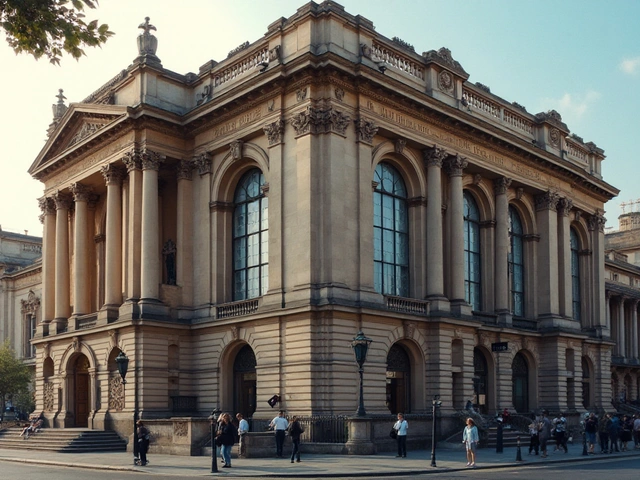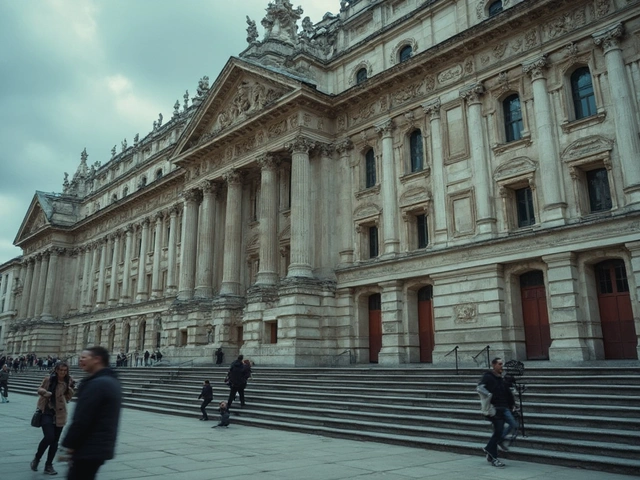
Beaux-Arts architecture isn’t just old buildings with columns. It’s a bold, theatrical style that turned public buildings into monuments - places meant to impress, to inspire, to make you feel like you were stepping into a grand story. If you’ve ever stood in front of a massive train station with marble staircases, gilded statues, and symmetrical wings stretching out like a palace, you’ve seen Beaux-Arts in action. It didn’t just decorate cities; it shaped how people experienced power, culture, and progress in the late 1800s and early 1900s.
Where Beaux-Arts Came From
The name comes from the École des Beaux-Arts in Paris, the most influential architecture school in the world at the time. Starting in the 1830s, this school trained architects in a rigid, classical system. Students didn’t just draw plans - they studied ancient Roman temples, Renaissance palaces, and French Baroque churches. They learned how to combine these elements into something new: grand, balanced, and deeply ornate. The goal wasn’t to copy history, but to elevate it.
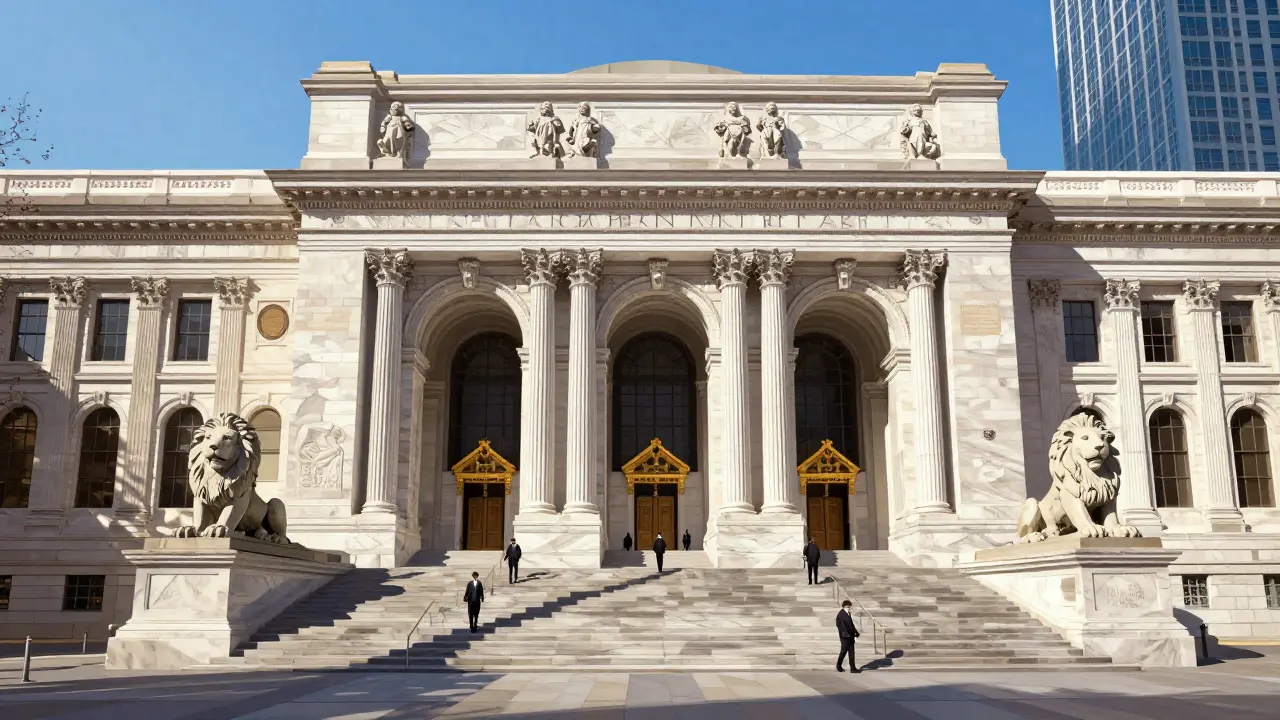
By the 1880s, American architects who studied there - like Richard Morris Hunt and Charles Follen McKim - brought these ideas home. They didn’t just design buildings. They designed statements. Think of the New York Public Library, the Boston Public Library, or the Union Station in Washington, D.C. These weren’t just functional spaces. They were civic temples.
The Five Hallmarks of Beaux-Arts Design
If you want to spot Beaux-Arts architecture, look for these five things:
- Symmetry - Everything is balanced. Left side mirrors right. Windows, doors, towers - all placed like a perfectly composed painting.
- Classical elements - Columns, pediments, arches, domes. You’ll see Roman Ionic, Greek Doric, and French Corinthian styles mixed together.
- Monumental scale - These buildings are huge. Not just tall, but wide, deep, and imposing. They were meant to dwarf the people who walked past them.
- Rich ornamentation - Sculptures of gods and heroes, intricate carvings, wrought iron railings, stained glass, and gilded details everywhere. No surface was left plain.
- Grand entrances - A wide staircase leading up to a massive portico. It’s not just a door - it’s a ceremony of entry.
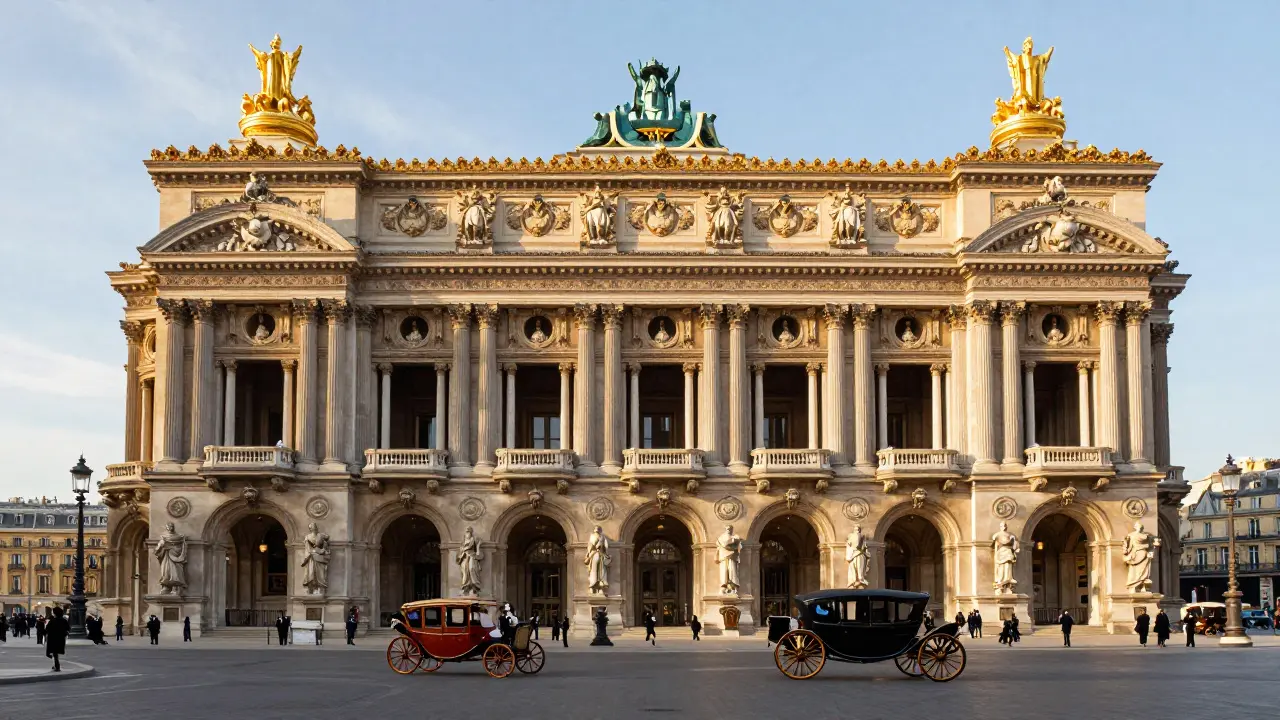
Take the Paris Opera House, built in the 1860s. It’s a textbook example. Over 1,500 sculptural pieces cover its facade. The interior glows with gold leaf, velvet, and crystal chandeliers. It wasn’t built to be efficient - it was built to awe.
Why It Dominated the Gilded Age
Beaux-Arts didn’t just appear out of nowhere. It landed right as America was becoming rich. The Industrial Revolution created millionaires. Railroads expanded cities. Banks and governments wanted buildings that said: We are powerful. We are permanent.
Libraries, courthouses, museums, train stations - all became Beaux-Arts canvases. The style was perfect for institutions that needed to look trustworthy, timeless, and elite. It told immigrants arriving at Ellis Island: You’re entering a civilization built on order and beauty.
Even private mansions got the treatment. The Vanderbilts, the Rockefellers, the Carnegies - they hired Beaux-Arts-trained architects to build palaces in Newport, New York, and Chicago. These homes had ballrooms bigger than churches and fountains that shot water higher than trees.
How It Differed From Other Styles
Beaux-Arts didn’t work alone. It sat between two big movements: the rigid revival styles of the early 1800s and the clean modernism that came after.
Compared to Gothic Revival - with its pointed arches and dark stone - Beaux-Arts was bright, open, and orderly. It didn’t try to feel medieval. It wanted to feel like Rome at its peak.
And when Modernism showed up in the 1920s - with glass towers and flat roofs - Beaux-Arts looked like overkill. All those statues? Too much. All that marble? Too expensive. Too slow. The world was changing. Machines were replacing hand-carved details.
But that’s the irony. Beaux-Arts was born from tradition - yet it was also the first style to use modern technology. Elevators, steel frames, electric lights - all made those grand interiors possible. It was old-world aesthetics with new-world engineering.
Where to Find It Today
You don’t have to travel to Paris or New York to see Beaux-Arts. Look at your own city. Many state capitols, old universities, and early 20th-century post offices were built in this style.
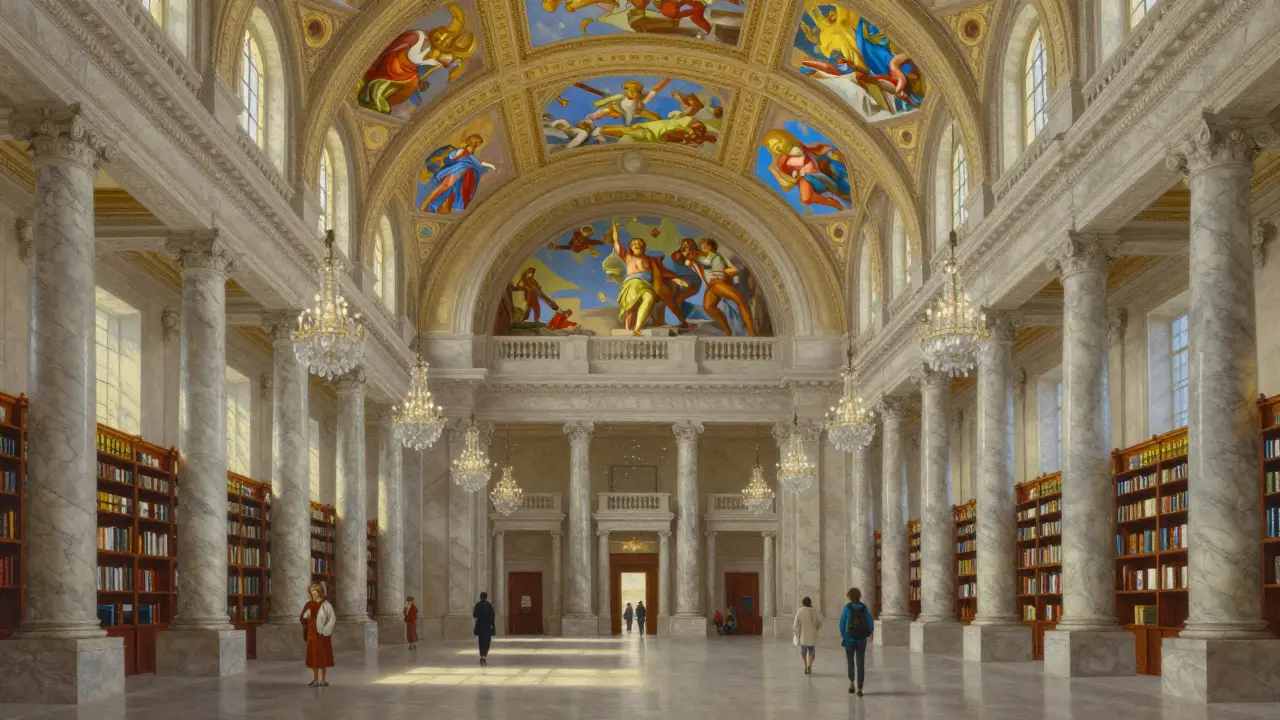
In the U.S., the Library of Congress in Washington, D.C., is one of the purest examples. Its Great Hall has 16 marble columns, 12-foot-tall statues, and a ceiling painted with mythological scenes. The Chicago Cultural Center? A Beaux-Arts masterpiece with a Tiffany glass dome.
Even in smaller towns, you might find a Beaux-Arts courthouse or bank. They’re often the most ornate buildings on Main Street. Look for the grand staircase. Look for the carved figures above the entrance. Look for the symmetry. If it feels like a movie set, you’re probably standing in front of Beaux-Arts.
Why It Still Matters
Today, we live in a world of glass boxes and minimalist offices. But people still crave spaces that feel meaningful. That’s why Beaux-Arts never truly disappeared. It’s been restored, revived, and reimagined.
Modern architects borrow from it. Think of the grand entrances of luxury hotels. The symmetry of new civic centers. The use of natural stone and bronze details in upscale public spaces. Even in digital design, the idea of balance and hierarchy - core to Beaux-Arts - still shapes user interfaces.
More than style, Beaux-Arts was a philosophy: that public spaces should uplift the soul. That architecture isn’t just shelter - it’s culture made visible. And in a time when so much feels temporary, that idea still resonates.
What You Can Learn From It
You don’t need to build a palace to appreciate Beaux-Arts. But you can borrow its lessons:
- Design with intention - every detail should serve a purpose, even if that purpose is beauty.
- Balance matters - asymmetry can be dynamic, but symmetry creates calm and authority.
- Ornament isn’t waste - it’s meaning. Carvings, patterns, and textures tell stories.
- Scale shapes emotion - a small building can feel intimate. A grand one can make you feel small in the best way.
Next time you walk past a historic building with columns and statues, pause. Look up. Notice how the light hits the marble. Listen to the echo in the hallway. That’s not just architecture. That’s history speaking - loudly, beautifully, and on purpose.
What makes Beaux-Arts architecture different from neoclassical?
Neoclassical architecture sticks closely to ancient Greek and Roman forms - clean lines, minimal decoration, and restrained elegance. Beaux-Arts takes those same elements but adds theatrical flair: more ornament, more symmetry, more grandeur. Think of neoclassical as a formal speech and Beaux-Arts as an opera.
Is Beaux-Arts architecture still being built today?
Full-scale Beaux-Arts buildings are rare today due to cost and changing tastes. But its influence lives on. Modern civic buildings, luxury hotels, and university campuses often use Beaux-Arts principles - symmetrical layouts, grand staircases, and classical detailing - even if they simplify the ornamentation.
Why did Beaux-Arts fall out of favor?
By the 1920s, modernism emerged as a reaction against what many saw as excessive decoration. The Great Depression made lavish building projects seem wasteful. Plus, new materials like steel and concrete favored simpler forms. Beaux-Arts was seen as old-fashioned, too expensive, and too tied to aristocratic values.
Can Beaux-Arts buildings be energy efficient?
Yes - and many have been retrofitted. Thick stone walls provide natural insulation. Large windows allow daylight, reducing electric use. Modern HVAC systems are hidden in basements or added to rear wings. Restoration projects often prioritize sustainability without sacrificing historic detail.
Are there Beaux-Arts buildings outside the U.S. and Europe?
Absolutely. Countries like Brazil, Argentina, and the Philippines have Beaux-Arts buildings from the early 1900s, often built during periods of economic growth and European influence. The National Museum of Fine Arts in Havana and the Central Post Office in Manila are prime examples.