When you walk through Rome today, you’re not just seeing old stones-you’re standing on the foundation of one of the most influential building systems the world has ever known. Ancient Roman architecture didn’t just shape cities two thousand years ago; it laid the groundwork for how we build even now. From the arches holding up your local library to the concrete sidewalks outside your house, Roman innovation is still alive. But what exactly made their buildings so durable, so smart, and so copied?
The Power of the Arch
The Romans didn’t invent the arch, but they were the first to use it at scale. Before them, most buildings relied on straight beams and columns-limiting how wide a space could be covered. A wooden beam might span 10 feet before sagging. The Romans figured out that by stacking wedge-shaped stones in a curve, they could transfer weight outward and down into solid piers. This meant they could build bridges over rivers, aqueducts across valleys, and massive amphitheaters that held 50,000 people.
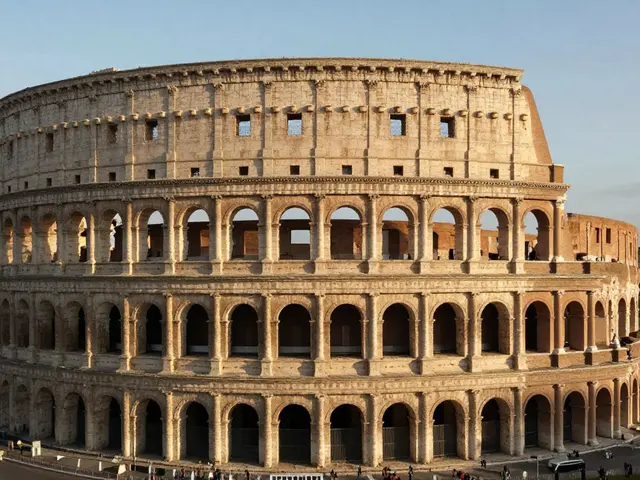
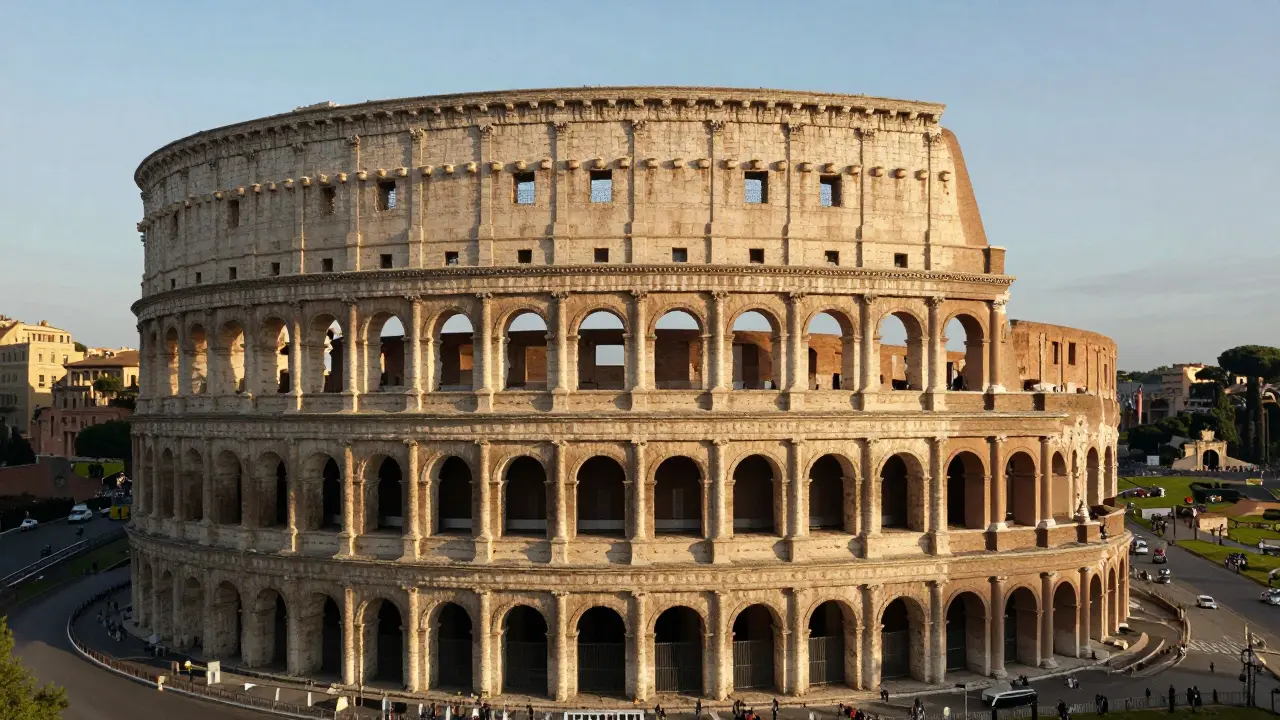
The Colosseum alone uses over 70,000 cubic meters of travertine stone held together by arches. Each level had a different type of arch: Doric on the bottom, Ionic above that, then Corinthian. It wasn’t just decoration-it was structural logic. The arches let them stack levels without crushing the lower ones. This system became the blueprint for medieval cathedrals, Renaissance palaces, and even modern train stations.
Concrete That Lasted 2,000 Years
Modern concrete cracks after 50 years. Roman concrete? Some of it still stands strong after 2,000. The secret wasn’t just more cement-it was the mix. Romans used volcanic ash from Mount Vesuvius, called puzzolana, mixed with lime and seawater. This created a chemical reaction that actually got stronger over time. Modern scientists only figured this out in 2017 after studying samples from ancient harbor walls in Italy. The ash formed minerals that filled cracks as they formed, making the concrete self-healing.
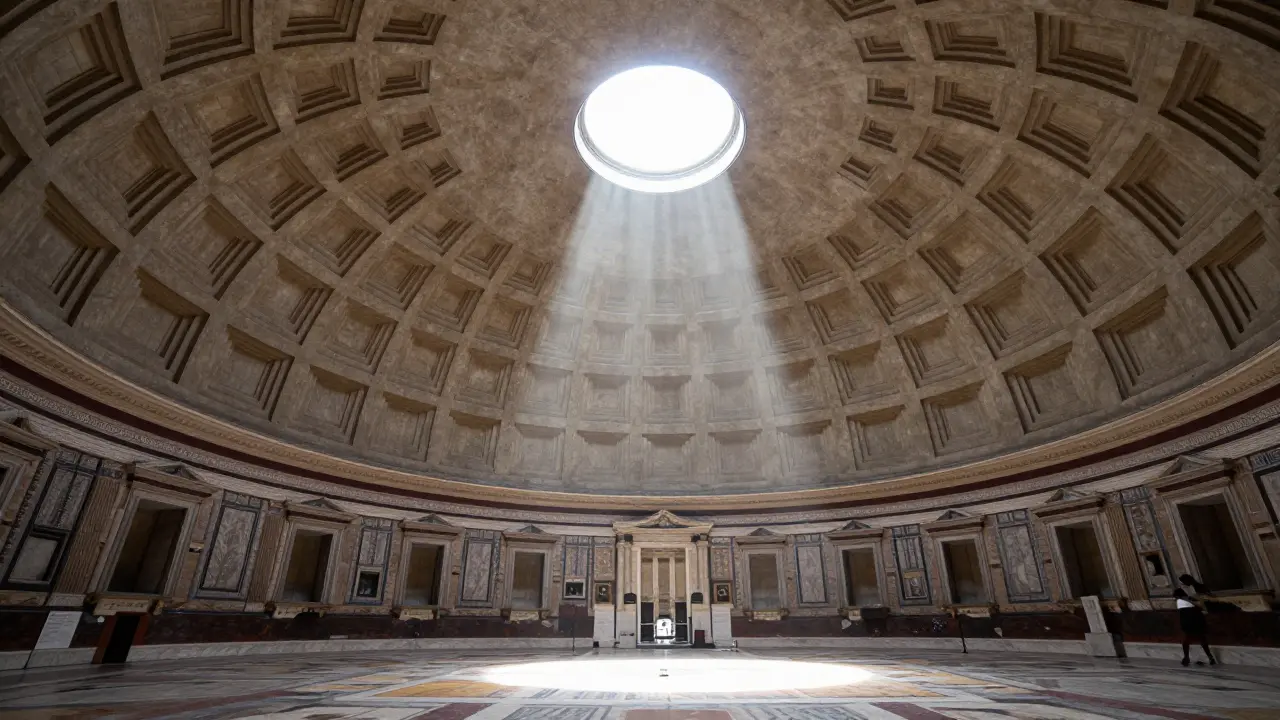
This material let them build the Pantheon’s dome-the largest unreinforced concrete dome ever made. At 43.3 meters wide, it’s still the largest of its kind. No steel, no rebar, just layered concrete that got lighter toward the top. The oculus in the center wasn’t just for light-it relieved pressure on the walls. Today’s engineers still study Roman concrete to make ours last longer.
The Dome: Engineering Without Limits
The Pantheon’s dome isn’t just big-it’s a masterpiece of balance. The Romans didn’t have cranes or computers. They built it by pouring concrete in rings, starting from the bottom and working upward. Each ring used a different mix: heavier stone at the base, lighter pumice near the top. The thickness of the dome drops from 5.5 meters at the base to just 1.2 meters at the oculus. That’s not guesswork-that’s math.
They also embedded coffers-sunken panels-into the dome’s surface. These weren’t just decorative. They reduced the total weight by 20% without weakening the structure. The same principle is used in modern airport terminals and sports arenas. The Pantheon’s dome has survived earthquakes, fires, and centuries of weather because the Romans understood load distribution before anyone else.
Urban Planning: The Roman Way
Rome wasn’t built in a day, but it was built with a plan. Every Roman city followed the same grid pattern: two main roads crossing at right angles. The cardo ran north-south; the decumanus ran east-west. Their intersection became the forum-the heart of civic life.
Forums weren’t just marketplaces. They held temples, law courts, and public speeches. Around them, Romans built baths, theaters, and basilicas-all connected by paved roads with drainage channels underneath. Even small towns like Pompeii had running water, sewage systems, and public latrines. This level of urban design was unmatched until the 19th century. Modern cities still use the grid system because it’s efficient. New York, Barcelona, and Philadelphia all owe their layout to Roman planners.
Aqueducts: Moving Water Like a Pro
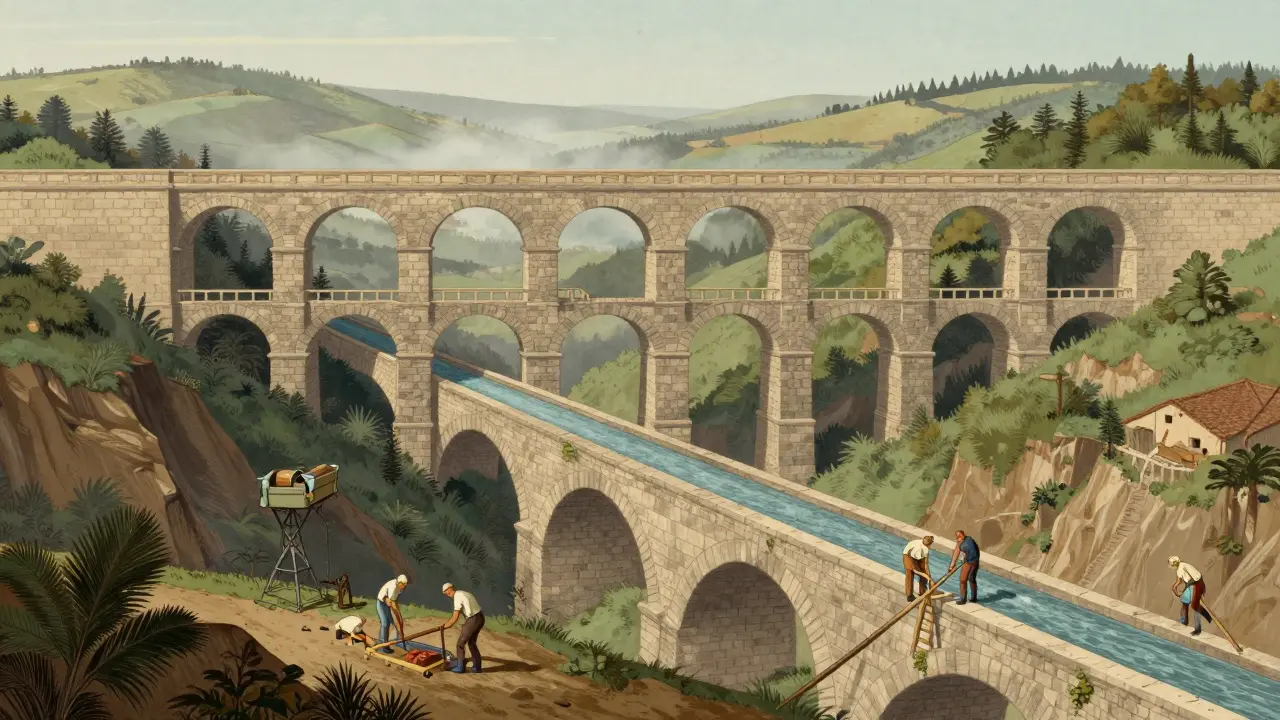
Rome had over 11 aqueducts bringing water into the city from up to 90 kilometers away. Some sections ran underground. Others soared above valleys on towering arches. The Aqua Claudia, built in 52 AD, carried 190,000 cubic meters of water daily. That’s enough to fill 76 Olympic-sized swimming pools.
They didn’t use pumps. Instead, they relied on gravity. Every aqueduct had a slope of less than 1%-just enough to keep water moving slowly and steadily. If the slope was too steep, the water eroded the channels. Too flat, and it stopped flowing. Roman engineers measured this with tools called chorobates-leveling devices made of wood and water. Their precision was so good that some aqueducts still function today, like the one supplying water to the Trevi Fountain.
Public Baths: More Than Just Cleanliness
When Romans said “take a bath,” they meant a whole afternoon. Public baths like the Baths of Caracalla weren’t just places to wash. They were social centers with libraries, gyms, gardens, and hot and cold pools. The complex covered 33 acres and could hold 1,600 people at once.
Heating systems were advanced. They used hypocausts-underfloor channels where hot air from furnaces circulated. Walls were hollow too, letting heat rise. This system kept entire rooms warm without smoke or open flames. Modern radiant floor heating works the same way. The Romans even had separate sections for men and women, and they opened them to the public for free. No one had to pay to stay clean.
Why It Still Matters
Roman architecture wasn’t about fancy ornamentation. It was about solving real problems: how to move water, support weight, house crowds, and keep cities running. They didn’t have modern tools, but they had patience, observation, and experimentation. Their buildings lasted because they were designed to be maintained, not just built.
Today, when you see a bridge with arches, a dome over a government building, or concrete sidewalks that don’t crack after a decade-you’re seeing Roman ideas in action. Their legacy isn’t in statues or ruins. It’s in the way we build. The Romans didn’t just create structures. They created systems that worked. And that’s why, two thousand years later, we’re still learning from them.
What made Roman concrete so durable?
Roman concrete used volcanic ash called puzzolana, mixed with lime and seawater. This created a chemical reaction that formed minerals that healed cracks over time. Modern research shows this self-healing property is why some Roman structures still stand after 2,000 years.
Did the Romans invent the arch?
No, the arch existed before the Romans-in Mesopotamia and Greece. But the Romans were the first to use it systematically in large-scale construction. They applied it to bridges, aqueducts, and amphitheaters, turning it into a structural foundation for entire cities.
How did Roman aqueducts work without pumps?
They used gravity. Aqueducts were built with a very slight slope-less than 1%-to keep water flowing slowly and steadily from higher elevations to cities. Roman engineers used leveling tools called chorobates to measure this slope with incredible precision.
What is the Pantheon’s dome made of?
The Pantheon’s dome is made of Roman concrete, layered with progressively lighter materials. The base used heavy travertine and tufa, while the top used lightweight pumice. This reduced overall weight without sacrificing strength, allowing the 43.3-meter span to remain unreinforced.
Why did Romans build so many public baths?
Public baths were social hubs, not just for hygiene. They included libraries, exercise areas, gardens, and hot/cold pools. Built with hypocaust heating systems, they were free to use and open to all citizens. This reflected Roman values around community, cleanliness, and public welfare.