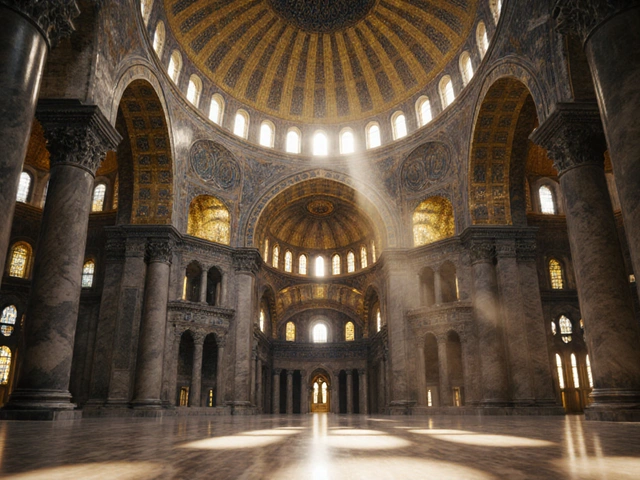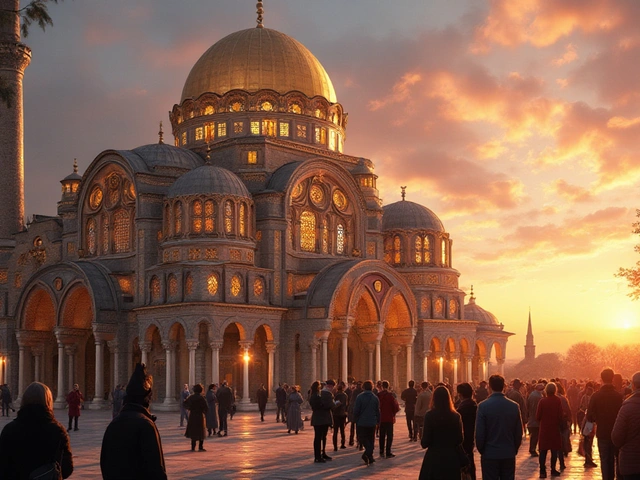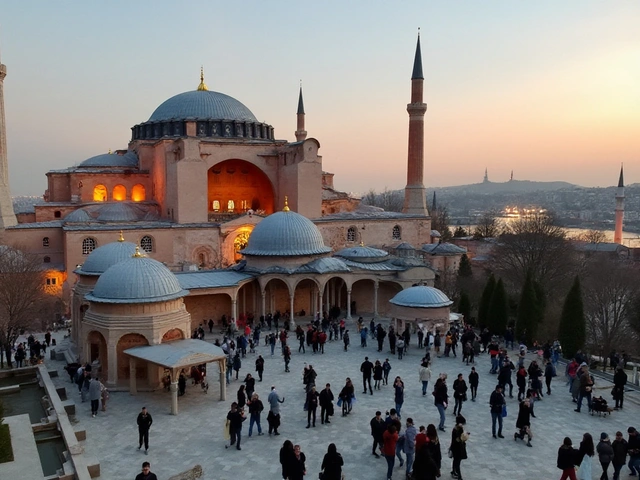
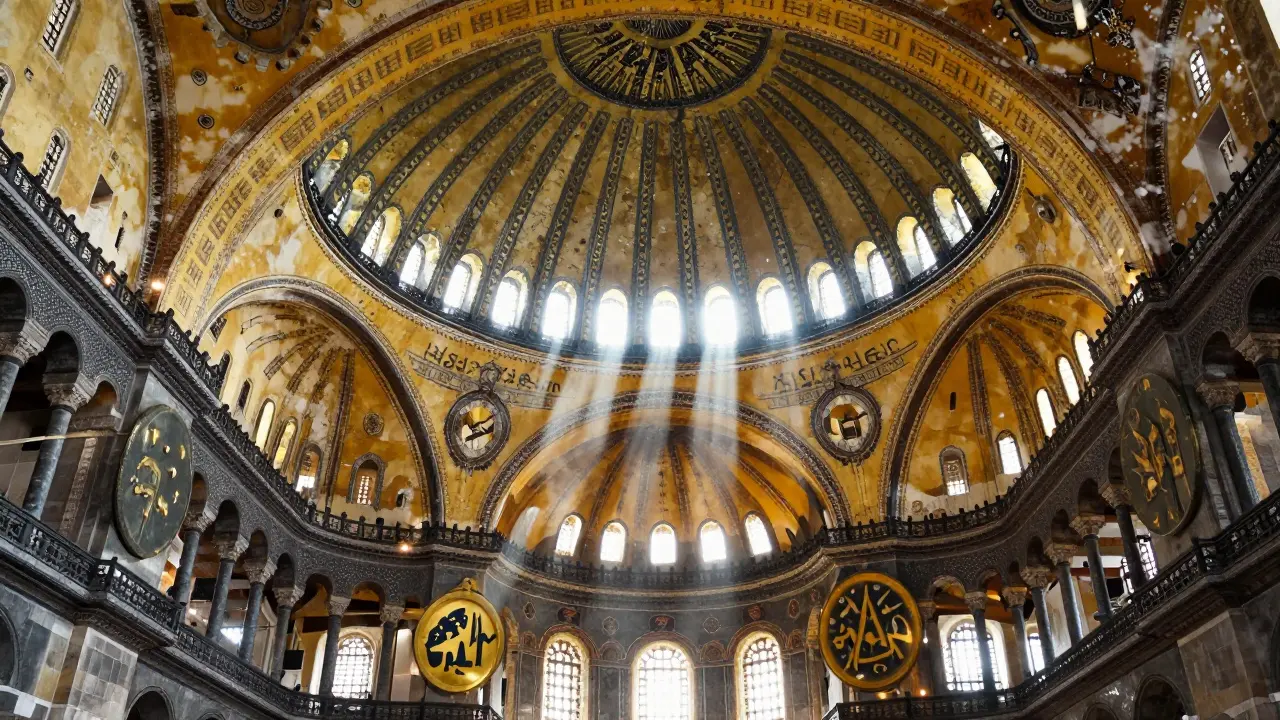
Imagine standing in a space where the ceiling seems to float, defying gravity and logic. Light pours through high windows, catching gold dust in the air, while walls shimmer with images of saints and emperors that have watched over centuries of prayer. This isn’t a modern art installation or a futuristic museum. It is the enduring legacy of Byzantine architecture, the distinctive building style of the Eastern Roman Empire that blended Roman engineering with Christian symbolism.
We often think of ancient history as something cold and static, preserved behind glass cases. But Byzantine design was alive. It was theatrical, spiritual, and incredibly ambitious. From the bustling streets of Constantinople (modern-day Istanbul) to the remote monasteries of Greece and Russia, this architectural language shaped how millions of people experienced faith and power for over a thousand years. If you’ve ever felt a sense of awe walking into a grand cathedral, chances are you’ve encountered the DNA of Byzantine design.
The Magic of the Dome
If there is one feature that screams "Byzantine," it is the dome. Before the Byzantines perfected it, domes were mostly small, like the Pantheon in Rome. They were heavy, required thick walls, and couldn’t be placed easily over square rooms. The Byzantine engineers solved this puzzle with a stroke of genius called pendentives, triangular curved sections that allow a circular dome to rest on a square base. Think of it like placing a round table on four square pillars; the pendentives are the smooth transitions that make that impossible feat look effortless.
This innovation allowed architects to build massive central domes that seemed to hover above the congregation. The crown jewel of this technique is, of course, the Hagia Sophia, the great cathedral in Istanbul built in 537 AD under Emperor Justinian I. When it was completed, its dome spanned 102 feet and rose 180 feet high. For nearly a thousand years, it was the largest cathedral in the world. Walking inside today, you still feel the sheer scale of it. The dome doesn’t just cover the space; it defines it, drawing your eyes upward toward the divine.
But the dome wasn’t just about engineering; it was about theology. In Byzantine thought, the circle represented heaven, eternity, and God’s perfection. By placing a dome over the church, architects were literally putting heaven above the worshippers. This symbolic weight meant that every subsequent Byzantine church tried to replicate this effect, even if on a smaller scale. You can see this evolution in the later churches of Thessaloniki and Mount Athos, where multiple smaller domes cascade across the roofline, creating a skyline that looks like a cluster of golden bubbles against the sky.
Light as a Building Material
In many Western cathedrals, light comes through stained glass, telling stories in color. In Byzantine churches, light itself is the storyteller. The architects didn’t want clear views of the outside world. They wanted to create an otherworldly atmosphere where time seemed to stop. To do this, they used rows of narrow windows at the base of the dome. These windows break up the solid mass of the masonry, making the heavy stone appear weightless.
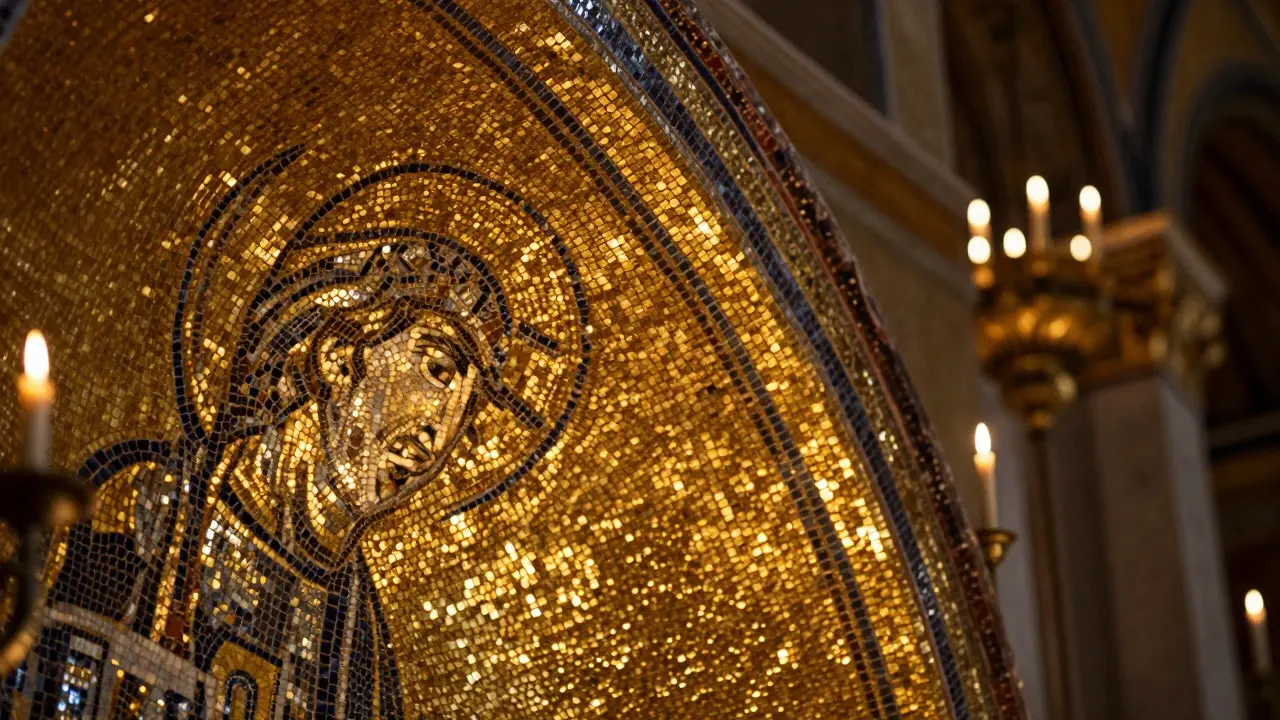
Inside, the walls weren’t painted with flat colors. They were covered in mosaics, artworks made from thousands of small pieces of colored glass, stone, or gold leaf. Gold tesserae (the individual tiles) were angled slightly differently so that they would catch candlelight and sunlight from different directions. As you moved through the church, the walls seemed to shimmer and shift. It created a dynamic, living surface that reflected the changing light of the day. This wasn’t just decoration; it was an attempt to manifest the uncreated light of God in physical form.
Consider the Church of the Holy Apostles in Constantinople, which was described by visitors as being filled with "golden light." Even though the original structure is gone, we know from accounts that the interior was designed to overwhelm the senses with brilliance. This focus on light influenced everything from window placement to the reflective properties of the materials used. It’s a reminder that in Byzantine architecture, what you don’t see-the absence of harsh shadows, the diffusion of glare-is just as important as what you do see.
The Cross-In-Square Plan
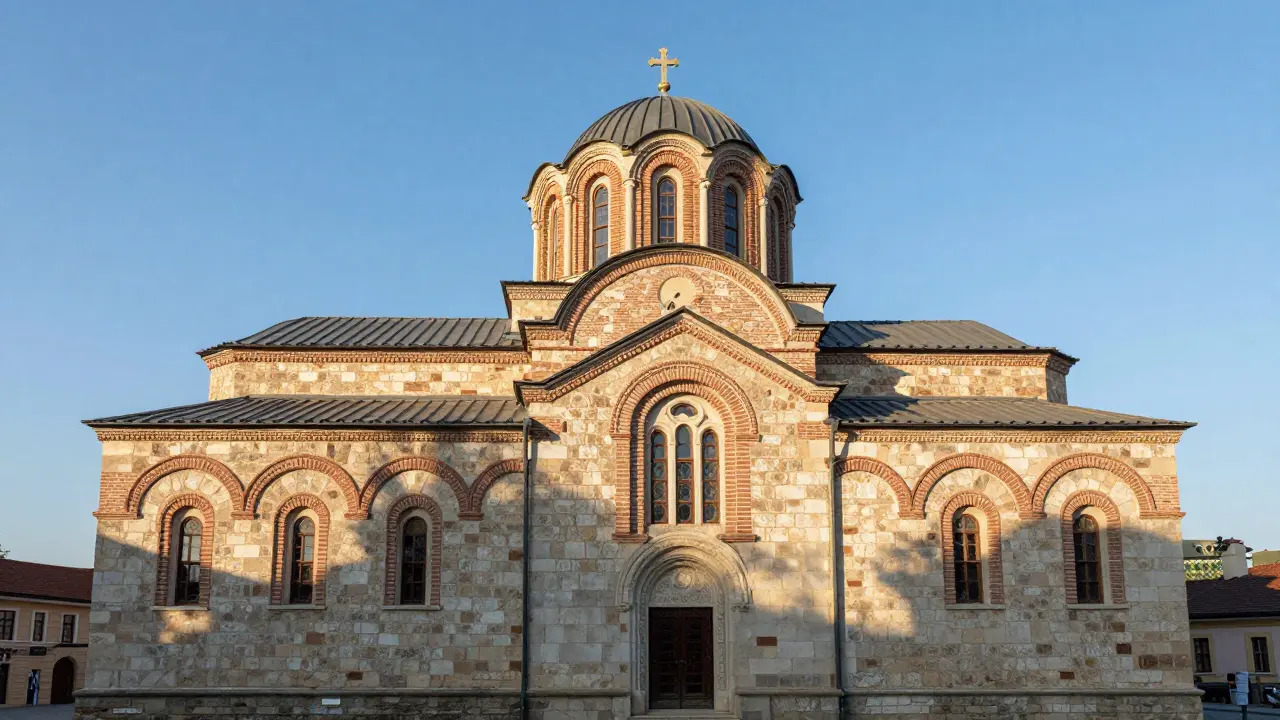
While the Hagia Sophia stands alone as a monumental exception, most Byzantine churches followed a more standardized layout known as the cross-in-square plan, a church layout where a central dome sits atop a cube-shaped core, with arms extending out to form a cross shape. Imagine a large square room. Now, extend four smaller squares outward from each side. Place a dome in the center. This simple geometric formula became the backbone of Byzantine ecclesiastical architecture for centuries.
Why did this plan become so popular? Because it was efficient, scalable, and deeply symbolic. The central dome represented Christ, while the four surrounding spaces could represent the four Gospels or the four corners of the earth. The layout also guided the movement of worshippers. You entered through the west, moved past the narthex (entryway), and into the nave, finally approaching the altar in the east. This procession mirrored the spiritual journey from darkness to light.
You can see perfect examples of this in the Daphni Monastery near Athens or the Chora Church in Istanbul. These buildings are smaller than the imperial cathedrals, but their proportions are exquisite. The balance between the vertical pull of the dome and the horizontal stability of the base creates a sense of harmony that feels both grounded and transcendent. Even today, architects study these plans for their clarity and functional elegance.
From Stone to Spirit: Interior Decoration
If the exterior of a Byzantine church might look austere-often just plain brick or stone-the interior is a explosion of color and narrative. The walls served as a Bible for the illiterate, depicting scenes from the Old and New Testaments, the lives of saints, and theological concepts. But unlike Western medieval art, which often focused on human emotion and drama, Byzantine iconography was stylized and formal.
Figures in mosaics and frescoes are usually shown frontally, with large eyes and elongated features. They don’t look like people you’d meet on the street; they look like beings from another realm. This deliberate lack of realism was intentional. The goal wasn’t to capture a likeness but to convey spiritual truth. A saint’s face might be serene and detached because their mind is fixed on heaven, not earthly concerns.
The hierarchy of images was strict. The Virgin Mary and Child typically dominated the semi-dome above the altar. Christ Pantocrator (Ruler of All) sat in the main dome. Below them, prophets and apostles lined the walls. This visual order reinforced the social and religious order of the empire. Everyone had their place, and the architecture reminded you of it every time you looked up.
The Legacy Beyond Borders
When the Ottoman Empire conquered Constantinople in 1453, the age of Byzantine architecture ended, but its influence didn’t die. In fact, it spread further than ever before. The Ottoman architects, particularly Mimar Sinan, studied the Hagia Sophia closely. The blue-tiled mosques of Istanbul, with their cascading domes and slender minarets, owe a huge debt to Byzantine structural principles. You can see the echo of the pendentive system in the way Ottoman mosques manage vast interior spaces.
To the north, Byzantine styles traveled to Kievan Rus (modern-day Ukraine and Russia). The Saint Basil’s Cathedral in Moscow, with its colorful onion domes, is a direct descendant of Byzantine church design, adapted to the harsher climate and local tastes. In Italy, cities like Venice and Ravenna boast some of the best-preserved Byzantine structures outside the former empire. St. Mark’s Basilica in Venice is essentially a Byzantine church transported to the heart of the Italian Renaissance.
Even today, when we talk about "neoclassical" or "revivalist" architecture, we often forget the Byzantine thread. But if you look closely at government buildings, libraries, and churches from the 19th and early 20th centuries, you’ll find domes, arches, and mosaic floors that trace their lineage back to Justinian’s court. The timeless charm of Byzantine architecture lies in its ability to adapt. It took Roman strength, added Christian mystery, and created a visual language that continues to inspire awe more than 1,500 years later.
| Feature | Description | Example |
|---|---|---|
| Pendentives | Triangular supports allowing domes on square bases | Hagia Sophia |
| Mosaics | Gold-backed tile artworks creating luminous surfaces | Ravenna Basilicas |
| Cross-in-Square | Standardized church plan with central dome | Daphni Monastery |
| Centralized Plan | Focus on a single central space rather than longitudinal aisle | Church of the Holy Sepulchre |
Frequently Asked Questions
What makes Byzantine architecture different from Roman architecture?
While Roman architecture relied heavily on concrete and massive vaults, Byzantine architecture refined the use of brick and mortar to create lighter, more flexible structures. The key difference is the emphasis on the central dome and the use of pendentives, which allowed for larger, more open interior spaces compared to the longitudinal basilicas common in earlier Roman Christian buildings.
Where can I see the best examples of Byzantine architecture today?
The Hagia Sophia in Istanbul is the most famous example. Other top sites include the Basilicas of San Vitale and Sant'Apollinare Nuovo in Ravenna, Italy; the Daphni Monastery near Athens, Greece; and the Chora Church in Istanbul. In Russia, the Golden Ring cities offer well-preserved wooden and stone churches influenced by Byzantine styles.
Why are there so many gold mosaics in Byzantine churches?
Gold symbolized divine light and eternity in Byzantine theology. By using gold tesserae in mosaics, artists aimed to create an ethereal, heavenly atmosphere within the church. The angled placement of the tiles ensured that flickering candlelight would reflect off the gold, making the images seem to glow from within, thus connecting the physical space with the spiritual realm.
Did Byzantine architecture influence Islamic architecture?
Yes, significantly. After the Ottoman conquest of Constantinople, Islamic architects studied Byzantine structures like the Hagia Sophia. Techniques such as the use of pendentives and large central domes were adopted and adapted in iconic mosques like the Süleymaniye Mosque and the Blue Mosque in Istanbul, blending Byzantine engineering with Islamic aesthetic preferences.
What is a pendentive and why is it important?
A pendentive is a curved triangular section of a vault that allows a circular dome to rest on a square room. It is crucial because it solves the geometric problem of transitioning from a square base to a round dome. This innovation enabled Byzantine architects to build larger, more stable domes without needing massive supporting walls, freeing up interior space for light and movement.