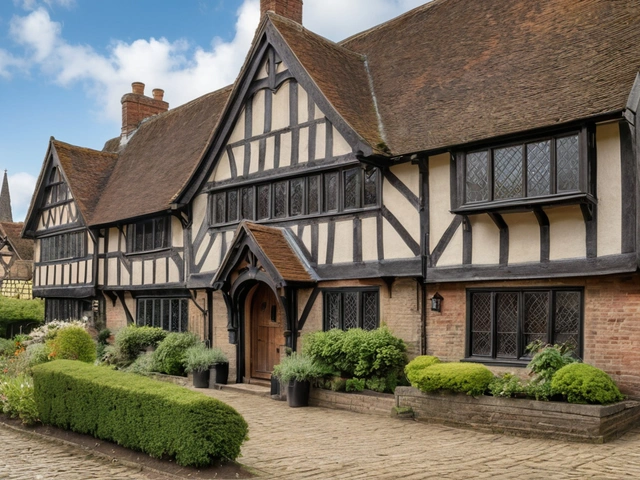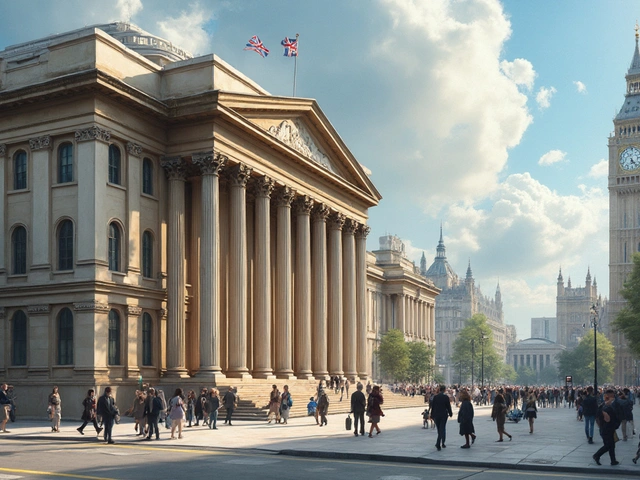
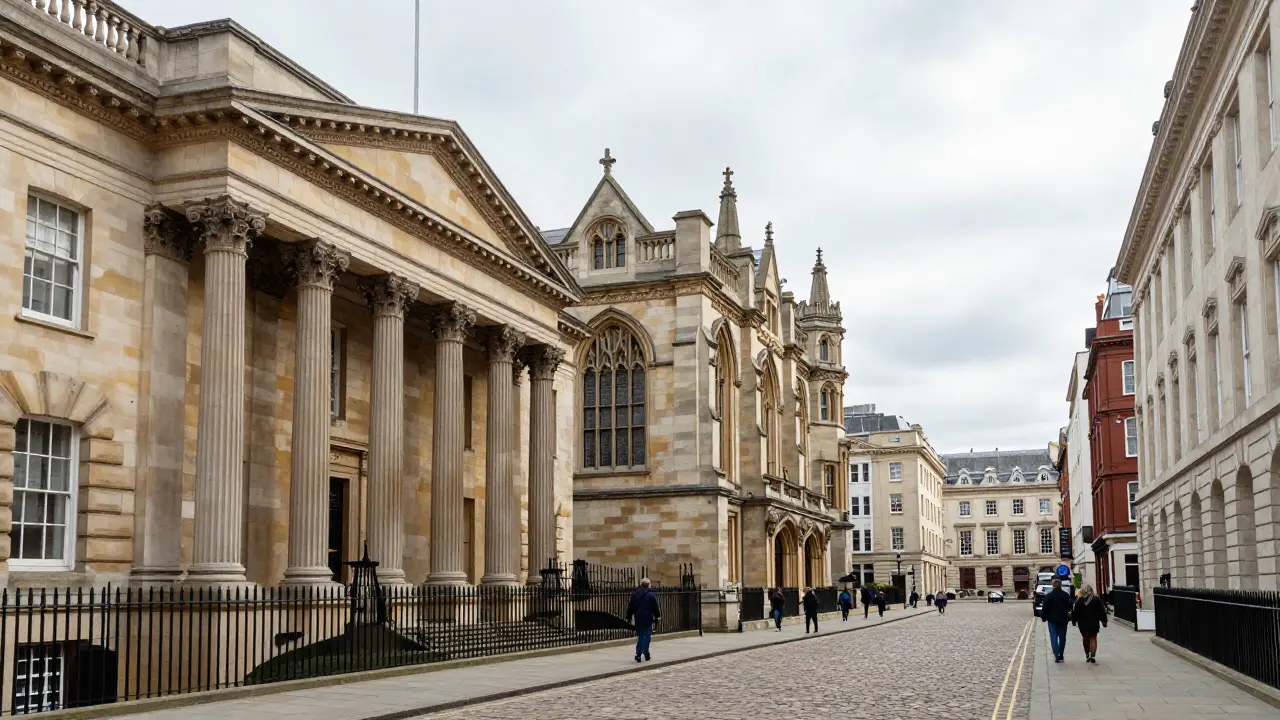
Walk down any historic street in a major city, and you will likely see it. A building that looks like it belongs in ancient Greece, or perhaps medieval France, or colonial America. It wasn't built then. It was built in the 19th or early 20th century. This is the work of Revivalism. It is not just about copying old buildings; it is about borrowing the visual language of the past to say something specific about the present.
We often think of modern design as sleek glass and steel. But for over two hundred years, revivalist architecture dominated our skylines. From the grand courthouses of the United States to the railway stations of Europe, these styles shaped how we perceive authority, culture, and beauty. Understanding this movement helps us decode why certain buildings feel "important" and how designers still use these cues today.
Key Takeaways
- Revivalism is an architectural movement that reinterprets historical styles (like Gothic, Greek, or Roman) in new contexts.
- It peaked during the Industrial Revolution as a reaction against mass production, offering a sense of tradition and permanence.
- Different styles served different purposes: Greek Revival for democracy, Gothic Revival for spirituality, and Neoclassical for government authority.
- Today, revivalism influences sustainable design through adaptive reuse and the preservation of cultural identity.
What Is Revivalism in Architecture?
At its core, revivalism is the deliberate return to an earlier style of art or architecture. In the context of building design, it means looking back at history books-specifically at ruins, sketches, and photographs-and using those elements to construct new structures. It is not mere imitation. It is translation.
Imagine translating a poem from Shakespeare into modern slang. You keep the meaning and the rhythm, but you change the words so they make sense now. Architects did the same with columns, arches, and facades. They took the Doric column from ancient Athens and put it on a bank in Boston. They took the pointed arch from a French cathedral and used it for a university library in London.
This movement gained massive traction in the 18th and 19th centuries. Why? Because the world was changing fast. The Industrial Revolution brought factories, smoke, and standardized brickwork. People felt disconnected from nature and history. Revivalism offered an antidote. It promised stability, elegance, and a connection to a "better" past.
The Major Styles of Revivalism
Not all revivalism looks the same. Each style borrowed from a different era and carried a different message. Here are the most influential movements:
Greek Revival
If you want a building to look democratic and sturdy, you build it in the Greek Revival style. Popular from the 1820s to the 1850s, especially in the United States, this style mimics the temples of ancient Greece. Key features include triangular pediments, heavy columns (often Doric or Ionic), and flat roofs hidden behind parapets.
Think of the White House or the U.S. Capitol Building. These structures use Greek forms to suggest that the nation is built on the same ideals as ancient Athens: reason, law, and citizen participation. It was a political statement in stone.
Gothic Revival
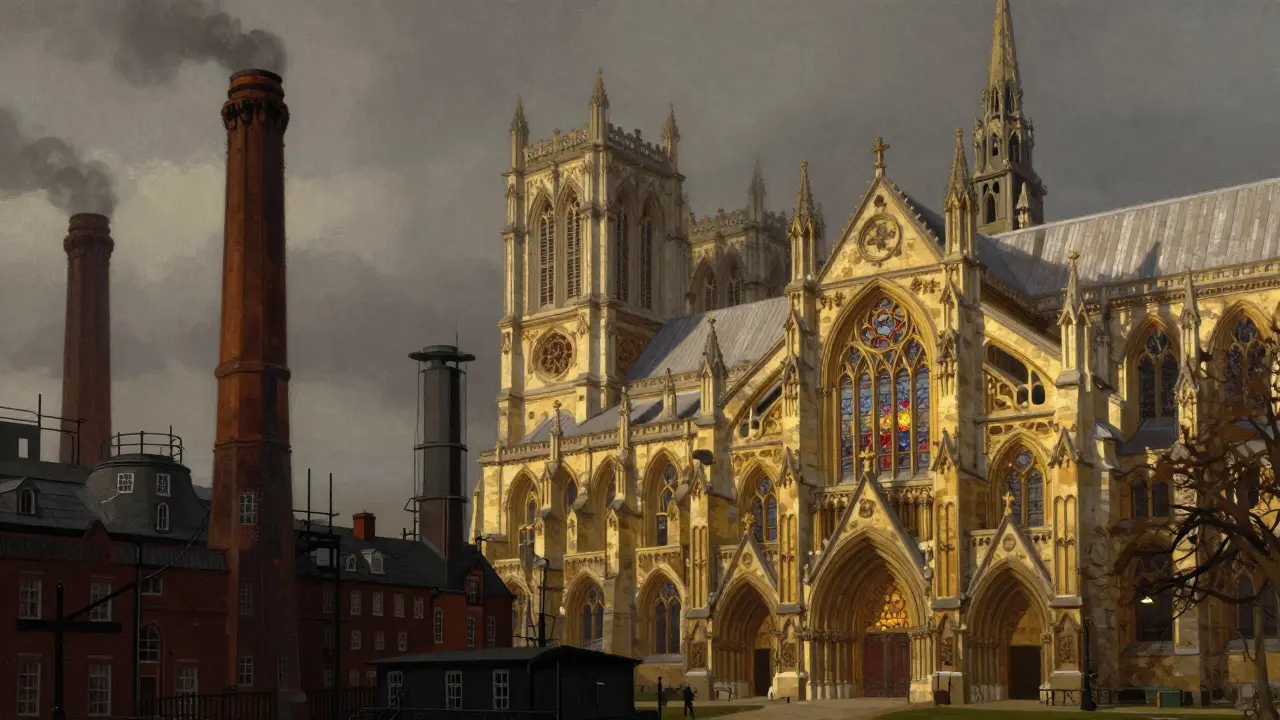
While Greek Revival spoke to the mind, Gothic Revival spoke to the soul. Emerging in the late 18th century and peaking in the Victorian era, this style looked back to the Middle Ages. It featured pointed arches, ribbed vaults, flying buttresses, and intricate stained glass.
Architects like Augustus Pugin argued that Gothic architecture was morally superior because it reflected Christian values and craftsmanship. This style became the default for churches, universities, and even some homes. The Palace of Westminster in London is a prime example. It combines medieval aesthetics with industrial-era construction techniques.
Neoclassical Revival
Neoclassicism is closely related to Greek Revival but often incorporates Roman elements as well. It emphasizes symmetry, proportion, and the use of classical orders (Doric, Ionic, Corinthian). Unlike the rustic simplicity of Greek Revival, Neoclassical buildings can be more ornate and grandiose.
This style was favored by governments and institutions that wanted to project power and order. The British Museum in London and the Panthéon in Paris are iconic examples. It suggests that the institution is timeless, rational, and authoritative.
Romanesque Revival
Less common than Gothic or Greek, Romanesque Revival draws from the architecture of the 10th to 12th centuries. It is characterized by thick walls, round arches, and sturdy pillars. It feels heavy, defensive, and earthy.
You often see this style in train stations and banks. The solidity of the round arch conveys security and reliability. San Francisco City Hall, for instance, uses Beaux-Arts principles which are rooted in Neoclassical and Romanesque traditions, creating a sense of civic grandeur.
| Style | Inspiration Era | Key Features | Typical Use |
|---|---|---|---|
| Greek Revival | Ancient Greece (5th-4th c. BC) | Triangular pediments, Doric/Ionic columns, symmetrical facade | Courthouses, banks, private mansions |
| Gothic Revival | Medieval Europe (12th-16th c.) | Pointed arches, flying buttresses, steep gables, stained glass | Churches, universities, libraries |
| Neoclassical | Ancient Rome & Greece | Grand scale, domes, elaborate ornamentation, strict symmetry | Museums, government buildings, monuments |
| Romanesque Revival | Early Medieval (10th-12th c.) | Round arches, thick walls, small windows, robust appearance | Train stations, fortifications, banks |
Why Did Revivalism Become So Powerful?
Architecture is never just about shelter. It is about communication. Revivalism became powerful because it provided a shared visual vocabulary in a rapidly modernizing world.
First, there was the rise of nationalism. After the French Revolution and the Napoleonic Wars, many nations were defining their identities. Germany turned to Gothic to emphasize its Teutonic roots. Italy embraced Renaissance styles to connect with its imperial past. The United States chose Greek to align itself with democratic ideals rather than European monarchies.
Second, technology enabled it. Before the 19th century, building a large stone structure required skilled masons working for decades. With the advent of cast iron, steel, and later reinforced concrete, architects could mimic stone details much faster and cheaper. A Gothic window could be made of cast iron instead of carved limestone. This allowed revivalist styles to spread quickly across continents.
Third, there was a romantic longing for the past. Writers and artists criticized the coldness of industrial cities. They idealized the countryside, the medieval guild system, and the harmony of ancient societies. Revivalist architecture was a physical manifestation of this nostalgia. It created spaces that felt human-scaled and spiritually significant, even if they were built with machine-made parts.
Revivalism vs. Modernism: The Great Debate
In the early 20th century, a new movement challenged revivalism: Modernism. Leaders like Le Corbusier and Ludwig Mies van der Rohe argued that "form follows function." They rejected historical references as dishonest and unnecessary. Why pretend a steel skyscraper is a Greek temple when it is clearly a steel skyscraper?
Modernism emphasized clean lines, open spaces, and new materials like glass and steel. It sought to break completely with the past. For several decades, modernism dominated global architecture. Cities filled with international-style office towers and brutalist concrete blocks.
However, revivalism never truly died. It went underground. And then, in the late 20th century, it returned. Critics began to complain that modernist cities felt sterile and alienating. People missed ornament, texture, and historical reference. This led to Postmodernism, which ironically revived classical elements in playful, sometimes ironic ways. Think of Michael Graves' Portland Building, which uses colorful, exaggerated classical motifs.
The Potential of Revivalism Today
Is revivalism dead? No. It has evolved. Today, we see a resurgence of interest in historical styles, but with a twist. It is less about pure imitation and more about contextual sensitivity and sustainability.
Adaptive Reuse: Instead of tearing down old buildings, architects are repurposing them. An old factory becomes lofts; a church becomes a community center. This preserves the "revivalist" fabric of a city while giving it new life. It reduces waste and maintains local character.
New Urbanism: Many contemporary neighborhoods are designed with traditional streetscapes. Houses have porches, pitched roofs, and varied facades, echoing 19th-century village layouts. This approach aims to create walkable, socially cohesive communities, rejecting the car-centric sprawl of mid-century modernism.
Cultural Identity: In a globalized world, where a skyscraper in Dubai looks similar to one in Shanghai, revivalism offers a way to assert local identity. Architects in India might incorporate Mughal arches; architects in Scandinavia might use Viking-inspired timber framing. It grounds buildings in their specific cultural soil.
Sustainability Through Longevity: Revivalist buildings were often built to last centuries. Modern disposable architecture contributes significantly to landfill waste. By learning from the durability and material honesty of revivalist styles, contemporary designers can create buildings that age gracefully and endure.
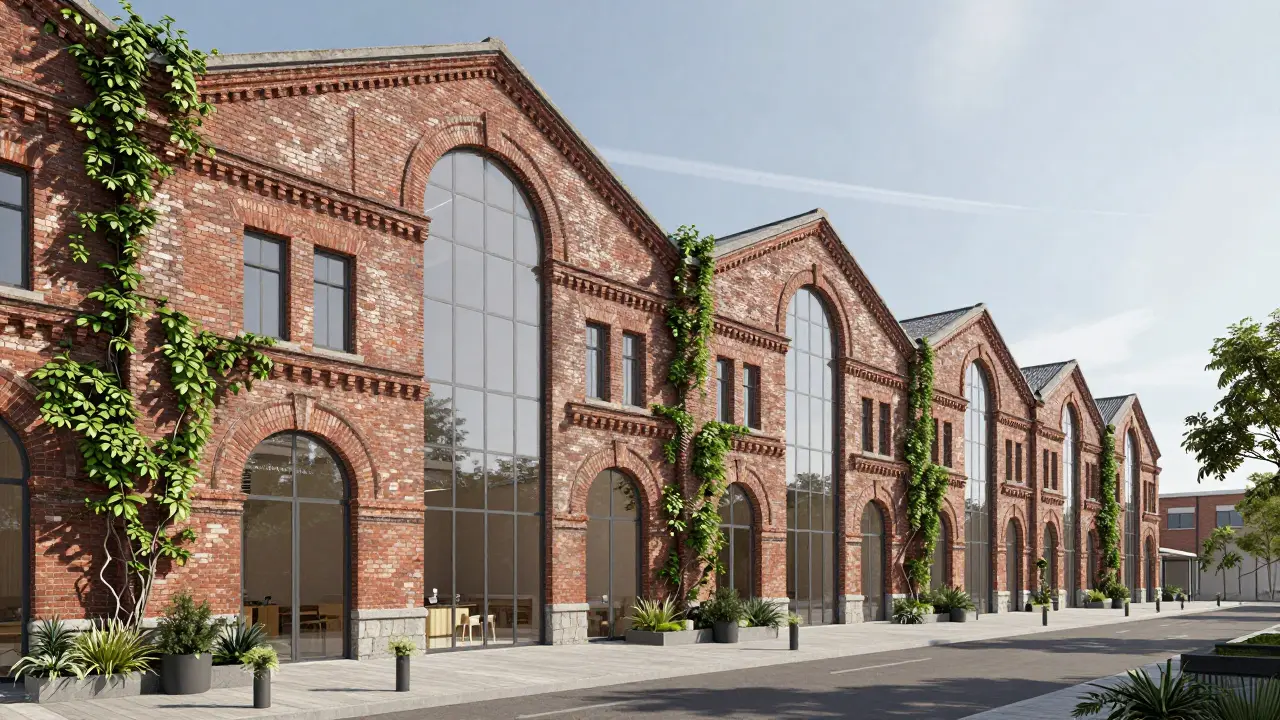
How to Identify Revivalist Architecture
Next time you are walking around your city, look up. Can you spot the revivalist clues?
- Columns: Are they fluted? Do they have capitals with leaves (Corinthian) or scrolls (Ionic)? If yes, it’s likely Classical Revival.
- Arches: Are they pointed? That’s Gothic. Round? That’s Romanesque or Classical.
- Roofs: Is there a triangular gable at the front? Greek Revival. Steeply pitched with dormers? Gothic or Tudor Revival.
- Ornament: Look for gargoyles, tracery, or friezes with mythological scenes. These are direct quotes from history.
Understanding these elements changes how you see your environment. You stop seeing just "old buildings" and start reading the stories they tell about who built them and what they valued.
Challenges and Criticisms
Revivalism is not without its critics. Some argue it promotes a false sense of history. A Greek temple in Texas has no real connection to Greece. It is a costume. Purists call this "pastiche"-a shallow copy without understanding.
Others point out that revivalist styles can be expensive. Ornate stonework and custom metalwork cost more than standard drywall and vinyl siding. This can limit access to high-quality design for lower-income communities.
There is also the issue of authenticity. When every historic district looks like a theme park, do we lose the genuine diversity of architectural expression? Striking a balance between respect for history and innovation for the future remains a key challenge for architects today.
Conclusion: The Enduring Appeal
The power of revivalism lies in its ability to comfort and inspire. It reminds us that we are part of a long chain of human creativity. Whether it is the solemnity of a Gothic cathedral or the democratic promise of a Greek courthouse, these styles tap into deep psychological needs for order, beauty, and belonging.
As we move further into the 21st century, facing climate crises and digital saturation, the potential of revivalism may grow even stronger. We may find ourselves looking back not just for aesthetic pleasure, but for wisdom on how to build places that are durable, meaningful, and human-centered. The past is not gone; it is waiting to be reimagined.
What is the difference between Revivalism and Restoration?
Restoration involves repairing an existing historical building to return it to its original state. Revivalism involves designing and constructing a new building that imitates a historical style. One fixes the past; the other recreates it.
Why did Greek Revival become popular in the United States?
American leaders associated Ancient Greece with democracy and republicanism. Using Greek architectural elements like columns and pediments helped visually link the new American nation to these democratic ideals, distinguishing it from the monarchies of Europe.
Is Revivalism considered outdated?
Not necessarily. While pure imitation is less common, the principles of revivalism-contextual design, use of traditional proportions, and cultural referencing-are highly relevant in New Urbanism and sustainable architecture today.
Which famous buildings are examples of Gothic Revival?
Notable examples include the Palace of Westminster (Houses of Parliament) in London, the Washington National Cathedral in the USA, and Trinity Church in Boston. These buildings feature pointed arches, steep roofs, and intricate stone detailing.
How does Revivalism impact property value?
Buildings in established revivalist styles, particularly in historic districts, often hold higher property values due to their aesthetic appeal, perceived durability, and cultural significance. However, maintenance costs for ornate features can be higher than for modern minimalist designs.