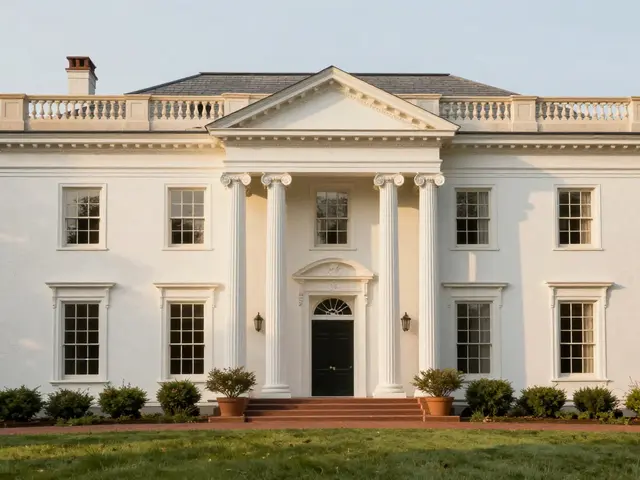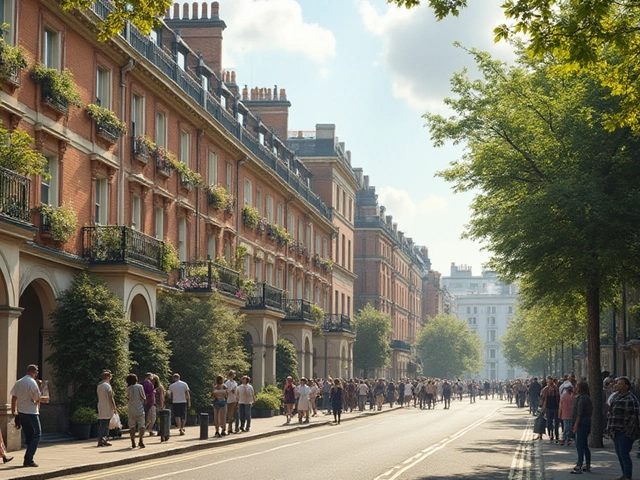
Walk down any major street in Washington D.C., London, or even a historic district in your own city, and you will likely pass a building that looks like it belongs in 16th-century Italy. These structures are not ancient ruins; they are examples of Renaissance Revival architecture, also known as Neo-Renaissance. This style swept across Europe and North America from the mid-19th century through the early 20th century, bringing back the symmetry, proportion, and classical details of the Italian Renaissance. Today, we are seeing a renewed interest in these buildings, not just for their beauty, but for their durability and timeless appeal.
Why are we looking at this style again? In an era where modern glass boxes can feel cold and temporary, the solidity and human scale of Renaissance Revival offer a sense of permanence. Whether you are an architect designing a new addition, a homeowner restoring a historic property, or simply a curious observer, understanding the core elements of this style helps you appreciate the craftsmanship hidden in plain sight. Let’s break down what makes these buildings tick, how they differ from other classical styles, and why they matter today.
The Core Principles of Renaissance Revival
To understand Renaissance Revival, you first need to understand what it is reviving. The original Renaissance (14th-17th centuries) was a rebirth of classical Roman ideas. Architects like Andrea Palladio studied ancient ruins and developed a system based on mathematical harmony. When the 19th century arrived, architects wanted that same order and elegance, but they had new materials and new purposes.
Neo-Renaissance is an architectural movement that reinterprets the symmetrical forms, classical proportions, and decorative motifs of the Italian Renaissance using 19th-century construction techniques. It is not a copy-paste job. Instead, it adapts old rules to new contexts. For example, while original Renaissance palaces were built for nobility, many Neo-Renaissance buildings were constructed for banks, libraries, and government offices. This shift gave the style a democratic yet authoritative feel.
The key principles include:
- Symmetry: The facade is balanced around a central axis. If you draw a line down the middle, both sides should mirror each other.
- Proportion: Windows, doors, and walls follow specific ratios, often based on the Golden Ratio or simple whole-number fractions.
- Classical Orders: Use of columns and pilasters following Doric, Ionic, or Corinthian styles.
- Horizontal Emphasis: Strong cornices and string courses create horizontal bands that anchor the building.
These principles create a visual calm. Unlike Gothic Revival, which reaches upward with spires and pointed arches, Renaissance Revival stays grounded. It feels stable, logical, and inviting. This is why it became the preferred style for civic buildings-people trust institutions that look solid and well-ordered.
Distinguishing Features: What to Look For
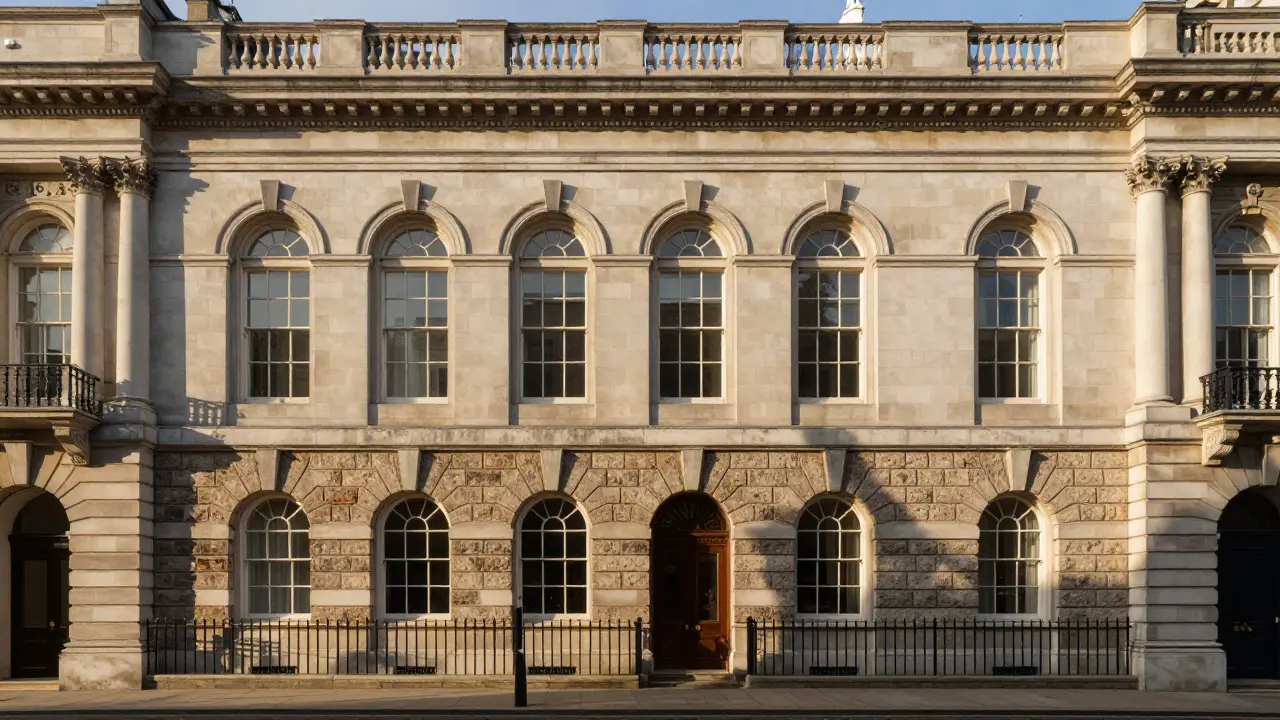
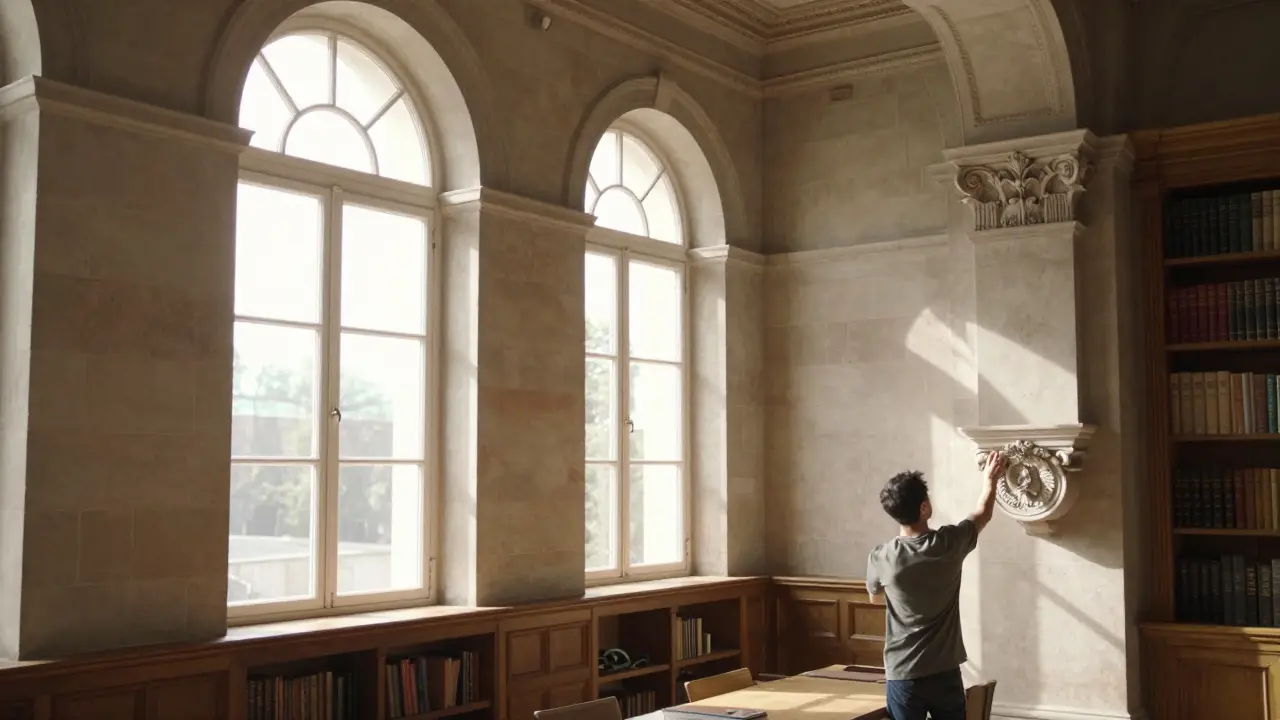
If you want to identify a Renaissance Revival building, start with the windows. They are typically rectangular with rounded arches at the top, known as segmental arches. You will often see them grouped in pairs or triplets, separated by pilasters (flat, column-like projections). Above the top floor, you will find a heavy cornice-a projecting ledge that caps the building and casts a shadow, defining the roofline clearly.
Another giveaway is the use of rustication. This involves carving horizontal grooves into the stone blocks, especially on the ground floor. It gives the base a rugged, fortified look, suggesting strength and security. As you move up the facade, the stonework becomes smoother, creating a visual lightness that draws the eye upward without overwhelming it.
Decorative elements are present but restrained. You might see medallions, garlands, or urns placed above windows or between floors. However, unlike Baroque architecture, which is dramatic and curvy, Renaissance Revival decoration is flat and geometric. It adds detail without cluttering the surface. This balance between ornament and structure is what makes the style so enduring.
| Feature | Renaissance Revival | Gothic Revival | Beaux-Arts |
|---|---|---|---|
| Arch Shape | Semircular or Segmental | Pointed | Round or Pedimented |
| Verticality | Horizontal emphasis | Strong vertical lines | Balanced, but grander scale |
| Decoration | Geometric, classical motifs | Naturalistic, intricate tracery | Elaborate sculpture, color |
| Typical Use | Civic, commercial, residential | Churches, universities | Museums, train stations |
Notice how Beaux-Arts overlaps with Renaissance Revival. Beaux-Arts is essentially a more ornate, academic version of the style, taught at the École des Beaux-Arts in Paris. Many large American museums blend both styles, making them hard to distinguish. But generally, if it feels heavier and more sculptural, it’s leaning toward Beaux-Arts. If it feels cleaner and more proportional, it’s pure Renaissance Revival.
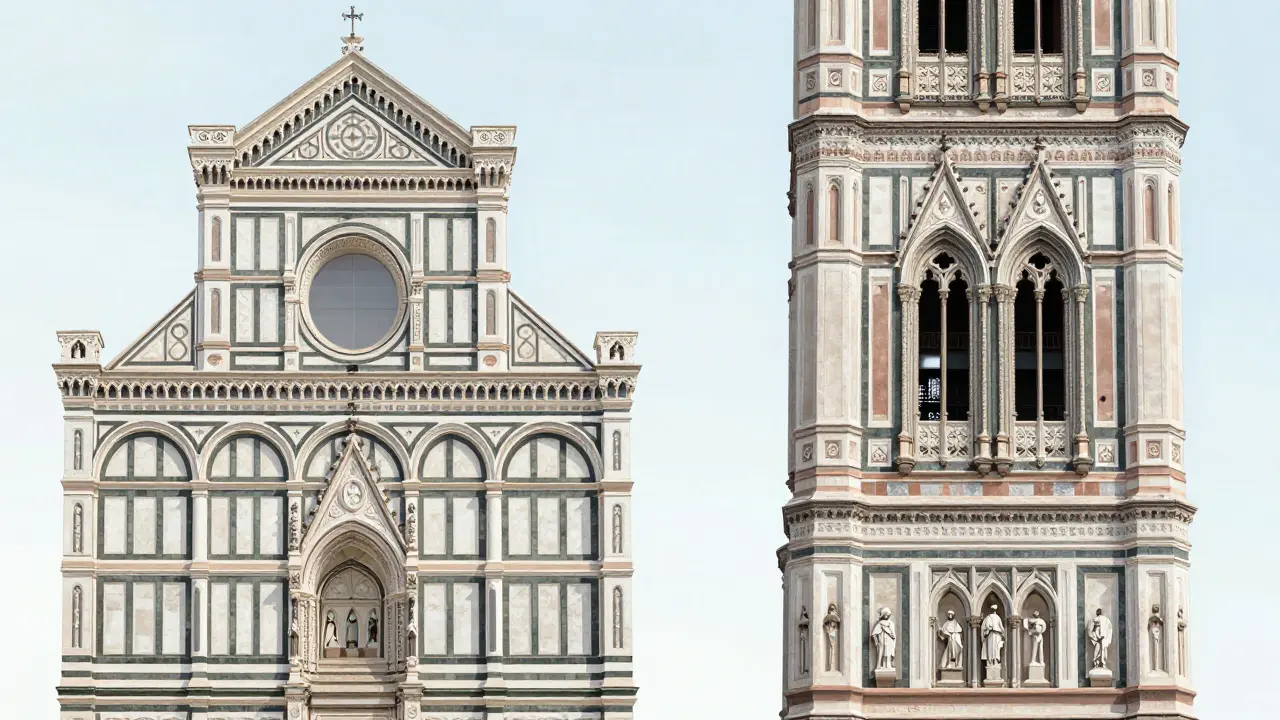
Historical Context: Why It Emerged
The Renaissance Revival didn’t appear out of nowhere. It emerged during a time of rapid industrialization. Cities were growing fast, filled with factories and smoke. People missed the clarity and beauty of the past. Architects began studying historical styles systematically, leading to the “Style Wars” of the 19th century, where different revival styles competed for dominance.
In Britain, the style gained traction after the Great Exhibition of 1851. Architects like George Gilbert Scott initially favored Gothic, but others argued that Renaissance was better suited for secular buildings. In the United States, the style took off after the Civil War, as cities rebuilt and sought to project stability and progress. Buildings like the New York Stock Exchange (completed in 1873) used Renaissance Revival to convey trust and financial power.
This historical context matters because it explains the style’s emotional resonance. It represents a desire for order in chaos, for beauty in utility. When you walk into a Renaissance Revival bank or library, you are stepping into a space designed to make you feel calm and confident. That psychological effect is part of its legacy.
Modern Applications and Restoration
Today, few new buildings are designed purely in the Renaissance Revival style. Modern codes, costs, and tastes favor simpler designs. However, the style remains highly relevant for restoration projects. Many historic districts have strict guidelines requiring new additions to match existing facades. Understanding the original details-like the correct profile of a window arch or the depth of a cornice-is crucial for authentic restoration.
For homeowners, this means investing in skilled craftsmen who can replicate stone carving or wood joinery accurately. It also means choosing materials that age gracefully, such as limestone or brick, rather than synthetic alternatives that peel or fade. Some modern architects incorporate Renaissance Revival elements subtly, using classical proportions in contemporary materials. This approach respects tradition while embracing innovation.
Consider the case of a 19th-century townhouse in Boston. The owners wanted to add a second-story extension. Instead of a boxy modern addition, they worked with an architect to design a gabled roof with dormer windows that mirrored the original facade. The result was seamless, preserving the neighborhood’s character while adding needed space. This kind of sensitive adaptation is where Renaissance Revival shines today.
Challenges and Misconceptions
One common misconception is that Renaissance Revival is outdated or elitist. Critics sometimes dismiss it as “old-fashioned,” but this ignores its functional benefits. The thick walls and high ceilings provide natural insulation and airflow, reducing energy costs. The durable materials require less maintenance over time. These practical advantages are increasingly valued in sustainable design discussions.
Another challenge is authenticity. Too often, developers slap on superficial classical details-fake columns, plastic moldings-without understanding the underlying geometry. This creates a caricature rather than a true homage. To avoid this, study original plans and photographs. Pay attention to how light interacts with shadows, how textures change with height. True appreciation comes from observing, not just copying.
Also, be aware of local regulations. Historic preservation boards may restrict changes to exterior facades. Before starting any renovation, check with your local heritage authority. They can provide guidelines that help you stay compliant while achieving your vision.
Conclusion: Why It Still Matters
Renaissance Revival architecture is more than a historical footnote. It offers lessons in proportion, materiality, and human-centered design. In a world of disposable buildings, these structures remind us that good design lasts. Whether you are admiring a grand museum or renovating a small shopfront, the principles of symmetry, balance, and craft remain universal.
As we rediscover this style, we are not just looking backward. We are finding tools to build better futures. By learning from the past, we can create spaces that are not only beautiful but also meaningful and enduring. So next time you pass a building with arched windows and a strong cornice, take a moment. Look closer. You might just see the future in the past.
What is the difference between Renaissance Revival and Neoclassical architecture?
Neoclassical architecture draws directly from ancient Greek and Roman temples, featuring plain surfaces, triangular pediments, and monumental columns. Renaissance Revival, however, is inspired by 15th-16th century Italian palaces, incorporating more decorative elements like rustication, segmented arches, and varied window shapes. While both use classical orders, Renaissance Revival is warmer and more detailed.
Is Renaissance Revival architecture expensive to maintain?
Initial construction can be costly due to skilled labor and quality materials like stone or brick. However, long-term maintenance is often lower than modern alternatives. Stone facades last decades without repainting, and thick walls provide natural insulation. Regular cleaning and minor repairs keep these buildings in excellent condition for generations.
Can I add Renaissance Revival features to a modern home?
Yes, but subtlety is key. Focus on proportions rather than exact replication. Use classical window shapes, add a modest cornice, or install pilasters on blank walls. Avoid over-decorating. The goal is harmony, not costume. Consult an architect familiar with traditional styles to ensure the additions complement your home’s existing structure.
Who were some famous architects of the Renaissance Revival style?
Key figures include Henry Hobson Richardson in the U.S., who blended Renaissance with Romanesque elements, and Charles Barry in Britain, who designed parts of the Houses of Parliament. In France, Henri Labrouste pioneered the style for public libraries. Their work established the vocabulary that countless other architects followed.
How does Renaissance Revival contribute to sustainability?
Its durability reduces waste from frequent renovations. Natural materials like stone and wood have low embodied energy compared to plastics. Passive design features-such as deep window reveals for shading and thermal mass walls for temperature regulation-minimize reliance on HVAC systems. Restoring existing buildings is also greener than demolishing and rebuilding.