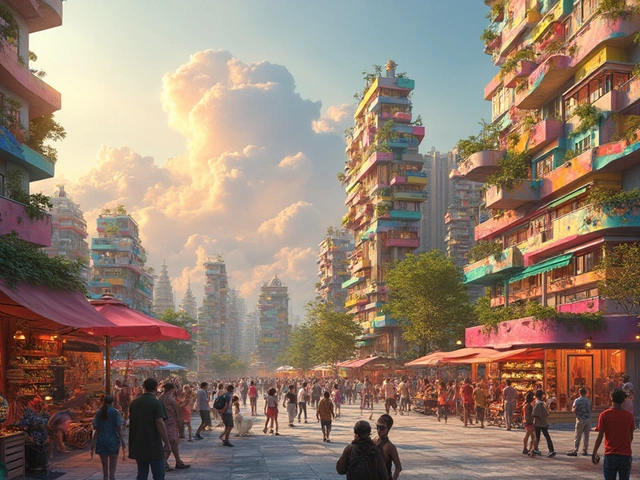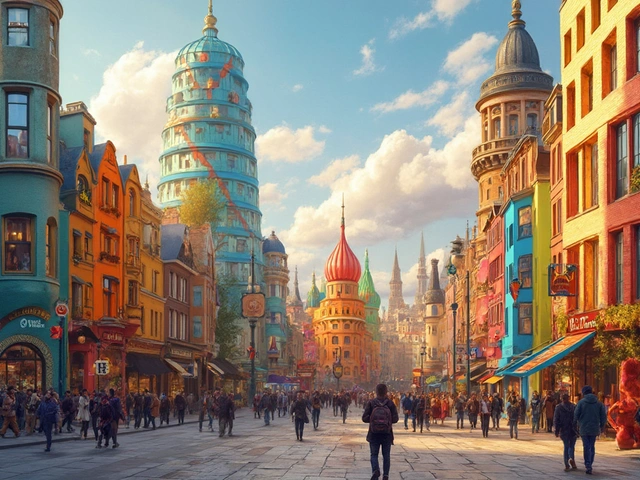
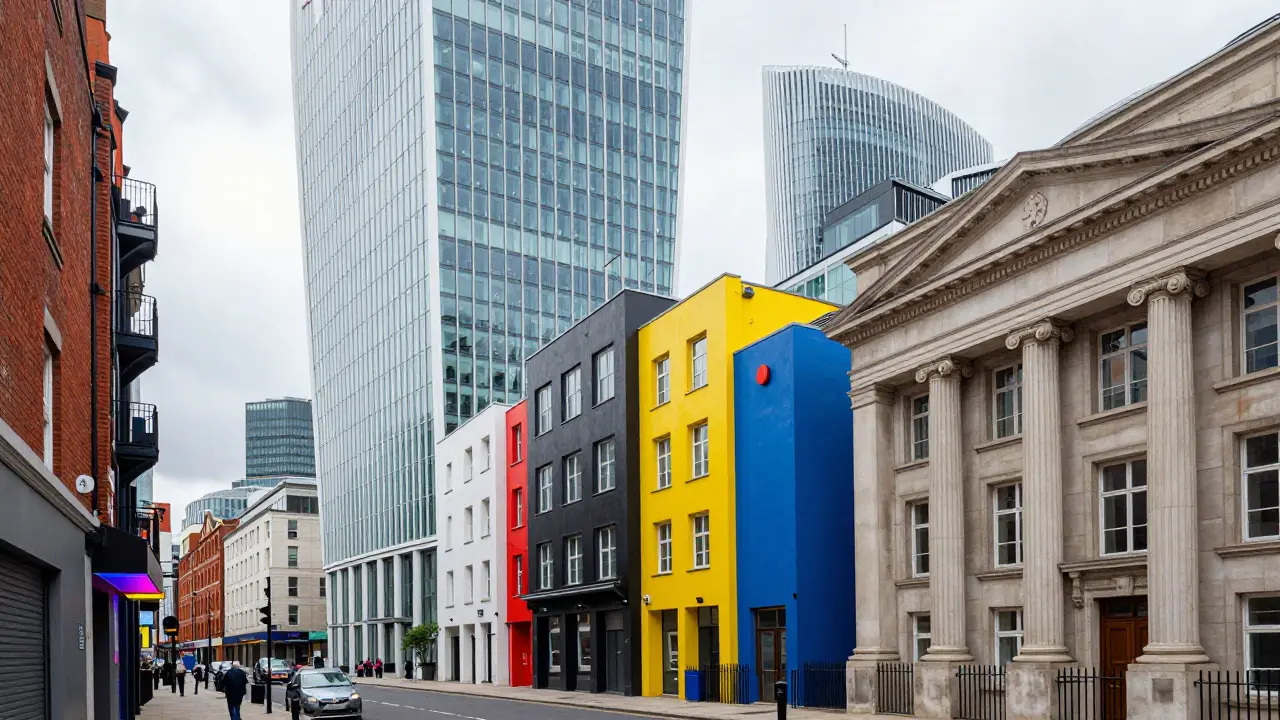
Walk down any major city street today, and you might notice something odd about the buildings. They aren’t just cold glass boxes like the skyscrapers of the 1970s, nor are they strict replicas of Greek temples. You see playful shapes, bold colors, and strange historical references mixed with high-tech materials. This visual chaos has a name: it’s the lingering echo of Postmodern Architecture, a movement that exploded in the late 20th century to challenge the rigid rules of its predecessor. But this isn't just a history lesson about old buildings. The way we design offices, homes, and public spaces right now is deeply indebted to the rebellion started by architects who decided that "less is more" was actually "less is a bore."
To understand why your favorite coffee shop looks the way it does, or why a corporate headquarters might feature a giant pink column, we need to look back at what went wrong before postmodernism arrived. We have to talk about the sterility of Modernism, the specific architects who broke the rules, and how those rule-breaking ideas evolved into the comfortable, eclectic styles we accept as normal in 2026.
The Problem with "Less Is More"
Before postmodernism could exist, there had to be something to rebel against. That "something" was Modernist Architecture, which dominated the mid-20th century. Led by figures like Ludwig Mies van der Rohe, Modernism preached purity. It wanted to strip away decoration, hide structural quirks, and create universal living spaces using steel, glass, and concrete. The goal was efficiency and social progress through standardized design.
On paper, this sounded great. In practice, it often felt cold. Think of the housing projects built in the 1950s and 60s-endless rows of identical white blocks with no sense of place or history. People didn't feel connected to these structures; they felt trapped in them. The architecture ignored human emotion, local culture, and the simple joy of visual interest. By the 1960s, critics were pointing out that while Modernism solved engineering problems, it failed the human experience. The stage was set for a counter-movement that valued meaning over mere function.
Who Were the Architects Behind the Movement?
You can't talk about postmodernism without mentioning the key players who defined it. These weren't just designers; they were philosophers with drafting pencils. Two names stand out above the rest: Robert Venturi and Michael Graves.
Robert Venturi wrote a book in 1966 called *Complexity and Contradiction in Architecture*. In it, he famously stated, "I prefer both-and to either-or." He argued that buildings should communicate complex messages, mixing historical references with modern forms. His Vanna Venturi House in Pennsylvania looked like a traditional suburban home but with a broken pediment and exaggerated proportions-a wink to the viewer rather than a serious attempt at replication.
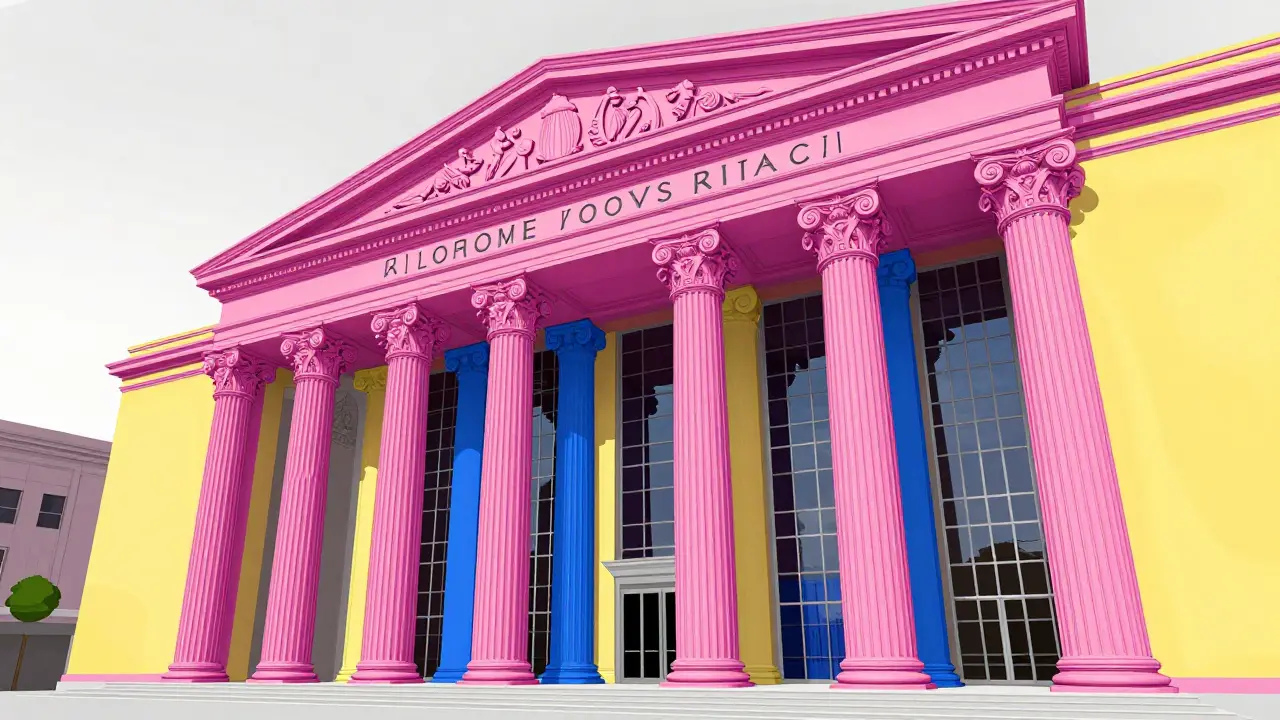
Then there was Michael Graves. If Venturi was the theorist, Graves was the stylist. His Portland Building in Oregon (completed in 1982) became an icon of the style. It featured massive columns, bright colors, and classical symbols used in absurdly large scales. It wasn't trying to be a Greek temple; it was trying to say, "Look, I'm referencing history, but I'm having fun doing it." Other notable figures included Philip Johnson, whose AT&T Building (now the Sony Building) in New York topped a sleek glass box with a Chippendale-style broken pediment, shocking the world with its sheer audacity.
Key Characteristics That Changed Everything
So, what exactly did postmodern architects do differently? They introduced several core principles that have bled into every aspect of contemporary design. Understanding these traits helps you spot their influence in modern interiors and exteriors alike.
- Ironic Historical References: Instead of ignoring the past, postmodernists quoted it. A window might look Roman, but it would be made of neon-lit plastic. This taught designers that context matters, and that mixing eras can create energy rather than confusion.
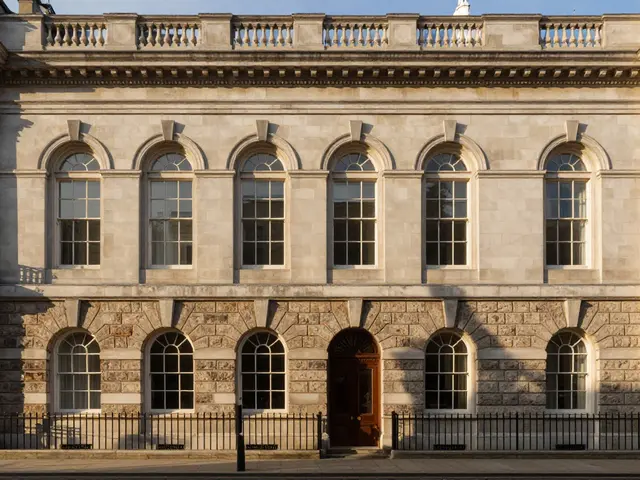
- Symbolism and Meaning: Buildings were expected to tell a story. A bank shouldn't just store money; it should look solid and trustworthy, perhaps using heavy stone bases. A library might use shapes that suggest open books or intellectual growth. This shifted design from pure utility to emotional communication.
- Bold Colors and Shapes: Gone were the muted grays and whites of Modernism. Postmodernism embraced primary colors, geometric patterns, and asymmetrical forms. This freedom allowed later designers to experiment with interior palettes and furniture shapes without fear of looking "unprofessional."
- Contextualism: Architects began designing buildings that responded to their surroundings. If a new structure was going up next to historic brick warehouses, it wouldn't be a glass tower; it might incorporate brickwork or similar rooflines. This respect for neighborhood character is now standard practice in urban planning.
From Skyscrapers to Living Rooms: The Spread of Influence
The impact of postmodern architecture didn't stop at the skyline. It trickled down into residential design, retail spaces, and even product design. How? By proving that decoration wasn't a sin-it was a tool for connection.
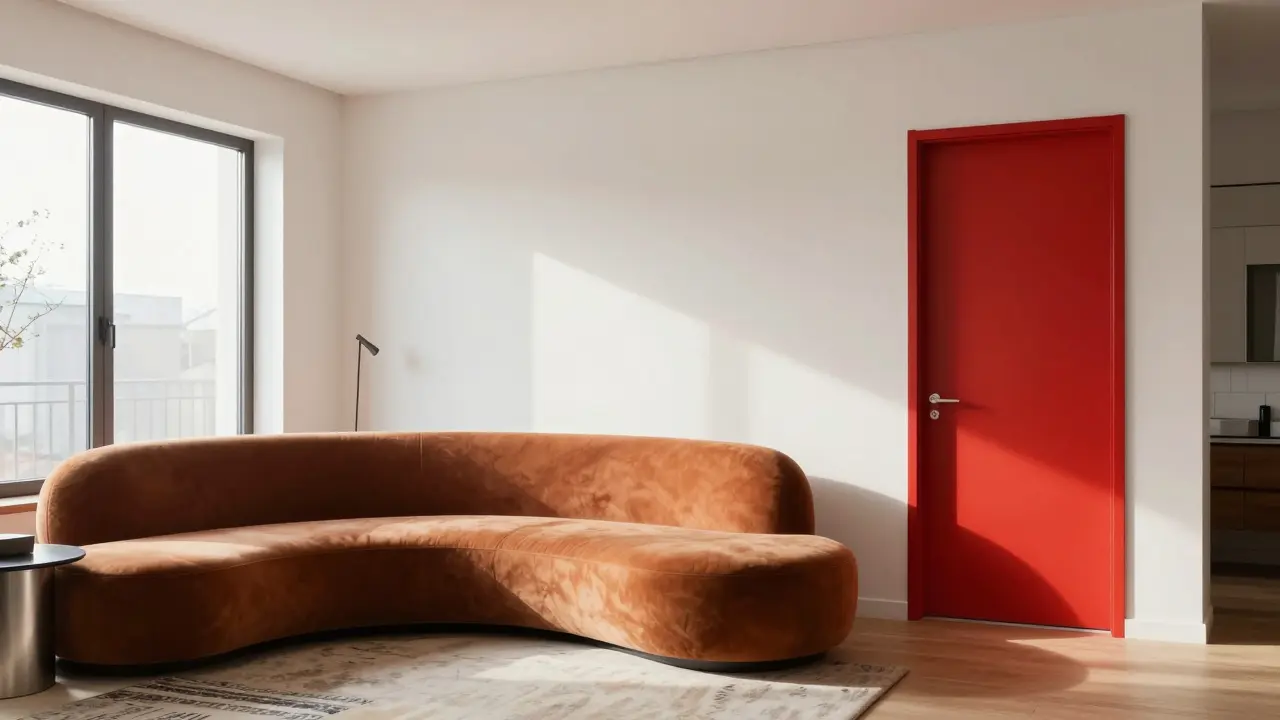
In residential design, the postmodern emphasis on individuality led to the decline of the cookie-cutter suburb. Homeowners began customizing facades with unique materials, colorful accents, and mixed textures. Inside, the open-plan living room remained popular, but it was no longer stark. Furniture designs became more sculptural and expressive, reflecting the postmodern love for form and symbolism. Think of the curvy sofas or bold accent chairs common in 2026 interiors-they owe their existence to the postmodern rejection of rigid geometry.
Retail and commercial spaces adopted postmodernism's theatricality. Stores realized that customers weren't just buying products; they were buying experiences. Shopping malls and flagship stores started using dramatic entrances, playful signage, and unexpected color schemes to attract attention. This approach paved the way for today's experiential retail, where brands create immersive environments rather than just displaying goods on shelves.
Even digital design shows postmodern influences. User interfaces (UI) and user experiences (UX) often play with depth, shadows, and playful animations-elements that break the flat, minimalist trend of early web design. This "skeuomorphism" revival mirrors the postmodern architectural tactic of using familiar, tactile references in new contexts.
| Feature | Modernism (Pre-1970s) | Postmodernism (1970s-Present) |
|---|---|---|
| Philosophy | Form follows function | Form follows fantasy/emotion |
| Decoration | Avoided entirely | Embraced as communication |
| Historical Reference | Rejected | Quoted ironically or playfully |
| Color Palette | Neutral, monochromatic | Bright, contrasting, varied |
| User Experience | Universal, standardized | Contextual, personalized |
Criticism and the Evolution into Contemporary Style
It’s important to note that postmodernism wasn't universally loved. Many critics argued that it was superficial, prioritizing style over substance. Some buildings were seen as kitsch or overly gimmicky. As the 1990s and 2000s approached, the movement began to fade, giving way to Deconstructivism and Minimalism again.
However, the genie couldn't be put back in the bottle. The idea that architecture should be meaningful, contextual, and emotionally resonant stuck. Today, we don't really call new buildings "postmodern" anymore. Instead, we see its DNA in Contemporary Architecture. Contemporary design blends the clean lines of Modernism with the warmth and complexity of Postmodernism. It uses sustainable materials (a new priority) but doesn't shy away from color or historical nods.
For example, look at the work of Frank Gehry or Zaha Hadid. While their styles are distinct, they share the postmodern willingness to break conventional forms and create iconic, memorable structures. Even in suburban homes, the mix of shingle siding with metal roofing and large windows reflects a postmodern sensibility of combining disparate elements into a cohesive whole.
Why This Matters for Your Next Project
If you're planning a renovation, a new build, or even redecorating your office, understanding this shift gives you permission to break the rules. You don't have to choose between sterile minimalism and chaotic maximalism. Postmodernism taught us that you can have both order and expression.
Consider adding one "unexpected" element to your space. Maybe it's a door frame painted a bold red in a neutral hallway, or a piece of furniture that references a historical style but uses modern materials. These small gestures connect your space to a broader narrative of human creativity and cultural memory. They make your environment feel less like a showroom and more like a home.
The legacy of postmodern architecture is not just in the buildings it produced, but in the mindset it created. It reminded us that spaces are not just containers for activities; they are active participants in our lives. They shape how we feel, how we interact, and how we remember. By embracing complexity, contradiction, and a bit of humor, we create environments that are truly alive.
What is the main difference between modern and postmodern architecture?
Modern architecture focuses on simplicity, functionality, and the absence of decoration, often using industrial materials like steel and glass. Postmodern architecture rejects this austerity, embracing ornamentation, historical references, irony, and bold colors to create buildings that communicate meaning and emotion.
Is postmodern architecture still popular today?
While the specific "postmodern" label fell out of fashion in the 1990s, its principles remain highly influential. Contemporary architecture frequently incorporates postmodern ideas like contextualism, symbolic forms, and mixed materials. The movement successfully ended the dominance of strict Modernism, allowing for greater diversity in current design trends.
Who are the most famous postmodern architects?
Key figures include Robert Venturi, known for his theoretical work and the Vanna Venturi House; Michael Graves, famous for the colorful Portland Building; Philip Johnson, who designed the iconic AT&T Building; and Charles Moore, who emphasized human scale and sensory experience in places like Piazza d'Italia.
How did postmodernism change interior design?
Postmodernism liberated interior design from the strict minimalism of the mid-century. It encouraged the use of bold colors, pattern mixing, and eclectic furniture choices. It validated the idea that interiors should reflect personal identity and cultural references rather than adhering to a single, universal aesthetic standard.
Why do some people dislike postmodern architecture?
Critics often view postmodern buildings as superficial or kitschy, arguing that they prioritize style over structural integrity or function. Some feel the ironic use of historical elements lacks sincerity, resulting in designs that appear gimmicky or confusing rather than meaningful.