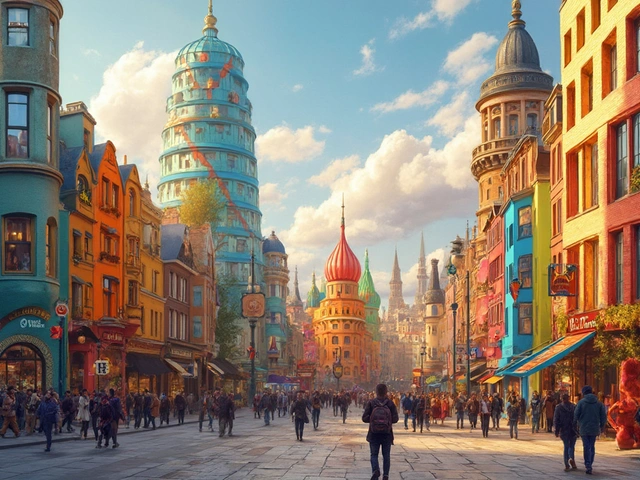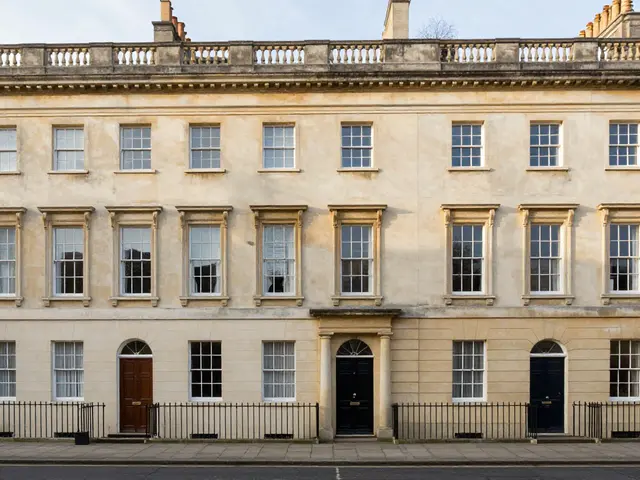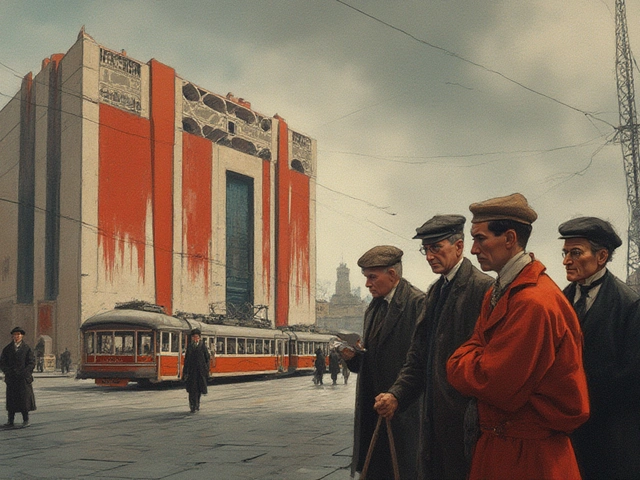
Look closely at the angular glass facades of a high-tech museum in London or the exposed concrete structures of a university campus in New York. You might not realize it, but you are looking at the ghost of Constructivist Architecture, a radical movement born in early 20th-century Russia that rejected decoration for pure function and social purpose. While the original red-brick monuments of the 1920s stand as historical artifacts, their DNA has been spliced into the very fabric of how we build today. This isn't just about nostalgia; it is about a specific way of thinking-where form follows function, where materials speak honestly, and where architecture serves the community rather than the elite.
The Core Philosophy: Art as Production
To understand why Constructivism still matters, you have to look past the aesthetics and into the ideology. Emerging after the 1917 Russian Revolution, this movement was led by artists like Vladimir Tatlin and Alexander Rodchenko. They believed art should not be a luxury for the rich but a tool for building a new society. The famous slogan "Art into Life" meant that creative energy should be directed toward industrial production and social infrastructure.
This philosophy stripped away ornamentation. If a column held up a roof, it should look like a column holding up a roof, not a carved Greek god. This honesty in materials-exposing steel, glass, and concrete-became a hallmark of the style. Today, when architects talk about "material honesty" or "structural expressionism," they are echoing Constructivist principles. The idea that a building’s structure should be visible and celebrated, rather than hidden behind drywall and plaster, remains a dominant trend in contemporary design.
From Monument to Machine: The Visual Language
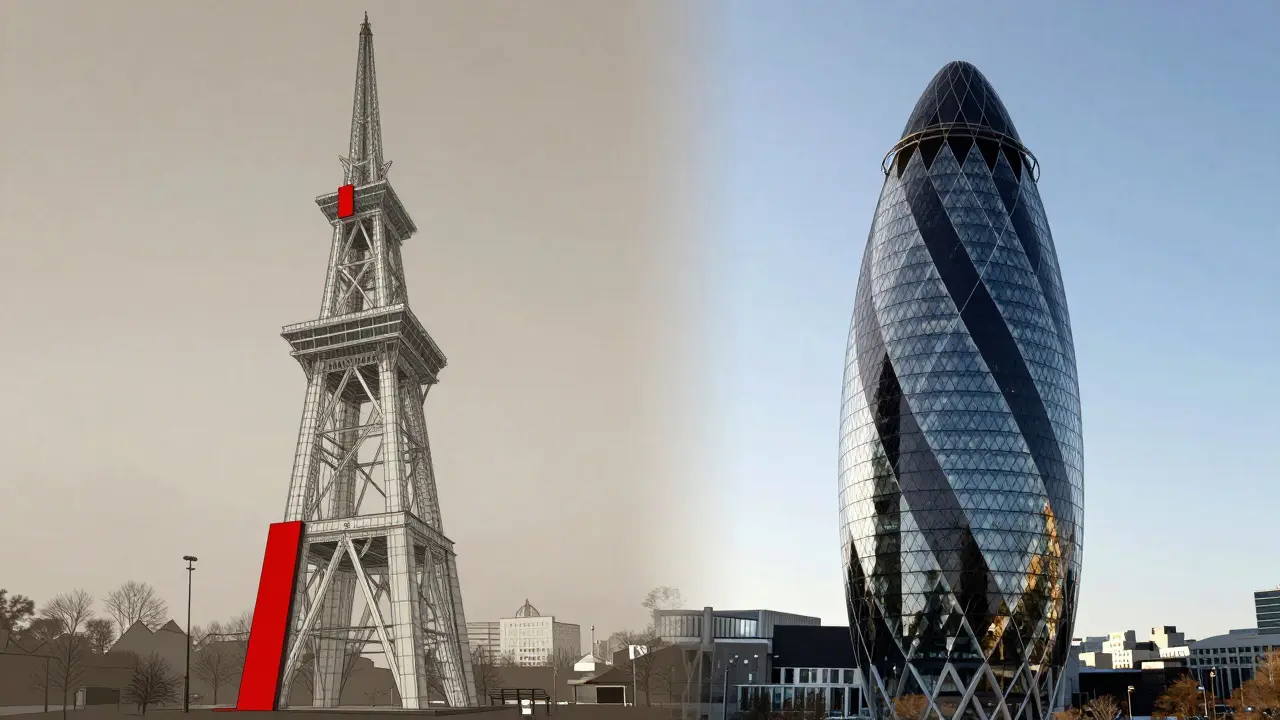
Constructivist buildings were designed to look like machines for living. They featured dynamic angles, cantilevered forms, and a sense of movement frozen in space. Think of the Tatlin Tower, an unbuilt project that proposed a spiraling skyscraper rotating at different speeds. Although never constructed, its influence is everywhere. Modern skyscrapers with twisting silhouettes, like the Gherkin in London or the Shanghai Tower, owe a debt to this early experimentation with non-rectilinear forms.
The use of geometric abstraction is another key legacy. Constructivists used circles, squares, and triangles not just for beauty, but to create visual tension and balance. In today's corporate headquarters and cultural centers, you see this same geometric rigor. The clean lines and modular grids that define much of modern commercial architecture stem directly from the Constructivist desire for order and efficiency. It is a language of clarity that cuts through the noise of urban environments.
| Principle | Original Context (1920s) | Modern Application (2020s) |
|---|---|---|
| Material Honesty | Exposed brick, iron, and glass to show construction | Visible steel frames and raw concrete in high-tech architecture |
| Social Function | Communal houses and worker clubs | Mixed-use developments with public plazas and co-working spaces |
| Dynamic Form | Cantilevers and asymmetrical designs | Parametric curves and twisted skyscraper profiles |
| Rejection of Ornament | No decorative moldings or statues | Minimalist facades focused on sustainability and insulation |
The Brutalist Connection: A Rougher Cousin
You cannot discuss Constructivism’s impact without mentioning Brutalism. Often confused with each other, these two styles share a spiritual lineage. Brutalism, which peaked in the mid-20th century, took the Constructivist love for raw concrete and structural truth and amplified it. Architects like Le Corbusier and Alison and Peter Smithson built massive, monolithic structures that felt heavy and permanent.
While Constructivism was often lighter and more experimental with steel and glass, Brutalism was about weight and permanence. However, both rejected the bourgeois elegance of previous eras. Today, there is a resurgence of interest in Brutalist buildings, particularly among younger generations who appreciate their boldness and authenticity. This revival is partly driven by a reaction against the sterile, glass-box uniformity of recent decades. People are seeking buildings with character, and the rough-hewn aesthetic of late Constructivism and early Brutalism provides that.
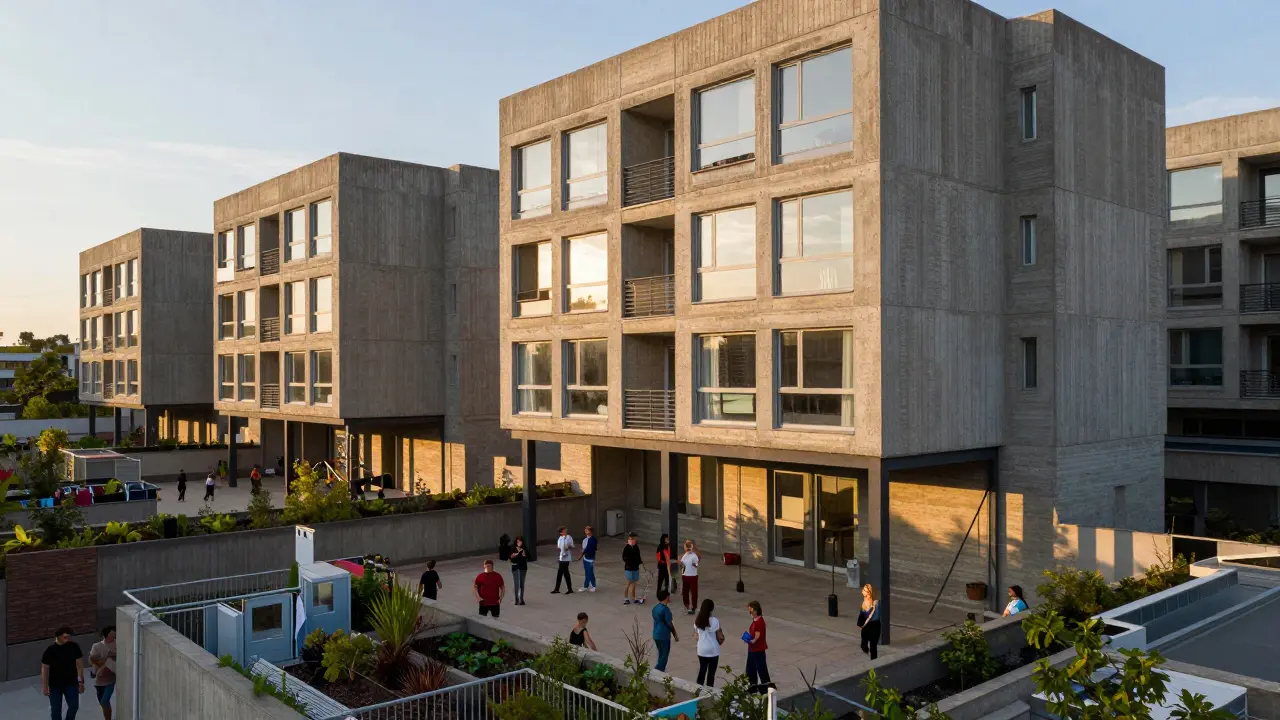
Sustainability and Social Housing: The Unfinished Agenda
One of the most profound impacts of Constructivism on today's buildings is in the realm of social housing and sustainability. The Constructivists dreamed of creating efficient, healthy living environments for the working class. They experimented with communal kitchens, shared laundry facilities, and rooftop gardens to save space and foster community. These ideas were ahead of their time and largely abandoned under Stalinist rule, which favored more traditional, monumental styles.
Fast forward to 2026, and these concepts are back in vogue. As cities grapple with housing crises and climate change, architects are revisiting the Constructivist model of dense, efficient, and communal living. Projects like the Superkilen Park in Copenhagen or various co-living initiatives in Berlin draw directly from this ethos. The focus is no longer just on individual ownership but on shared resources and reduced carbon footprints. The Constructivist vision of architecture as a social service is being reinterpreted for the age of ecological urgency.
High-Tech Architecture: The Logical Successor
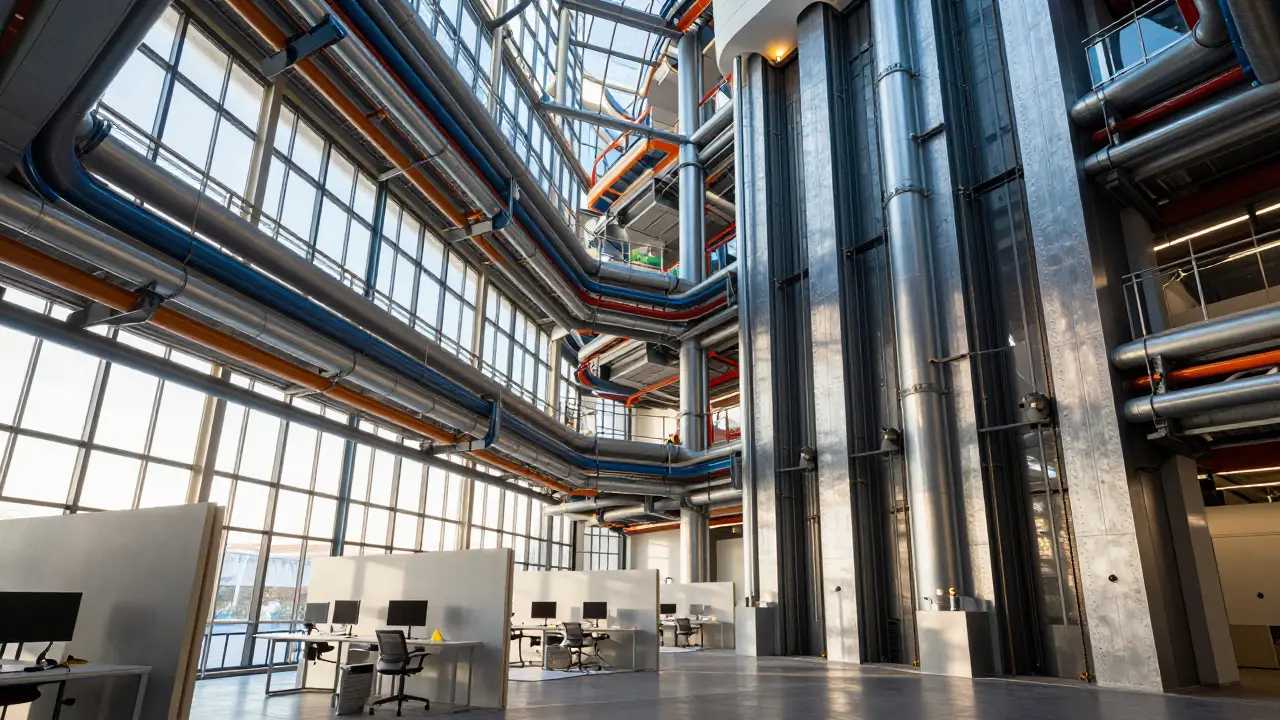
If you visit the Pompidou Centre in Paris or the Lloyd’s Building in London, you are seeing the direct descendant of Constructivist thought. High-Tech architecture, emerging in the 1970s, took the Constructivist principle of exposing structure and pushed it to the extreme. Services like pipes, ducts, and elevators were moved to the exterior, leaving the interior flexible and open.
This approach allows buildings to adapt over time, a crucial feature in our rapidly changing world. The flexibility inherent in Constructivist design-where walls could be moved and spaces reconfigured-is essential for modern offices that need to accommodate hybrid work models. The idea that a building is a machine that can be upgraded and modified, rather than a static monument, is a core tenet of sustainable design today. It reduces waste by extending the lifespan of structures and allows them to evolve with user needs.
Digital Fabrication and Parametric Design
With the advent of computer-aided design (CAD) and parametric modeling, Constructivist ideals have found new life. Algorithms allow architects to create complex, organic forms that would have been impossible to calculate by hand in the 1920s. Yet, the underlying logic remains similar: using geometry and structure to solve problems efficiently. Architects like Zaha Hadid, whose work is often fluid and futuristic, were trained in a tradition that values structural innovation and spatial complexity, roots that trace back to the avant-garde experiments of early Russian Constructivism.
Today’s digital tools enable a new kind of material honesty. We can simulate how light interacts with glass, how wind affects steel, and how concrete cures. This data-driven approach aligns with the Constructivist belief in science and technology as drivers of progress. The result is buildings that are not only visually striking but also highly optimized for performance. This synergy between art, engineering, and computation is the modern embodiment of the Constructivist dream.
Preservation vs. Progress: The Current Debate
In many cities, including Birmingham where I live, there is an ongoing debate about how to treat remaining Constructivist and Modernist buildings. Some are seen as eyesores, while others are recognized as heritage assets. The UK’s National Heritage List includes several examples of early Modernist architecture, reflecting a growing appreciation for this period. However, preservation is challenging due to the specialized maintenance required for materials like reinforced concrete and large-scale glazing.
The challenge for today’s architects is to integrate these older structures into the modern cityscape without losing their essence. Adaptive reuse projects are becoming common, where old factories or administrative blocks are converted into lofts, museums, or tech hubs. This practice honors the Constructivist spirit of functionality by giving these buildings a new purpose. It is a practical solution that respects history while addressing current needs.
What is the main difference between Constructivism and Modernism?
While often overlapping, Constructivism was specifically rooted in post-revolutionary Russia and emphasized art as a tool for social change and industrial production. International Modernism, which emerged later, was more global and focused on universal standards of efficiency and minimalism. Constructivism was more politically charged and experimental in its use of dynamic forms.
Are there any surviving original Constructivist buildings?
Yes, though many were destroyed during World War II or demolished under Stalinist policies. Notable survivors include the Narkomfin Building in Moscow and the House on the Water in Leningrad (now St. Petersburg). These structures are now protected heritage sites and serve as important references for architects today.
How does Constructivism influence sustainable design?
Constructivism’s emphasis on functional efficiency, material honesty, and communal living aligns well with sustainable goals. Its rejection of unnecessary ornament reduces material waste, and its focus on adaptable spaces extends building lifespans. Additionally, the idea of shared amenities reduces per-capita resource consumption.
Why is there a renewed interest in Constructivist aesthetics?
Contemporary audiences are drawn to the bold, honest, and socially conscious nature of Constructivist design. In an era of digital saturation and consumer excess, the raw, utilitarian beauty of Constructivism offers a refreshing contrast. It represents a time when architecture aimed to improve society, a value that resonates strongly today.
Who were the key figures in Constructivist architecture?
Key figures included Vladimir Tatlin, Alexander Rodchenko, El Lissitzky, and Moisei Ginzburg. While some were primarily artists or designers, their theories profoundly influenced architectural practice. Ginzburg, in particular, wrote extensively on the social aspects of housing and urban planning.