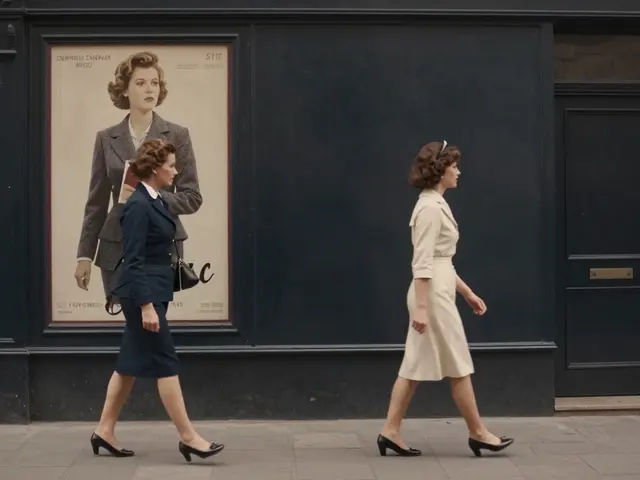

Before the 1920s, fashion was tied to place. A woman in Paris wore different silhouettes than one in Tokyo or Buenos Aires. Men’s suits varied by country - from the wide lapels of Italian tailoring to the stiff collars of British formalwear. Then something shifted. A new kind of clothing appeared, clean, simple, and everywhere at once. It didn’t look French, or American, or Japanese. It looked like it belonged to no single country - and that was the point. This was the rise of international style in fashion.
What Exactly Is International Style in Fashion?
International style isn’t just about wearing the same clothes around the world. It’s about a shared design philosophy: less ornament, more function. It strips away embroidery, lace, ruffles, and excessive tailoring. Instead, it favors geometric shapes, neutral tones, and seamless construction. Think of it as the architectural movement of the 1920s - think Le Corbusier or Mies van der Rohe - but applied to fabric.
This style emerged from the Bauhaus school in Germany, where designers believed form should follow function. Clothing wasn’t just decoration; it was part of modern life. Women’s dresses lost their corsets. Men’s jackets lost their padding. Hemlines rose. Shoulders squared. Color became secondary to cut.
By the 1950s, this wasn’t just a European trend. In New York, women wore simple sheath dresses by Claire McCardell. In Tokyo, designers like Issey Miyake were studying Western minimalism. In Brazil, fashion houses began blending local textiles with clean lines. The result? A visual language that crossed borders without translation.
Why Did International Style Spread So Fast?
It wasn’t just about aesthetics. It was about speed, cost, and change.
After World War II, fabrics were scarce. People needed clothes that lasted, didn’t require dry cleaning, and could be made quickly. International style answered that. A single bolt of wool could make three dresses instead of one ornate gown. A simple shift dress could be sewn at home or in a factory with minimal training.
Mass production helped. Companies like Sears and Marks & Spencer started selling standardized clothing in bulk. Catalogs showed the same styles from Chicago to Cape Town. Hollywood films exported the look - think Audrey Hepburn in Breakfast at Tiffany’s, wearing a black Givenchy dress that looked like it could have been made in Milan, London, or Sydney.
And then came air travel. Fashion shows in Paris no longer stayed in Paris. Models, designers, and magazines flew around the world. What was once local became global overnight. A Tokyo student could see a New York runway collection on a magazine page and replicate it with local fabric. No passport needed.
The Role of Politics and War
International style didn’t just happen because people liked clean lines. It was shaped by upheaval.
During the 1930s and 1940s, fascist regimes in Europe tried to control fashion as propaganda. Nazi Germany promoted traditional Germanic styles. Mussolini’s Italy pushed opulent, nationalist designs. But resistance came from designers who saw simplicity as freedom. Women in occupied France wore pared-down outfits not just out of necessity - but as quiet rebellion.
After the war, the United States emerged as a cultural superpower. American brands like Levi’s, Columbia, and later, Ralph Lauren, exported casual, functional clothing. Denim didn’t care where you were from. A pair of jeans on a farmer in Kansas looked the same as one on a student in Seoul. That sameness became a symbol of modernity - and of democracy.
Even the Cold War played a role. The U.S. used fashion as soft power. American clothing was sent to Eastern Bloc countries through cultural exchanges. Soviet women, forbidden from buying Western goods, copied international style from smuggled magazines. They called it “the American look.”
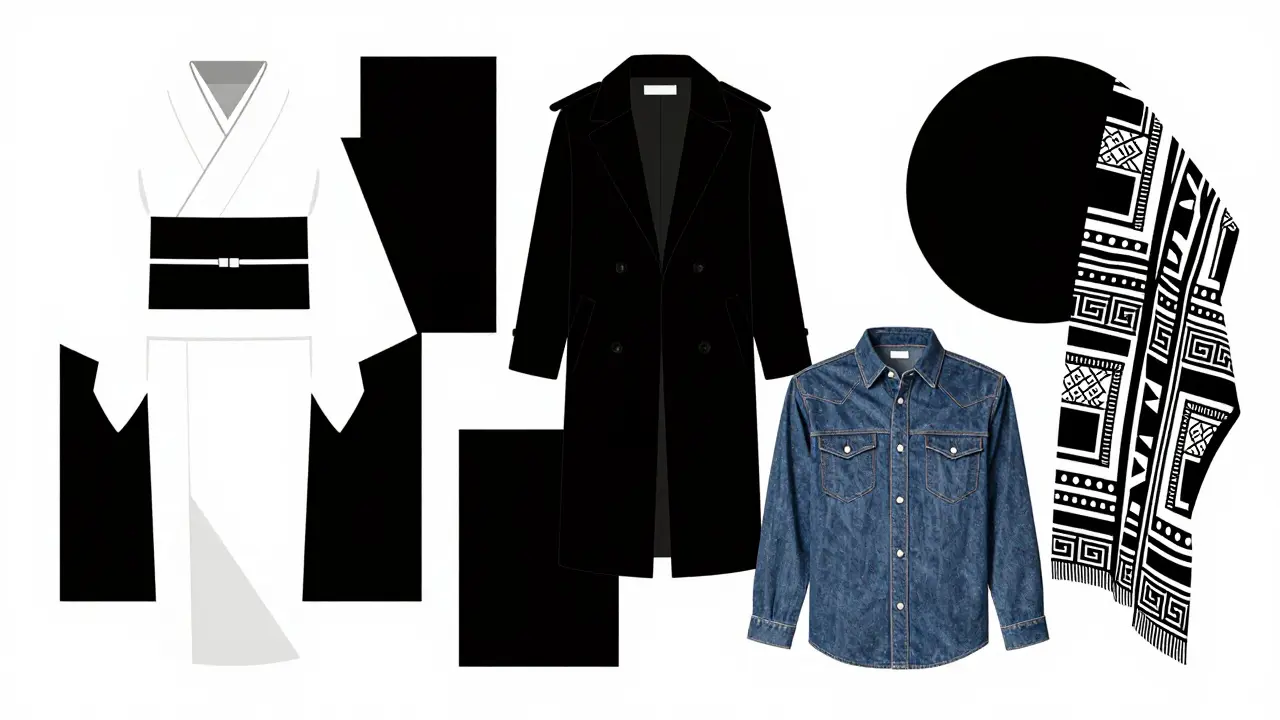
How International Style Changed Women’s Lives
Before international style, women’s fashion was often restrictive - literally. Corsets, long skirts, heavy layers. Getting dressed took time. Moving freely was hard.
International style changed that. The tubular dress, the pantsuit, the sleeveless top - these weren’t just trends. They were tools of liberation. Women could now work, drive, travel, and vote in clothes that didn’t hold them back.
In 1947, Christian Dior’s “New Look” brought back full skirts and nipped waists - but it was short-lived. By 1958, Yves Saint Laurent introduced the first tuxedo suit for women. It wasn’t just a dress. It was a statement. Women in offices from Toronto to Manila began wearing it. They didn’t need to mimic men to be taken seriously - they just needed clean lines and confidence.
By the 1970s, international style had become the default. Even in places where traditional dress still existed, urban women adopted its principles. A hijab paired with a tailored blazer. A sari worn with a minimalist tunic. The global look didn’t erase culture - it gave people new ways to express it.
Who Were the Key Designers?
International style didn’t come from one person. It was built by a network of thinkers across continents.
- Coco Chanel - She killed the corset. Her tweed suits and simple black dresses made elegance accessible.
- Pauline de Rothschild - A French-American designer who blended European minimalism with global textiles.
- Yohji Yamamoto - Japanese designer who brought asymmetry and shadow into the international lexicon.
- Rei Kawakubo - Comme des Garçons challenged the idea of beauty itself, using deconstruction as a form of international expression.
- Georgio Armani - Italian tailoring stripped of ornament, worn by executives from Singapore to São Paulo.
These designers didn’t all know each other. But their work echoed the same ideas: reduction, clarity, universality.
International Style Today - Still Relevant?
Yes. But it’s changed.
Today’s version of international style isn’t just about black and white. It’s about sustainability. It’s about quality over quantity. It’s about clothes that last decades, not seasons.
Brands like Cuyana, Eileen Fisher, and Uniqlo are modern heirs to this tradition. They sell fewer pieces. They focus on natural fibers. They design for multiple seasons and body types. Their customers aren’t chasing trends - they’re building wardrobes.
Even fast fashion has borrowed from international style. Zara’s best-selling black turtleneck? A direct descendant of the 1920s Chanel jersey dress. The difference? Now, it’s made in Bangladesh and sold in Sydney. The philosophy remains: simple, functional, global.
But here’s the twist: today’s international style doesn’t erase identity. It embraces it. A woman in Lagos might wear a wrap dress made from Ankara fabric - but cut in a minimalist silhouette. A man in Oslo might wear a wool coat inspired by Japanese tailoring. The style is global, but the meaning is local.
Why This Matters Now
We live in a world of noise. Social media pushes constant change. Trends come and go in weeks. But international style offers something different: stability.
It’s the antidote to overconsumption. It’s the quiet rebellion against the idea that you need a new outfit every month. It’s the belief that good design doesn’t need to shout.
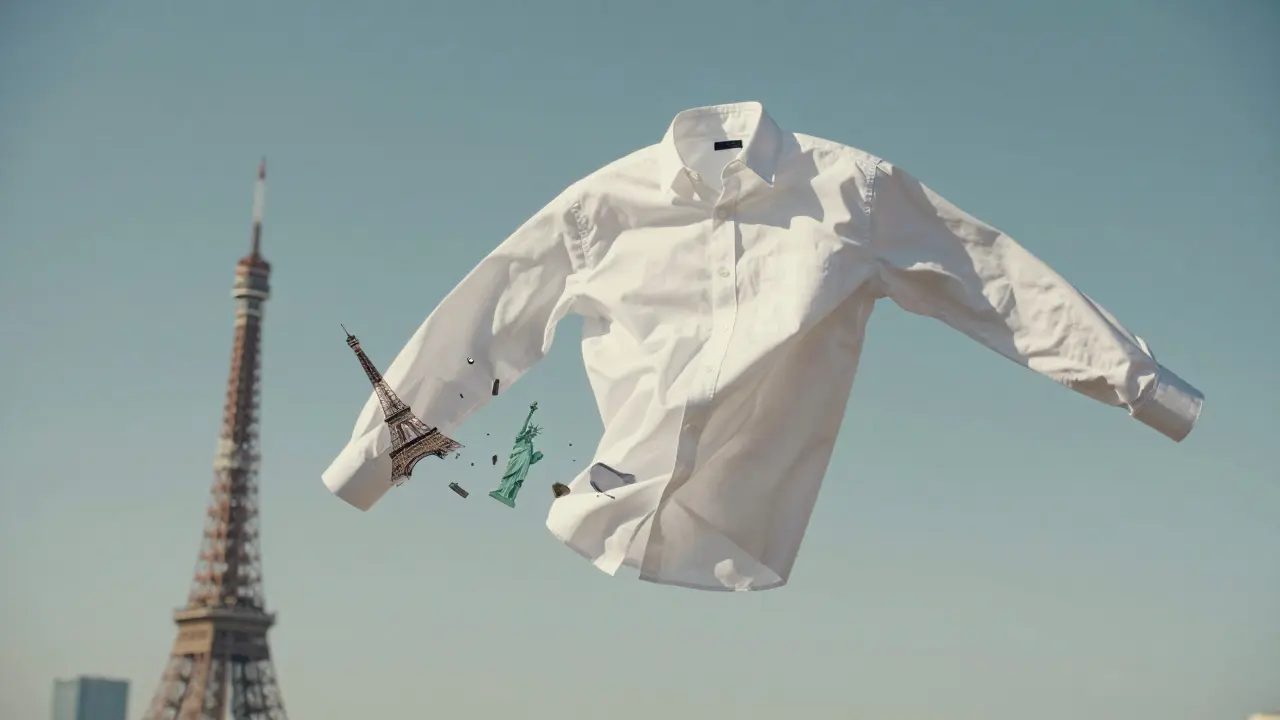
If you’ve ever owned a white button-down shirt that lasted ten years, or a pair of dark jeans that fit perfectly no matter your weight, you’ve lived international style. You didn’t need a label to know it was right. You just knew.
It’s not about looking like everyone else. It’s about choosing what works - across cultures, across time, across budgets. That’s why it still matters. Not because it’s trendy. But because it’s true.
Is international style the same as minimalism?
They overlap, but they’re not the same. Minimalism is a lifestyle choice - less stuff, more space. International style is a design language - clean lines, functional cuts, neutral palettes. You can be minimalist without wearing international style (think all-gray sweaters and bare walls). You can wear international style without being minimalist (a tailored wool coat with a patterned silk scarf). International style is about form. Minimalism is about quantity.
Can international style work in traditional cultures?
Absolutely. In fact, it often thrives there. In India, women wear cotton kurtas with straight cuts and no embroidery. In Nigeria, men wear tailored agbada robes without heavy beadwork. In Mexico, indigenous weavers combine traditional patterns with simple silhouettes. International style doesn’t replace culture - it gives it a new structure. It lets tradition speak in a quieter, more universal voice.
Why do so many luxury brands use international style?
Because it’s timeless. A Chanel tweed jacket from 1960 still sells today. A Hermès scarf doesn’t need logos to be recognizable. International style avoids fleeting trends, which means pieces hold value longer. Luxury brands know that true exclusivity isn’t in flashy details - it’s in perfect construction, quality materials, and enduring design. That’s why their most expensive items are often the simplest.
Is international style only for wealthy people?
No. In fact, it was born from necessity. During the Great Depression and post-war shortages, people made do with less. The most successful international style pieces - like the little black dress or the denim shirt - were affordable and easy to make. Today, brands like Uniqlo, H&M Conscious, and even thrift stores offer international style pieces at low prices. You don’t need to spend $500 on a coat to wear clean lines and neutral colors.
How can I build a wardrobe in international style?
Start with five core pieces: a well-fitting white shirt, a black wool blazer, straight-leg dark jeans, a neutral trench coat, and a pair of simple leather loafers. Choose natural fabrics - cotton, wool, linen, silk. Avoid logos, embellishments, and seasonal colors. Mix and match. Buy fewer, better things. When you see a new trend, ask: Will this still look good in five years? If not, skip it. International style isn’t about what’s new - it’s about what lasts.