For decades, high-tech architecture had a bad reputation. When you think of exposed steel trusses, glass facades, and industrial aesthetics, you probably picture the Louvre Pyramid or the Centre Pompidou in Paris. Beautiful? Yes. Efficient? Not really. Those iconic structures were essentially air-conditioned aquariums that guzzled electricity like crazy.
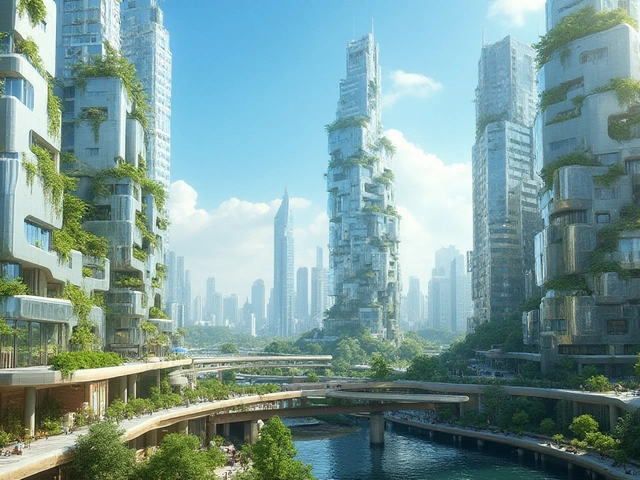
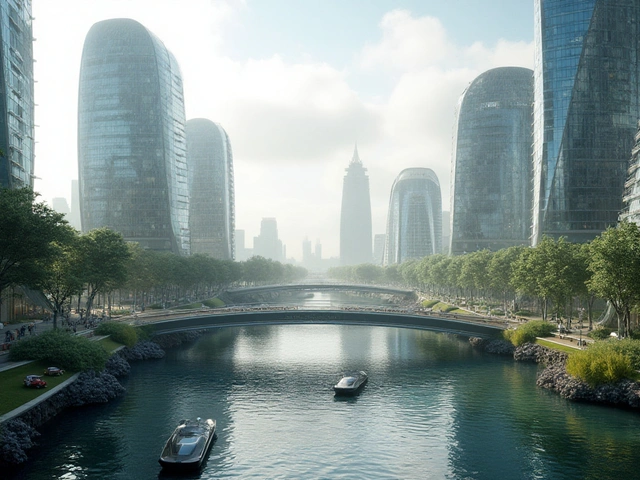
But something has shifted. Today, high-tech architecture is no longer just about showing off engineering prowess. It’s becoming one of the most powerful tools we have for sustainable living. The same transparency and flexibility that made early high-tech buildings energy hogs are now being used to create structures that breathe, adapt, and generate their own power. We aren't just looking at pretty shapes anymore; we are looking at buildings that act like living organisms.
The Shift from Aesthetics to Performance
To understand where we are, we need to look at where we came from. High-tech architecture emerged in the 1970s with pioneers like Norman Foster and Richard Rogers. Their goal was honesty. They wanted to show how a building worked, exposing the ducts, pipes, and structural elements rather than hiding them behind drywall. This was a radical departure from traditional architecture, which often disguised function for the sake of form.
However, this honesty came at an environmental cost. Early high-tech buildings relied heavily on mechanical systems because they lacked passive design strategies. They didn’t consider thermal mass, natural ventilation, or solar orientation. They assumed technology could solve any comfort issue, so they cranked up the HVAC systems. In Melbourne, where summers can be scorching and winters surprisingly chilly, those old-school glass boxes would have been nightmares to heat and cool.
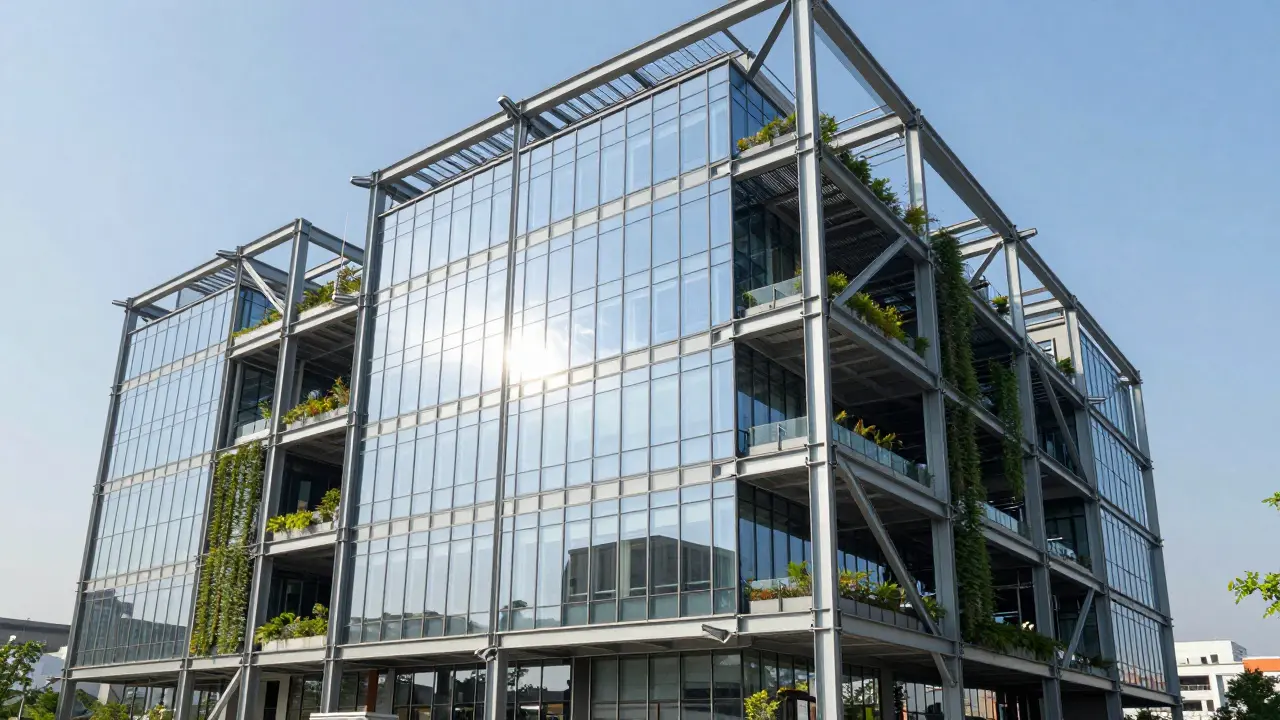
Today, the philosophy has flipped. Technology is no longer the master; it’s the servant. Modern high-tech architects use advanced simulation software to model airflow, sunlight, and temperature before laying a single brick. The result is a hybrid approach: the visual language of high-tech-exposed structure, lightweight materials, transparency-combined with the rigorous performance standards of green building. This isn't just theory. Buildings like the Bullitt Center in Seattle and the Edge in Amsterdam prove that high-tech design can achieve net-zero energy consumption while maintaining that sleek, industrial look.
Smart Materials: The New Skin of Buildings
One of the biggest changes in high-tech sustainable architecture is the move away from static materials. Traditional buildings are rigid. Once you build a wall, it stays that way. High-tech sustainable design uses 'smart materials' that react to their environment.
Consider electrochromic glass. Unlike tinted windows that block light permanently, electrochromic glass darkens or clears based on the intensity of sunlight. In a Melbourne summer, when the sun is blazing down on a west-facing facade, the glass automatically tints to reduce heat gain. This cuts the load on air conditioning units significantly. You get the view without the oven effect.
Then there are phase-change materials (PCMs). These are substances, often integrated into wall panels or ceilings, that absorb and release thermal energy as they change state from solid to liquid and back. During the day, as the room heats up, the PCM absorbs excess heat, keeping the interior cool. At night, when temperatures drop, it releases that stored heat, warming the space. It’s like giving your building a thermal battery. This reduces the need for active heating and cooling, which is a huge win for sustainability.
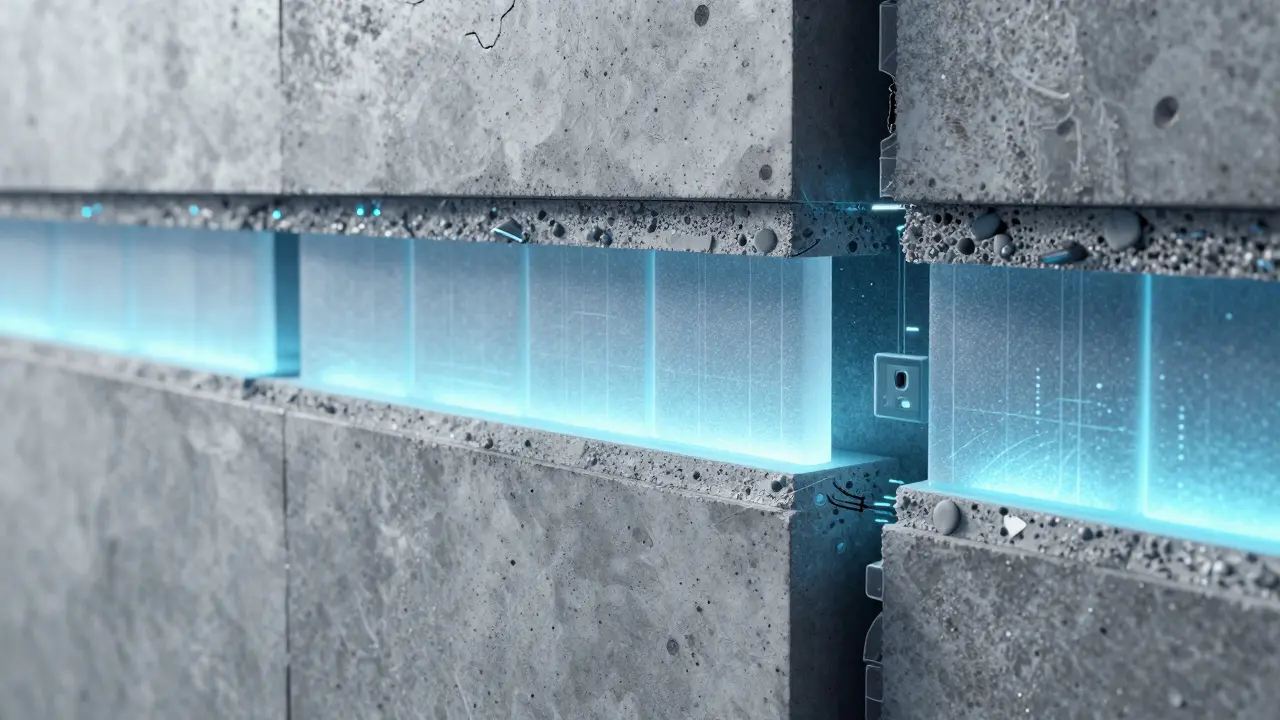
We also see the rise of self-healing concrete. Microcapsules embedded in the concrete contain bacteria that activate when cracks form and water enters. The bacteria produce limestone, sealing the crack. This extends the lifespan of the building, reducing the need for repairs and the embodied carbon associated with replacing damaged sections. Every year a building lasts longer is a year we don’t have to rebuild it.
Energy Generation: From Consumer to Producer
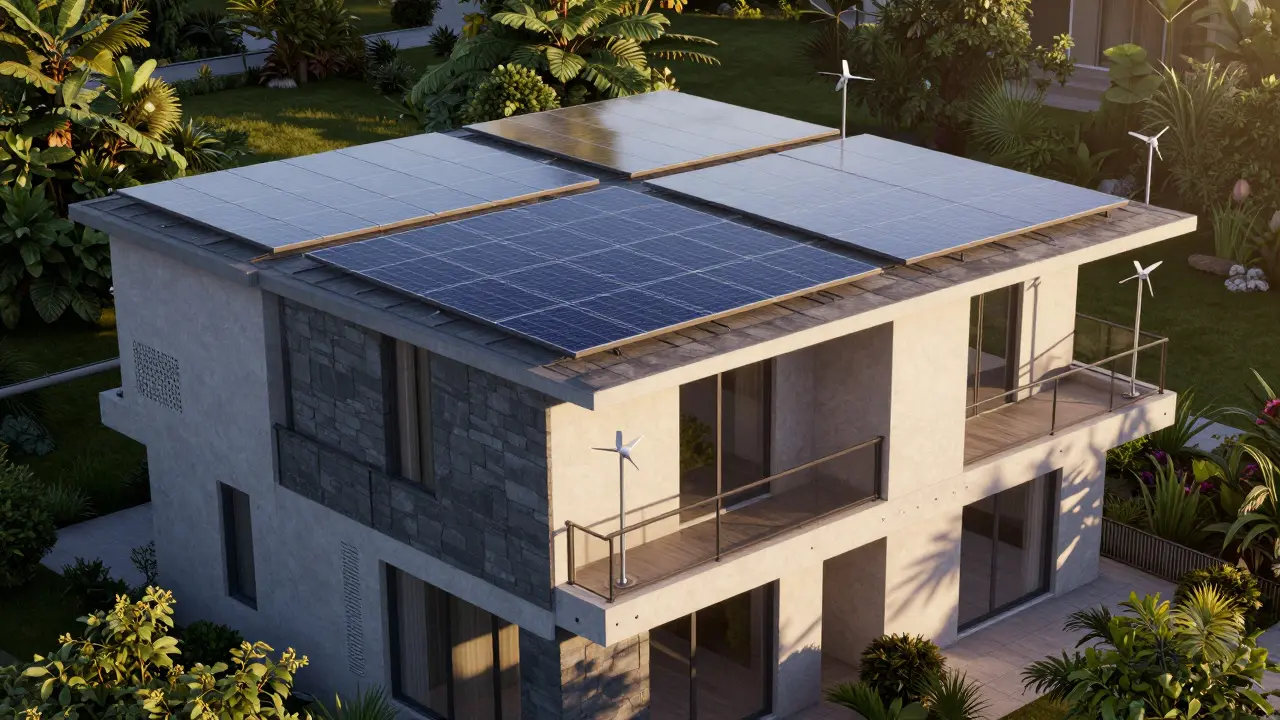
Sustainable living isn't just about using less energy; it's about generating it. High-tech architecture excels here because it integrates energy production directly into the building's structure. This is known as Building-Integrated Photovoltaics (BIPV).
Gone are the days of clunky solar panels bolted onto the roof after construction. Now, the building envelope itself generates power. Solar glass facades allow light in while producing electricity. Roof tiles made of thin-film photovoltaics look like traditional slate but act like solar farms. Even kinetic floors, which harvest energy from foot traffic, are being tested in high-traffic commercial spaces.
In residential settings, this integration is crucial. A house in Australia can easily produce more energy than it consumes if designed correctly. By orienting the building to maximize southern exposure (in the Northern Hemisphere) or northern exposure (in the Southern Hemisphere, like Melbourne), and covering south-facing walls with BIPV, homeowners can become prosumers-producing and consuming their own energy. Excess power is fed back into the grid, often earning credits or income.
Wind energy is another frontier. Small-scale vertical axis wind turbines are being integrated into building corners and balconies. Unlike traditional horizontal turbines, these are quieter and safer for urban environments. They capture turbulent winds that swirl around skyscrapers, turning chaotic airflow into usable electricity. It’s a perfect example of high-tech design solving urban constraints.
Data-Driven Efficiency: The Internet of Things
A building is only as efficient as its management. This is where the Internet of Things (IoT) comes in. High-tech sustainable buildings are packed with sensors that monitor everything: temperature, humidity, CO2 levels, occupancy, and even individual behavior patterns.
Imagine a home that knows you’re sleeping and adjusts the thermostat and blinds accordingly. Or an office building that dims lights in empty conference rooms and redirects fresh air only to occupied zones. This level of granularity prevents waste. Studies show that unoccupied buildings still consume up to 30% of their energy due to poor controls. IoT eliminates this blind spot.
Machine learning algorithms take this a step further. They learn from historical data to predict future needs. If the algorithm knows a heatwave is coming, it might pre-cool the building during cooler morning hours when electricity rates are lower. This demand-side management not only saves money but also reduces strain on the local power grid during peak times.
For residents, this means apps that provide real-time feedback on energy usage. Seeing exactly how much energy your shower uses versus your fridge creates a psychological shift. People tend to conserve more when they can see the immediate impact of their actions. Transparency drives behavior change.
Circular Economy: Designing for Disassembly
Sustainability isn't just about operation; it's about the entire lifecycle. Traditional buildings are demolished, creating massive amounts of waste. High-tech architecture is embracing the circular economy by designing for disassembly (DfD).
This means using bolts instead of glue, modular components instead of monolithic slabs, and standardized parts that can be reused. When a building reaches the end of its life, it becomes a material bank rather than a landfill. Steel beams, glass panels, and electrical systems can be dismantled and repurposed for new projects.
This approach requires careful planning. Architects must document every component, creating a 'material passport' for the building. This digital record tracks the origin, composition, and potential reuse value of each part. It’s like a birth certificate for your building materials. As regulations tighten on construction waste, DfD will likely become a standard requirement rather than a niche option.
| Feature | Traditional Approach | High-Tech Sustainable Approach |
|---|---|---|
| Glazing | Static tinted glass | Electrochromic/dynamic glass |
| Structure | Hidden, glued/assembled | Exposed, bolted/modular |
| Energy | Grid-dependent consumption | BIPV generation + storage |
| Controls | Manual timers/thermostats | AI-driven IoT sensors |
| End-of-Life | Demolition & landfill | Disassembly & reuse |
Challenges and Realities
It’s not all smooth sailing. High-tech sustainable architecture comes with challenges. The upfront cost is higher. Smart materials, IoT infrastructure, and custom engineering require significant investment. However, lifecycle cost analysis shows that these costs are recouped through energy savings and reduced maintenance over time. It’s an investment, not just an expense.
Maintenance is another factor. Complex systems need skilled technicians. If a sensor fails or a software glitch occurs, the building’s efficiency drops. This requires ongoing training and support. Homeowners need to be comfortable with technology, or they need reliable service providers.
There’s also the risk of 'greenwashing.' Some developers slap a few solar panels on a poorly insulated building and call it sustainable. True high-tech sustainability requires holistic design. You can’t fix a leaky bucket with a fancy tap. The building envelope must be tight, the insulation adequate, and the orientation correct before adding tech layers.
The Future is Adaptive
Looking ahead, high-tech architecture will become even more adaptive. We’re seeing experiments with shape-memory alloys that change the building’s form in response to weather. Imagine facades that open like flower petals in the sun and close like fists in the wind. This dynamic responsiveness maximizes comfort and minimizes energy use.
Biophilic design is also merging with high-tech. Vertical gardens integrated into structural frames, algae bioreactors that filter air and produce biofuel, and indoor ecosystems that improve mental health. Technology isn't replacing nature; it’s enabling us to live closer to it.
In Melbourne and cities worldwide, the push for sustainable living is urgent. Climate change demands action. High-tech architecture offers a path forward that doesn’t sacrifice comfort or style. It proves that we can have our cake and eat it too-beautiful, functional buildings that respect the planet. The question isn't whether we can afford to build sustainably; it's whether we can afford not to.
Is high-tech architecture expensive to maintain?
While initial installation costs are higher, maintenance costs can be lower over time. Smart systems detect issues early, preventing major repairs. However, specialized technicians may be needed for complex IoT or robotic systems, so factor in service contracts.
Can I retrofit my existing home with high-tech sustainable features?
Yes. You can start with smart thermostats, LED lighting, and window films. For bigger upgrades, consider adding solar panels or upgrading insulation. Full retrofits involving structural changes are more complex but possible with careful planning.
What is the difference between high-tech and eco-friendly architecture?
Eco-friendly architecture often focuses on natural materials and passive design. High-tech architecture uses advanced technology and engineering to achieve sustainability goals. The best modern designs combine both approaches for maximum efficiency.
How does high-tech architecture help with climate control in hot climates?
Dynamic glazing reduces heat gain, while smart shading systems block direct sunlight. Phase-change materials absorb excess heat, and efficient HVAC systems powered by renewables keep interiors cool without wasting energy.
Are high-tech sustainable buildings durable?
Yes. Many high-tech materials, like self-healing concrete and corrosion-resistant alloys, are designed for longevity. Designing for disassembly also ensures that components can be replaced or reused, extending the building's overall life cycle.