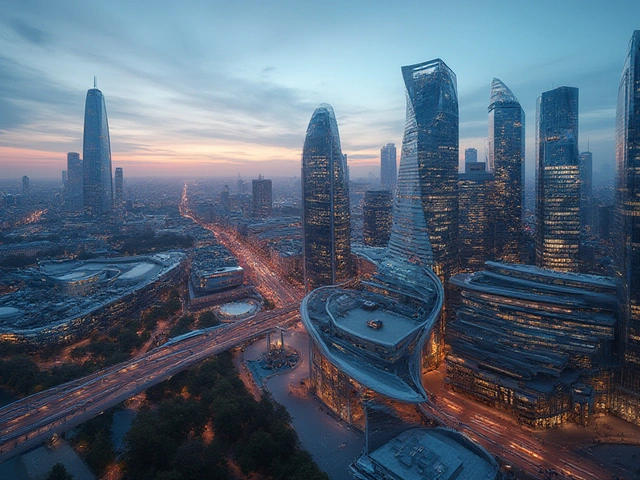
Forget the idea that buildings are just boxes for people to sit in. Imagine a world where a skyscraper looks like a giant machine, where the plumbing and electricity aren't hidden behind drywall but are worn like a badge of honor on the outside. That's the heart of high-tech architecture. It's not just about adding a few gadgets to a room; it's a philosophy that celebrates the raw power of engineering and industrial materials.
If you've ever looked at a building and wondered why the stairs are on the outside or why it looks like it was assembled from a giant Meccano set, you're seeing structural expressionism in action. This style flipped the script on traditional design by making the "guts" of the building the main attraction. Instead of hiding the steel beams and air ducts, architects put them front and center to show exactly how the structure stays standing.
Quick Guide: What Makes a Building "High-Tech"?
- Exposed Services: Pipes, ducts, and electrical cables are visible.
- Industrial Materials: Heavy use of steel, glass, and aluminum.
- Prefabrication: Parts are made in factories and bolted together on-site.
- Flexibility: Internal spaces can be easily shifted because the support is on the exterior.
- Technical Optimism: A belief that technology can solve human problems through design.
The Centre Pompidou: The Building That Turned Inside Out
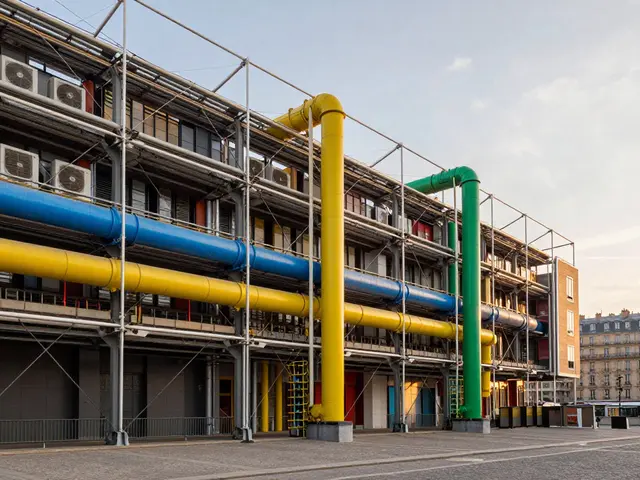
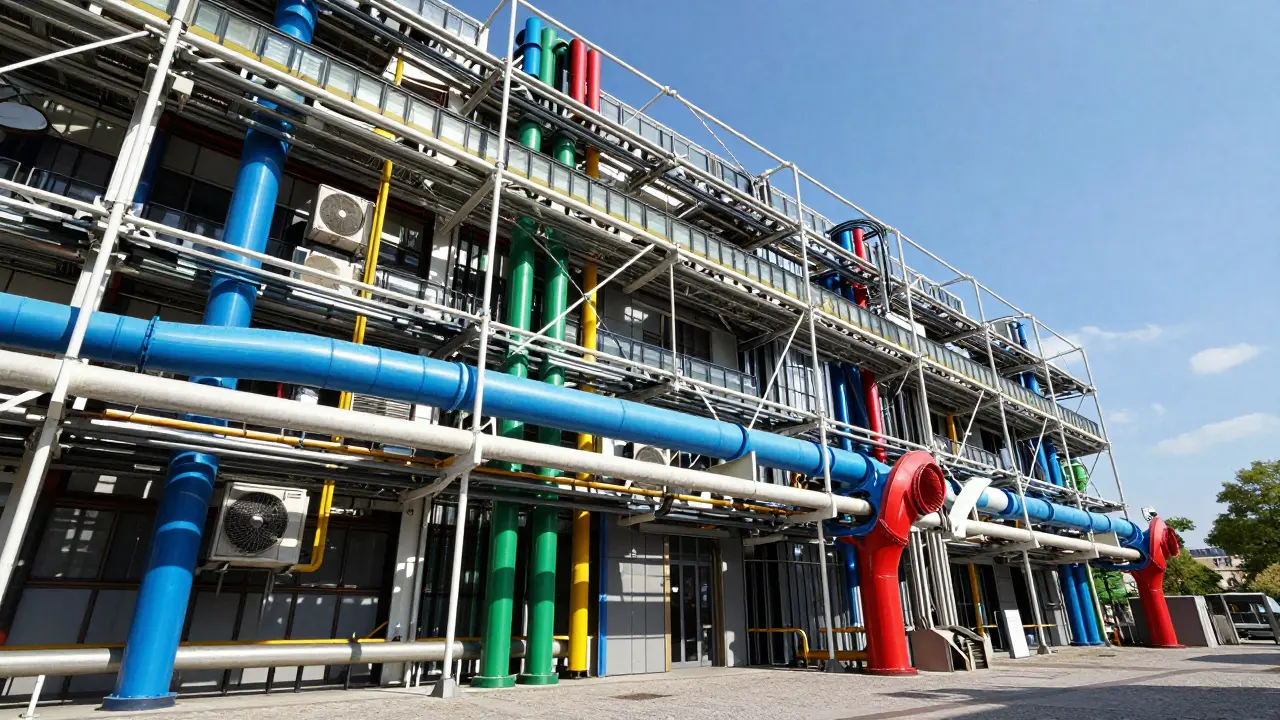
You can't talk about this style without starting in Paris. The Centre Pompidou is a massive cultural center that looks more like an oil refinery than a museum. Designed by Renzo Piano and Richard Rogers, it was completed in 1977 and shocked the world. Why? Because it wears its intestines on its sleeve.
The architects used a color-coded system for the external pipes: blue for air conditioning, green for plumbing, yellow for electricity, and red for elevators. This wasn't just for a pop of color; it was a logical way to organize the building's functions. By moving all the technical services to the outside, they created a massive, open-plan interior space that can be rearranged for any exhibition. It's a masterclass in flexibility.
The HSBC Building: A Steel Skeleton in Hong Kong
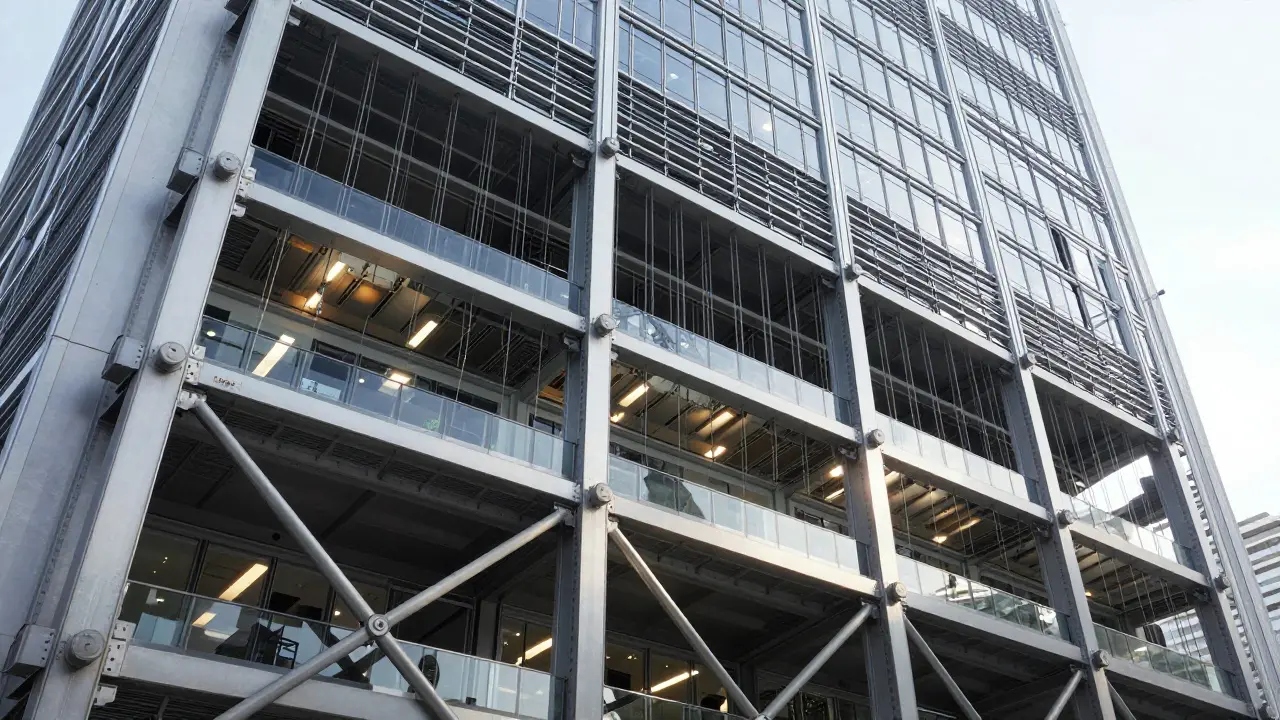
In the heart of Hong Kong, the HSBC Main Building stands as a testament to the "kit-of-parts" approach. Norman Foster designed this skyscraper to be incredibly light and efficient. Instead of a traditional solid core, the building uses a massive steel superstructure that looks like a series of connected bridges.
What's really cool here is the suspension system. The floors are essentially hung from the steel frame, which reduces the amount of material needed and allows for huge amounts of natural light to penetrate the office spaces. It's an example of how engineering can reduce a building's weight while increasing its strength, effectively treating a skyscraper like a piece of precision machinery.
The Louvre Pyramid: Precision Glass Engineering
While the main Louvre museum is all about French Renaissance luxury, the courtyard features a jarring, brilliant contrast. The Louvre Pyramid, also a Foster creation, uses high-tech principles to solve a very practical problem: how to handle millions of visitors without ruining the historic vibe.
The pyramid is made of diamond-shaped glass panes held together by a web of stainless steel cables. It’s an exercise in transparency and geometry. By using advanced glass technology, the structure allows sunlight to flood the underground lobby, making the transition from the old palace to the modern entrance feel seamless. It proves that high-tech isn't always about pipes; sometimes it's about the invisible strength of tension cables.
The Lloyd's Building: The Ultimate Industrial Monument
If the Pompidou is a museum that looks like a factory, the Lloyd's building in London is an office that looks like a spaceship from the 80s. Richard Rogers took the "inside-out" concept to the extreme here. Every single service-stairs, lifts, water pipes, and electrical conduits-is located on the perimeter of the building.
The logic is simple: the needs of a building's services change over time, but the need for office space stays the same. By putting the services on the outside, the owners can upgrade the plumbing or wiring without ever having to tear down a wall inside the office. The result is a shimmering, stainless-steel behemoth that reflects the chaotic energy of the London financial district.
| Building | Key Feature | Primary Material | Design Philosophy |
|---|---|---|---|
| Centre Pompidou | Color-coded external pipes | Steel & Glass | Total Flexibility |
| HSBC Building | Suspended floor slabs | Steel | Structural Efficiency |
| Lloyd's Building | Perimeter services | Stainless Steel | Future-Proofing |
| Louvre Pyramid | Tension cable network | Glass & Steel | Geometric Transparency |
The Gherkin: Aerodynamics in the City
You've likely seen the 30 St Mary Axe (better known as The Gherkin) on any postcard of London. This isn't just a weird shape for the sake of art; it's a piece of high-tech environmental engineering. The curved shape reduces the wind turbulence around the base of the building, meaning people walking on the street don't get blasted by sudden gusts of wind.
Inside, the building uses a "spiraling" ventilation system. Air is drawn through the gaps in the floors and pushed up and out, which significantly lowers the need for energy-hungry air conditioning. It's a great example of how high-tech architecture evolved from just showing off steel to using geometry to save the planet.
Burj Khalifa: Pushing the Limits of Physics
To talk about high-tech without mentioning the Burj Khalifa in Dubai would be a mistake. This isn't just about height; it's about the materials science required to keep a building from swaying in the desert wind. The tower uses a "buttressed core," a high-tech structural system that supports the building's weight while resisting twisting forces.
The exterior is clad in reflective glass and aluminum panels designed to withstand the extreme heat of the Arabian Peninsula. The precision required to pump concrete to record-breaking heights during construction was an engineering feat in itself. It shows that high-tech architecture can scale from a small pavilion to a kilometer-high spire.
The Hearst Tower: The Diagonal Grid
In New York City, the Hearst Tower shows how high-tech can be blended with old-world charm. The base is a 1920s masonry building, but the tower on top is a shimmering masterpiece of Diagrid construction. A diagrid is a framework of diagonally intersecting beams that creates a rigid structure without the need for vertical columns.
Because the diagrid is so strong, the architects were able to use 20% less steel than a traditional frame would have required. This makes the building lighter, cheaper to build, and more sustainable. It's a perfect blend of mathematical precision and architectural elegance.
The Beijing National Stadium: The Bird's Nest
The Beijing National Stadium, famously called the Bird's Nest, takes structural expressionism and turns it into a sculpture. The chaotic-looking web of steel beams is actually a highly calculated structural system. The beams aren't just for show; they are the primary support for the roof and the seating.
The building uses a complex system of steel joints that distribute the load across the entire structure. It's essentially a giant, woven basket of steel. By exposing the structural elements as a decorative feature, the architects created a landmark that is both a feat of engineering and a work of art.
The Eden Project: Geodesic Giant
Down in Cornwall, England, the Eden Project uses the high-tech concept of the Geodesic Dome. These domes are based on the work of Buckminster Fuller and are designed to be the strongest possible structure using the least amount of material.
The bubbles are made of ETFE (ethylene tetrafluoroethylene), a lightweight, transparent plastic that is much lighter than glass but just as strong. This allows the project to create massive biomes that mimic different climates. It's a prime example of using high-tech materials to create an artificial environment for ecological education.
The Milau Viaduct: High-Tech Infrastructure
Architecture isn't just about houses and museums; it's about how we move. The Millau Viaduct in France is one of the tallest bridges in the world and a peak example of high-tech civil engineering. It uses a cable-stayed design, where the road deck is supported by a series of steel cables anchored to massive masts.
The precision required to launch the road deck from both sides of the valley and meet perfectly in the middle was staggering. The bridge uses high-grade steel and prestressed concrete to handle the immense tension and compression. It's a clean, minimalist design that lets the engineering do all the talking.
Avoiding the "Cold" Feeling of High-Tech
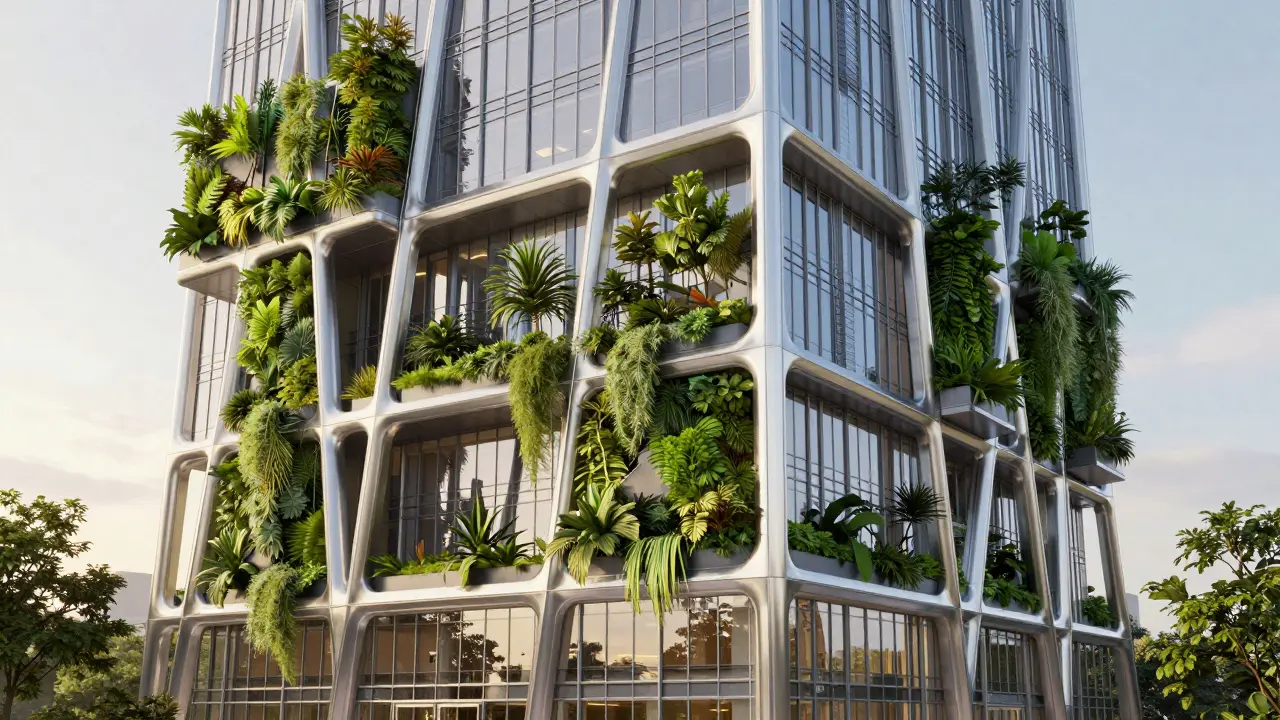
One of the biggest pitfalls of this style is that it can feel like living inside a refrigerator. All that steel and glass can be alienating. To avoid this, the best high-tech architects now incorporate Biophilic Design-adding plants, natural light, and organic shapes to soften the industrial edges. When you mix a steel skeleton with a living wall, you get a building that feels both futuristic and human.
Is high-tech architecture the same as futuristic design?
Not exactly. Futuristic design is often about how a building looks (curvy shapes, sci-fi aesthetics), while high-tech architecture is about how it's built. High-tech focuses on the actual engineering, materials, and the visibility of the building's technical systems.
Why are the pipes on the outside in buildings like the Pompidou?
It's all about space and flexibility. By moving the "servicing" elements (plumbing, HVAC, elevators) to the exterior, the interior becomes a completely open shell. This allows the owners to move walls or change the layout without having to work around fixed pipes and ducts.
Which materials are most common in this style?
The "holy trinity" of high-tech architecture is steel, glass, and aluminum. These materials are preferred because they can be prefabricated in factories and assembled quickly on-site with high precision.
Is high-tech architecture sustainable?
Modern high-tech architecture is very focused on sustainability. While early examples used a lot of energy, newer projects use things like diagrids to reduce steel use and aerodynamic shapes to lower heating and cooling costs.
Who are the most influential architects of this movement?
The big names are Norman Foster, Richard Rogers, and Renzo Piano. Together, they defined the movement in the 1970s and 80s, moving away from the heavy concrete of Brutalism toward a lighter, more industrial aesthetic.
What to Explore Next
If you're fascinated by the way buildings are put together, you might want to look into Parametricism, where architects use computer algorithms to create shapes that are impossible to draw by hand. You could also check out Brutalism to see the opposite end of the spectrum-heavy, raw concrete versus light, precise steel. For those interested in the environment, regenerative architecture is the next step beyond sustainability, focusing on buildings that actually improve the ecosystem around them.