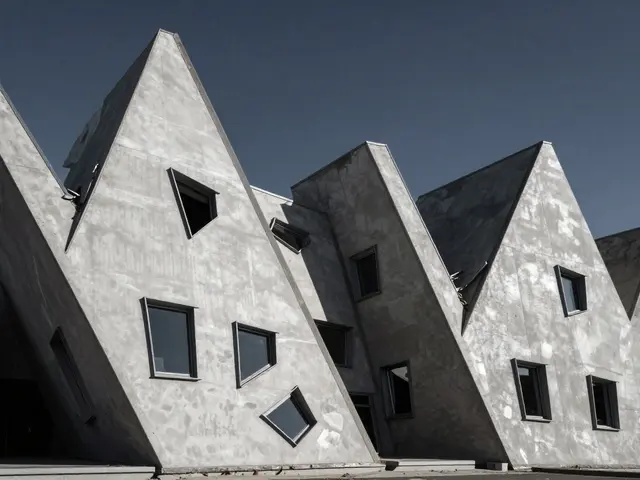
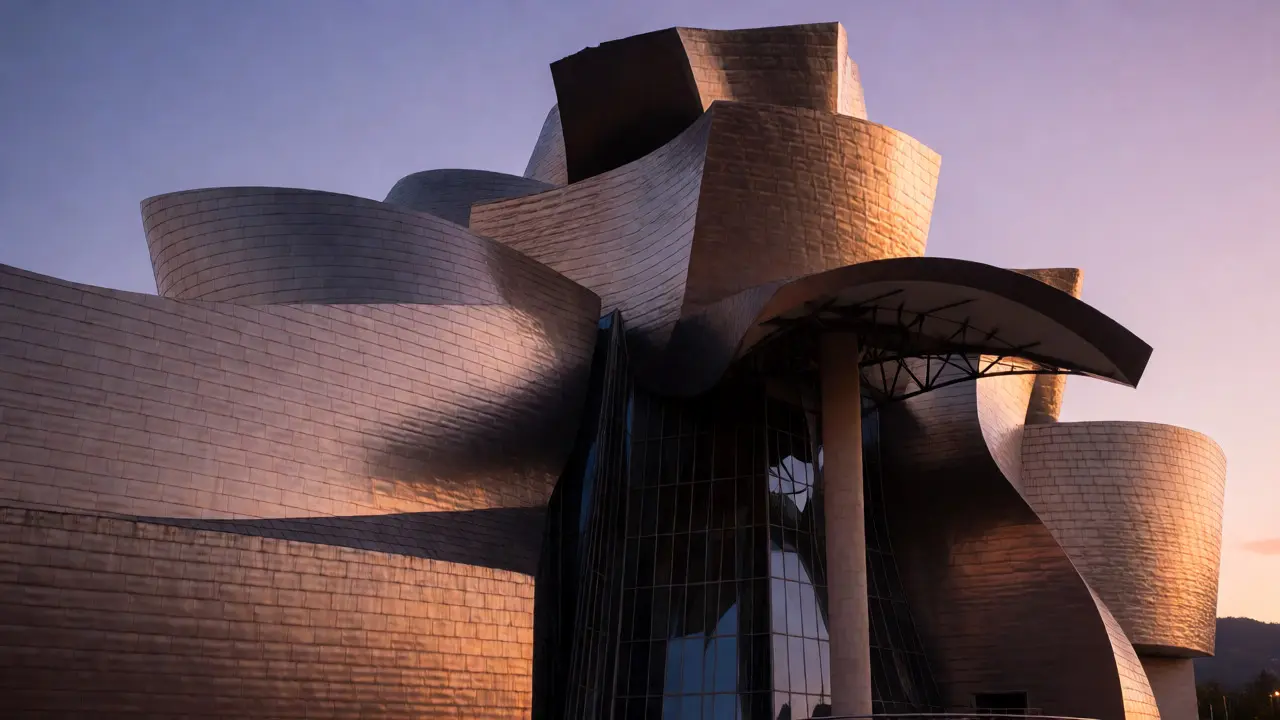
Imagine walking into a building that looks like it’s mid-collapse. The walls tilt at impossible angles, the roof seems to be slicing through the sky rather than capping the structure, and the whole thing defies the straight lines and right angles you’re used to seeing in city skylines. That’s Deconstructivism for you. It’s not just an aesthetic choice; it’s a philosophical rebellion against the rigid order of modernism. If you’ve ever looked at the Guggenheim Museum Bilbao or the Walt Disney Concert Hall and wondered, "How does that even stand up?", you’re already halfway to understanding this movement.
This isn’t about chaos for the sake of chaos. Deconstructivism emerged in the late 1980s as a direct response to the perceived sterility of modern architecture. While Modernism preached "less is more" and strict functionality, Deconstructivism asked, "What if less is actually boring?" It draws inspiration from the French philosopher Jacques Derrida’s concept of deconstruction-the idea that meaning is never fixed and that structures (whether linguistic or physical) contain inherent contradictions. In architecture, this translates to buildings that challenge our expectations of stability, symmetry, and harmony.
The Philosophy Behind the Fracture
To get why these buildings look the way they do, you have to understand what they were pushing back against. For decades, architecture was dominated by the International Style-glass boxes, steel beams, and clean lines. Think Mies van der Rohe’s Seagram Building. It was elegant, sure, but it felt cold. Deconstructivist architects wanted to reintroduce complexity, fragmentation, and a sense of unease. They weren’t trying to destroy architecture; they were trying to free it from the tyranny of the grid.
The term itself was popularized after the 1988 MoMA exhibition in New York, titled simply "Deconstructivist Architecture." Curated by Philip Johnson and Mark Wigley, this show brought together seven architects who shared a visual language but not necessarily a unified manifesto. These included Frank Gehry, Zaha Hadid, Rem Koolhaas, Peter Eisenman, Daniel Libeskind, Bernard Tschumi, and Coop Himmelb(l)au. The exhibition didn’t claim they were a school; it claimed they were exploring similar ideas about breaking down traditional forms.
Key Characteristics You Can Spot
You don’t need a degree in philosophy to identify a Deconstructivist building. There are specific visual cues that act as fingerprints for this style. Once you know them, you’ll start spotting them everywhere, from museums to university campuses.
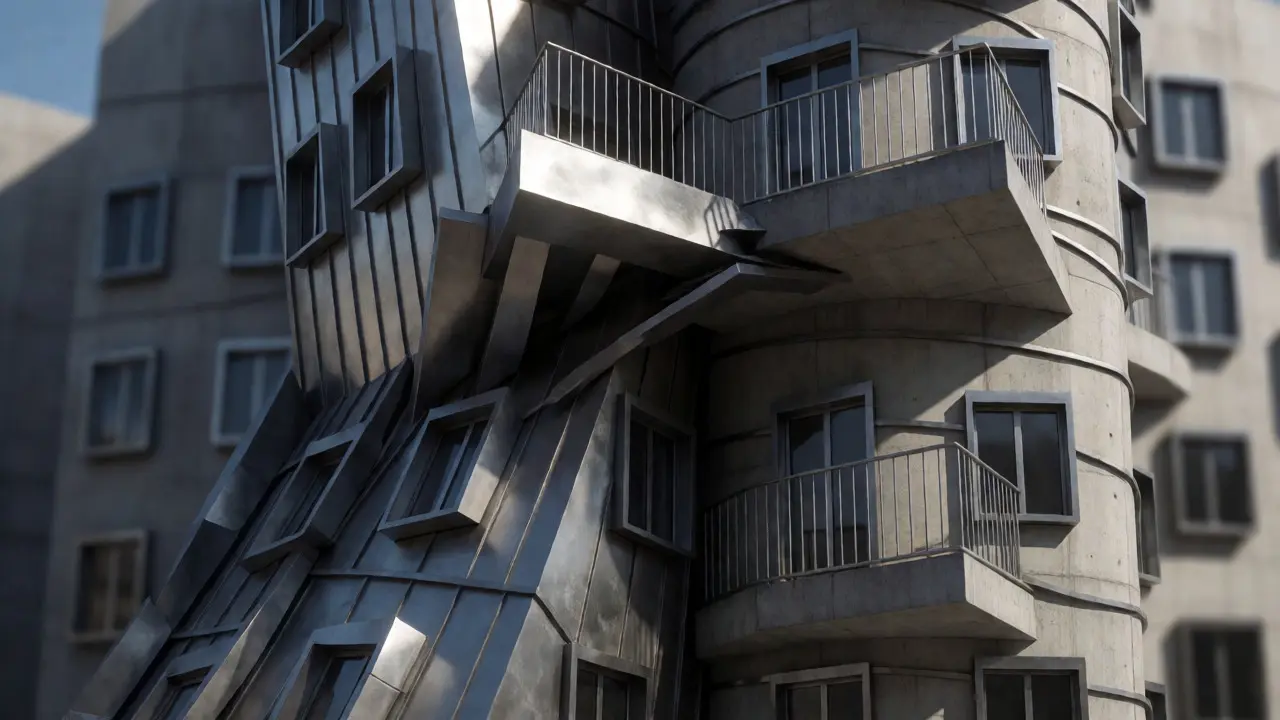
- Non-linear Design: Forget straight lines. Walls curve, twist, and intersect at odd angles. The geometry often feels dynamic, as if the building is moving or frozen in time during an earthquake.
- Fragmentation: Elements of the building appear disconnected. A balcony might seem to float without support, or a roof section might overlap another in a way that defies gravity. This creates a visual tension.
- Controlled Chaos: It looks random, but it’s not. Every angle is calculated. The apparent disorder is a carefully engineered illusion designed to disorient the viewer slightly.
- Rejection of Symmetry: Traditional architecture relies on balance. Deconstructivism embraces asymmetry. One side of the facade rarely mirrors the other, forcing you to walk around the structure to get the full picture.
- Innovative Materials: Because these shapes are complex, builders often use advanced materials like titanium, stainless steel, and reinforced concrete. The materiality is part of the message-showing that technology can make the impossible possible.
The Architects Who Broke the Mold
You can’t talk about this movement without naming the heavy hitters. These individuals didn’t just design buildings; they changed how we think about space.
| Architect | Signature Work | Distinctive Approach |
|---|---|---|
| Frank Gehry | Guggenheim Museum Bilbao | Uses curved titanium panels to create organic, sculptural forms that change with the light. |
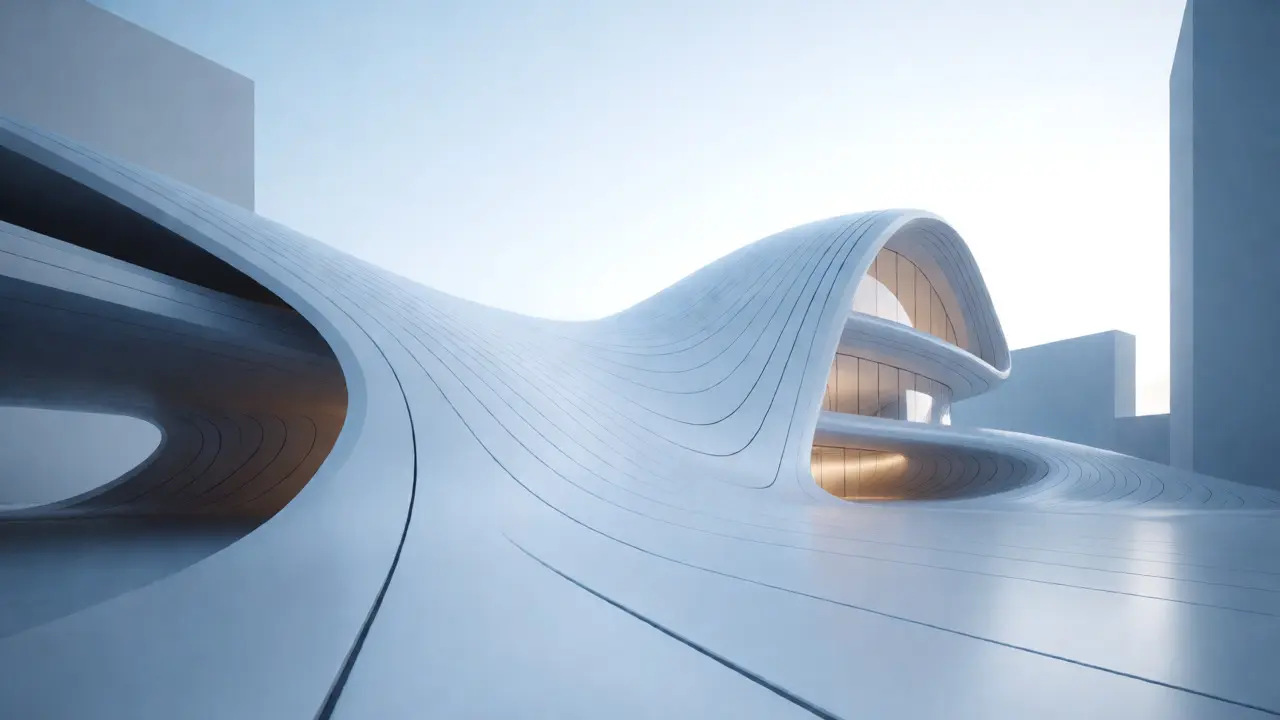
| Zaha Hadid | Heydar Aliyev Center | Pioneered fluid, seamless surfaces where floors, walls, and roofs merge into one continuous flow. |
| Daniel Libeskind | Jewish Museum Berlin | Uses sharp, jagged zinc-clad forms to evoke historical trauma and absence. |
| Peter Eisenman | Wexner Center for the Arts | Focuses on conceptual grids that are disrupted and overlapped to question spatial logic. |
Frank Gehry is probably the most famous name here. His work, particularly the Guggenheim Museum in Bilbao, Spain, is often cited as the turning point when Deconstructivism went mainstream. Before Bilbao, architecture was largely local. After it, cities realized that a single iconic building could revitalize an entire economy-a phenomenon now known as the "Bilbao Effect." Gehry uses software originally developed for aerospace engineering to model his complex curves, allowing him to build shapes that would have been impossible ten years earlier.
Zaha Hadid took things further by removing edges entirely. Her buildings don’t have corners. They flow. The Heydar Aliyev Center in Baku, Azerbaijan, is a prime example. It looks like a white wave rising from the ground. Hadid’s work challenges the very definition of a "building," making it feel more like a landscape feature than a static object.
From Theory to Reality: How They Build It
So, how do you actually construct a building that looks like it’s falling apart? The answer lies in digital technology. Deconstructivism wouldn’t exist in its current form without Computer-Aided Design (CAD) and Building Information Modeling (BIM).
In the past, architects drew on paper. Complex geometries were hard to visualize and harder to price. Today, algorithms generate these forms. Architects input parameters-wind loads, structural constraints, aesthetic goals-and the computer generates thousands of variations. This process, often called parametric design, allows for the precision needed to cut thousands of unique metal panels and fit them together perfectly. Without tools like CATIA (used by Gehry) or Rhino Grasshopper, the cost of building these structures would be prohibitive.
It’s also worth noting that while the exterior looks chaotic, the interior often makes logical sense. The fragmentation is usually applied to the skin or the public spaces, while the functional core remains stable. This ensures that while your eyes might be confused, your feet remain firmly planted on level ground.
Criticism and Controversy
Not everyone loves Deconstructivism. Critics argue that it prioritizes form over function. Le Corbusier, the father of Modernism, famously said, "A house is a machine for living in." Deconstructivist houses, critics say, are more like sculptures for looking at. There are real issues with practicality. Angled rooms can lead to awkward furniture placement. Non-standard windows can be expensive to clean. And let’s be honest, some people just find the aesthetic stressful.
There’s also the issue of context. A sharp, metallic spike sticking out of a historic European town square can feel jarring. Some urban planners argue that Deconstructivism ignores the neighborhood fabric, imposing an ego-driven vision onto a community. However, proponents counter that architecture should challenge us, not just comfort us. They argue that these buildings spark conversation and force cities to evolve.
The Legacy and Future of Deconstructivism
Is Deconstructivism still relevant in 2026? Absolutely. But it has evolved. The pure, jagged forms of the 1990s have softened. Today, we see its DNA in sustainable design and adaptive reuse. Architects are using deconstructivist principles to break down old industrial sites, reimagining warehouses as cultural hubs with fragmented, open layouts.
Moreover, the emphasis on non-linear thinking has influenced urban planning. We no longer plan cities as perfect grids. We plan for organic growth, mixed-use zones, and flexible spaces that can change over time. The philosophical root of Deconstructivism-that nothing is permanent and everything is subject to reinterpretation-is more true today than ever before.
If you’re an architect or a design student, studying this movement teaches you one crucial lesson: rules are there to be understood so they can be broken intelligently. It’s not about doing whatever you want; it’s about doing what hasn’t been done yet.
Frequently Asked Questions
Is Deconstructivism the same as Brutalism?
No, they are quite different. Brutalism focuses on raw concrete, heavy mass, and monolithic forms, often feeling solid and imposing. Deconstructivism focuses on fragmentation, lightness, and complex geometries that appear to defy gravity. While both reject traditional ornamentation, Brutalism seeks solidity, whereas Deconstructivism seeks instability and motion.
Why do Deconstructivist buildings cost so much?
The primary driver of cost is customization. Standard construction relies on repeating modules (like standard bricks or window frames). Deconstructivist designs often require thousands of unique components, each cut precisely by computer-controlled machinery. Additionally, the structural engineering required to support unconventional shapes demands specialized expertise and materials, driving up labor and material costs.
Can I apply Deconstructivist principles to my home?
Yes, but on a smaller scale. You can introduce asymmetrical facades, angled rooflines, or disjointed volumes in residential extensions. Using contrasting materials (like wood clashing with metal) can also mimic the fragmented aesthetic. However, maintaining livability is key-ensure that the complex exteriors don’t result in unusable interior corners.
Who coined the term 'Deconstructivism'?
The term was popularized by critics Philip Johnson and Mark Wigley during the 1988 "Deconstructivist Architecture" exhibition at the Museum of Modern Art (MoMA) in New York. While the philosophical roots lie with Jacques Derrida, the architectural application and naming were solidified by this curatorial effort.
Are Deconstructivist buildings energy efficient?
Traditionally, they struggled with efficiency due to large glass surfaces and complex thermal bridges. However, modern advancements in glazing, insulation, and parametric optimization allow new Deconstructivist structures to meet high sustainability standards. Digital modeling helps optimize shading and ventilation paths, turning form into a tool for energy conservation.