
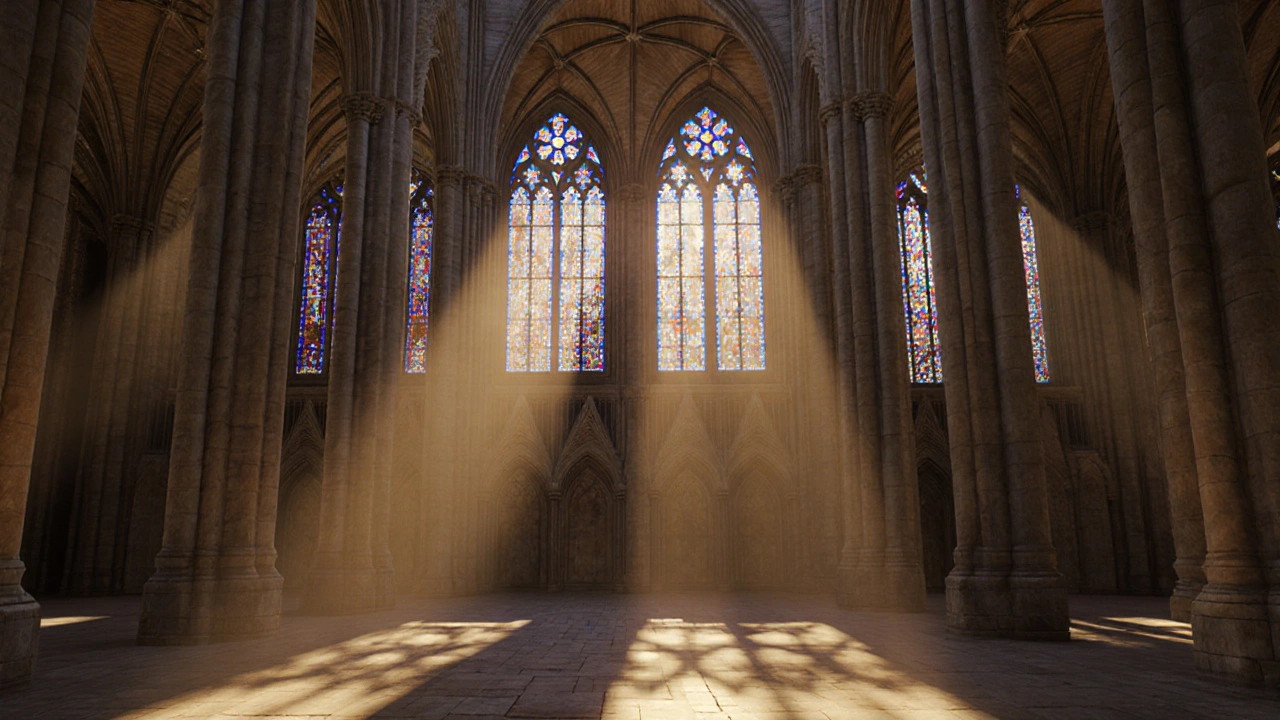
Gothic architecture isn't just beautiful-it's brilliant engineering. Discover how pointed arches, flying buttresses, and ribbed vaults defied gravity and turned stone into light-filled cathedrals that still stand today.
Ribbed Vaults: The Structural Beauty Behind Gothic and Renaissance Architecture
When you walk into an old cathedral and look up, the ceiling isn’t just decoration—it’s a masterpiece of engineering. ribbed vaults, a system of arched stone ribs that support a ceiling’s weight and direct it to columns. Also known as groin vaults with ribs, they turned stone ceilings from heavy burdens into elegant, soaring structures that let in more light and opened up vast interior spaces. This wasn’t just about looking good. Ribbed vaults made buildings taller, thinner-walled, and more stable, which is why they became the backbone of Gothic cathedrals from France to England.
They didn’t appear out of nowhere. Gothic architecture, a style that emerged in 12th-century France and spread across Europe, defined by pointed arches, flying buttresses, and stained glass. Also known as High Gothic, it relied on ribbed vaults to reach new heights—literally. Before ribbed vaults, ceilings were thick, flat, and heavy. With ribs, builders could distribute weight more efficiently, letting them use thinner walls and add huge windows. That’s why places like Notre-Dame and Salisbury Cathedral feel so light inside, even though they’re made of stone. And it wasn’t just religion driving this. The same principles later influenced Renaissance architecture, a return to classical symmetry and proportion, blending art with math and engineering. Also known as classical revival, Renaissance builders studied Gothic vaults, simplified them, and used them in domes and palaces. Brunelleschi’s dome in Florence didn’t use ribs the same way as a Gothic cathedral, but the idea of using structural lines to control load came directly from them.
Look closely at any ribbed vault and you’ll see the pattern: intersecting arches that form a skeleton, then filled in with lighter stone. These ribs weren’t hidden—they were celebrated. They became part of the design, often carved or painted. And they didn’t just support the ceiling; they guided the eye upward, creating a sense of movement and awe. That’s why they’re still studied today—not just by architects, but by anyone who wants to understand how beauty and function can work together.
What you’ll find in the posts below are real examples of how ribbed vaults shaped buildings across centuries—from the soaring naves of medieval cathedrals to the refined interiors of Renaissance villas. You’ll see how they connected to pointed arches, tracery, and even modern design thinking. No fluff. Just clear, practical insight into one of architecture’s most powerful innovations.