
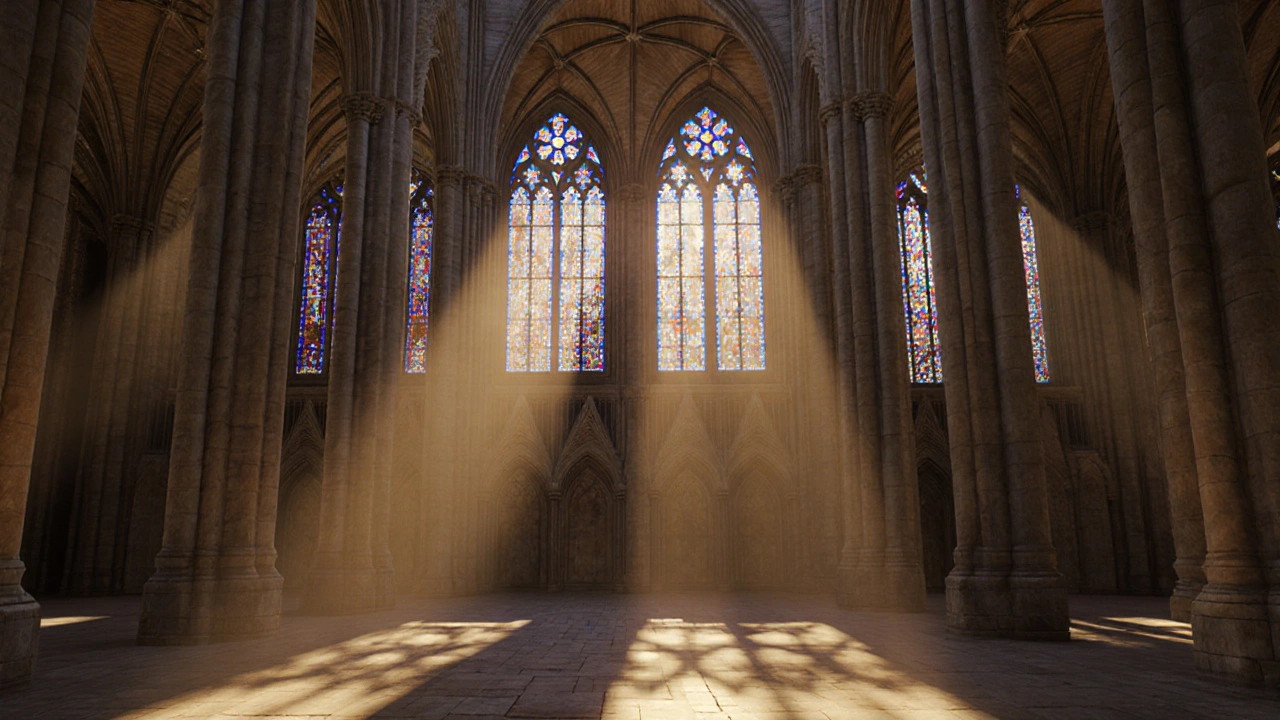
Gothic architecture isn't just beautiful-it's brilliant engineering. Discover how pointed arches, flying buttresses, and ribbed vaults defied gravity and turned stone into light-filled cathedrals that still stand today.
Medieval Engineering: How Cathedrals, Castles, and Machines Changed the World
When you think of medieval engineering, the practical, often groundbreaking methods used to build cathedrals, castles, and machines between the 5th and 15th centuries. Also known as pre-industrial construction, it was the foundation of everything that came after—from modern bridges to skyscrapers. This wasn’t guesswork. It was trial, error, and genius—done without computers, steel, or electricity.
Take the Gothic architecture, a style defined by towering spires, stained glass, and weight-defying structures that seemed to float. How did they build churches so tall without them collapsing? The answer lies in the rib vault, a network of stone arches that channeled weight down to specific points. That’s what let architects remove thick walls and fill them with glass. And to keep those walls from pushing outward? They invented the flying buttress, a stone arm that reached out from the building like a brace, pulling the walls back into place. These weren’t decorations. They were the bones of the structure.
Meanwhile, across Europe, castle fortifications, complex systems of walls, moats, drawbridges, and murder holes designed to outlast sieges were being refined by engineers who understood pressure, leverage, and human behavior. They didn’t just build higher walls—they built smarter ones. Stone towers with angled bases to deflect battering rams. Spiral staircases that turned right-handed attackers into easy targets. Ventilation systems that kept air flowing during months-long sieges. This was engineering as survival.
And it wasn’t all about stone. Medieval engineers built water wheels that powered mills, cranes that lifted tons of material, and even early mechanical clocks that tracked time with gears and escapements. They used pulleys, counterweights, and levers—tools we still rely on today. What’s missing from modern construction isn’t technology—it’s the raw problem-solving spirit that made these things possible with nothing but muscle, math, and patience.
You’ll find posts here that dig into how these systems worked, why they mattered, and how they still echo in today’s buildings. From the math behind dome designs that came later to the forgotten tools that made Gothic spires possible, this collection shows you the real minds behind the stone. No myths. No fluff. Just how it was done—and why it still works.