The Quick Take: Key Elements of the Style
- Symmetry: Buildings were designed to be mirror images across a central axis.
- Proportion: Based on the human body and musical harmonies.
- Classical Orders: The return of Doric, Ionic, and Corinthian columns.
- Geometry: A heavy reliance on the circle and the square.
- Hemispherical Domes: Replacing the pointed Gothic spires with rounded, balanced caps.
Breaking the Gothic Mold
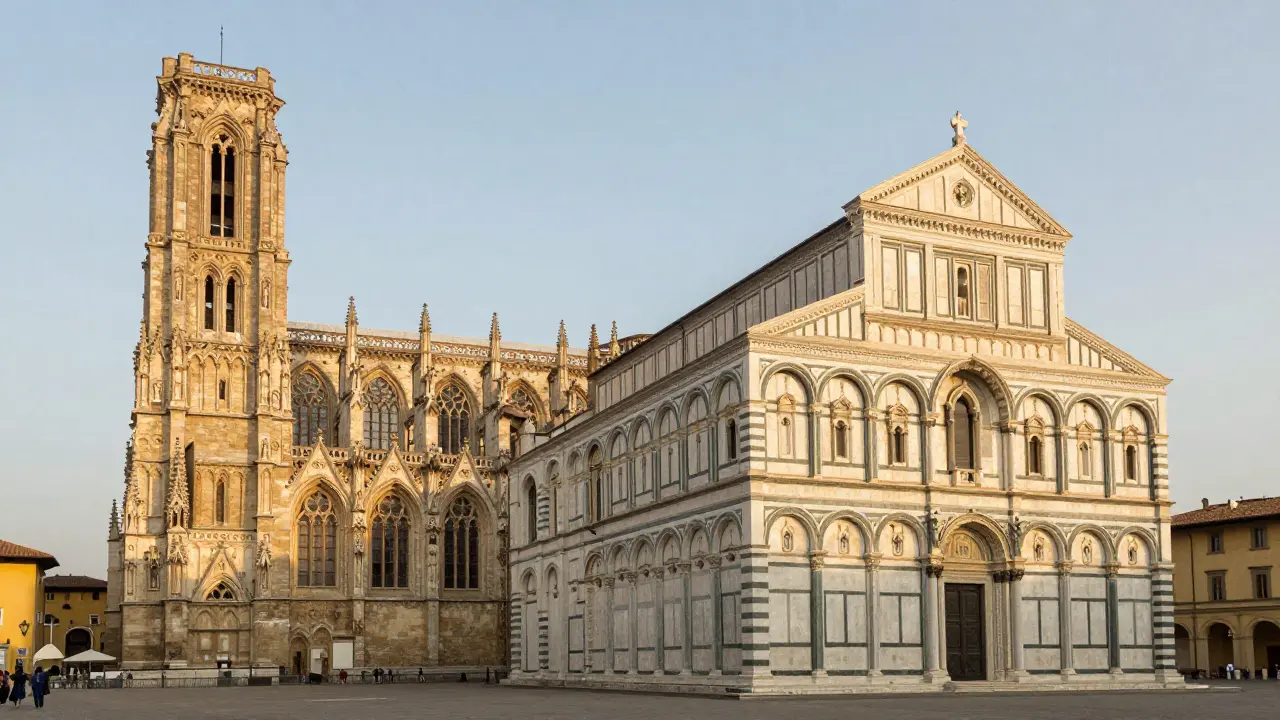
Before the 1400s, if you wanted to impress God or a king, you built something that stretched toward the sky until it almost felt like it would tip over. Gothic architecture was all about verticality and mystery. The Renaissance architecture movement flipped the script. Architects stopped trying to escape the earth and instead tried to organize it. They replaced the irregular, organic feel of Gothic cathedrals with a sense of calm and logic. Instead of jagged edges, they brought back the semicircular arch. Why? Because the circle represents perfection and infinity in the eyes of the humanist thinkers of the time.
This shift wasn't accidental. It was driven by Humanism-the belief that human reason and the study of classical texts could improve the world. Architects weren't just builders anymore; they were scholars. They spent their weekends measuring old Roman temples with calipers to figure out the exact ratio of a column's height to its width. If a building didn't feel "right," they didn't just guess; they used math to fix it.
The Man Who Changed the Skyline: Filippo Brunelleschi
You can't talk about this era without mentioning Filippo Brunelleschi. He wasn't just an architect; he was a bit of a rebel. His biggest "flex" was the dome of the Florence Cathedral (the Duomo). For years, no one knew how to build a dome that big without it collapsing under its own weight. Brunelleschi didn't use a massive wooden frame to hold it up; instead, he invented a double-shell design and a herringbone brick pattern that allowed the dome to support itself as it rose.
Beyond the dome, Brunelleschi practically invented linear perspective. This allowed architects to draw buildings exactly as they would appear to the eye, meaning they could plan an entire complex on paper before a single stone was laid. This precision is why Renaissance buildings feel so coherent. When you stand in the middle of a Renaissance courtyard, you feel a sense of balance because the architect calculated exactly where your eye would land.
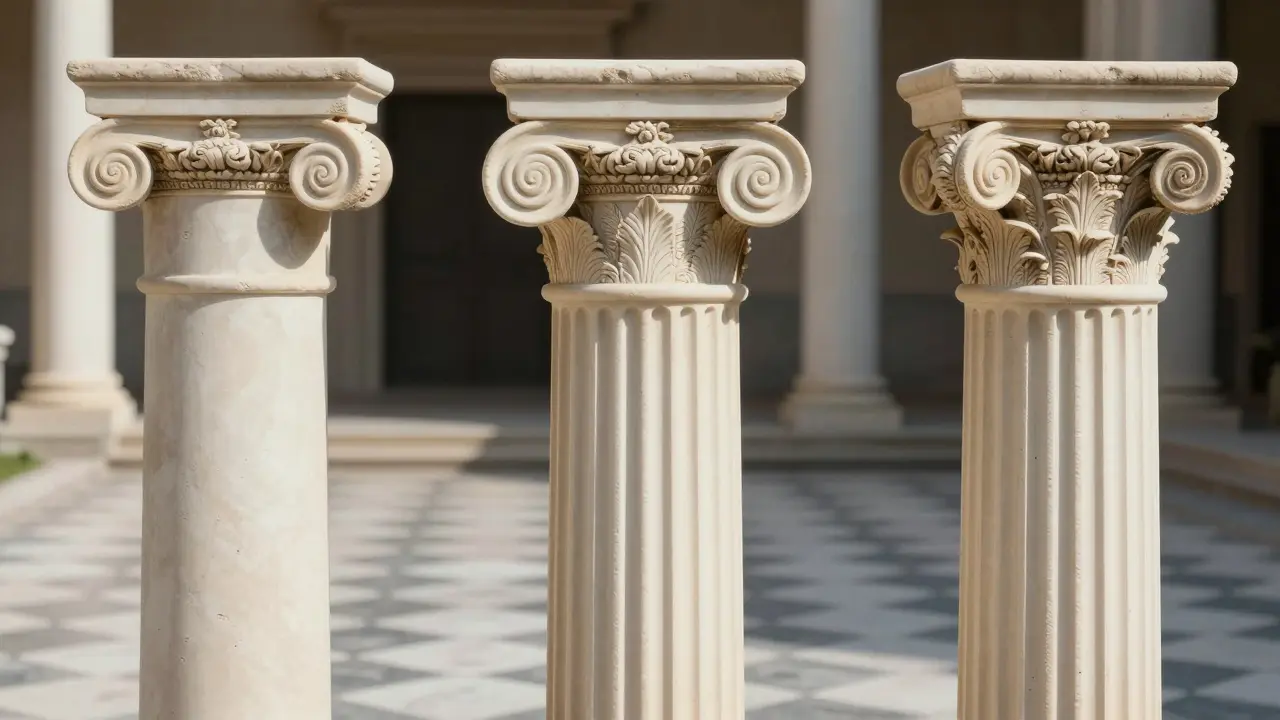
The Rules of the Game: The Classical Orders
To make their buildings look "official," Renaissance architects brought back the Classical Orders. These aren't just decorative columns; they are a language. If you see a plain, sturdy column, that's the Doric order-meant to convey strength and masculinity. The Ionic order, with its scroll-like curls (volutes), is more elegant and refined. The Corinthian order is the fancy one, covered in acanthus leaves, usually reserved for the most opulent spaces.
| Order | Visual Characteristic | Vibe/Symbolism | Common Placement |
|---|---|---|---|
| Doric | Simple, no base, plain capital | Strength and Simplicity | Ground floors or exteriors |
| Ionic | Spiral volutes at the top | Grace and Wisdom | Middle levels of facades |
| Corinthian | Ornate acanthus leaf carving | Luxury and Elegance | Upper levels or interiors |
Andrea Palladio and the Villa Obsession
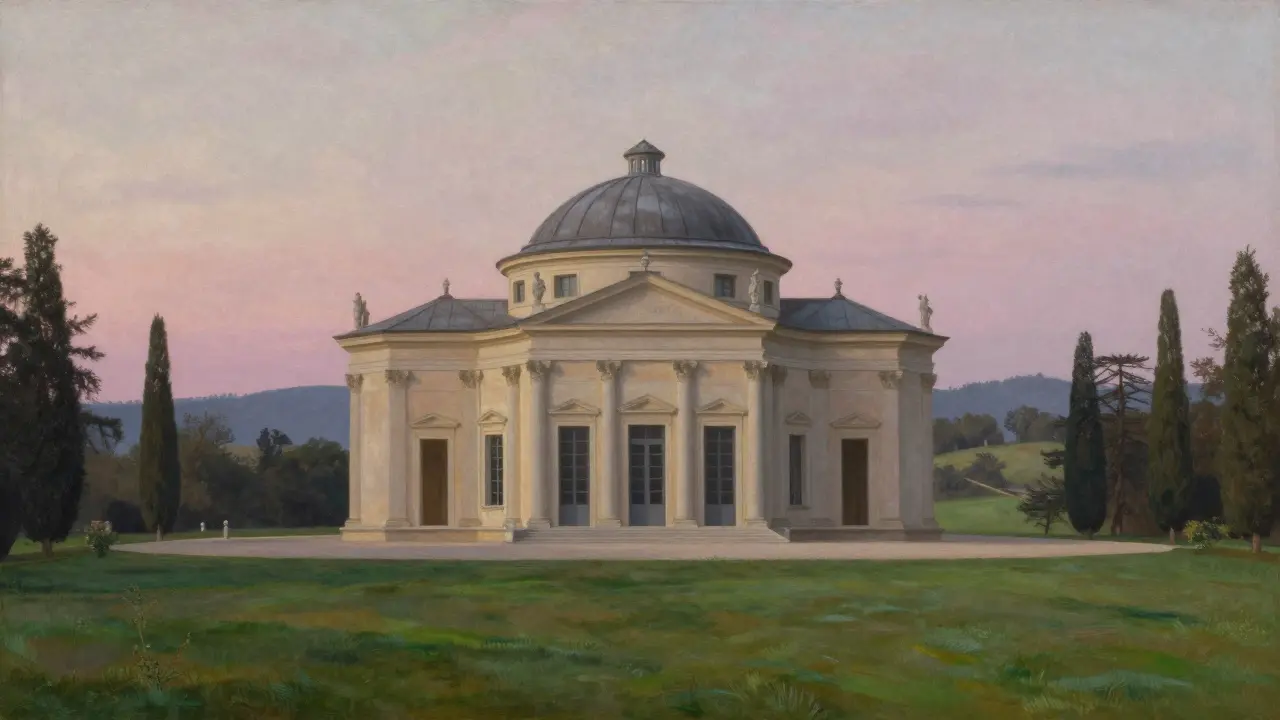
While Florence started the fire, Andrea Palladio spread it across Europe. Palladio was obsessed with the works of the Roman architect Vitruvius. He took the grand scale of Roman temples and shrunk them down for private homes, creating the "Palladian Villa." His most famous work, the Villa Rotonda, is basically a temple for living in. It's a perfect square with a dome in the center and four identical porches.
Palladio's influence was massive because he wrote a guidebook, The Four Books of Architecture. It was essentially a "how-to" manual for building a classy home. Because of this book, you can find "Palladian" style houses in the English countryside and even in the White House in Washington D.C. He proved that symmetry wasn't just for churches; it could make a home feel peaceful and prestigious.
From Palaces to Plazas: Urbanism in the Renaissance
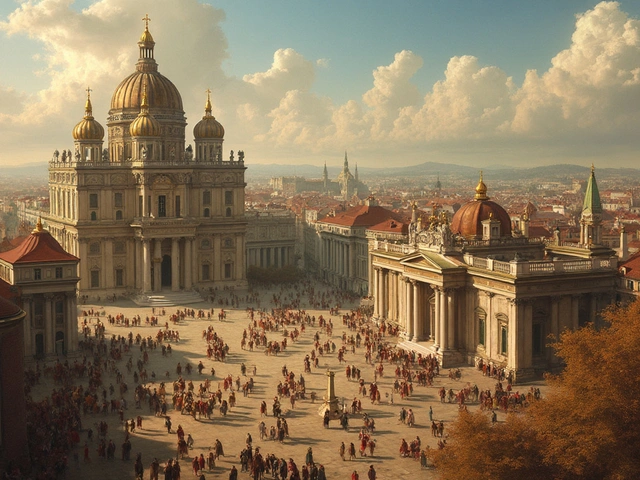
The movement didn't stop at individual buildings. It changed how entire cities were laid out. The goal was to create a "Ideal City." This meant wide, straight streets and central plazas that acted as the heart of the community. Instead of the narrow, winding alleys of the Middle Ages, Renaissance urban planning focused on sightlines. They wanted you to be able to stand at one end of a street and see a grand monument at the other, creating a sense of destination and order.
The Palazzo Medici Riccardi in Florence is a great example of this shift. It looks like a fortress on the outside with heavy stone (rustication), but inside, it's an open, airy courtyard. This contrast between the public "tough" exterior and the private "refined" interior became a staple of the era's residential design for the wealthy elite.
The Transition to Baroque
By the late 1500s, the strict rules of symmetry started to feel a bit boring to some. Architects began to experiment with "breaking" the rules. They started using oval shapes instead of circles and adding dramatic curves to the walls. This gave birth to Baroque architecture. If the High Renaissance was a calm, balanced conversation, Baroque was a loud, emotional opera. The balance was replaced by dynamism, and the simple beauty was replaced by gold leaf and theatrical lighting.
What is the main difference between Gothic and Renaissance architecture?
Gothic architecture is defined by verticality, pointed arches, flying buttresses, and a sense of mystery. Renaissance architecture focuses on horizontality, semicircular arches, symmetry, and mathematical proportion, drawing heavily from ancient Greek and Roman designs.
Why were the Classical Orders so important?
The Classical Orders (Doric, Ionic, and Corinthian) provided a standardized system of proportion. By following these rules, architects ensured that their buildings felt balanced and harmonious, mirroring the perceived order of the natural world.
Who was the most influential Renaissance architect?
While many contributed, Filippo Brunelleschi is often cited as the father of Renaissance architecture for his work on the Florence Cathedral and his development of linear perspective. Andrea Palladio is equally influential for spreading the style across Europe through his writings.
What is a "Palladian Villa"?
A Palladian Villa is a country house designed by or based on the principles of Andrea Palladio. It typically features a central block with a temple-like portico and symmetrical wings, focusing on geometric harmony and a strong connection to the surrounding landscape.
Did Renaissance architecture only happen in Italy?
It started in Italy, but the style spread to France, Spain, Germany, and England. Each region adapted the Italian rules to their own climate and materials, leading to variations like the French Châteaux of the Loire Valley.
Next Steps for Exploring the Era
If you're fascinated by this period, start by looking at the works of Michelangelo, specifically the dome of St. Peter's Basilica in Rome. It takes everything Brunelleschi started and pushes it to a grander, more dramatic scale. From there, try exploring the "Mannerism" period, which acted as the bridge between the balanced Renaissance and the wild Baroque. You'll see architects intentionally distorting proportions to create tension and surprise, showing that even the most rigid rules are meant to be broken eventually.