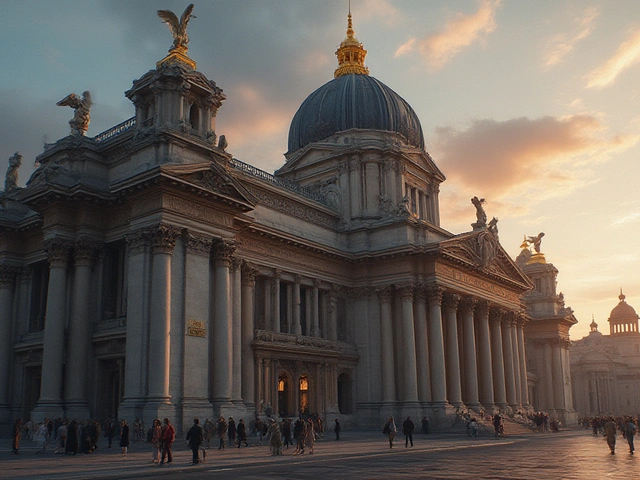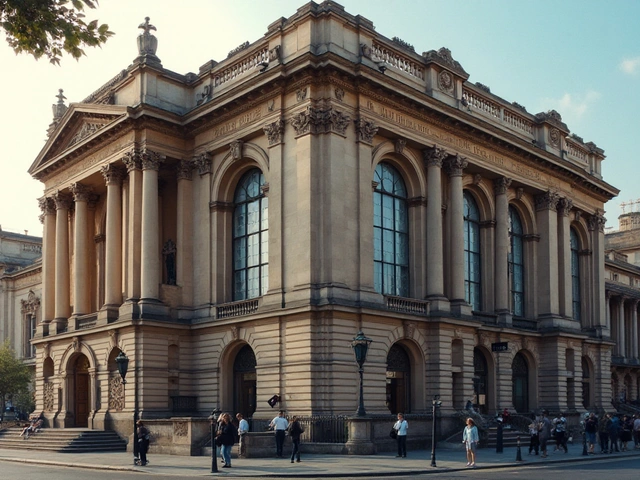
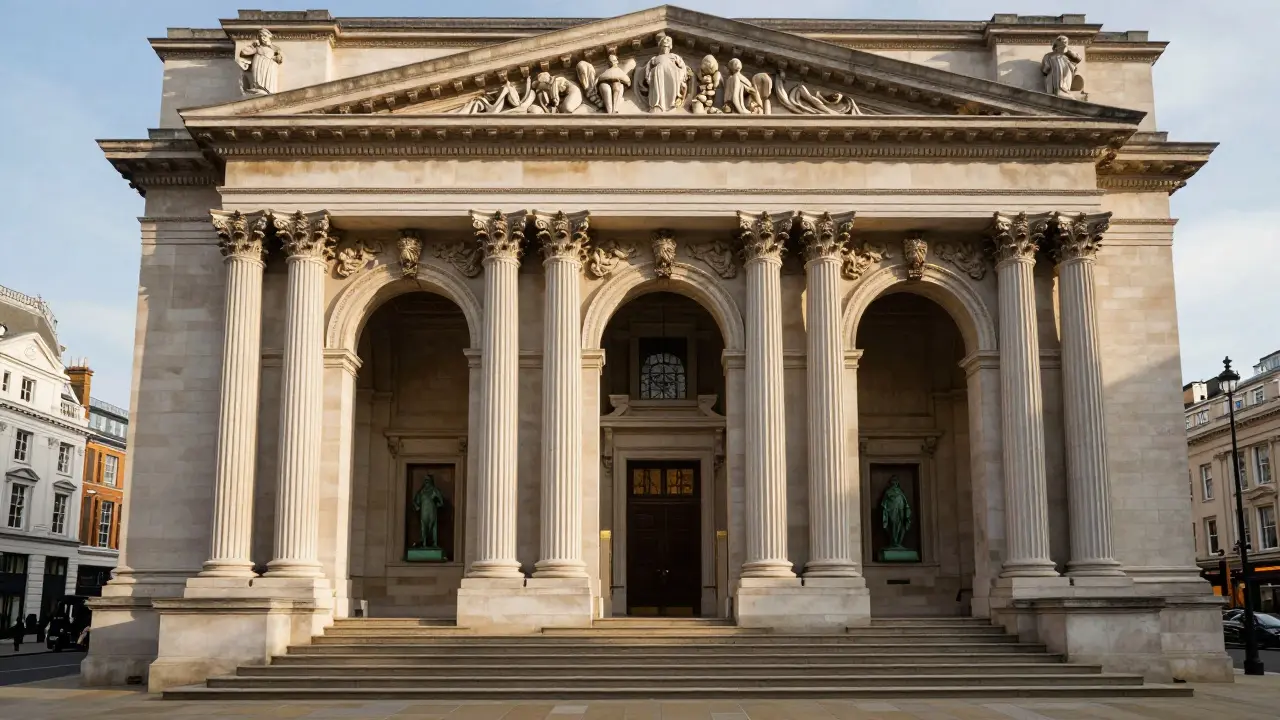
Look up at the grand entrance of a major city museum or a historic government building. You likely see towering columns, sweeping staircases, and intricate stone carvings that seem to shout authority and permanence. This is Beaux-Arts architecture, a style defined by its commitment to symmetry, grandeur, and classical elegance. It dominated public life in the late 19th and early 20th centuries, shaping the skylines of New York, Washington D.C., and Paris. But what exactly makes this style so distinct, and why did it fall out of favor?
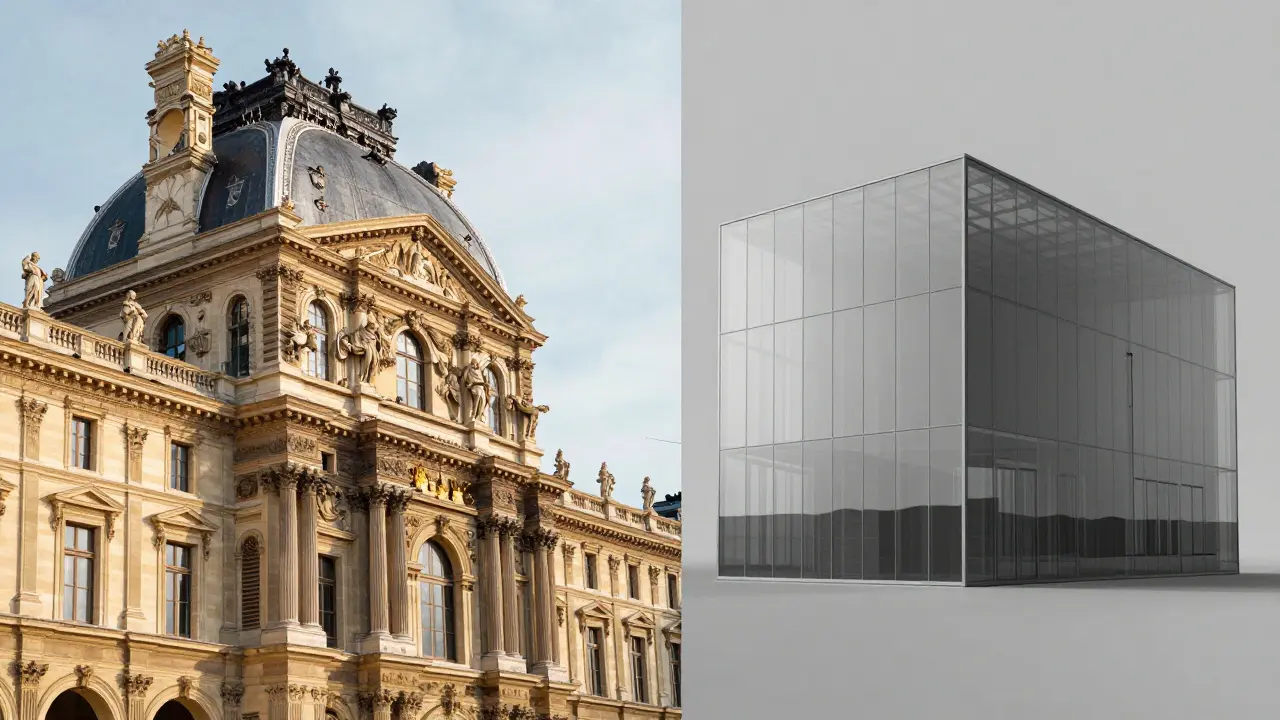
We often associate modern architecture with glass boxes and minimalism. Beaux-Arts is the opposite. It is about excess, detail, and a specific set of rules taught at one of the world’s most influential art schools. Understanding this style helps you read the built environment differently. You start seeing the hidden order behind the ornamentation.
The Roots: From Paris to the World
To understand Beaux-Arts, you have to go back to Paris. Specifically, to the École des Beaux-Arts. Founded in the 17th century, this school became the gold standard for architectural training. The curriculum was rigid. Students didn’t just learn how to build; they learned how to think like artists using classical forms.
The core method was the parti. This was a simple, geometric diagram that organized the entire building plan. If you could draw a clear parti, your design had logic. If not, it was rejected. This emphasis on composition over function created buildings that were visually powerful but sometimes impractical.
In the mid-1800s, American students began flocking to Paris. They studied under masters who emphasized Greek and Roman precedents. When these architects returned home, they brought the style with them. By the time of the World's Columbian Exposition in Chicago in 1893, Beaux-Arts had taken center stage. The "White City" of temporary buildings showcased the style’s potential for creating idealized urban spaces. It promised order and beauty in rapidly growing, chaotic industrial cities.
Key Characteristics: What Defines the Style?
You can spot a Beaux-Arts building from a block away. The style relies on a specific toolkit of elements that create a sense of hierarchy and monumentality. Here are the features you should look for:
- Symmetry: The facade is almost always symmetrical. If you draw a line down the middle, the left side mirrors the right. This creates visual stability.
- Classical Orders: Columns are essential. Architects used Doric, Ionic, and Corinthian orders strictly according to historical rules. These columns support heavy entablatures and pediments.
- Grand Staircases: Entrance stairs are wide and imposing. They force you to slow down and approach the building with respect. Think of the steps leading up to the Metropolitan Museum of Art.
- Ornamentation: Stone carvings, sculptures, and reliefs cover surfaces. These aren’t random decorations; they often tell stories or symbolize virtues like Justice, Wisdom, or Industry.
- Dome and Cupola: Many large Beaux-Arts buildings feature central domes. This adds verticality and draws the eye upward, connecting the earthbound structure to the sky.
- Material Quality: Original Beaux-Arts buildings used high-quality materials like limestone, marble, and bronze. This durability contributed to their longevity.
The interior is just as important. Grand lobbies, double-height ceilings, and elaborate moldings create a theatrical experience. The goal was to impress visitors immediately upon entry.
The Golden Age: Landmarks That Defined an Era
Between 1880 and 1920, Beaux-Arts reached its peak. During this period, wealthy patrons and governments commissioned massive projects to legitimize their power. Several buildings stand out as masterclasses in the style.
| Building | Location | Architect | Key Feature |
|---|---|---|---|
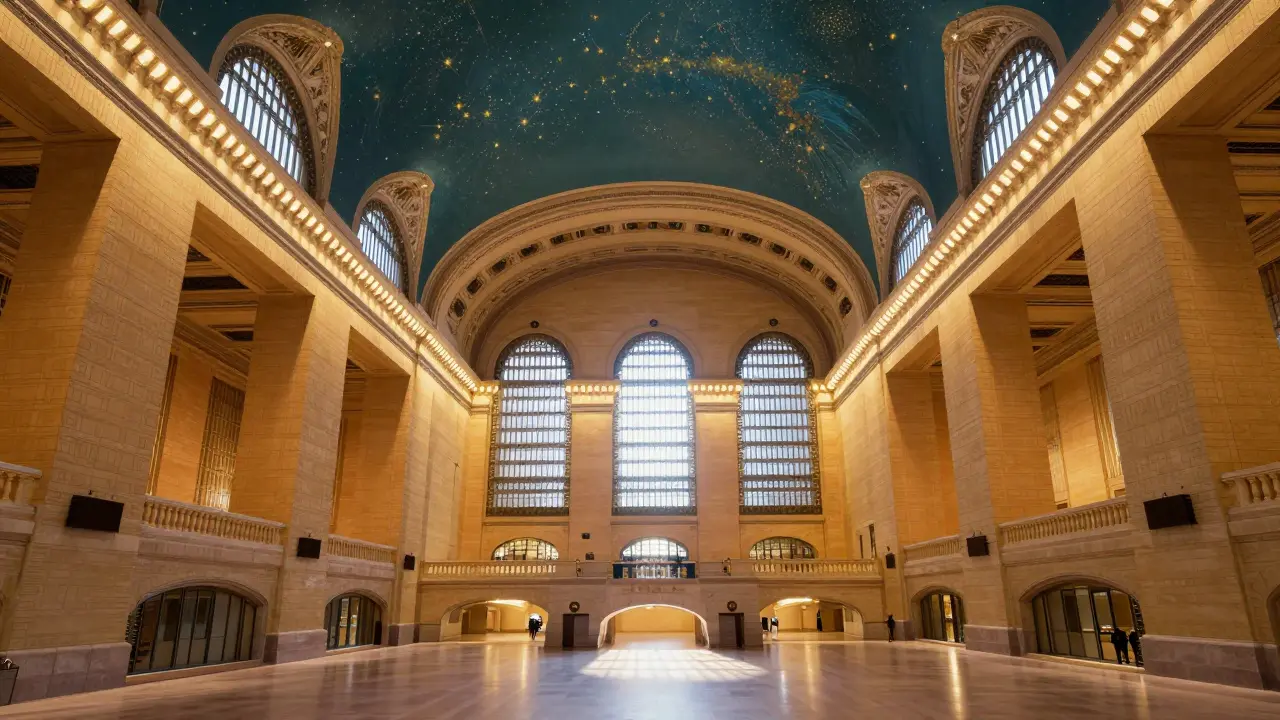
| Grand Central Terminal | New York City | Reed & Stem | Vaulted ceiling with constellations |
| The Palace of Fine Arts | San Francisco | Bernard Maybeck | Colonnaded rotunda and reflecting pool |
| Carnegie Hall | New York City | William B. Tilton | Richly decorated facade and lobby |
| U.S. Treasury Building | Washington D.C. | Alfred B. Mullett | Massive colonnade and sculptural details |
Grand Central Terminal remains the most famous example. Its main concourse feels like a cathedral of travel. The blue ceiling painted with stars reverses the orientation of the night sky, a subtle touch that rewards close observation. The scale is human yet monumental, designed to handle crowds without losing dignity.
In Washington D.C., the McMillan Plan reshaped the city around Beaux-Arts principles. The National Mall became a sequence of open spaces framed by neoclassical buildings. This planning approach influenced urban design worldwide, emphasizing vistas and axial alignments.
Why Did Beaux-Arts Decline?
If Beaux-Arts was so successful, why did it disappear? The answer lies in changing values and economics. By the 1920s and 1930s, several factors worked against the style.
First, cost. Beaux-Arts required skilled artisans. Carving stone by hand was expensive and slow. As construction moved toward steel frames and curtain walls, speed and efficiency became priorities. Modernist architects argued that ornament was a waste of resources.
Second, ideology. The rise of Modernism brought a new philosophy: form follows function. Architects like Le Corbusier criticized Beaux-Arts as dishonest because its decorative elements didn’t serve structural purposes. They wanted clean lines, open plans, and honest materials like concrete and glass.
Third, education. The École des Beaux-Arts lost its monopoly on architectural training. New schools, such as the Bauhaus in Germany, promoted experimental approaches. American universities shifted focus toward engineering and practical design rather than artistic composition.
By the mid-20th century, many Beaux-Arts buildings were seen as outdated. Some were demolished to make way for skyscrapers. Others survived only because they housed institutions that valued tradition.
Beaux-Arts Today: Preservation and Influence
Today, we view Beaux-Arts differently. We appreciate its craftsmanship and historical significance. Many former critics now recognize that the style created some of our most beloved public spaces.
Preservation efforts have saved key landmarks. Organizations like the National Trust for Historic Preservation advocate for maintaining original materials and details. Restoration projects often involve sourcing matching stone and recreating lost carvings.
The influence persists in contemporary design. While few new buildings are pure Beaux-Arts, elements remain popular. Symmetry, classical proportions, and grand entrances continue to convey authority in courthouses, libraries, and museums. Even modern developers sometimes use "neo-classical" facades to evoke trust and stability.
Understanding Beaux-Arts also helps us critique current trends. In an era of disposable architecture, the durability and thoughtfulness of Beaux-Arts offer a counterpoint. It reminds us that buildings can be both functional and beautiful, serving society for generations.
How to Identify Beaux-Arts in Your City
You don’t need to be an expert to spot this style. Start by looking at public buildings constructed between 1890 and 1930. Check for these clues:
- Walk up to the entrance. Is there a grand staircase? Are there columns framing the doors?
- Look at the roofline. Do you see balustrades, statues, or dormer windows with pediments?
- Examine the windows. Are they arranged in rhythmic patterns? Do they have architraves or keystones?
- Enter the lobby. Is the space tall and open? Are there chandeliers, mosaics, or marble floors?
If you find three or more of these features, you’re likely looking at Beaux-Arts. Take photos and compare them to online images of known examples. Over time, you’ll develop an eye for the style’s nuances.
What is the difference between Beaux-Arts and Neoclassical architecture?
Neoclassical architecture refers broadly to any style inspired by ancient Greece and Rome. Beaux-Arts is a specific subset of Neoclassicism that emerged from French academic training. Beaux-Arts buildings tend to be more ornate, colorful, and complex than typical Neoclassical structures. They combine classical forms with Renaissance detailing and Baroque drama.
Who were the most famous Beaux-Arts architects?
Key figures include Richard Morris Hunt, who introduced the style to America; Cass Gilbert, who designed the Woolworth Building; and McKim, Mead & White, whose firm produced many iconic civic buildings. In France, Charles Garnier designed the Palais Garnier opera house, a masterpiece of the style.
Is Beaux-Arts architecture still being built today?
Pure Beaux-Arts is rare in new construction due to cost and regulatory constraints. However, elements appear in neo-classical designs for banks, hotels, and cultural institutions. Developers sometimes use simplified versions to evoke prestige without full ornamentation.
Why do Beaux-Arts buildings feel so grand?
The grandeur comes from scale, symmetry, and material quality. Large columns and high ceilings create a sense of awe. Ornamentation adds richness and texture. The layout guides visitors through sequenced experiences, building anticipation before revealing key spaces.
How did Beaux-Arts influence urban planning?
Beaux-Arts planning emphasized axial streets, circular plazas, and monumental vistas. Cities like Washington D.C., Chicago, and Boston adopted these principles to organize growth and create cohesive civic centers. This approach prioritized visual harmony over traffic efficiency, which later planners critiqued.