
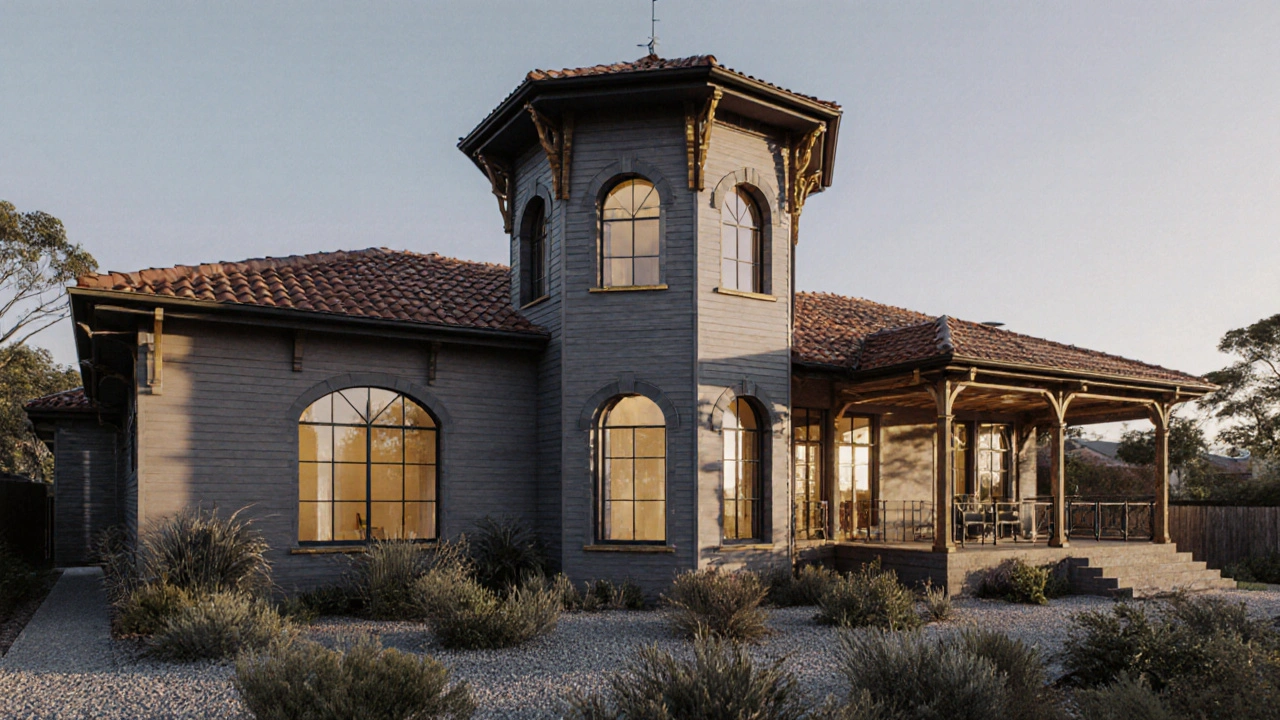
Italianate architecture is making a quiet comeback with modern materials and smarter design. Discover how its tall windows, bracketed eaves, and asymmetrical towers are being revived for today’s homes-especially in Australia’s hot climates.
Italianate Design Elements: What They Are and Why They Still Matter
When you see a home with Italianate design elements, a 19th-century architectural style inspired by Italian villas that blends rustic charm with elegant details. Also known as Victorian Italianate, it turned simple houses into something more—like a piece of Tuscany dropped into an American suburb. This isn’t just old-school decoration. These features were built to work: tall windows let in light, low-pitched roofs shed rain, and those decorative brackets? They’re not just for looks—they support heavy eaves without needing thick beams.
Look closer and you’ll find bracketed eaves, the ornate wooden supports under roof overhangs that give Italianate homes their signature depth and shadow. These aren’t random carvings—they’re a direct nod to Renaissance villas in northern Italy, where artisans used similar supports to protect walls from weather. Then there’s ornate cornices, the detailed trim running along the top of walls, often with dentils, scrolls, or floral patterns that add rhythm to the facade. And let’s not forget tower roofs, those square or round turrets that rise like small watchtowers, turning a house into a landmark. These aren’t gimmicks. They were practical: towers gave better views, improved airflow, and made homes feel grand without needing acres of land.
What makes Italianate design so enduring isn’t nostalgia—it’s how well these pieces fit into modern life. Today’s farmhouse styles borrow those tall windows and low roofs. New builds use bracketed eaves to add character without the cost of stone or brick. Even in cities, you’ll spot Italianate touches on brownstones and townhouses, where the verticality and detail break up the monotony of glass and steel. It’s architecture that speaks quietly but clearly: this house was made to be lived in, not just admired.
Below, you’ll find real examples of how these elements show up—from historic restorations to new homes that quietly channel 19th-century Italy. Whether you’re restoring an old house or just curious why some homes feel more alive than others, these posts break it down without the fluff.