
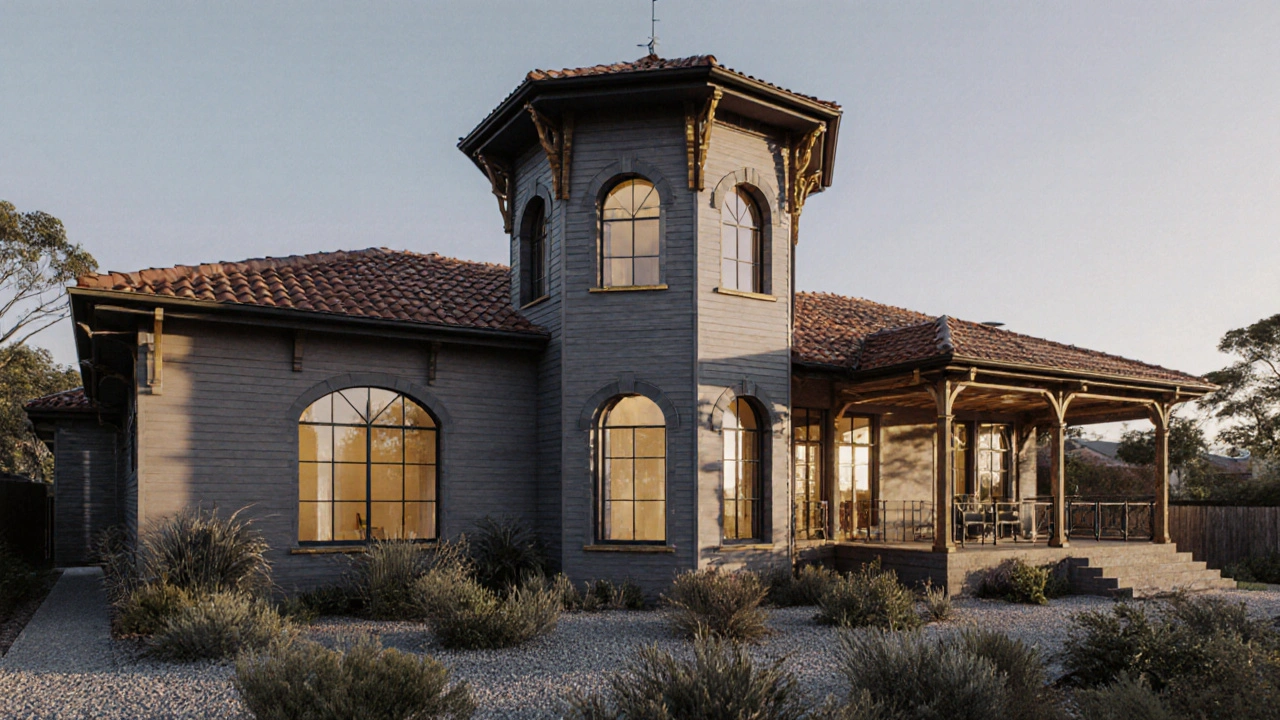
Italianate architecture is making a quiet comeback with modern materials and smarter design. Discover how its tall windows, bracketed eaves, and asymmetrical towers are being revived for today’s homes-especially in Australia’s hot climates.
Historic Architecture Revival: Rediscovering Timeless Styles in Modern Design
When you see a home with tall windows, bracketed eaves, or a domed roof, you’re not just looking at a building—you’re seeing a historic architecture revival, the intentional return to past architectural styles to create buildings that feel rooted in tradition yet fit modern life. Also known as neo-historic design, it’s not about nostalgia—it’s about quality, proportion, and craftsmanship that mass production can’t replicate. This movement isn’t stuck in the past. It’s alive in neighborhoods where Italianate homes still stand with their ornate cornices, in churches with pointed arches that echo medieval cathedrals, and in villas with terracotta roofs that whisper of the Mediterranean coast.
Take Gothic Revival, a 19th-century return to medieval design principles focused on verticality, light, and structural honesty. Also known as neo-Gothic, it didn’t just copy cathedrals—it adapted flying buttresses and ribbed vaults into libraries, universities, and even train stations. Or consider Renaissance architecture, a rebirth of symmetry, classical orders, and human-centered scale that turned buildings into rational, balanced spaces. Also known as classical revival, its influence shows up in city halls, banks, and even modern apartment buildings that prioritize harmony over chaos. Then there’s Italianate architecture, a style that brought Tuscan villa charm to 19th-century homes with towers, arched windows, and decorative brackets. Also known as Victorian Italianate, it’s making a comeback in today’s farmhouse and coastal homes because it works—no matter the century.
These aren’t costumes. They’re solutions. The low-pitched roofs of Mediterranean revival architecture keep homes cool. The thick stucco walls of Spanish colonial style hold heat in winter and block it in summer. The symmetry of Georgian design creates natural flow and balance. People aren’t choosing these styles because they look pretty—they’re choosing them because they’re smart, durable, and built to last. You won’t find a single modern material that outperforms the stone, wood, and brick of these revivals when it comes to weathering time.
What you’ll find below isn’t a list of old buildings. It’s a collection of real, working examples—how Gothic Revival’s engineering still inspires today’s smart facades, how Renaissance proportion guides modern urban layouts, and why Italianate details are showing up in new construction more than ever. These aren’t museum pieces. They’re living ideas, still shaping how we build, live, and feel in our spaces.