
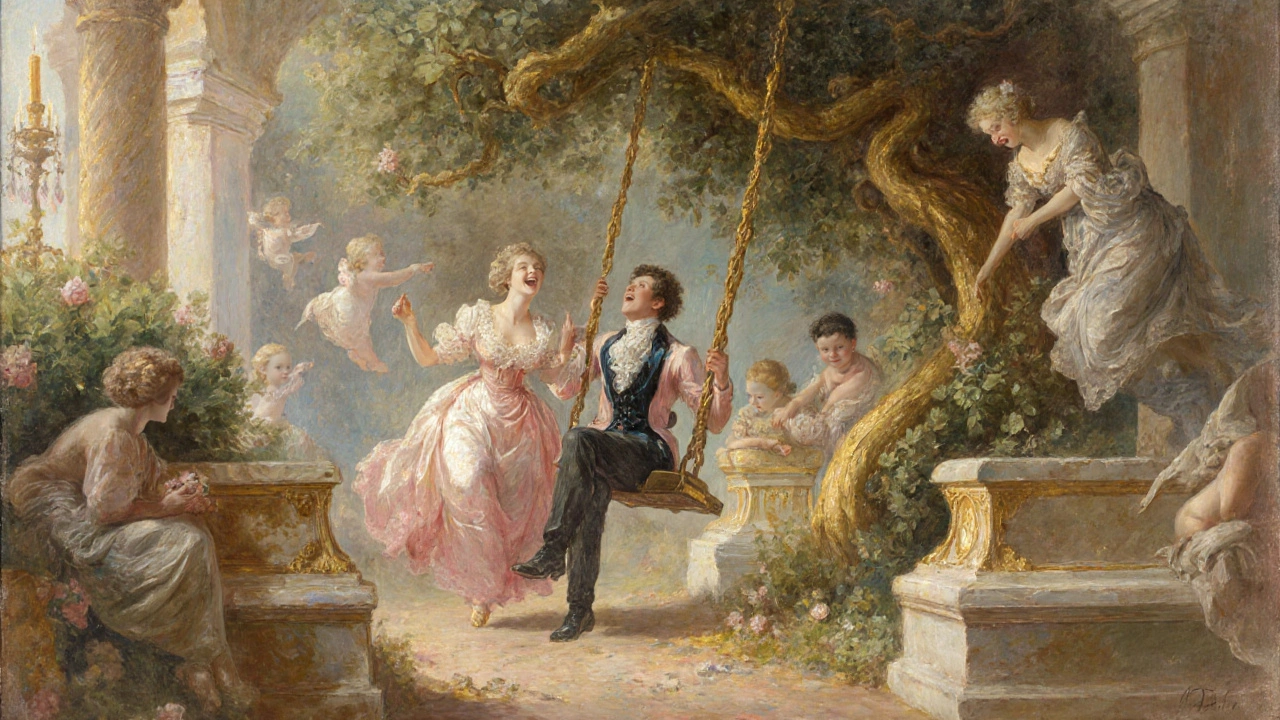
Rococo was the playful, ornate art movement of 18th-century Europe that celebrated elegance, intimacy, and luxury. Known for pastels, gold, and curved forms, it defined aristocratic life before the revolution changed everything.
French Rococo: The Playful, Ornate Style That Redefined 18th-Century Design
When you think of French Rococo, a lavishly decorative art and architectural style that exploded in France during the early 1700s, known for its curves, pastels, and playful elegance. Also known as Rocaille style, it wasn’t just decoration—it was a whole new way of feeling space, light, and emotion in homes and palaces. This wasn’t architecture for power or religion. It was for pleasure. For intimate gatherings. For the aristocracy who wanted their walls to whisper, not shout.
French Rococo grew out of the heavy grandeur of Baroque architecture, a dramatic, monumental style focused on scale, movement, and religious or royal authority. But instead of towering domes and dark marble, Rococo turned inward. Think gilded stucco vines curling around mirrors, porcelain figurines tucked into alcoves, and ceilings painted to look like floating clouds. It was architecture as theater, designed to surprise and delight. The style spread fast—from the Salon de la Princesse at Hôtel de Soubise to the private boudoirs of Madame de Pompadour—because it matched the mood of a society that valued charm over command.
It wasn’t just about looks. Rococo art, the painting and decorative arts that matched the architecture with soft tones, romantic scenes, and delicate brushwork. Also known as Louis XV style, it turned everyday life into poetry: lovers strolling in gardens, children playing with pets, women in silk lounging on chaise longues. Artists like François Boucher and Jean-Honoré Fragonard didn’t paint myths—they painted moments. And those moments became the blueprint for how we think of luxury today.
What makes French Rococo still relevant? It’s the idea that beauty doesn’t have to be loud to be powerful. You see its DNA in modern interiors: curved furniture, pastel palettes, intricate moldings, and the love of detail that makes a room feel personal. It’s the opposite of minimalism, but just as intentional. Every scroll, every shell, every fleur-de-lis was chosen to create a feeling—not just a look.
And while it faded by the late 1700s—replaced by the seriousness of Neoclassicism—it never disappeared. Today, you’ll find echoes of French Rococo in boutique hotels, high-end interiors, and even fashion runways. It reminds us that design can be joyful without being frivolous.
Below, you’ll find a curated collection of posts that dive into the full story of French Rococo: its origins, its most famous buildings, how it connected to the art of its time, and why it still matters. Whether you’re restoring a historic home or just love the look of gilded curves, these articles give you the real context—not just the postcards.