
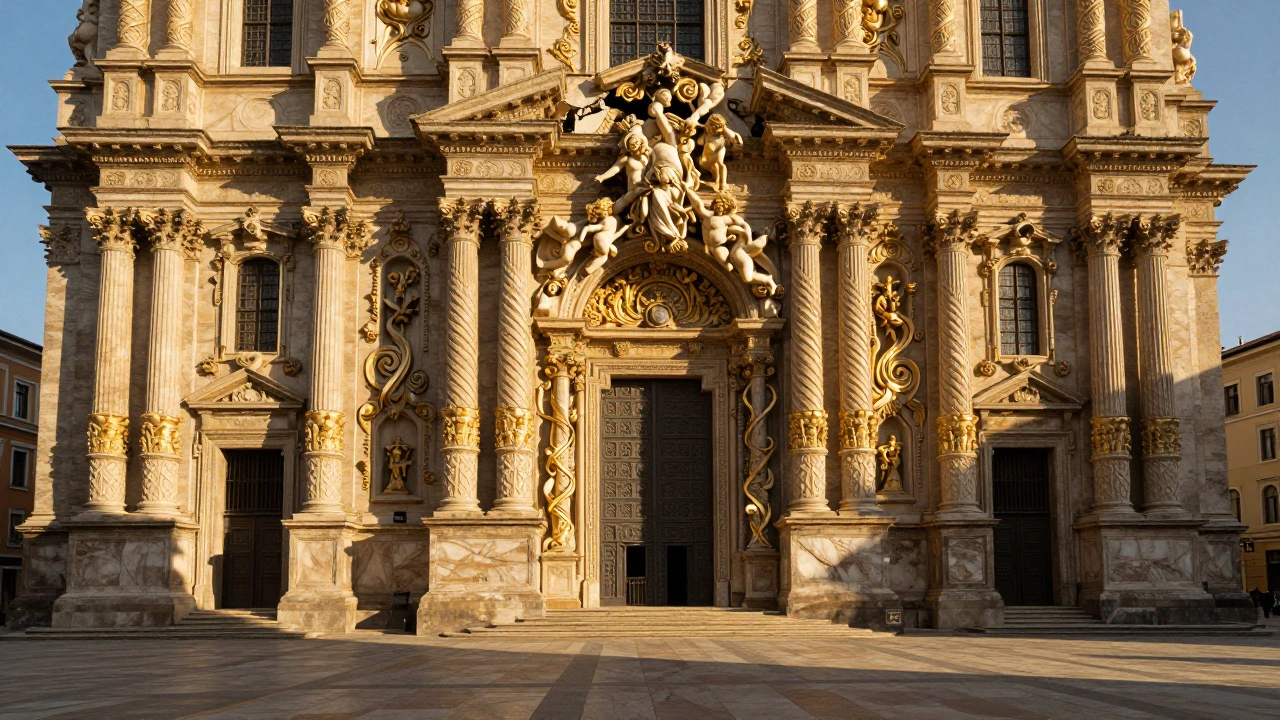
Baroque architecture uses movement, drama, and ornament to create awe. Learn how to recognize its twisted columns, gilded ceilings, and emotional design language in churches, palaces, and beyond.
Baroque Details: Ornament, Drama, and the Art of Architectural Excess
When you see Baroque details, a style of architectural ornamentation defined by lavish curves, rich textures, and theatrical flair. Also known as Baroque ornamentation, it doesn’t just decorate—it performs. This isn’t subtle design. It’s the kind of architecture that makes you stop and stare—where every column twists like a dancer, every cornice drips with carved flowers, and gold leaf doesn’t just highlight, it shouts.
Baroque details didn’t appear by accident. They were born in 17th-century Europe as a reaction to the calm order of the Renaissance. Churches, palaces, and even town halls became stages for power and faith. Think of the Baroque architecture, a movement that used scale, light, and decoration to overwhelm the senses and inspire awe of St. Peter’s Basilica in Rome or the Palace of Versailles. These weren’t just buildings—they were emotional experiences. The swirling pediments, the broken pediments, the illusionistic frescoes that made ceilings feel like open skies—all of it was engineered to make you feel small, moved, and utterly captivated.
And it’s not just old churches. Baroque details still show up today—in luxury hotels, high-end interiors, even in modern homes that want to feel rich without being stuffy. You’ll spot them in the carved moldings around a fireplace, the curved ironwork on a balcony, or the way light catches gilded trim on a ceiling. It’s the difference between plain and unforgettable. The ornate design, a deliberate use of intricate, hand-crafted embellishment to convey wealth and artistry of the Baroque era didn’t rely on mass production. Every leaf, every scroll, every cherub was shaped by hand. That’s why it feels alive.
Baroque details aren’t about clutter. They’re about rhythm. They lead your eye, pull you in, and make you feel like you’re walking through a frozen symphony. You don’t just see them—you feel them. That’s why they’ve survived centuries. They don’t fade into the background. They demand attention. And in a world of flat, minimalist spaces, that’s powerful.
Below, you’ll find posts that dig into how Baroque details show up in historic buildings, how they’ve been reinterpreted in modern design, and what makes them so unforgettable. Whether you’re restoring a century-old home or just curious about why some spaces feel more alive than others, these articles will show you the truth behind the gold leaf.