
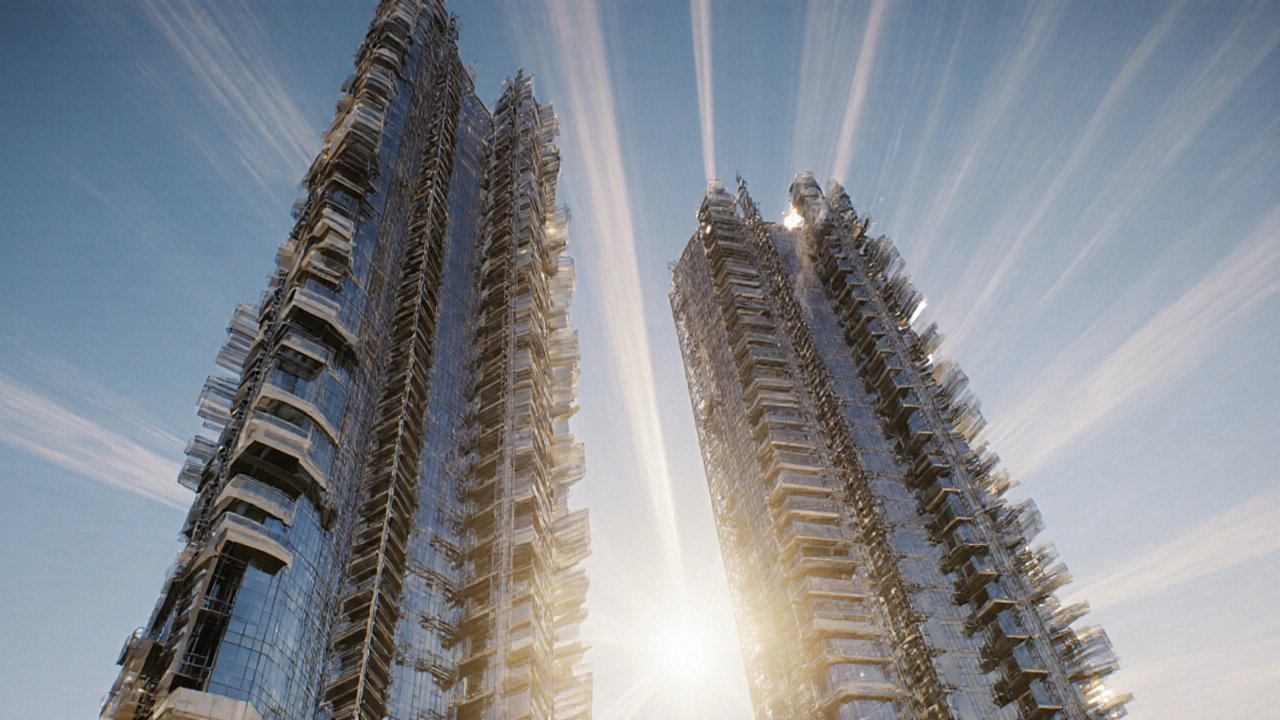
High-tech architecture blends cutting-edge technology with bold design to create buildings that respond to their environment. From smart facades to self-healing materials, it’s shaping the future of sustainable, efficient, and human-centered design.
Responsive Facades: Smart Building Skins That Adapt to Environment and Use
When we talk about responsive facades, building exteriors that physically or digitally adjust to environmental conditions like sunlight, temperature, or wind. Also known as adaptive facades, they’re not just decorative—they’re functional systems that reduce energy use, improve indoor comfort, and respond to how people actually use the space. Think of them as the skin of a building that breathes, shades, or opens up when needed—like a living thing, not a static wall.
These systems rely on smart building envelopes, integrated materials and mechanisms that react to real-time data from sensors. They can include motorized louvers, electrochromic glass that tints automatically, or even kinetic panels that shift position with the sun’s path. Some use simple passive design—like overhangs or vents—while others combine robotics and AI to optimize performance. What they all share is a goal: to make buildings smarter without adding complexity for the people inside. You won’t find them just in high-tech labs—they’re already in offices in Singapore, museums in Germany, and even housing projects in the U.S., where energy costs and climate pressures are pushing design forward.
The real power of dynamic facades, facades that change form or function over time to improve efficiency or user experience isn’t just in saving electricity. It’s about reconnecting buildings with their surroundings. A facade that blocks harsh afternoon sun isn’t just efficient—it makes the space feel more comfortable. A wall that opens to let in a breeze isn’t just a feature—it turns architecture into an experience. This isn’t science fiction. It’s the next logical step in how we build, especially as climate goals and human well-being become central to design.
You’ll find examples of these ideas in the posts below—from how modern materials mimic natural responses, to how architects are borrowing from biology to create self-regulating surfaces. Some designs are high-tech; others are beautifully simple. But they all share one thing: they don’t just sit there. They react. And that’s changing everything about how we live inside buildings.